Durga Puja FAQ: 40 questions answered
 Pujo Parikrama team8 min read · Updated
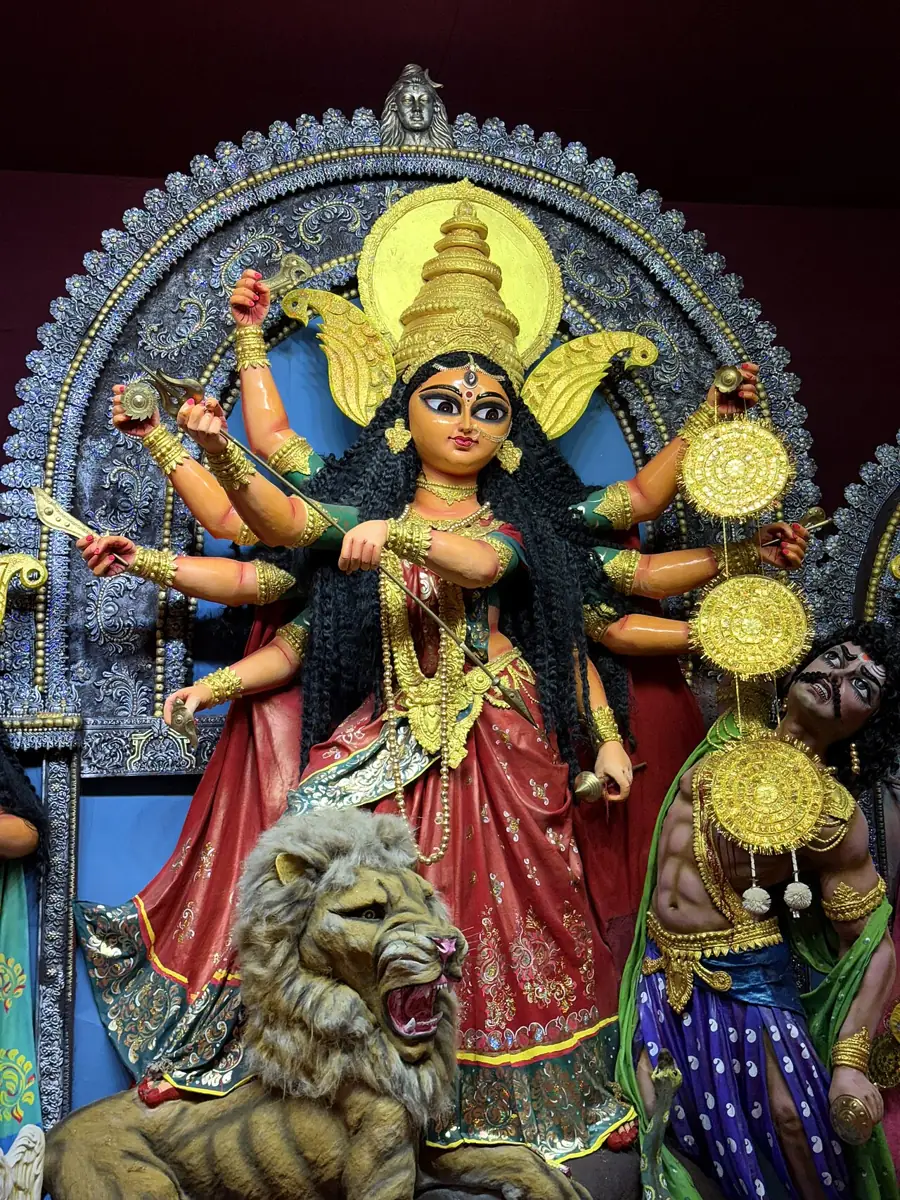
Durga Puja is the Hindu festival honouring the goddess Durga's victory over the buffalo demon Mahishasura, and in Bengal her annual homecoming with her four children. In 2026 Mahalaya is Saturday 10 October, the main days run from Shashthi, Saturday 17 October, to Maha Navami, Tuesday 20 October, and Bijoya Dashami is Wednesday 21 October. This page gives short answers to the 40 questions people ask most, on dates, meaning, rituals, food, etiquette and visiting Kolkata, each linked to a fuller guide.
 ▶ Photo story · 8 pagesDurga Puja FAQ: 40 questions answered
In this article 6 sections
The short answer: Durga Puja 2026 runs from Shashthi, Saturday 17 October, to Bijoya Dashami, Wednesday 21 October, with Mahalaya on Saturday 10 October. It celebrates the goddess Durga's victory over Mahishasura and, in Bengal, her homecoming. Below are 40 short answers to the questions people ask most. Each links to an in-depth guide; for the full calendar see Durga Puja 2026 dates, and for unfamiliar words the glossary.
Dates and basics
When is Durga Puja in 2026?
Mahalaya is Saturday 10 October 2026, Panchami Friday 16 October, Shashthi Saturday 17 October, Saptami Sunday 18 October, Maha Ashtami Monday 19 October, Maha Navami Tuesday 20 October and Bijoya Dashami Wednesday 21 October. See all 2026 dates.
Why do Durga Puja dates change every year?
The festival follows the Hindu lunar calendar, falling in the bright fortnight of the month of Ashwin, so its Gregorian dates move between September and October. Exact ritual timings come from the panjika (almanac) and can differ slightly between almanacs.
What is Durga Puja?
It is the Hindu festival worshipping the goddess Durga, the embodiment of divine power (Shakti), above all in West Bengal, Assam, Odisha, Tripura, Bihar, Jharkhand and among Bengalis worldwide. Read What is Durga Puja?.
Why is Durga Puja celebrated?
It celebrates Durga's victory over the buffalo demon Mahishasura, a story told in the Devi Mahatmya. In Bengal she is also welcomed as Uma, a daughter returning to her parents' home for a few days. See the Mahishasura story.
How many days does Durga Puja last?
The main festival is five days, Shashthi to Bijoya Dashami, but the season begins with Mahalaya about a week earlier, and many pandals open to visitors from Panchami or before.
What is Mahalaya?
Mahalaya is the new-moon day that ends the fortnight of remembering ancestors and marks the start of Devi Paksha, the goddess's fortnight. Many Bengalis wake before dawn to listen to the radio programme Mahishasuramardini. See Mahalaya and the Mahishasuramardini broadcast.
What is akal bodhon?
Akal bodhon means "untimely awakening": the story, told in Krittibas's Bengali Ramayana, that Rama invoked Durga in autumn, out of season, before his battle with Ravana. Bengali tradition links the autumn puja to it. Read Akal Bodhon.
Who are the figures in a Durga Puja idol?
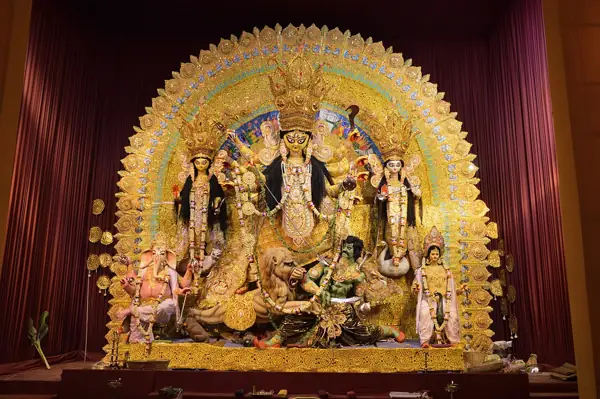
Durga stands on her lion, killing Mahishasura, flanked by her children Lakshmi, Saraswati, Ganesh and Kartik, each with their animal mount. Ganesh's companion, the kola bou, stands beside him. See Goddess Durga.
Is Durga Puja a UNESCO heritage?
Yes. UNESCO inscribed Durga Puja in Kolkata on its Representative List of the Intangible Cultural Heritage of Humanity in 2021. Read Durga Puja and UNESCO.
How old is Durga Puja?
Worship of the goddess is ancient, and large family pujas in Bengal are recorded from several centuries ago; the community or sarbojanin puja grew in the twentieth century. See the history of Durga Puja.
Durga Puja and Navratri
What is the difference between Durga Puja and Navratri?
Both fall in the same autumn period and honour the Goddess. Navratri is nine nights of worship of her nine forms, with fasting and, in western India, garba and dandiya; Bengal's Durga Puja centres on the last five days, with clay idols of Durga and her children. See Navratri.
Are Dussehra and Bijoya Dashami the same day?
They fall on the same day, the tenth day of the bright fortnight. In much of north India it is Dussehra, marking Rama's victory over Ravana; in Bengal it is Bijoya Dashami, the goddess's farewell. In 2026 it is Wednesday 21 October.
Is Durga Puja celebrated outside Bengal?
Yes, across India and wherever Bengali communities live, from Delhi and Mumbai to London, New York and beyond. See Durga Puja around the world and our guide to other festivals.
Rituals
What happens on Shashthi?
The goddess is formally welcomed with bodhon (awakening), amantran (invitation) and adhibas (preparatory rites), and most pujas unveil the idol's face. See Shashthi.
What is kola bou?
The kola bou ("banana bride") is a banana plant bound with eight other plants and draped in a red-bordered sari, bathed at dawn on Saptami and placed beside Ganesh. It represents the goddess in plant form. Read Kola Bou.
What is pushpanjali?
Pushpanjali or anjali is the offering of flowers to the goddess while repeating Sanskrit mantras after the priest, most famously on Ashtami morning; many people fast until they have offered it. See the pushpanjali mantra.
What is Sandhi Puja?
It is worship at the junction (sandhi) of the Ashtami and Navami lunar days, traditionally 48 minutes, with 108 lotuses and 108 lamps. Its clock time changes each year, so check the panjika. Read Sandhi Puja.
What is Kumari Puja?
The worship of a young girl as a living form of the goddess, usually on Maha Ashtami; the best-known public one is at Belur Math near Kolkata. See Kumari Puja.
What happens on Maha Navami?
Navami brings the final full day of worship, with the homa (fire offering) at many pujas and an emotional last night of pandal hopping. See Maha Navami.
What happens on Bijoya Dashami?
The goddess is bid farewell: the darpan bisarjan (her reflection in a mirror in water), sindoor khela, immersion processions and Bijoya greetings. See Bijoya Dashami.
What is sindoor khela?
On Dashami, women offer sindoor (vermilion) and sweets to the goddess, then smear sindoor on each other. Traditionally it is for married women; some pujas now welcome a wider group, so ask locally. Read Sindoor Khela.
What is dhunuchi naach?
A devotional dance with a dhunuchi, a clay incense burner of smouldering coconut husk and resin, performed to the dhak during the evening aarti. See Dhunuchi Naach.
What is the dhak?
The dhak is the large barrel drum played by dhakis throughout the puja; its rhythm is the sound of the festival. Read Dhak and dhaki.
What is bisarjan?
Bisarjan is the immersion of the idol in a river or pond, symbolising the goddess's return to Kailash. It begins on Dashami and continues for some days at some pujas; local authorities set immersion arrangements. See eco-friendly Durga Puja.
What is a bonedi bari puja?
A puja held by an old, established Kolkata family, often for generations, usually in the family's own thakur dalan (worship hall). Read Bonedi bari pujas.
Where are the idols made?
Many of Kolkata's idols are made in Kumartuli, the potters' quarter in north Kolkata, from straw, bamboo and river clay. Read Kumartuli idol making.
 Also readWhat is Durga Puja? The meaning behind the festival
Food
What is bhog?
Bhog is food offered to the goddess and then shared as blessed food, typically khichuri, labra (mixed vegetables), fries, chutney and payesh. See Durga Puja food and bhog and our recipes.
Do Bengalis eat non-vegetarian food during Durga Puja?
Many do. Bhog offered to the goddess is usually vegetarian, but outside the ritual many Bengali families enjoy fish and meat during the puja days. Customs vary by family; some keep certain days vegetarian.
What should I eat in Kolkata during the pujas?
Phuchka, rolls, mughlai paratha, biryani, telebhaja (fritters) and sweets such as rosogolla and sandesh, plus bhog where it is offered to visitors. See the food guide.
What do people say on Bijoya Dashami?
"Shubho Bijoya" is the usual greeting. People touch elders' feet, embrace friends and share sweets in the days after Dashami. See Bijoya Dashami wishes.
Etiquette and dress
Can non-Hindus and tourists visit pandals?
Yes. Public pandals welcome everyone. Dress modestly, remove shoes where asked, don't touch the idol or ritual items, and follow volunteers' directions.
Do I need to remove my shoes?
At many family pujas and near the altar in some pandals, yes; in others you can walk through with shoes on. Follow the signs and what others do, and wear easy slip-ons.
Can I take photos at a pandal?
Usually yes in public pandals, but some family pujas restrict photography, and flash is unwelcome during puja and aarti. Ask before photographing people. See photography tips.
What should I wear for Durga Puja?
New clothes are traditional: saris, kurtas or dhuti-panjabi, in breathable fabrics for the October heat, plus comfortable shoes. See what to wear for Durga Puja.
Visiting Kolkata
What is the best time for pandal hopping?
Early morning, from about dawn to 9 am, and late night after about 1 am. Evenings from about 6 pm to midnight, Saptami to Navami, are the busiest. See pandal hopping tips.
How should I get around Kolkata during the pujas?
By Metro and on foot, mostly. Roads near big pandals are often closed or jammed in the evenings; app cabs and autos help for short hops. See the Kolkata traveller's guide.
Where should I stay in Kolkata for Durga Puja?
Near a Metro station. North and central Kolkata suit heritage and blockbuster pandals, south Kolkata the classic neighbourhood pujas, and Salt Lake or New Town are calmer. Book early.
Which are the best pandals in Kolkata?
It depends on what you like: heritage pujas in the north, giant theme pandals in central and south Kolkata, or classic neighbourhood pujas. Browse by area and trail in our Kolkata pandal guide, which shows live crowd check-ins.
Is Durga Puja suitable for children and elderly visitors?
Yes, with planning: go at quieter hours, see fewer pandals, give children a contact card, and ask about separate entrances. See Durga Puja with kids and elderly visitors.
Can I celebrate Durga Puja at home?
Yes. Many families hold a simple home puja with a small idol, picture or sacred pot, flowers and bhog. See Durga Puja at home and the samagri list.
Questions people ask
When is Durga Puja in 2026?
Mahalaya is on Saturday 10 October 2026. The main days are Shashthi (Saturday 17 October), Saptami (Sunday 18 October), Maha Ashtami (Monday 19 October) and Maha Navami (Tuesday 20 October), ending with Bijoya Dashami on Wednesday 21 October.
Why is Durga Puja celebrated?
It celebrates the goddess Durga's victory over the buffalo demon Mahishasura, told in the Devi Mahatmya, as the triumph of divine power over evil. In Bengal it is also the homecoming of Durga as Uma, a married daughter visiting her parents with her children.
What is the difference between Durga Puja and Navratri?
Both fall in the same autumn period and honour the Goddess. Navratri is nine nights of worship of her nine forms, with fasting and, in western India, garba and dandiya; Bengal's Durga Puja centres on the last five days, with clay idols of Durga and her children in pandals and homes.
What is the most important day of Durga Puja?
Many consider Maha Ashtami the most important, with morning pushpanjali, Kumari Puja at some pujas and Sandhi Puja at the junction of Ashtami and Navami. In 2026 Maha Ashtami is Monday 19 October.
Can non-Hindus and tourists visit Durga Puja pandals?
Yes. Public (sarbojanin) pandals welcome everyone. Dress modestly, remove shoes where asked, don't touch the idol or ritual items, and follow volunteers' directions.
What is the best time for pandal hopping in Kolkata?
Early morning, from about dawn to 9 am, and late night after about 1 am are the least crowded. Evenings from about 6 pm to midnight, especially Saptami to Navami, are the busiest.
Read next
- Durga PujaWhat is Durga Puja? The meaning behind the festivalWhat Durga Puja means: the Devi Mahatmya story of Mahishasura, Durga as Shakti, Uma's homecoming, Rama's akal bodhon and why the festival falls in autumn.
 RitualsDurga Puja rituals day by dayDurga Puja rituals day by day: Mahalaya, Shashthi bodhon, Saptami Kola Bou, Ashtami anjali and Sandhi Puja, Navami homa, Dashami sindoor khela, 2026 dates.
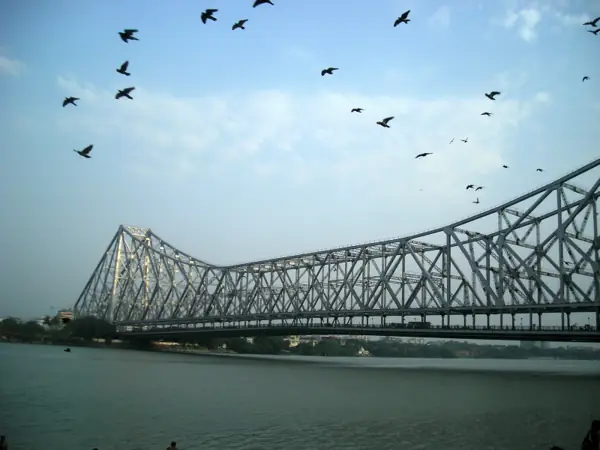 VisitVisiting Kolkata for Durga Puja 2026Plan a Durga Puja 2026 trip to Kolkata: when to arrive, airport and stations, where to stay, metro and cabs, October weather, money, safety and a 3-day plan.
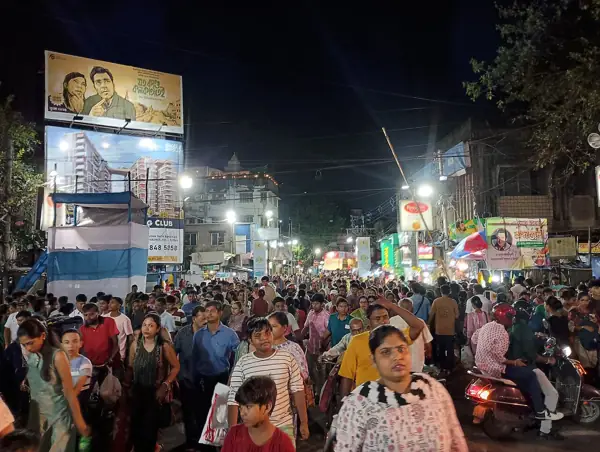 CulturePandal hopping in KolkataPractical Kolkata pandal hopping tips: the best hours to beat crowds, using the Metro, what to carry, kids and elders, safety, and which area is known for what.
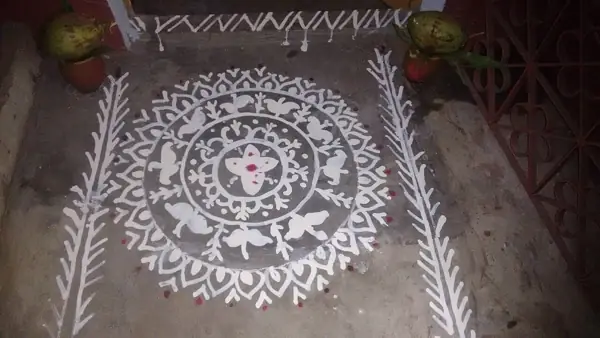 CultureDurga Puja glossaryA Durga Puja glossary: 58 Bengali and Sanskrit words explained, from anjali, bodhon and dhunuchi to sindoor khela, daker saaj, bonedi bari and thakur dekha.
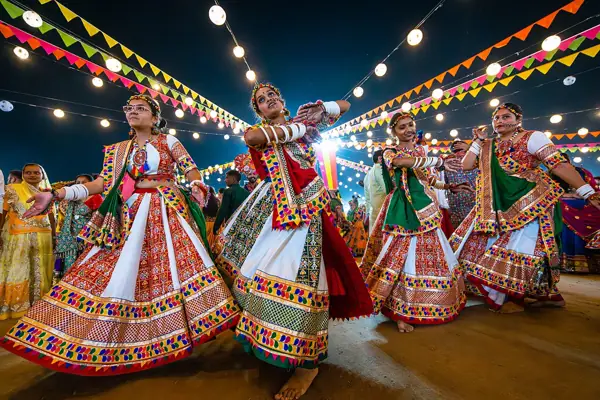 NavratriNavratri 2026What Navratri means, when Sharad Navratri 2026 falls, its rituals (ghatasthapana, Navadurga, fasting, garba) and how it differs from Bengal's Durga Puja.