Durga Puja samagri list: a complete checklist
 Pujo Parikrama team4 min read · Updated
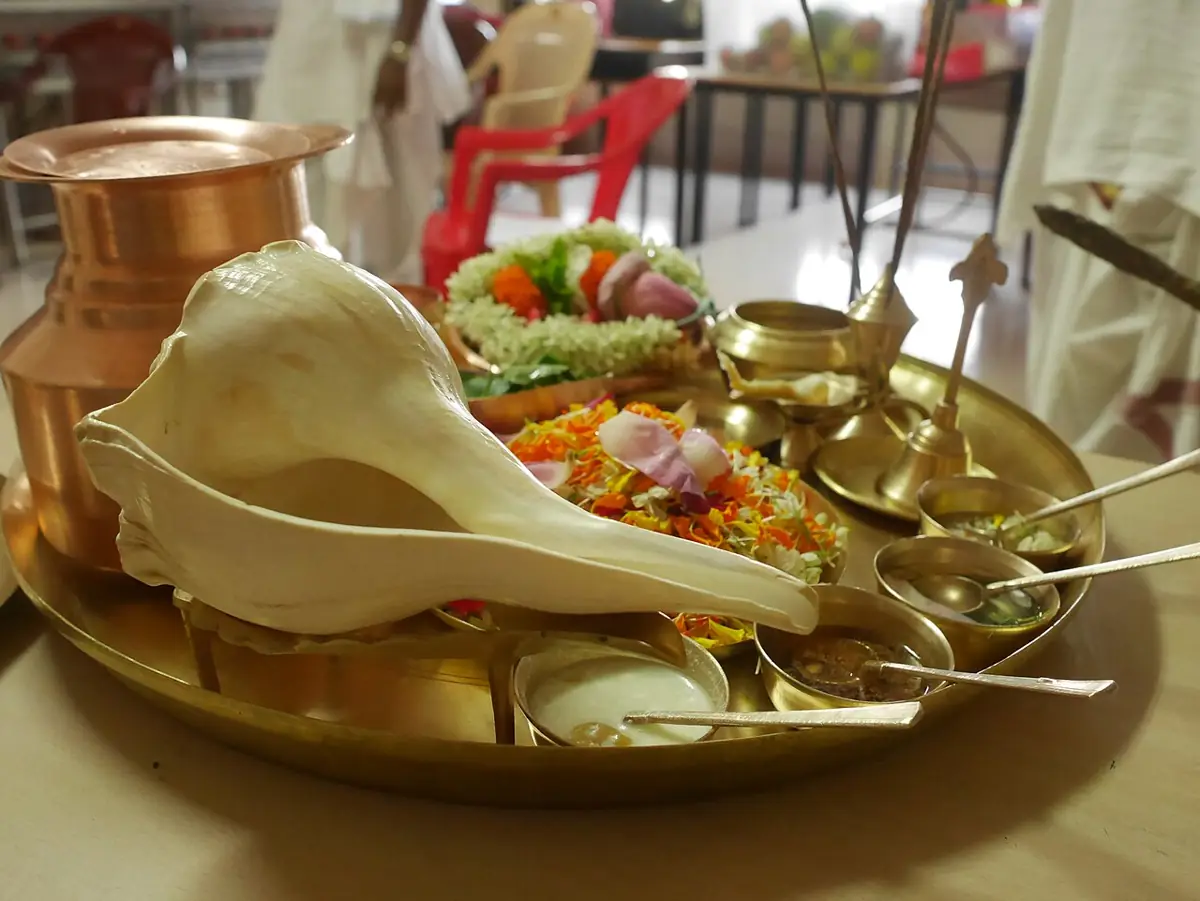
Durga Puja samagri (puja items) for home worship centres on a ghat or kalash with mango leaves, a picture or image of Ma Durga, a lamp, incense, sindoor, sandalwood, red hibiscus and bel leaves, uncooked rice, durva grass, fruit and sweets. For Ashtami anjali you need extra flowers and bel leaves, and for Dashami many families keep curd, flattened rice, sweets and sindoor. Lists vary by family and panjika, and simple substitutes are acceptable for home worship.
 ▶ Photo story · 8 pagesDurga Puja samagri list: a complete checklist
In this article 8 sections
For a simple Durga Puja at home you need a ghat or kalash (water pot) with mango leaves, a picture or small image of Ma Durga, a lamp, incense, sindoor and sandalwood paste, red hibiscus and bel leaves, uncooked rice, durva grass, and fruit and sweets for the offering. Below is a fuller checklist, grouped so you can shop once and tick things off. It is written for household worship; a priest-led full Durga Puja uses a much longer list, which the purohit (priest) will usually give the family.
Families and regions differ. A Bengali home, a Gujarati home and a Punjabi home preparing for Navratri will have overlapping but different lists. Treat this as a reliable starting point, and add or drop items according to your custom. For how to use these items, see how to do Durga Puja at home.
Essentials
| Item | Bengali / common name | Used for |
|---|---|---|
| Picture or small image of Ma Durga | Pratima / chhobi | Focus of worship |
| Pot of brass, copper or clay | Ghat / kalash | Seat of the Goddess's presence |
| Five mango leaves | Aamer pallab | Placed in the ghat's mouth |
| Green coconut or whole fruit | Dab / phal | Rests on the ghat |
| Uncooked sun-dried rice | Atap chal | Seat for the ghat, offerings, sankalpa |
| Red or yellow cloth | Lal kapor | Covering the stool or altar |
| Low wooden stool | Jolchouki / chowki | Altar |
| Sitting mat | Asan | For the person doing the puja |
| Ganga water or clean water | Gangajal | Purifying and filling the ghat |
| Sindoor | Sindur | Swastika on the ghat, offering |
| Sandalwood paste | Chandan | Gandha (fragrance) offering |
| Lamp with ghee or mustard oil, wicks | Prodip / diya | Light and aarti |
| Incense sticks or resin | Dhup / dhuno | Dhoop offering |
| Bell | Ghanta | Rung during offerings |
| Conch (optional) | Shankha | Blown at aarti and auspicious moments |
| Red thread | Lal suto / mauli | Tied round the ghat or wrist |
| Matches, small plates, a bowl and spoon | Kosha-kushi (copper vessel and spoon), if available | Offering water |
| Chandi Path book or recording | Chandi / Durga Saptashati | Recitation |
Flowers and leaves
| Item | Notes |
|---|---|
| Red hibiscus (jaba) | The flower most associated with Durga in Bengal |
| Lotus (padma) | Prized for Sandhi Puja; a few are enough at home |
| Marigold (genda) | For garlands and decoration |
| White flowers (e.g. tuberose, jasmine) | Widely used; customs about specific flowers vary |
| Bel (bael) leaves | Offered with flowers, especially at anjali; three-leaflet sprigs are preferred |
| Durva grass | Offered with rice; also used for Ganesha |
| Tulsi | Some families offer it; many do not offer tulsi to Devi, so follow your custom |
| Mango leaves | For the ghat and for a toran (door hanging) |
| Banana leaf | To serve bhog on, if you like |
Offerings and bhog
| Item | Notes |
|---|---|
| Seasonal fruit | Banana, apple, guava, sugarcane pieces, cucumber, whatever is fresh |
| Sweets | Sandesh, batasha, narkel naru (coconut balls) |
| Milk and curd | For payesh (kheer) or offering as is |
| Honey, ghee, sugar | With milk and curd these make panchamrit |
| Betel leaf and areca nut | Paan-supari, a classic offering |
| Bhog ingredients | Gobindobhog rice and moong dal for khichuri, vegetables for labra |
| Drinking water | Kept with every food offering |
See Durga Puja food and bhog for what each day's bhog usually looks like.
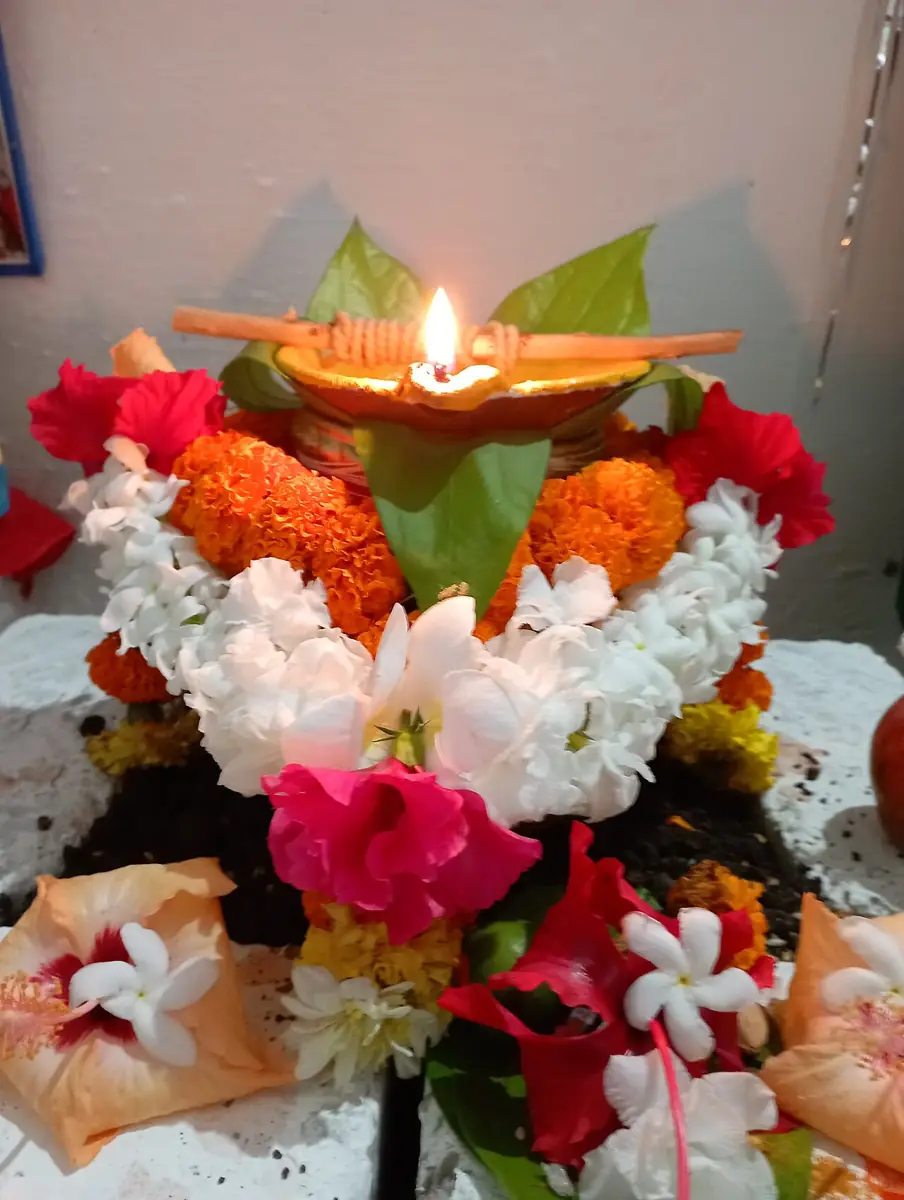

For Ashtami anjali
| Item | Notes |
|---|---|
| Extra flowers and bel leaves | Enough for each person to offer three times |
| A plate or basket | To hold and collect offered flowers |
| Clean water | Sprinkled before anjali |
| Printed or saved mantra | The pushpanjali mantra with transliteration |
Also readHow to do Durga Puja at homeFor Dashami
| Item | Notes |
|---|---|
| Curd and flattened rice | Doi-chire, offered in many Bengali homes before farewell |
| Sweets | For offering and Bijoya greetings |
| Paan (betel leaf) | Offered to the Goddess; also used in boron (farewell) at pandals |
| Sindoor | For sindoor khela |
| A mirror (optional) | Some families show the Goddess's reflection in water or a mirror at visarjan |
| A pot of soil or a plant | To receive the ghat water and flowers respectfully |
Extra items for Navratri
If you follow the Navratri tradition, add: a wide clay tray, clean soil and barley (jau) seeds for the sprouting pot, a red chunri (scarf) for the Goddess, and the ingredients for Navratri fasting food and kanya pujan. The ghatasthapana guide explains how they fit together.
Substitutions that are fine at home
- No mango leaves? Use betel or ashoka leaves, which many families also treat as auspicious.
- No coconut? A whole fruit, or a small plate of rice, can cover the ghat.
- No brass pot? A clean clay pot is traditional and inexpensive; any clean pot is acceptable to many families.
- No Ganga water? Clean water with sincere intention is what matters most.
- No hibiscus? Any fresh, fragrant flower that hasn't been smelled or worn first.
- No sandalwood? A little sindoor or turmeric paste.
- Can't read Sanskrit? Read the Chandi in Bengali, Hindi or English, or listen to it.
Buying and disposal tips
- Buy flowers the day before or the same morning; keep them in water, covered with a damp cloth.
- Choose clay lamps and natural cloth over plastic.
- After Dashami, return flowers, leaves and the ghat water to soil or a garden rather than throwing them in a river or a bin. Some neighbourhoods and pandals collect puja flowers for composting; ask locally.
Questions people ask
What is the minimum samagri needed for Durga Puja at home?
A picture of Ma Durga or a water-filled ghat, a lamp, incense, flowers, a little sindoor or sandalwood paste, and some fruit or sweets are enough for a simple home puja.
Which flower is offered to Ma Durga?
Red hibiscus (jaba) is the flower most associated with Durga in Bengal, along with lotus and bel (bael) leaves. Marigold, white flowers and seasonal blooms are also widely used.
Can I use a steel pot as a kalash?
Brass, copper, silver or earthenware are traditional, but many families accept any clean pot for home worship when nothing else is at hand. Follow your family's custom if it has one.
What items are needed for Ashtami anjali?
Fresh flowers (especially red hibiscus), bel leaves, a little Ganga or clean water to sprinkle, and the pushpanjali mantra. Many people also keep a small plate to collect the flowers after offering.
What is needed for Dashami at home?
Commonly curd and flattened rice (doi-chire), sweets, betel leaf, sindoor for women who take part in sindoor khela, and a plant or clean water to receive the ghat's water.
Read next
- At home · 12 stepsHow to do Durga Puja at homeA simple, respectful way to do Durga Puja at home: setting up a ghat, sankalpa, offerings, aarti, Ashtami anjali and Dashami visarjan, with a supplies list.
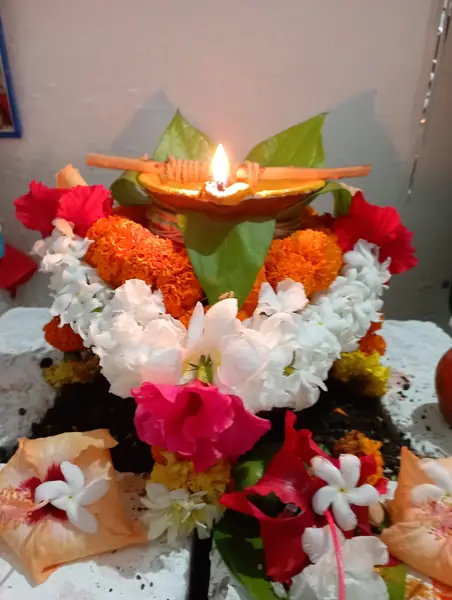 Navratri · 10 stepsGhatasthapanaStep-by-step Navratri ghatasthapana (kalash sthapana) at home: sowing barley in soil, setting the kalash, coconut and mango leaves, muhurta tips and supplies.
 RitualsDurga Puja pushpanjali mantra, with meaningDurga Puja pushpanjali (anjali) mantras in Bengali and Devanagari with transliteration and meaning: Jayanti Mangala Kali, Sarva Mangala and how to offer.
 RitualsBijoya DashamiBijoya Dashami 2026 is Wednesday 21 October: darpan bisarjan, boron and sindoor khela, immersion processions, shanti jal and Bijoya greetings explained.