Durga Puja food: bhog, street food and sweets
 Pujo Parikrama team5 min read · Updated
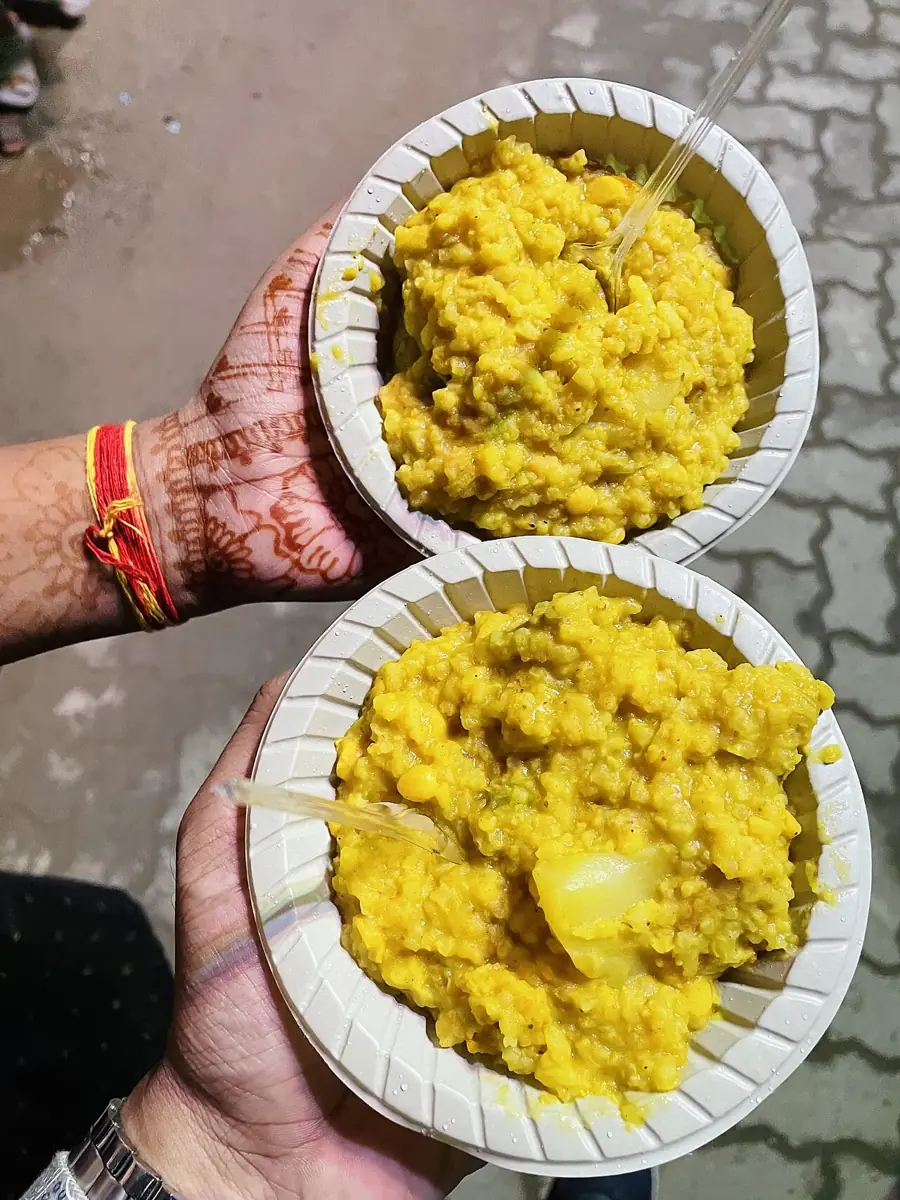
Durga Puja food has two halves: bhog, the vegetarian meal first offered to the goddess and then shared with everyone (khichuri, labra, beguni, chutney and payesh), and the festive eating out that fills Kolkata's streets for five days, from phuchka and egg rolls to mughlai paratha, kabiraji and biryani. Sweets such as rosogolla, sandesh and mishti doi tie the two together, and many households also keep family food customs, vegetarian on some days and a special meat meal on others.
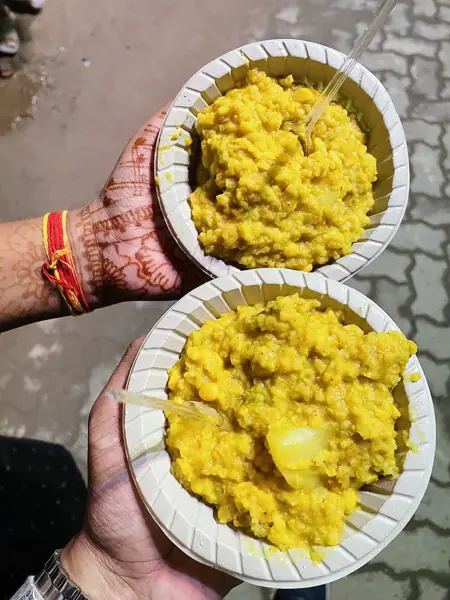 ▶ Photo story · 7 pagesDurga Puja food: bhog, street food and sweets
In this article 5 sections
Durga Puja is as much a food festival as a religious one. At its centre is bhog, the meal offered to the goddess and then shared out as blessing; around it, Kolkata eats out for five days straight, queuing at street stalls and old cabins between pandals. This guide covers both, with notes on sweets, family food customs and where to eat on a pandal-hopping night.
What is bhog?
Bhog is food offered to the deity during the puja. Once it has been offered, what remains becomes prasad, food carrying the goddess's grace, and it is distributed to devotees. In Bengali community pujas the bhog served to visitors is usually a hot, simple, vegetarian meal, cooked without onion or garlic in many places, and eaten sitting in long rows on the floor or at trestle tables, often from leaf plates or shal pata (sal-leaf plates).
The classic Durga Puja bhog plate looks like this:
| Dish | What it is |
|---|---|
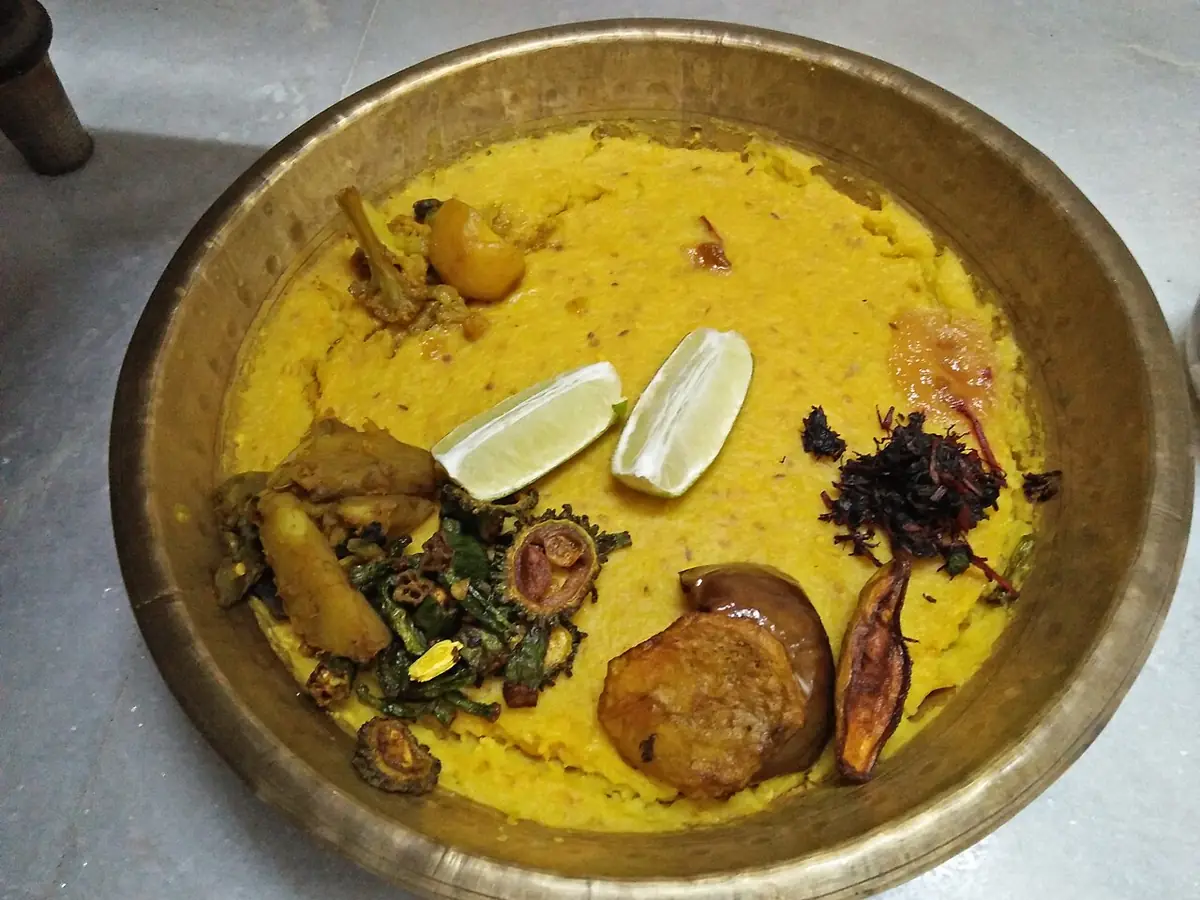
| Khichuri | Rice and lentils (often roasted moong dal) cooked together with ghee and whole spices; the heart of the plate |
| Labra | A mixed vegetable dish of pumpkin, potato, radish, aubergine and greens, cooked soft with panch phoron (five-spice) |
| Beguni | Aubergine slices dipped in gram-flour batter and fried; other bhaja (fries) may be served too |
| Chutney | Sweet and sour, commonly tomato, sometimes with dates or amsotto (dried mango) |
| Payesh | Rice slow-cooked in milk with sugar, a sweet finish |
Some pujas serve plain rice, dal and a mixed vegetable chorchori instead of khichuri, or add papad and a sweet. Bonedi bari (old family) pujas often have their own long-standing menus, including offerings such as luchi (fried flatbread), fruit and home-made sweets. The menu genuinely varies, so treat the table above as typical rather than fixed.
Why bhog is shared
The sharing is the point. Food offered to the goddess is not kept back; it goes out to whoever has come, without asking who they are. In a sarbojanin (community, "for everyone") puja, people of every background sit down side by side for the same khichuri. Many families remember Ashtami bhog at their para pandal as one of the most important meals of the year. If you are offered bhog, accept it with your right hand, eat what you take and don't waste it.

Pujo eating culture: Kolkata's streets
Outside the pandal, Durga Puja is a city-wide night out. Stalls set up along pandal routes, restaurants extend their hours, and old cabins (small, decades-old cafés) see queues. Favourites you will see everywhere:
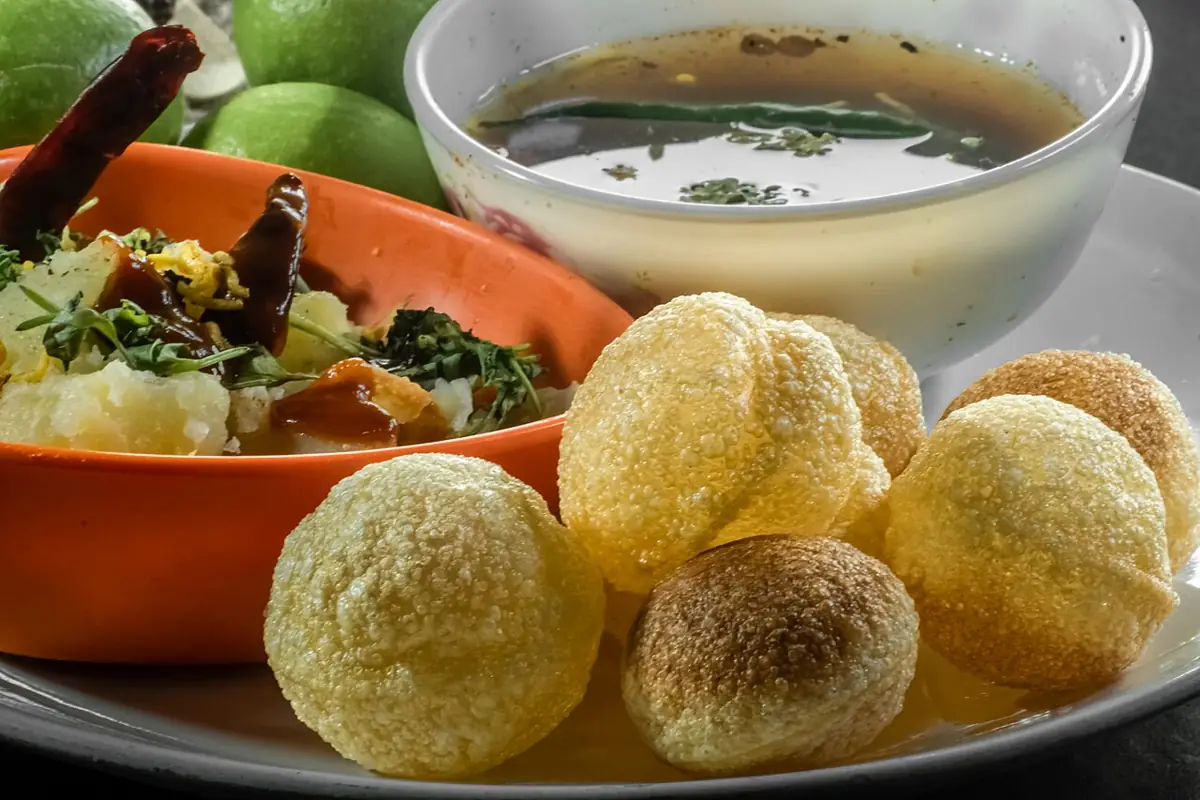
- Phuchka: hollow crisp shells filled with spiced potato and tamarind water, eaten one at a time from the vendor's hand. Kolkata's take on pani puri.
- Egg roll and chicken roll: a paratha fried with egg, filled with onion, chilli and meat or just egg, rolled in paper. Kolkata's rolls are a pujo staple.
- Mughlai paratha: a stuffed, egg-filled paratha fried on a flat griddle, cut into squares and served with potato curry and salad.
- Kabiraji: a cutlet of fish or chicken coated in a lacy, crisp web of beaten egg, a speciality of old cabins.
- Fish fry and cutlets: breaded fish, chops and devilled eggs (dimer devil).
- Kolkata biryani: famous for its potato and boiled egg alongside the meat; many people plan one biryani dinner during the puja.
- Ghugni, jhalmuri and telebhaja: chickpea curry, spiced puffed rice and fritters, cheap and fast between pandals.
Two classic cabins you can fit into a pandal walk: Mitra Cafe at Sovabazar, close to the north Kolkata heritage pujas, and the Indian Coffee House on College Street, near the central theme pandals. The full Kolkata guide lists eateries by area, near each pandal.

Sweets: the taste of Pujo
No Bengali festival is complete without mishti (sweets). Boxes of sweets are bought for guests, carried on visits and above all exchanged on Bijoya Dashami.
- Rosogolla: soft spongy balls of chhana (fresh cottage cheese) in light syrup.
- Sandesh: a drier chhana sweet, pressed into moulds, sometimes flavoured with cardamom, mango or saffron.
- Mishti doi: sweetened, caramelised yoghurt set in clay pots.
- Pantua, chomchom, langcha, rajbhog: fried or syrup-soaked chhana sweets, each with its own texture.
- Narkel naru: coconut balls, often made at home and offered at the puja and on Bijoya.
A note on nolen gur: this "new" date-palm jaggery, used in prized sweets like nolen gurer sandesh, is collected in the cold months, so its season normally comes after Durga Puja. You may see gur-flavoured sweets in October, but the fresh-gur season is winter.
 Also readMaha Ashtami
Family food customs during the puja
Food customs vary a great deal from family to family, so none of the following applies everywhere:
- Vegetarian days. Many households eat niramish (vegetarian, often without onion and garlic) food on some puja days, particularly Ashtami, the day of Pushpanjali, when people often fast until offering flowers in the morning.
- Navami mutton. In many Bengali families Navami is associated with a special mutton or meat meal, and some families link this to the tradition of bali (ritual sacrifice) in older pujas. Other families do not follow this at all. See the Navami page for the day's rituals.
- Dashami. Families commonly prepare or buy sweets to share after the immersion, when people visit relatives for Bijoya greetings. Read more in our guide to Bijoya Dashami wishes.
Eating well on a pandal-hopping night
- Eat a proper meal before a long walk; food lines at big pandals can be as long as entry lines.
- Choose busy stalls where food is cooked fresh in front of you, and carry your own drinking water.
- Keep cash and UPI both ready; small stalls may prefer one or the other.
- Late at night, many popular eateries near the big pandals stay open, but don't count on it everywhere.
For routes, areas and timing, read our pandal hopping tips, and see the 2026 puja dates to plan which day to go for bhog: Maha Ashtami falls on Monday 19 October 2026 and Maha Navami on Tuesday 20 October 2026.
Questions people ask
What is served in Durga Puja bhog?
The best-known Durga Puja bhog is khichuri (rice and lentils cooked together), labra (a mixed vegetable dish), beguni or other fritters, a sweet tomato or fruit chutney and payesh (rice pudding). The exact menu varies from one puja committee or family to another.
Why is bhog shared with everyone?
Bhog is first offered to the goddess, and what remains is treated as prasad, her blessing in edible form. Sharing it with neighbours, visitors and strangers, often seated together in rows, is part of the devotion and of the idea that the puja belongs to the whole community.
Is Durga Puja bhog vegetarian?
In most community pujas the bhog served to visitors is vegetarian, and it is usually cooked without onion and garlic. Practices differ by family and tradition, so some households follow their own customs for offerings.
Can visitors eat bhog at Kolkata pandals?
Many community pujas serve bhog to visitors on Ashtami or Navami, sometimes by coupon, sometimes free, and sometimes only to residents of the para (neighbourhood). Ask at the puja office or volunteers' desk, and accept it respectfully if offered.
Is nolen gur available during Durga Puja?
Usually not fresh. Nolen gur, the new date-palm jaggery used in many Bengali sweets, is a winter product, so Durga Puja in October normally comes before its season. Some shops sell stored gur or gur-flavoured sweets earlier, but the true nolen gur season is later.
Read next
- RitualsMaha AshtamiMaha Ashtami 2026 is Monday 19 October: the morning pushpanjali, Kumari Puja, Sandhi Puja with 108 lotuses and lamps, fasting until anjali and what people wear.
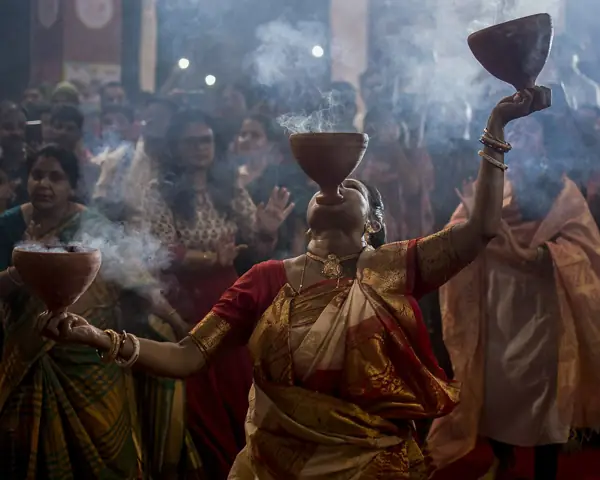 RitualsMaha NavamiMaha Navami 2026 is Tuesday 20 October: the Navami puja, the homa fire offering, khichuri bhog, symbolic offerings in place of sacrifice and dhunuchi naach.
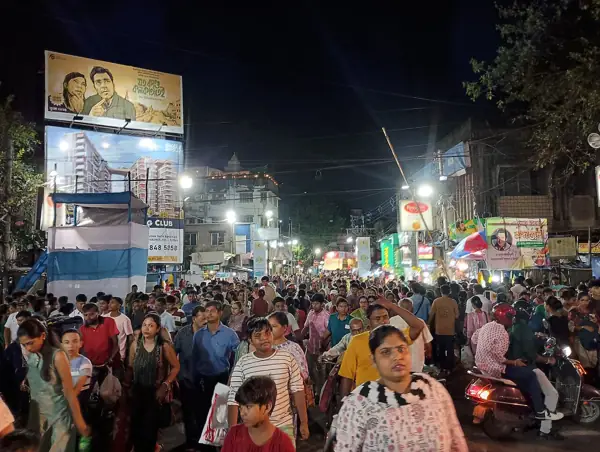 CulturePandal hopping in KolkataPractical Kolkata pandal hopping tips: the best hours to beat crowds, using the Metro, what to carry, kids and elders, safety, and which area is known for what.
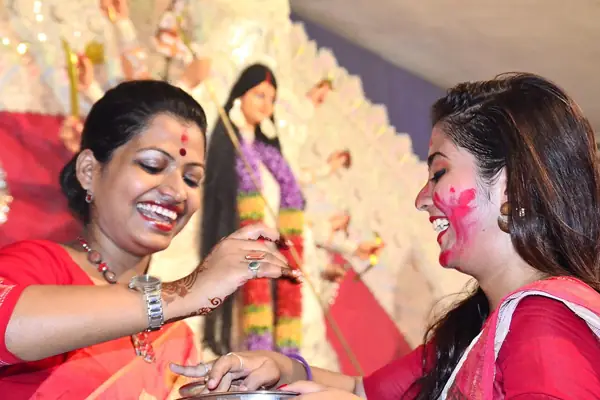 CultureSubho Bijoya and Durga Puja wishesOriginal Subho Bijoya and Durga Puja wishes in Bengali, English and Hindi for family, friends, colleagues and Instagram, plus the custom of pranam and kolakuli.
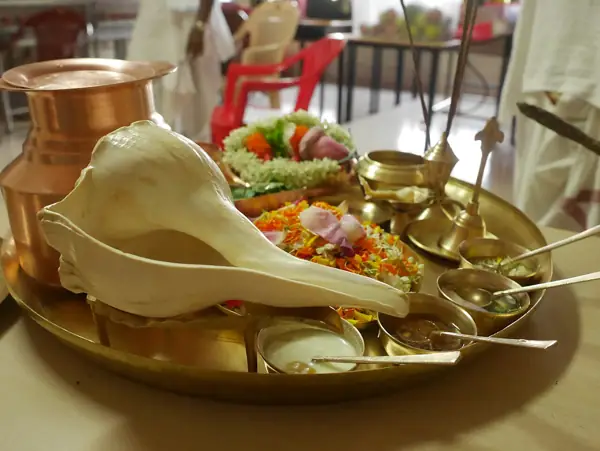 At homeDurga Puja samagri listA complete Durga Puja samagri checklist for home worship: essentials, flowers and leaves, bhog, items for Ashtami anjali and Dashami, plus easy substitutions.