Durga Puja rituals day by day
 Pujo Parikrama team3 min read · Updated
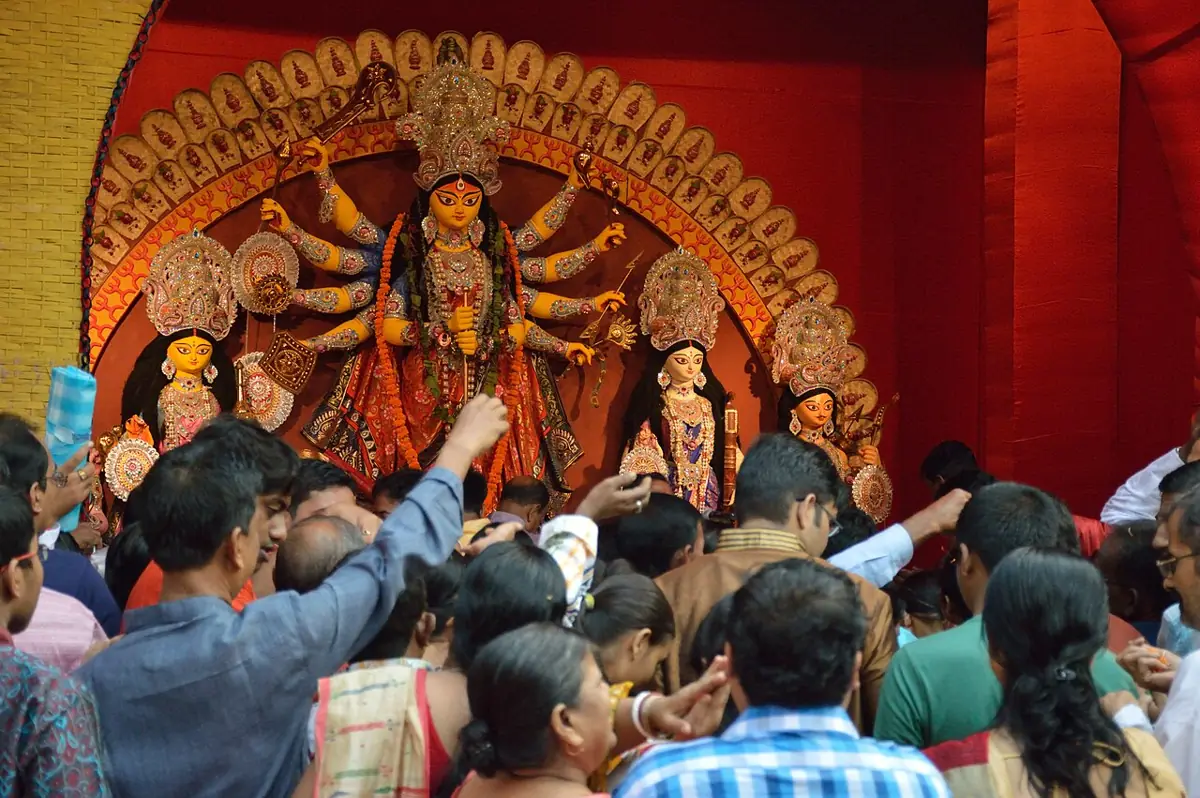
Durga Puja's rituals unfold over about ten days: Mahalaya opens Devi Paksha, Shashthi awakens the goddess (bodhon), Saptami brings the Nabapatrika or Kola Bou, Ashtami has the morning pushpanjali, Kumari Puja and Sandhi Puja, Navami has the homa and bhog, and Bijoya Dashami ends with sindoor khela and immersion. In 2026 Mahalaya falls on Saturday 10 October and Bijoya Dashami on Wednesday 21 October.
 ▶ Photo story · 10 pagesDurga Puja 2026, day by day
In this article 3 sections
At a glance
- Sat 10 Oct
 Mahalaya
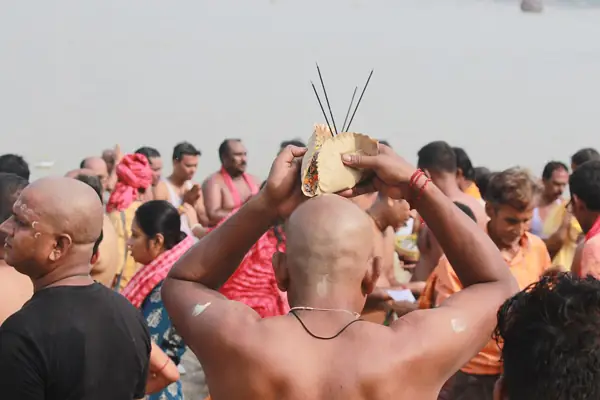
Tarpan for the ancestors at dawn and Mahishasuramardini on the radio: the fortnight of the goddess begins.
- Sat 17 Oct
- Sun 18 Oct
- Mon 19 Oct
- Tue 20 Oct
- Wed 21 Oct
Durga Puja's rituals follow a fixed sequence that runs from Mahalaya, when Devi Paksha (the fortnight of the goddess) begins, to Bijoya Dashami, when she is bid farewell. The main worship takes place over five days, Shashthi to Dashami, and each day has a rite that defines it: the awakening, the arrival of the Kola Bou, the Ashtami anjali and Sandhi Puja, the Navami fire offering, and the Dashami farewell.
The broad order is the same across Bengal, but the exact rites, the moment each one is performed and some of the offerings vary by family, region and the panjika (Bengali almanac) the priest follows. Use this page as a map, and ask your local puja committee or priest for the timings that apply to you.
Durga Puja 2026 at a glance
| Day | 2026 date | Key rituals | Read more |
|---|---|---|---|
| Mahalaya | Saturday 10 October | Tarpan for ancestors at the ghats, Mahishasuramardini on radio, start of Devi Paksha | Mahalaya |
| Shashthi | Saturday 17 October | Kalparambha, bodhon (awakening), amantran and adhivas, unveiling of faces | Shashthi |
| Saptami | Sunday 18 October | Nabapatrika bath and Kola Bou, prana pratishtha, start of the main puja | Saptami |
| Maha Ashtami | Monday 19 October | Pushpanjali, Kumari Puja, Sandhi Puja with 108 lotuses and lamps | Ashtami |
| Maha Navami | Tuesday 20 October | Navami puja, homa (fire offering), bhog, dhunuchi naach at night | Navami |
| Bijoya Dashami | Wednesday 21 October | Darpan bisarjan, boron, sindoor khela, immersion, Bijoya greetings | Dashami |
Panchami, the evening before Shashthi, falls on Friday 16 October 2026. Many pandals open to visitors from Panchami or even earlier. For crowd forecasts by day, see the Durga Puja 2026 dates page.
The sequence, day by day
Mahalaya: the invocation
Mahalaya is the new-moon day that ends Pitri Paksha, the fortnight for ancestors, and begins Devi Paksha. Families offer tarpan (water offerings to ancestors) at the Ganga ghats, and millions of Bengalis wake before dawn to hear the radio programme Mahishasuramardini. In the idol workshops of Kumartuli, the eyes of the goddess are traditionally painted around this day.
Shashthi: the awakening
On Shashthi the goddess is formally awakened in the bodhon rite, traditionally performed beside a bel (wood apple) tree, then invited (amantran) and consecrated (adhivas). In many pandals her face is unveiled this evening.
Saptami: the Kola Bou arrives
At dawn on Saptami a bundle of nine plants, the Nabapatrika or Kola Bou, is bathed in the river or at a ghat, dressed in a sari and placed beside Ganesha. The priest then invokes life into the idol (prana pratishtha) and the main puja begins.
Maha Ashtami: anjali and Sandhi Puja
Ashtami morning brings the most attended pushpanjali, the flower offering. Many places hold Kumari Puja, the worship of a young girl as the goddess. At the junction of Ashtami and Navami comes Sandhi Puja, with 108 lotuses and 108 lamps.
Maha Navami: homa and bhog
Navami has its own puja, a homa or yajna (fire offering) and a large bhog (food offered to the goddess and shared). In the evening the dhunuchi naach is at its most intense, because it is the last full night.
Bijoya Dashami: farewell
On Dashami the goddess is symbolically immersed in a mirror (darpan bisarjan), married women bid her farewell with boron and sindoor khela, and the idols are carried to the river. Then come Bijoya greetings: touching elders' feet, embracing friends and sharing sweets. See Bijoya Dashami wishes.
Where to see the rituals in Kolkata
Old family pujas (bonedi bari) such as Sovabazar Rajbari keep many rites in their older forms, and Bagbazar Sarbojanin is known for a traditional atmosphere and a crowded sindoor khela. The North Kolkata heritage trail links several of these. Read more about bonedi bari pujas, the food and bhog of each day, and the glossary for any term you meet.
If you are new to the festival, start with what Durga Puja is and the story of the goddess Durga.
In this section
- RitualsMahalayaMahalaya 2026 is on Saturday 10 October. What it means: the end of Pitri Paksha, tarpan at the Ganga ghats, the pre-dawn Mahishasuramardini and chokkhu daan.
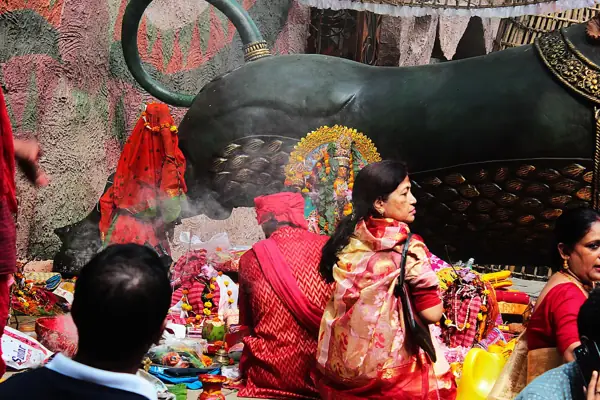 RitualsShashthiShashthi 2026 is Saturday 17 October: Kalparambha, the bodhon awakening of Durga by a bel tree, amantran and adhivas, unveiling of faces and Shashthi fasts.
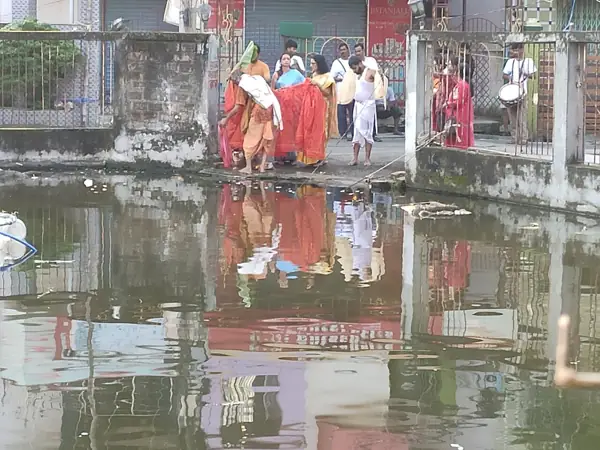 RitualsSaptamiSaptami 2026 is Sunday 18 October: the dawn bath of the Nabapatrika (Kola Bou), its procession from the ghat, prana pratishtha and the start of the main puja.
- RitualsMaha AshtamiMaha Ashtami 2026 is Monday 19 October: the morning pushpanjali, Kumari Puja, Sandhi Puja with 108 lotuses and lamps, fasting until anjali and what people wear.
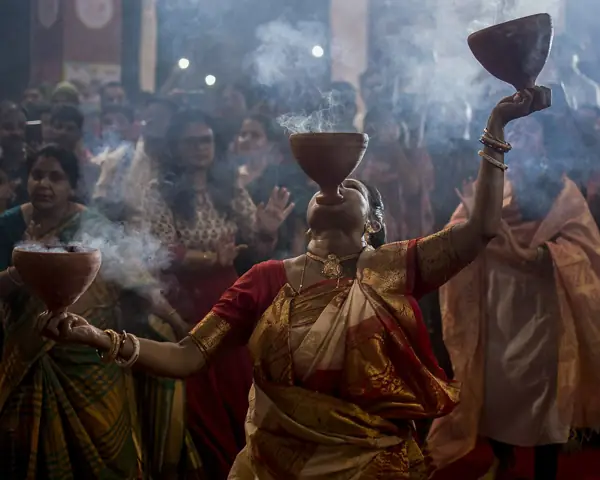 RitualsMaha NavamiMaha Navami 2026 is Tuesday 20 October: the Navami puja, the homa fire offering, khichuri bhog, symbolic offerings in place of sacrifice and dhunuchi naach.
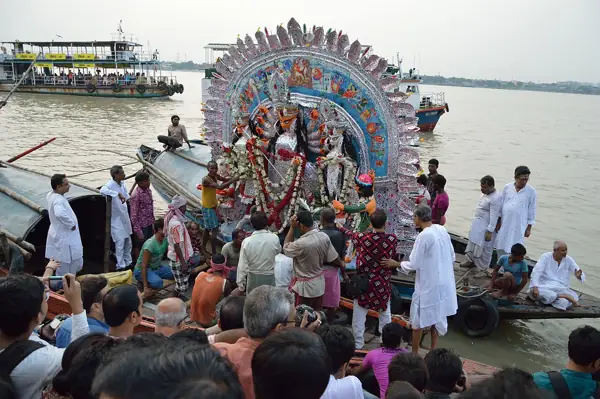 RitualsBijoya DashamiBijoya Dashami 2026 is Wednesday 21 October: darpan bisarjan, boron and sindoor khela, immersion processions, shanti jal and Bijoya greetings explained.
- RitualsDurga Puja pushpanjali mantra, with meaningDurga Puja pushpanjali (anjali) mantras in Bengali and Devanagari with transliteration and meaning: Jayanti Mangala Kali, Sarva Mangala and how to offer.
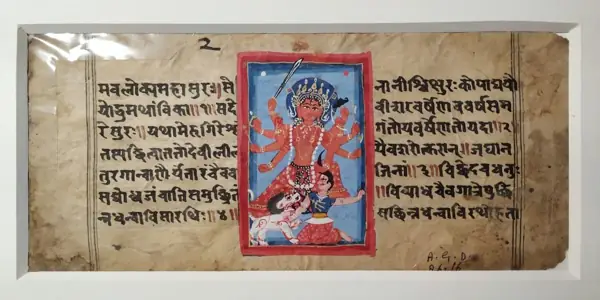 RitualsYa Devi SarvabhuteshuYa Devi Sarvabhuteshu verses from Devi Mahatmya chapter 5 in Devanagari and Bengali with transliteration and meaning, plus when they are recited at Durga Puja.
- RitualsChandi PathChandi Path explained: the Durga Saptashati's 700 verses in 13 chapters, its three episodes, Kavacham, Argala and Kilakam, and how to read or listen at home.
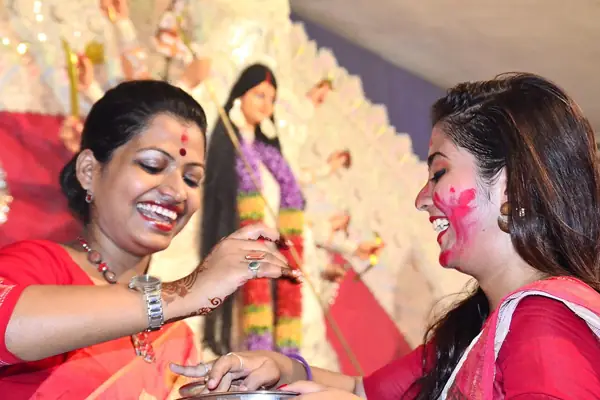 RitualsSindoor khelaSindoor khela is the Bijoya Dashami ritual where women offer vermilion to Durga and smear it on each other: who takes part, how it is done, what to wear.
- RitualsDhunuchi naachDhunuchi naach is Durga Puja's dance with smoking clay incense burners to the dhak, held at evening arati from Saptami to Navami. Its meaning and safety tips.
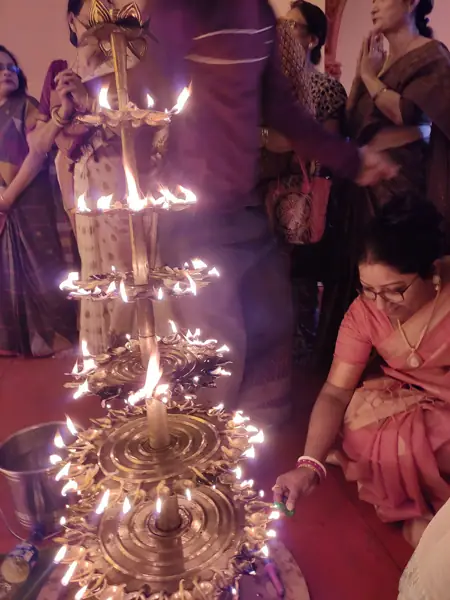 RitualsSandhi PujaSandhi Puja is the worship of Durga as Chamunda in the 48 minutes where Ashtami ends and Navami begins, with 108 lotuses and 108 lamps. Timing and legend.
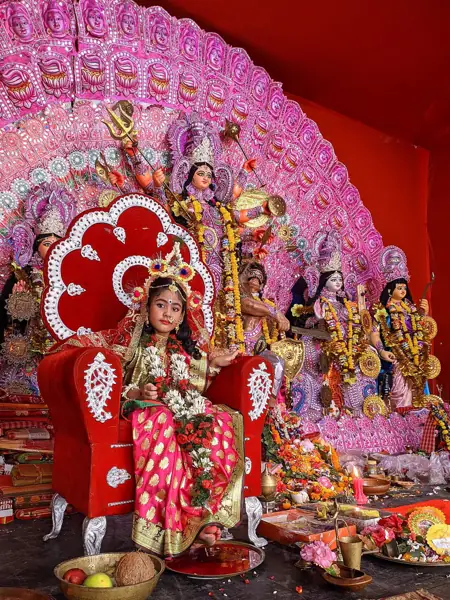 RitualsKumari PujaKumari Puja is the Durga Puja rite in which a young girl is worshipped as the goddess, best known at Belur Math on Maha Ashtami. Its meaning, history and steps.
- RitualsKola BouKola Bou, or Nabapatrika, is the bundle of nine plants worshipped as Goddess Durga on Saptami. The nine plants, their goddesses and why she stands by Ganesha.
See it in Kolkata
- 📍 Bagbazar SarbojaninOne of the oldest sarbojanin pujas. Traditional daker saaj idol, plus a riverside fair.
- 📍 Sovabazar RajbariA bonedi bari puja started by Raja Nabakrishna Deb. The thakurdalan is stunning.
Questions people ask
What is the order of Durga Puja rituals?
Mahalaya comes first, about a week before the main puja. Then come Shashthi (bodhon, the awakening), Saptami (Nabapatrika bath and the start of the main puja), Maha Ashtami (pushpanjali, Kumari Puja, Sandhi Puja), Maha Navami (homa and bhog) and Bijoya Dashami (sindoor khela and immersion).
What are the Durga Puja 2026 dates?
Mahalaya is on Saturday 10 October 2026, Panchami on Friday 16 October, Shashthi on Saturday 17 October, Saptami on Sunday 18 October, Maha Ashtami on Monday 19 October, Maha Navami on Tuesday 20 October and Bijoya Dashami on Wednesday 21 October.
Which is the most important day of Durga Puja?
Many Bengalis treat Maha Ashtami as the heart of the festival because it has the main pushpanjali and the Sandhi Puja, but every day has its own essential rite and none is skipped in a full puja.
Are Durga Puja rituals the same in every home and pandal?
No. The core sequence is shared, but details, timings and some rites differ by family tradition, region and the panjika (almanac) a priest follows.
Can visitors take part in Durga Puja rituals?
Yes, in most community (sarbojanin) pujas anyone can join the pushpanjali, watch the arati and receive bhog. Follow the organisers' instructions, take off shoes near the altar and ask before photographing rites.
Read next
- RitualsMahalayaMahalaya 2026 is on Saturday 10 October. What it means: the end of Pitri Paksha, tarpan at the Ganga ghats, the pre-dawn Mahishasuramardini and chokkhu daan.
- RitualsMaha AshtamiMaha Ashtami 2026 is Monday 19 October: the morning pushpanjali, Kumari Puja, Sandhi Puja with 108 lotuses and lamps, fasting until anjali and what people wear.
- RitualsBijoya DashamiBijoya Dashami 2026 is Wednesday 21 October: darpan bisarjan, boron and sindoor khela, immersion processions, shanti jal and Bijoya greetings explained.
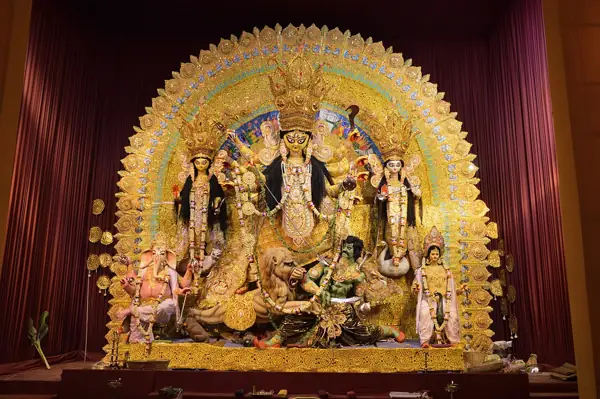 Durga PujaWhat is Durga Puja? The meaning behind the festivalWhat Durga Puja means: the Devi Mahatmya story of Mahishasura, Durga as Shakti, Uma's homecoming, Rama's akal bodhon and why the festival falls in autumn.
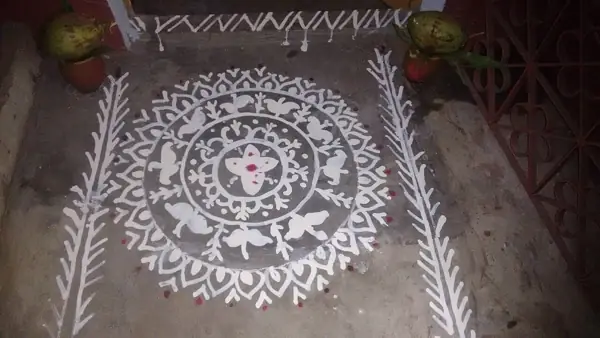 CultureDurga Puja glossaryA Durga Puja glossary: 58 Bengali and Sanskrit words explained, from anjali, bodhon and dhunuchi to sindoor khela, daker saaj, bonedi bari and thakur dekha.