Kumartuli and the making of Durga idols
 Pujo Parikrama team6 min read · Updated
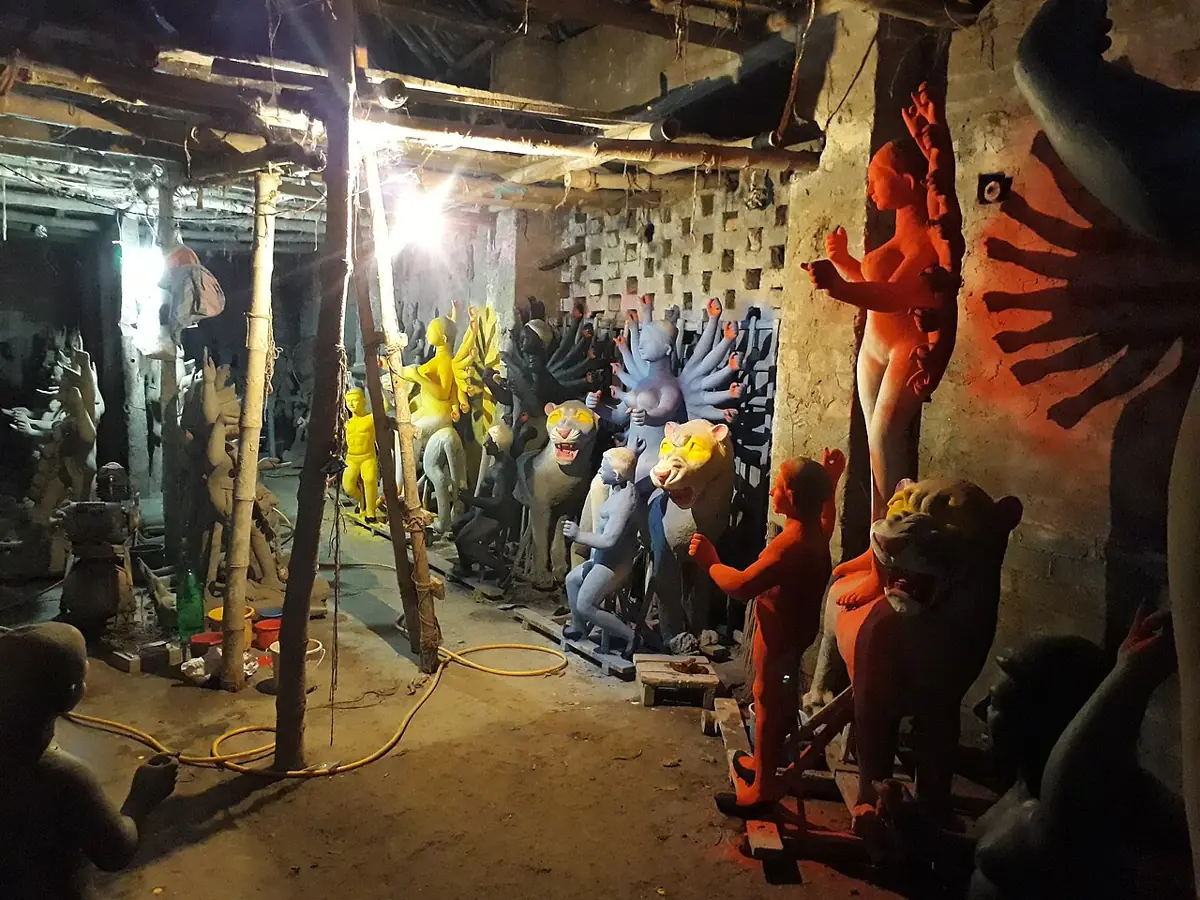
Kumartuli is the potters' quarter of north Kolkata, on the bank of the Hooghly, where hundreds of artisans make clay images of Durga for pujas in the city and abroad. Each image is built on a bamboo and wood frame, shaped in straw, covered in layers of river clay, dried, painted and dressed, with ornaments of shola pith or silver foil. The final step, chokkhu daan or painting the eyes, is traditionally done around Mahalaya. The best time to visit is the month before the puja.
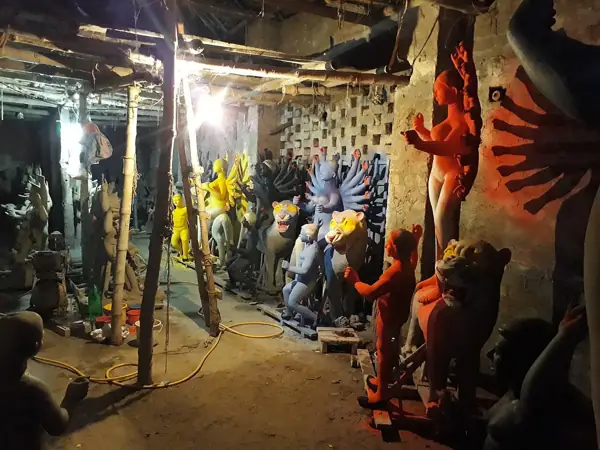 ▶ Photo story · 7 pagesHow Kumartuli makes the goddess
In this article 5 sections
Kumartuli (from kumor, potter, and tuli, quarter) is the old image-makers' neighbourhood of north Kolkata, a maze of narrow lanes beside the Hooghly where a large share of the city's Durga images are made each year. Here artisans turn bamboo, straw and river clay into the goddess and her family over several months, finishing with the painting of her eyes, chokkhu daan, traditionally around Mahalaya. If you want to understand Durga Puja from the inside, a walk through Kumartuli before the festival is one of the best things you can do.
A neighbourhood of image-makers
Potters have worked in this part of north Kolkata since the city's early colonial days. Many families are commonly said to have come from Krishnanagar in Nadia, a historic centre of clay modelling, and the craft is often passed from father to son, with whole families working together. Over time the quarter's workshops have come to supply not just Durga images but those for Kali, Lakshmi, Saraswati, Jagaddhatri, Vishwakarma and other festivals through the year. In recent decades women image-makers have also become well known.
The workshops are mostly small sheds open to the lane, with images in every stage of completion jostling for space. In the weeks before the puja the lanes fill with finished images wrapped in plastic, waiting for their trucks.

How a Durga image is made
Methods differ between workshops, and large theme-pandal images may use other materials entirely, but the traditional clay process follows a clear sequence.
1. The frame (kathamo)
Work starts months before the festival. Many workshops begin with a small ritual, and the kathamo (frame) is built from bamboo and wooden planks to carry the weight of the figures. In a traditional ekchala (single frame) image, the goddess, her four children, the lion and Mahishasura are all built on one frame.
2. Straw bodies
Bundles of rice straw are tied tightly onto the frame with jute string to make the rough shapes of bodies, limbs and animals. This straw skeleton decides the posture and proportions, so the most experienced artisans usually do it.
3. The first layer of clay
The straw is covered with a thick layer of clay from the Hooghly, the local stretch of the Ganga, which is considered sacred. This first coat is commonly mixed with rice husk or chopped straw so that it binds and does not crack as it dries. The images are then left to dry, in the sun when the monsoon allows.
4. Punya mati: the soil from many doorsteps
By tradition, the clay for a Durga image includes small amounts of soil from several places, among them a handful from the doorstep of a house in a red-light district, the homes of sex workers. This is called punya mati (blessed soil). The custom is part of long-standing ritual practice and is still followed by many image-makers and priests, though not all.
Interpretations vary. A common explanation is that those who enter such a house leave their virtue at the threshold, so the soil there becomes pure. Others read the custom as a statement that the goddess embraces every part of society, including those it marginalises. Sex workers' organisations in Kolkata have at times drawn attention to the contradiction between the ritual value placed on their soil and the stigma they face, and have asked for respect and recognition. It is best understood as a living custom with debated meanings.
5. The second, finer layer
Once the first coat is dry and cracks are filled, a smoother layer of finer clay is applied. Strips of cloth soaked in clay are often used to strengthen joints and to model folds. The surface is then rubbed smooth.
6. Heads and hands
Faces are usually made separately in moulds, many of them family heirlooms, and then finished by hand; the artisan's skill shows most clearly in the face. Hands and fingers are also shaped separately and attached. Once everything is fixed and fully dry, the figures are coated with a white base, usually chalk-based, to prepare the surface for paint.
7. Painting
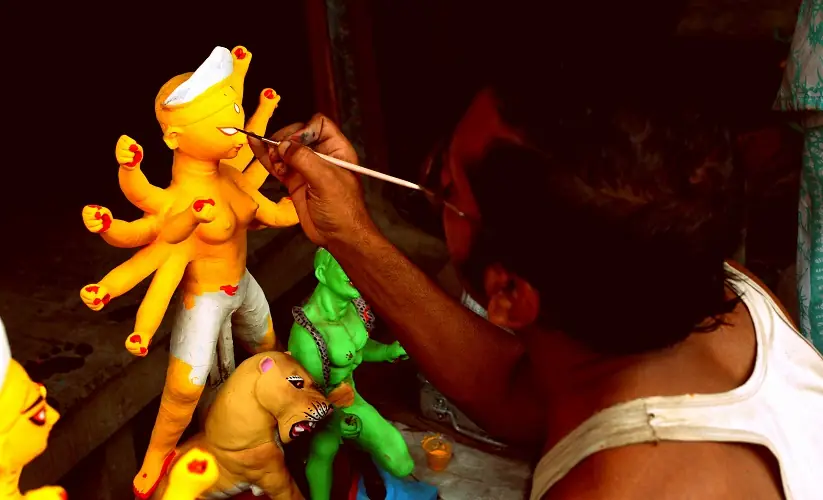
The skin tones go on first: golden for Durga, white for Saraswati, fair for Lakshmi, green for Mahishasura in many images, and so on. Then come the details of lips, brows and decoration, and often a coat of varnish or glaze for shine.
8. Chokkhu daan: giving the eyes
The last brushstrokes are the eyes. Chokkhu daan (gift of eyes) is traditionally performed on or around Mahalaya, in 2026 Saturday 10 October, often by the senior artisan of the workshop. Until the eyes are painted the image is considered unfinished.
9. Dressing and ornaments
Finally the image is dressed in a real sari, with hair of dyed jute, and adorned. Traditional images wear sholar saaj, ornaments carved from white shola pith, or daker saaj, ornaments covered in silvery foil. These are usually made by specialist ornament craftsmen and bought in by the workshops. See the goddess's iconography for what each element means.
The images are then carried out, often on the shoulders of teams of porters, to the trucks that take them to their pandals in the days before Shashthi, which in 2026 is Saturday 17 October.
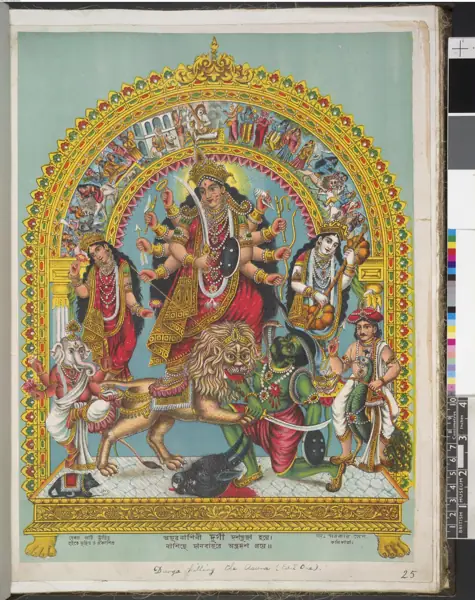 Also readGoddess Durga and her family
Images that travel the world
Kumartuli images are sent to Bengali communities across India and around the world. Clay is heavy and fragile, so images for export are often made of lighter materials such as fibreglass or shola, and they are shipped months in advance, well before the local festival. Many diaspora pujas reuse an image for several years. See Durga Puja around the world.
Visiting Kumartuli: practical tips
- When: the four weeks before the puja are the most rewarding, with the busiest painting and dressing in the fortnight before Mahalaya. During the festival itself most images have already left, but the local pujas are worth seeing.
- Getting there: take the Kolkata Metro to Shobhabazar Sutanuti and walk west towards the river, or arrive by ferry at Kumartuli ghat. See the north Kolkata area guide.
- Time of day: mornings are calmer and the light is better; afternoons are hot and crowded in season.
- What to wear: comfortable closed shoes, as lanes can be muddy and wet from clay work.
- Etiquette: these are workplaces. Ask before photographing people or stepping into a workshop, do not touch the images, and keep clear when images are being moved. Some studios have their own rules for visitors and photographers; follow them.
- Supporting artisans: small clay figures and souvenirs are often for sale, a direct way to support the craft.
Pujas to see nearby
During the festival, Kumartuli's own pujas are known for craftsmanship, as you might expect from a neighbourhood of image-makers. Visit Kumartuli Park, Kumartuli Sarbojanin and nearby Ahiritola Sarbojanin, then continue to Bagbazar and Sovabazar Rajbari. The North Kolkata heritage trail links them in one walk, and our history of Durga Puja explains why this corner of the city matters so much.
See it in Kolkata
- 📍 Kumartuli Park SarbojaninNext door to the idol-makers' quarter. Expect bold, artistic themes every year.
- 📍 Kumartuli SarbojaninWorshipped where the idols are born. Walk the artisan lanes on the way.
- 📍 Ahiritola SarbojaninA riverside neighbourhood puja known for large-scale theme work.
Questions people ask
Where is Kumartuli?
Kumartuli is in north Kolkata, on the east bank of the Hooghly between Sovabazar and Bagbazar. The nearest metro station is Shobhabazar Sutanuti, a short walk away, and Kumartuli ghat is served by river ferries.
When is the best time to visit Kumartuli?
The weeks before the puja, especially the fortnight leading up to Mahalaya, when images are being painted and dressed. In 2026 Mahalaya is on Saturday 10 October; most images leave the workshops in the days before Shashthi on Saturday 17 October.
What clay is used for Durga idols?
Artisans use clay from the bed and banks of the Hooghly, the local stretch of the Ganga, usually a sticky clay for the main body and a finer clay for the surface. It is mixed with straw or rice husk to stop it cracking.
Why is soil from sex workers' homes used in Durga idols?
By tradition a handful of soil from the doorstep of a sex worker's home, called punya mati, is mixed into the clay. A common explanation is that visitors leave their virtue at that threshold, making the soil sacred; others see it as a statement that the goddess belongs to all of society. Its meaning and the way the custom treats the women involved are debated.
Can you take photos at Kumartuli?
Usually yes from the lanes, but the workshops are workplaces. Ask before photographing artisans or entering a studio, keep out of the way of work, and respect any sign asking visitors not to photograph unfinished images.
Read next
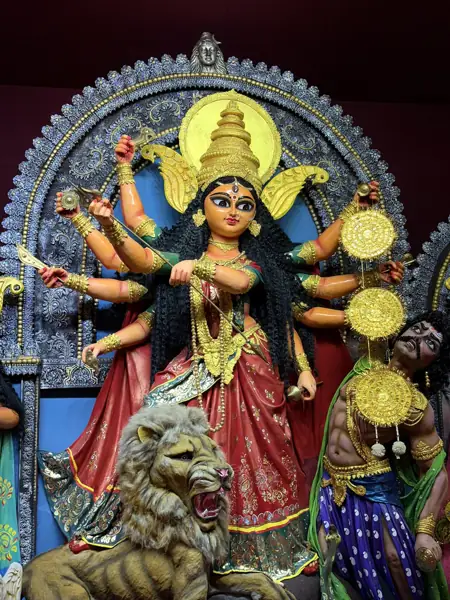
- Durga PujaGoddess Durga and her familyHow to read a Durga Puja image: Durga's ten arms and weapons, the lion, Mahishasura, Lakshmi, Saraswati, Ganesha, Kartik, their vahanas, ekchala and daker saaj.
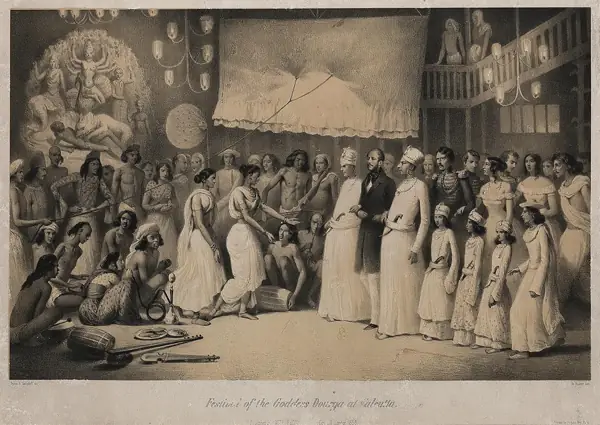 Durga PujaThe history of Durga Puja in BengalHow Durga Puja grew from zamindari and rajbari pujas to barowari and sarbojanin community festivals, theme pandals and UNESCO heritage status in Kolkata.
 Durga PujaDurga Puja and UNESCOIn December 2021 UNESCO inscribed Durga Puja in Kolkata on its intangible cultural heritage list. What the listing means, why it was chosen and what changed.
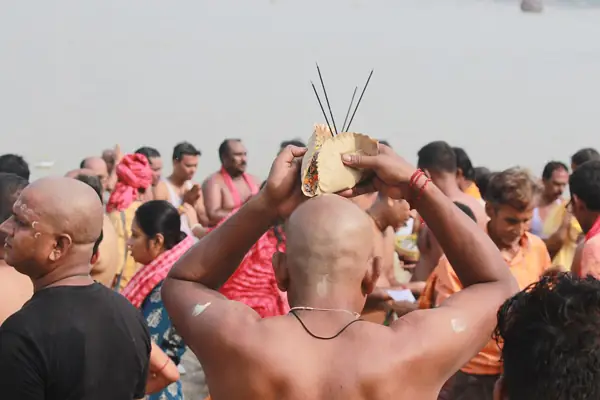 RitualsMahalayaMahalaya 2026 is on Saturday 10 October. What it means: the end of Pitri Paksha, tarpan at the Ganga ghats, the pre-dawn Mahishasuramardini and chokkhu daan.