Durga Puja bhog recipes
 Pujo Parikrama team4 min read · Updated
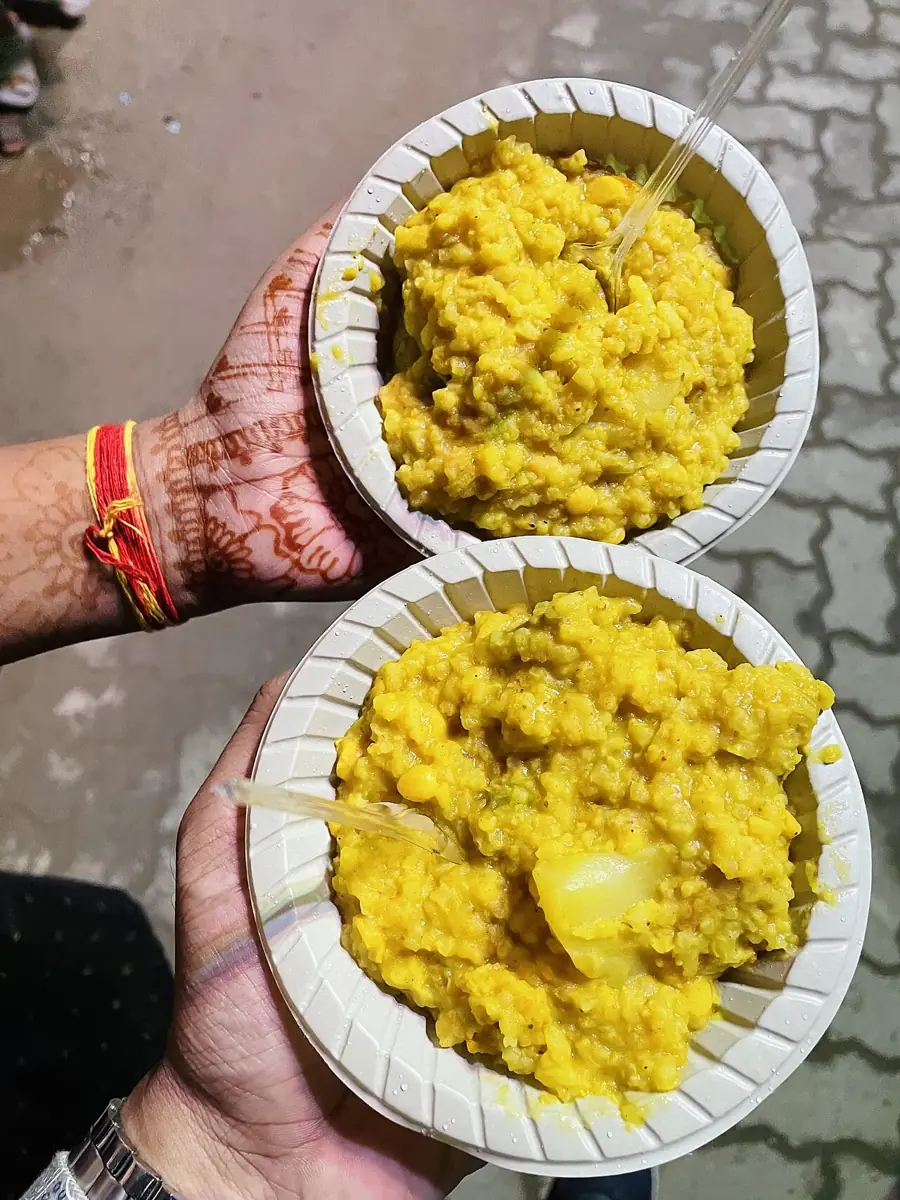
Durga Puja bhog is the vegetarian meal offered to the goddess and then shared as prasad, and the classic Ashtami bhog thali is khichuri, labra, beguni, a sweet tomato chutney and payesh. These recipes recreate that thali at home, along with narkel naru for Bijoya and Lakshmi Puja and luchi with alur dom for Ashtami breakfast. Most are cooked without onion or garlic, as bhog is in many Bengali households.
 ▶ Photo story · 9 pagesThe Durga Puja bhog plate
In this article 6 sections
Durga Puja bhog is food cooked for the goddess, offered during the puja and then shared with everyone present as prasad, food that carries her blessing. The best-known version is the Ashtami bhog thali: soft, ghee-scented khichuri, a mixed vegetable labra, crisp beguni, a sweet-sour tomato chutney and a small bowl of payesh. The recipes on this page let you cook that thali at home, whether you are offering it at a home puja or simply want the taste of the pandal kitchen.
What bhog is
Bhog (offering) is the cooked meal placed before the deity at a set time in the day's puja, usually around midday. Once the priest has offered it, it is no longer just lunch: it is prasad, and it is served to family, neighbours and visitors, often sitting in rows on the floor and eating off sal-leaf plates. At community pujas in Kolkata, volunteers cook bhog in huge pots for hundreds of people, and the queue for a plate on Ashtami is part of the festival. You can read more about this in our guide to Durga Puja food and bhog.
The classic Ashtami bhog thali
Each dish on the thali has a job. Together they balance soft and crisp, savoury and sweet.
| Dish | Role on the plate | Recipe |
|---|---|---|
| Bhoger khichuri | The main dish: gobindobhog rice and roasted moong dal with ghee | Bhoger khichuri |
| Labra | A soft mixed vegetable side, seasoned with panch phoron | Labra |
| Beguni | Crisp, hot fritters for texture | Beguni |
| Chutney | Sweet and tangy, eaten towards the end | Tomato khejur aamsotto chutney |
| Payesh | The sweet finish | Gobindobhog payesh |
Families add or swap dishes freely. Some serve chorchori (a drier mixed vegetable) instead of labra, add a bhaja (fry) of potato or pumpkin, or replace payesh with a shop-bought sweet. Bonedi bari (old family) pujas often keep menus that have been handed down for generations. Treat this thali as typical rather than fixed.
The no-onion, no-garlic convention
In many Bengali households, food offered to the goddess is cooked without onion or garlic, which are considered unsuitable for offerings. Flavour comes instead from ghee, ginger, cumin, bay leaf, dried red chilli, panch phoron (a five-seed mix of fenugreek, nigella, cumin, black mustard and fennel) and a pinch of hing (asafoetida). Every recipe in this section is written that way, including the luchi and alur dom for Ashtami morning. Some families also avoid tomatoes or certain vegetables in bhog; others are relaxed about it. If you are cooking for a home puja, ask whoever leads it what your family follows.
Cooking with devotion
Bhog is cooked with care as well as skill. Common household customs include:
- Bathing and wearing clean clothes before entering the kitchen, and cooking in a freshly cleaned space.
- Using separate, clean utensils kept for puja cooking where possible.
- Keeping bhog apart from food that has already been eaten from, and not serving anyone before the offering is made.
- Not tasting the food before it is offered, because the first taste belongs to the goddess. Many cooks season by measurement and experience for this reason. Other families do not follow this rule, and tasting customs vary widely.
None of this needs to be elaborate. A clean kitchen, a calm mind and attention to the food are at the heart of it. If you are planning a full home puja, our Durga Puja at home guide and samagri list cover the rest.
All recipes
- Bhoger khichuri: gobindobhog rice and roasted moong dal, the centre of the Ashtami thali.
- Labra: mixed vegetables with panch phoron.
- Gobindobhog payesh: rice slow-cooked in milk, with a nolen gur variation for winter.
- Beguni: aubergine slices in gram-flour batter.
- Tomato khejur aamsotto chutney: sweet tomato chutney with dates and dried mango.
- Narkel naru: coconut and jaggery balls for Bijoya and Kojagari Lakshmi Puja.
- Luchi and alur dom: puffed fried bread with a potato curry, an Ashtami breakfast.
Planning the cooking
If you are cooking the full thali for a home puja on Ashtami or Navami, work backwards from the offering time. The chutney and naru can be made a day ahead. Payesh can be made in the early morning and left to cool. Start the labra and khichuri about an hour and a half before the offering, and fry the beguni last so it is still crisp when the plate goes before the goddess.
In this section
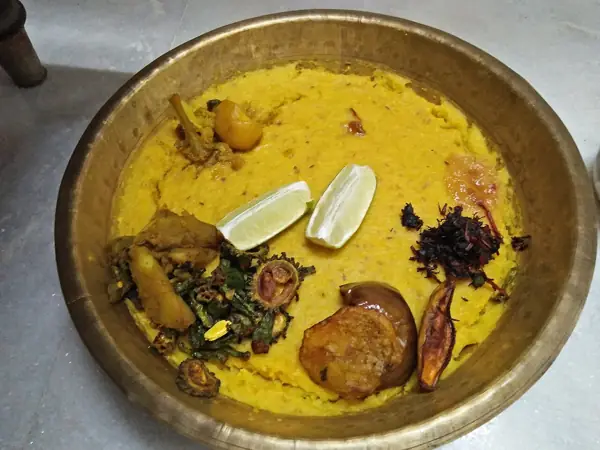 Recipes · 1 h 10 minBhoger khichuriBhoger khichuri recipe with gobindobhog rice, roasted moong dal, ghee, whole spices and ginger, no onion or garlic, just like Durga Puja Ashtami bhog. Serves 4.
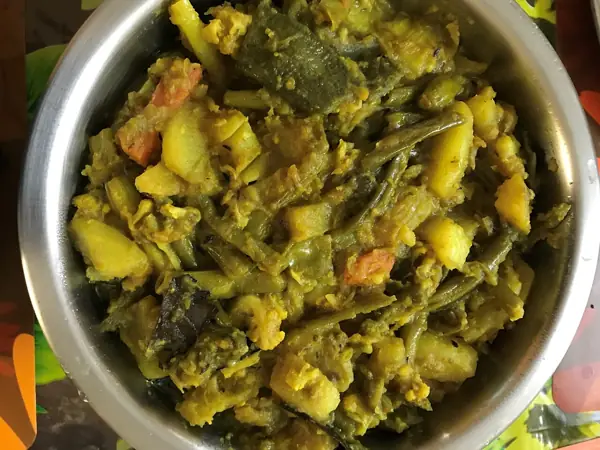 Recipes · 55 minLabraLabra torkari recipe: pumpkin, potato, radish, aubergine and greens cooked soft with panch phoron and ginger, no onion or garlic, as served with khichuri bhog.
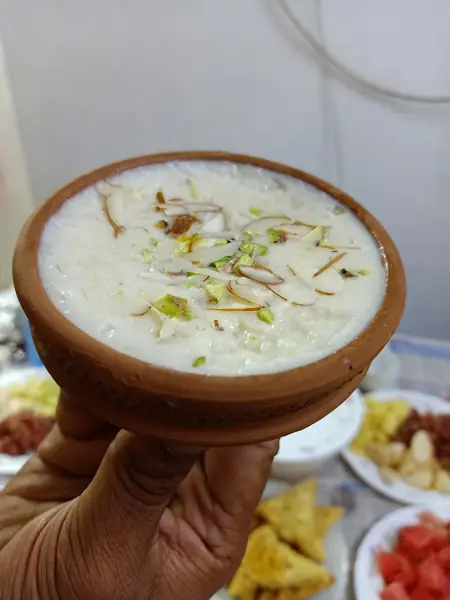 Recipes · 1 h 10 minGobindobhog payeshGobindobhog payesh recipe: fragrant rice simmered in whole milk with bay leaf, cardamom and sugar, the sweet end of Durga Puja bhog, plus a nolen gur version.
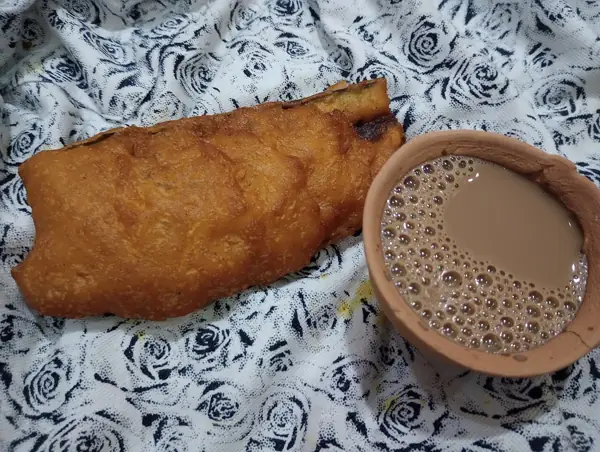 Recipes · 35 minBeguniBeguni recipe: thin aubergine slices dipped in a spiced besan and rice-flour batter and fried crisp, the hot fritter served with khichuri in Durga Puja bhog.
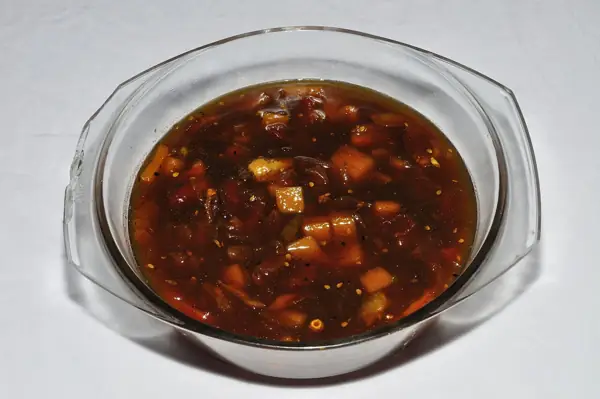 Recipes · 40 minTomato khejur aamsotto chutneyBengali tomato chutney with khejur (dates) and aamsotto (dried mango), tempered with panch phoron: the sweet-sour chutney of the Durga Puja bhog plate. Vegan.
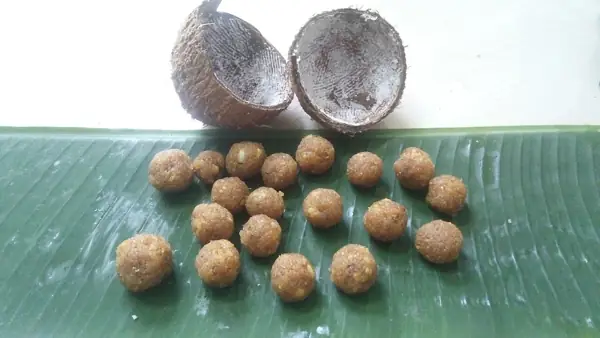 Recipes · 50 minNarkel naruNarkel naru recipe: fresh grated coconut cooked with jaggery and cardamom and rolled into balls, the classic home sweet for Bijoya Dashami and Lakshmi Puja.
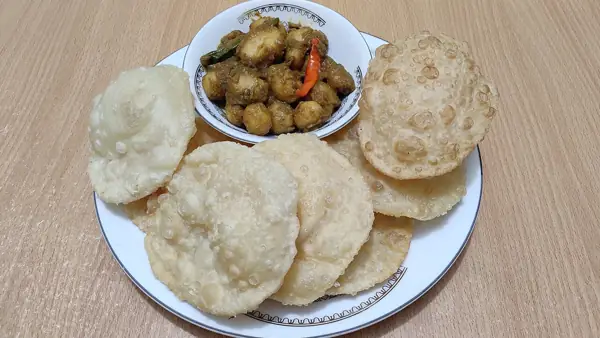 Recipes · 1 h 20 minLuchi and alur domLuchi and alur dom recipe without onion or garlic: puffed maida luchi with a ginger-spiced baby potato curry, the Durga Puja Ashtami breakfast in many homes.
Questions people ask
What is in a Durga Puja bhog thali?
A typical Ashtami bhog thali has bhoger khichuri, labra (mixed vegetables), beguni or another fritter, a sweet tomato chutney and payesh. Menus vary between families and puja committees, and some serve plain rice, dal and vegetables instead.
Why is bhog cooked without onion and garlic?
Many Bengali households treat onion and garlic as unsuitable for food offered to the deity, so bhog is cooked with ginger, whole spices, ghee and asafoetida instead. It is a widely followed convention rather than a universal rule, so follow your own family's practice.
Can I taste bhog while cooking it?
In many homes the cook does not taste bhog before it is offered, because the first taste belongs to the goddess, and seasoning is judged by eye and experience. Other families are less strict; follow the custom of your household or puja.
Which day is khichuri bhog served at Durga Puja?
Khichuri bhog is most closely associated with Maha Ashtami, though many pujas serve it on Saptami and Navami as well. In 2026, Maha Ashtami falls on Monday 19 October.
Read next
- CultureDurga Puja foodWhat people eat at Durga Puja: khichuri bhog, labra, payesh, phuchka, rolls, mughlai paratha, rosogolla and sandesh, plus why bhog is shared and eaten together.
 RitualsMaha AshtamiMaha Ashtami 2026 is Monday 19 October: the morning pushpanjali, Kumari Puja, Sandhi Puja with 108 lotuses and lamps, fasting until anjali and what people wear.
 RitualsMaha NavamiMaha Navami 2026 is Tuesday 20 October: the Navami puja, the homa fire offering, khichuri bhog, symbolic offerings in place of sacrifice and dhunuchi naach.
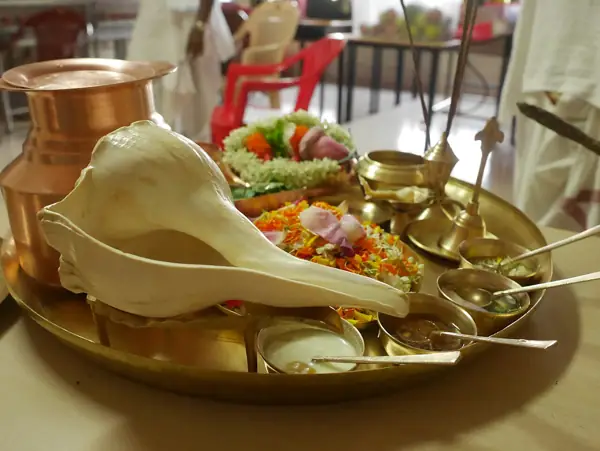 At home · 12 stepsHow to do Durga Puja at homeA simple, respectful way to do Durga Puja at home: setting up a ghat, sankalpa, offerings, aarti, Ashtami anjali and Dashami visarjan, with a supplies list.
- Recipes · 1 h 10 minBhoger khichuriBhoger khichuri recipe with gobindobhog rice, roasted moong dal, ghee, whole spices and ginger, no onion or garlic, just like Durga Puja Ashtami bhog. Serves 4.
- Recipes · 1 h 10 minGobindobhog payeshGobindobhog payesh recipe: fragrant rice simmered in whole milk with bay leaf, cardamom and sugar, the sweet end of Durga Puja bhog, plus a nolen gur version.