Gobindobhog payesh: Bengali rice kheer for bhog
 Pujo Parikrama team3 min read · Updated
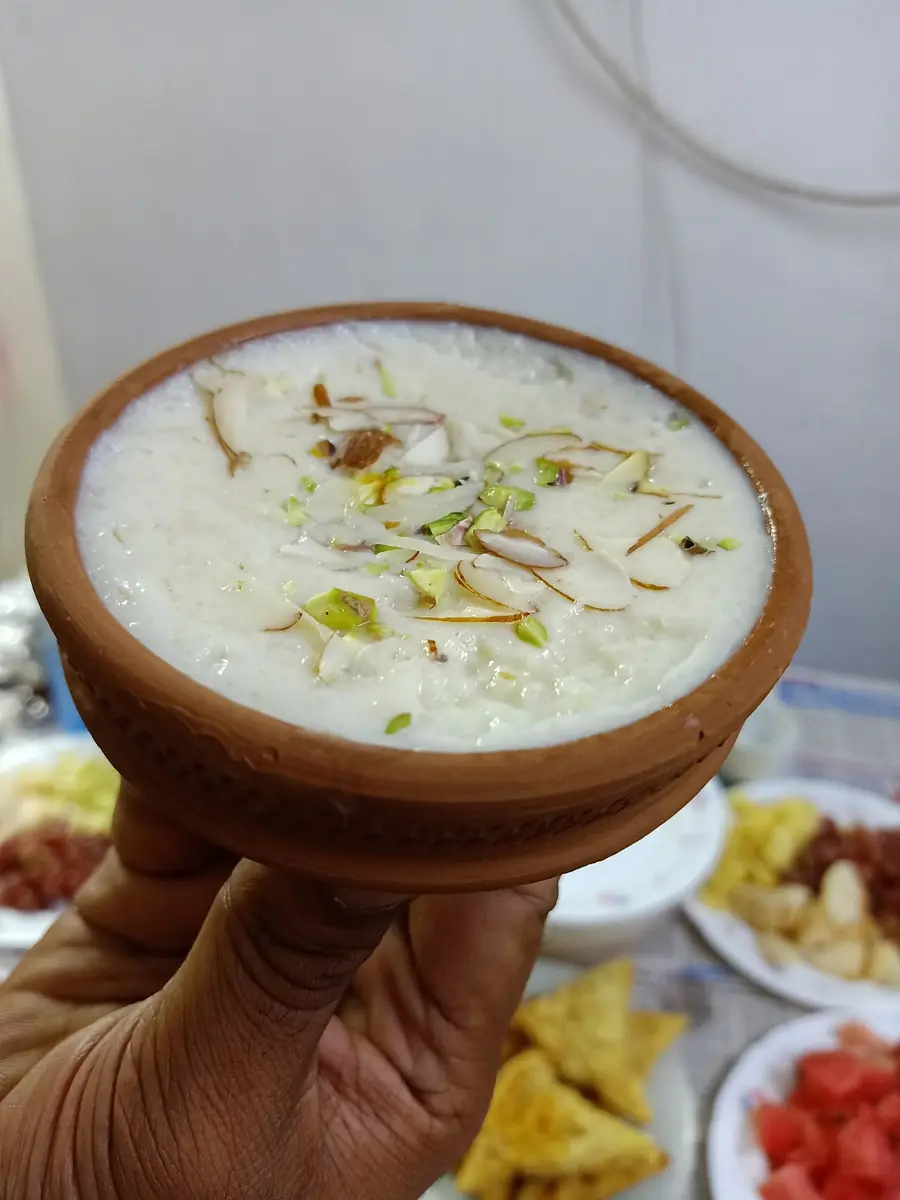
Payesh is Bengal's rice pudding, made by slowly simmering fragrant gobindobhog rice in full-fat milk with bay leaf, cardamom and sugar until creamy. It is the sweet that ends the Durga Puja bhog plate and is also cooked for birthdays and other auspicious days. This recipe serves four; in winter, many families make it with nolen gur (new date-palm jaggery) instead of sugar.
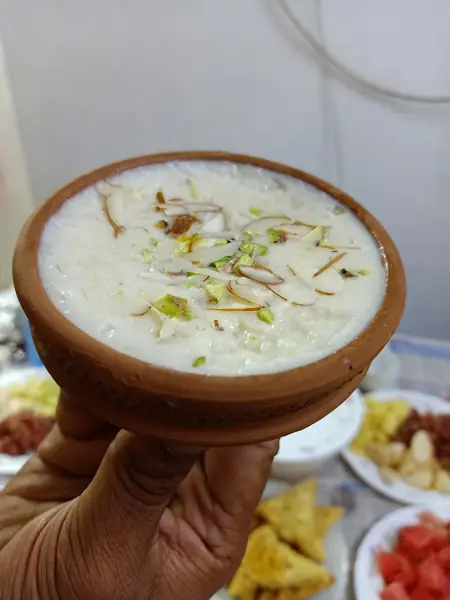 ▶ Photo story · 9 pagesGobindobhog payesh: Bengali rice kheer for bhog
In this article 5 sections
- Serves
- 4 servings
- Prep
- 20 min
- Cook
- 50 min
- Total
- 1 h 10 min
- Diet
- Vegetarian
Ingredients
Tick them off as you go; ticks stay on this phone.
Method
- Wash and soak the rice
Wash the gobindobhog rice in two changes of water, drain, and spread it on a plate to dry for 15 minutes. Rub it with the ghee so the grains are lightly coated.
- Boil the milk
Pour the milk into a heavy-based, wide pan, add the bay leaf and cardamom and bring to a boil over medium heat, stirring so it does not catch on the bottom.
- Add the rice
Add the ghee-coated rice, lower the heat to low-medium and simmer, stirring and scraping the bottom and sides every 2–3 minutes.
- Cook the rice soft
Keep simmering for 30–35 minutes, until the rice is completely soft and breaks when pressed between your fingers and the milk has reduced by about a third.
- Add sugar
Add the sugar and the pinch of salt and stir for another 8–10 minutes on low heat. The sugar loosens the payesh at first, then it thickens again to a pouring-cream consistency.
- Add nuts and raisins
Stir in the cashews and raisins and cook for 2 minutes more, then turn off the heat and remove the bay leaf.
- Rest and serve
Let the payesh stand for 15 minutes before offering; it thickens considerably as it cools. Serve warm, at room temperature or chilled.
Payesh is the sweet note that closes the Durga Puja bhog plate. After khichuri, labra and chutney comes a small bowl of creamy rice cooked in milk, scented with bay leaf and cardamom. It is one of the oldest sweets in Bengali cooking and, with only a few ingredients, depends on patience more than skill.
Its place in the puja
Milk, rice and sugar are among the purest foods in Hindu offering traditions, and payesh appears at many auspicious moments in Bengali life: a child's first rice ceremony, birthdays, and the bhog on Ashtami and Navami. At community pujas it is often cooked in large brass or aluminium pots and served in small portions at the end of the meal. In homes, some families offer payesh in a separate bowl alongside the main bhog. Read more in our Durga Puja food and bhog guide.
Tips for success
- Use full-fat milk. Low-fat milk gives a thin, watery payesh. Full-fat cow's milk reduces to a rich, naturally creamy base.
- Choose a wide, heavy pan. A wider surface reduces the milk faster, and a thick base helps stop scorching. A non-stick pan is a good choice if you are new to it.
- Keep the ratio. About 50 g of rice to 1 litre of milk gives a pourable payesh. More rice makes it thick and stodgy once it cools.
- Cook the rice fully before adding sugar. Sugar slows the softening of rice. If you add it too early, the grains stay firm.
- Stir and scrape. Run the spoon along the bottom and the sides of the pan; the skin that forms on the sides can be scraped back in for extra richness.
- Remember it thickens. Turn off the heat while the payesh still looks a little thinner than you want.
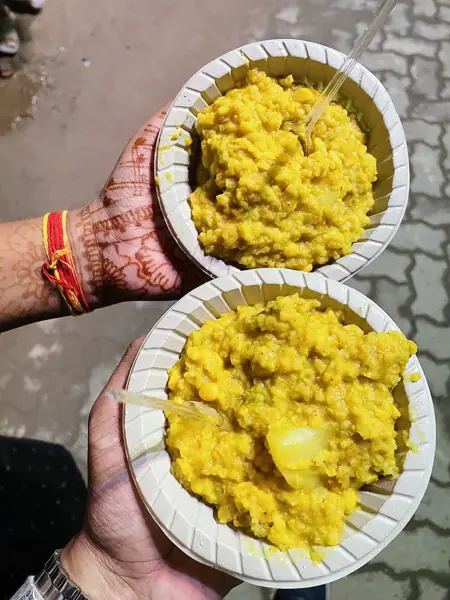 Also readDurga Puja bhog recipes
The nolen gur variation
In winter, from around November to January, Bengal's markets fill with nolen gur, the new season's date-palm jaggery. Nolen gurer payesh is made with it in place of sugar and has a deep, smoky, caramel flavour. Since Durga Puja normally comes before the season, this is a version for later in the year. Cook the rice in milk as above, turn off the heat, wait 5 minutes and stir in about ½ cup of grated gur (or 3–4 tbsp liquid jhola gur). Do not boil it again, or the milk may split.
Other variations
- Saffron: a few strands soaked in warm milk, added with the sugar, give a pale gold colour.
- Less sweet: reduce the sugar to ¼ cup (50 g) if you prefer, or if you are serving it alongside other sweets.
- Thickened milk: for a richer festive payesh, reduce 1.25 litres of milk for 10 minutes before adding the rice.
- Nuts: pistachios or almonds can replace cashews.
Storing and serving
Payesh keeps in a covered container in the fridge for up to 3 days. It sets thicker when cold; stir in a few spoons of warm milk to loosen it. Many people love it chilled on a warm October afternoon, while others prefer it just warm. Serve in small bowls after the meal, or as part of the bhog thali with narkel naru or another sweet alongside.
Questions people ask
What is the difference between payesh and kheer?
Payesh is the Bengali name for rice cooked in milk and sugar, the dish known as kheer in much of north India. Bengali payesh is usually made with small, fragrant gobindobhog rice and flavoured with bay leaf and cardamom.
How do I make nolen gurer payesh?
Cook the payesh exactly as above but leave out the sugar. When the rice is soft, turn off the heat, let it cool for 5 minutes, then stir in about ½ cup grated nolen gur. Adding gur to very hot milk can make it curdle.
Why did my payesh curdle?
Payesh usually curdles when jaggery is added to boiling milk or when the milk is not fresh. Use fresh full-fat milk, and add gur only after the pan has cooled slightly.
Which rice is best for payesh?
Gobindobhog rice is the classic choice for Bengali payesh because its short grains turn creamy and fragrant. Kalijeera rice works well too, and basmati broken into pieces is a reasonable substitute.
Read next
- RecipesDurga Puja bhog recipesHome recipes for the Durga Puja bhog thali: bhoger khichuri, labra, beguni, tomato chutney, payesh, narkel naru and luchi alur dom, mostly no onion or garlic.
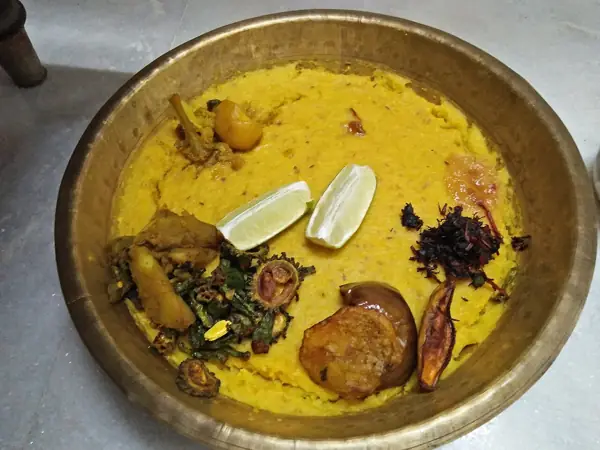 Recipes · 1 h 10 minBhoger khichuriBhoger khichuri recipe with gobindobhog rice, roasted moong dal, ghee, whole spices and ginger, no onion or garlic, just like Durga Puja Ashtami bhog. Serves 4.
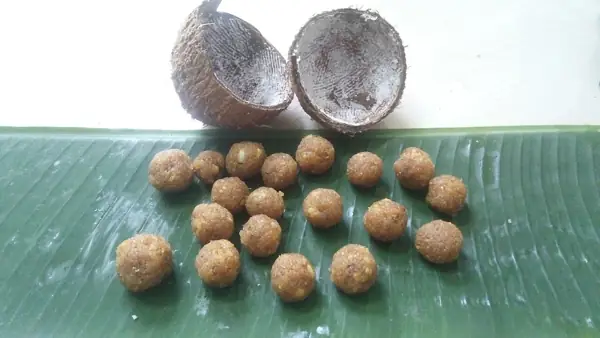 Recipes · 50 minNarkel naruNarkel naru recipe: fresh grated coconut cooked with jaggery and cardamom and rolled into balls, the classic home sweet for Bijoya Dashami and Lakshmi Puja.
- CultureDurga Puja foodWhat people eat at Durga Puja: khichuri bhog, labra, payesh, phuchka, rolls, mughlai paratha, rosogolla and sandesh, plus why bhog is shared and eaten together.
 RitualsMaha AshtamiMaha Ashtami 2026 is Monday 19 October: the morning pushpanjali, Kumari Puja, Sandhi Puja with 108 lotuses and lamps, fasting until anjali and what people wear.
 RitualsMaha NavamiMaha Navami 2026 is Tuesday 20 October: the Navami puja, the homa fire offering, khichuri bhog, symbolic offerings in place of sacrifice and dhunuchi naach.