Bhoger khichuri: Durga Puja khichuri bhog
 Pujo Parikrama team3 min read · Updated
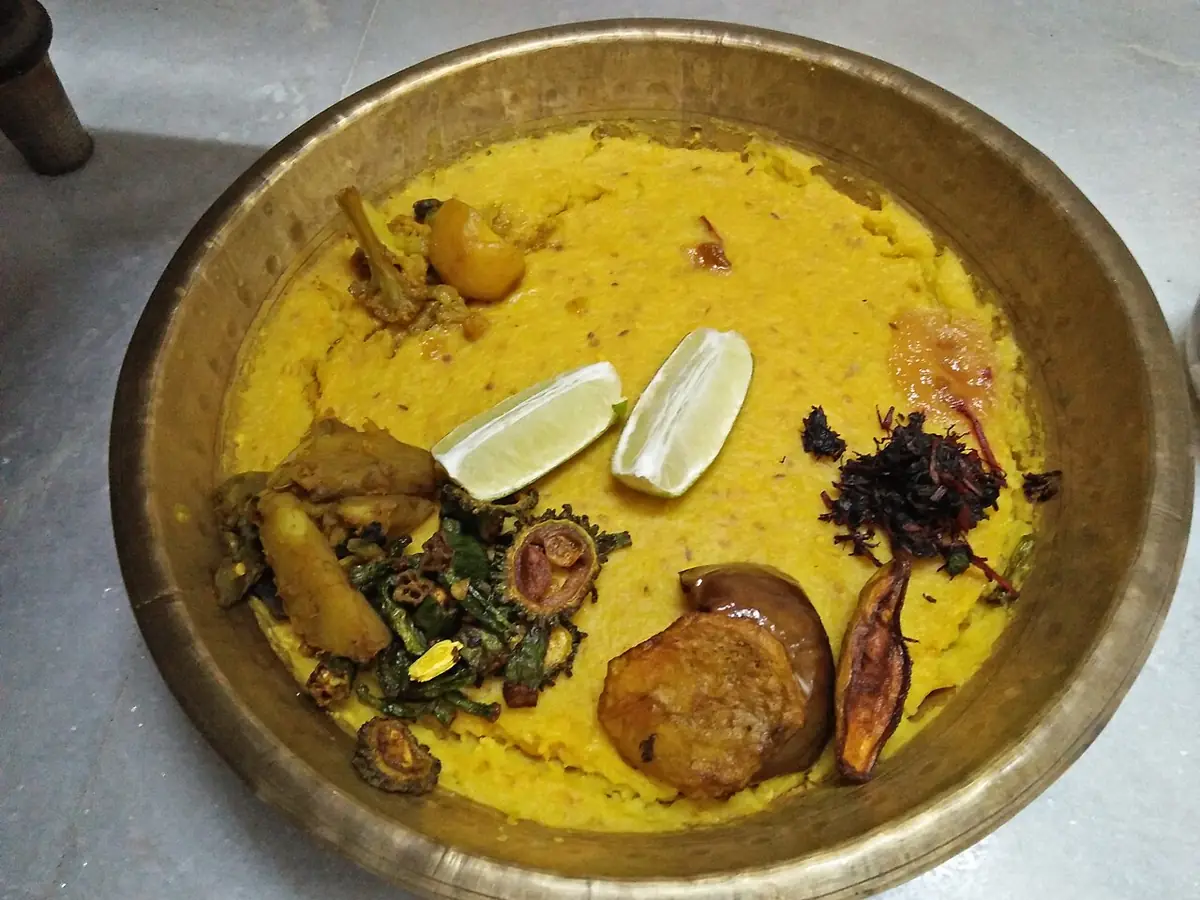
Bhoger khichuri is the rice-and-lentil dish at the heart of Durga Puja bhog, cooked on Ashtami and other puja days and offered to the goddess before it is shared. It is made with fragrant gobindobhog rice and dry-roasted yellow moong dal, simmered with ghee, ginger and whole spices, and cooked without onion or garlic. This recipe serves four and takes about an hour.
 ▶ Photo story · 10 pagesBhoger khichuri: Durga Puja khichuri bhog
In this article 5 sections
- Serves
- 4 servings
- Prep
- 25 min
- Cook
- 45 min
- Total
- 1 h 10 min
- Diet
- Vegetarian
Ingredients
Tick them off as you go; ticks stay on this phone.
Method
- Roast the moong dal
Put the dry moong dal in a heavy-based pan over medium-low heat and stir constantly for 6–8 minutes, until it turns light golden and smells nutty. Tip it into a bowl so it does not keep browning.
- Wash and soak
Wash the roasted dal and the gobindobhog rice together in two or three changes of water until the water runs nearly clear. Drain and leave to rest for 15 minutes.
- Fry the vegetables
Heat 2 tbsp ghee in a large heavy pot over medium heat. Fry the potato and cauliflower with a pinch of turmeric and salt for 4–5 minutes until lightly golden at the edges, then lift them out.
- Temper the spices
Add 1 tbsp more ghee to the pot. Add the bay leaves, cumin seeds, dried red chillies, cardamom, cloves and cinnamon and stir for 30 seconds until the cumin crackles.
- Add ginger and ground spices
Add the ginger and green chillies and stir for 1 minute. Add the turmeric and ground cumin with 2 tbsp water and cook for another minute until the ghee separates.
- Sauté the rice and dal
Add the drained rice and dal and stir gently over medium heat for 2–3 minutes so every grain is coated in ghee.
- Simmer
Pour in 5 cups of the hot water, add the salt and bring to a boil. Lower the heat, cover partly and simmer for 15 minutes, stirring every few minutes so nothing catches.
- Add vegetables and finish cooking
Add the fried potato, cauliflower and peas, the sugar and the remaining cup of hot water. Simmer for another 10–12 minutes, stirring often, until the rice and dal are soft and the khichuri is thick but still flows off the spoon.
- Finish with ghee
Turn off the heat, stir in the last 1 tbsp ghee, cover and rest for 5 minutes. Offer and serve hot; it thickens as it stands, so loosen with a splash of hot water if needed.
Bhoger khichuri is the dish most Bengalis think of first when they think of Durga Puja. It is the warm, soft, golden centre of the bhog plate, the thing volunteers ladle out of huge pots at community pujas on Maha Ashtami, and the dish families cook at home when the puja comes to their own altar. This recipe makes a home-sized pot for four.
Its place in the puja
Bhog is food offered to the goddess before anyone eats it. Khichuri suits that role well: it is a complete, nourishing meal in a single pot, it can be cooked in quantity, and it is made from simple, "pure" ingredients, rice, lentils, ghee and spices, without onion or garlic. Once offered, it becomes prasad, and eating it together, seated in rows, is part of the festival. Many pujas serve khichuri on Saptami and Navami as well as Ashtami; in 2026, Maha Ashtami falls on Monday 19 October. On the plate it is joined by labra, beguni, tomato chutney and payesh. See our Durga Puja food and bhog guide for the wider story.

Tips for success
- Roast the dal patiently. Medium-low heat and constant stirring give an even golden colour. If some grains darken to brown, the dal will taste bitter, so start again rather than carry on.
- Use gobindobhog rice. This small-grained, naturally fragrant rice from Bengal turns creamy and gives bhoger khichuri its distinctive aroma. You will find it at Indian grocers and online.
- Use hot water. Adding cold water to the pot shocks the grains and slows cooking. Keep a kettle of hot water nearby for adjusting the consistency.
- Stir and scrape. Khichuri catches easily once it thickens. A heavy-based pot and a flat-edged spoon help.
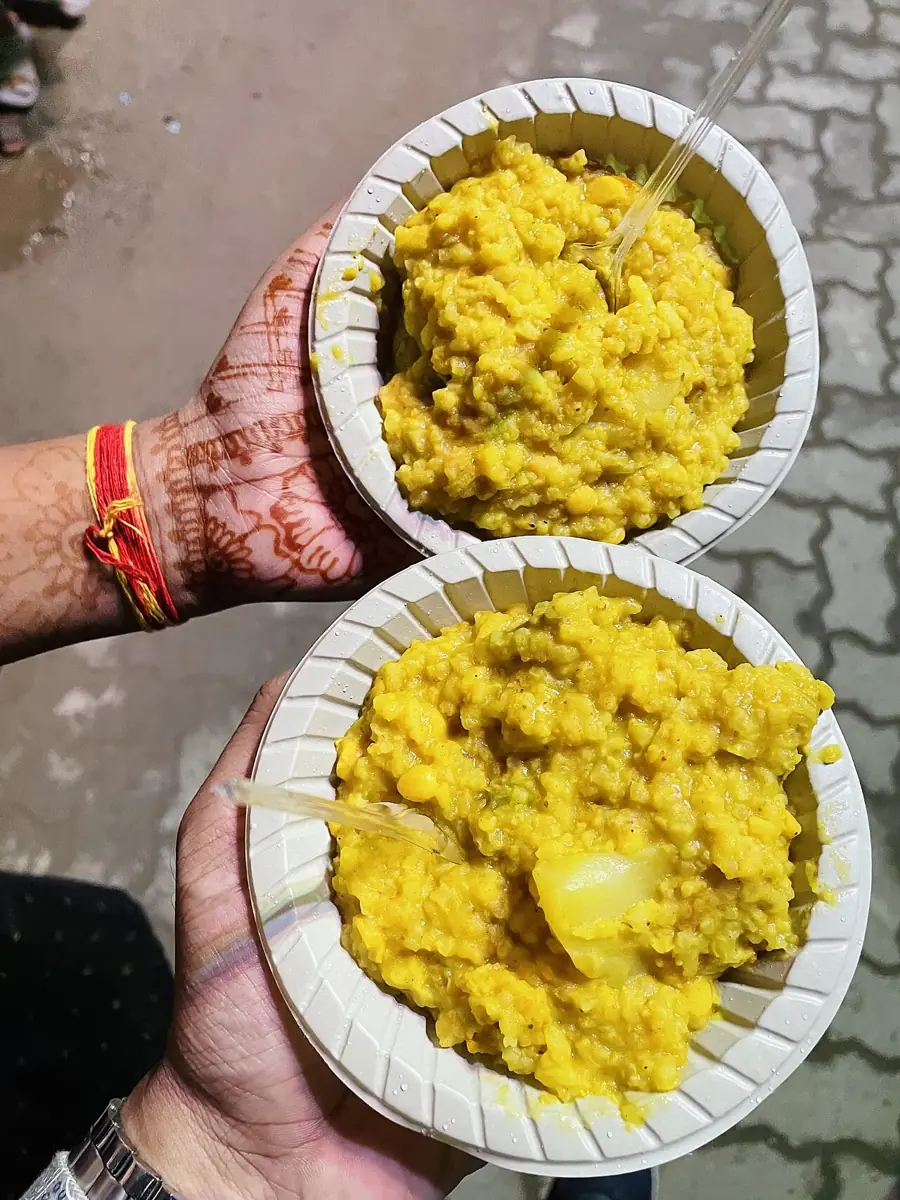
- Aim for "flowing" khichuri. Pandal-style bhoger khichuri is loose enough to spread slowly on the plate, not a stiff mound. It firms up a great deal as it cools.
- Season with care. In many homes the cook does not taste bhog before it is offered, so measure the salt rather than guessing. The small amount of sugar is traditional and rounds out the flavour without making it sweet.
 Also readDurga Puja bhog recipes
Variations
- Plain khichuri: leave out the vegetables entirely for the simplest version, as some family pujas prefer.
- Seasonal vegetables: add small cubes of pumpkin, a few pieces of sweet potato or a handful of green beans with the potato.
- Extra fragrance: finish with a pinch of ground garam masala or a few cashews and raisins fried in ghee.
- Hing: a small pinch of asafoetida in the tempering adds depth, a common addition in no-onion cooking.
- Fasting days: khichuri made from rice and lentils is not suitable for every fast; check the Navratri fasting rules or your family's custom.
Storing and reheating
Khichuri is best eaten within a few hours. Leftovers keep, covered, in the fridge for up to 2 days. It sets firm when cold: reheat gently in a pan with a few tablespoons of hot water per serving, stirring until it loosens, and add a small spoon of ghee. Prasad is usually eaten the same day rather than stored for long.
Serving
Serve hot, with a spoonful of ghee on top, alongside labra and a crisp beguni. Bhog is traditionally eaten with the right hand from a sal-leaf or steel plate. Leave chutney and payesh for the end of the meal, and if you are serving prasad after a home puja, offer it to guests before family members take their own plates.
Questions people ask
What is the difference between bhoger khichuri and ordinary khichuri?
Bhoger khichuri is cooked as an offering, so it is made without onion and garlic, usually with roasted moong dal, gobindobhog rice and generous ghee. Everyday khichuri may use other lentils, onions and garlic, and is not offered first.
Can I make bhoger khichuri without gobindobhog rice?
Yes. Any short-grain fragrant rice works, such as kalijeera or a short-grain sona masuri. Basmati gives a less creamy, more separate texture, so add an extra half cup of water and cook a little longer.
Why is moong dal roasted for khichuri?
Dry-roasting moong dal gives bhoger khichuri its nutty aroma and golden colour, and it helps the dal hold some shape instead of turning to paste. Stop when it is light golden; dark dal tastes bitter.
Can I make bhoger khichuri in a pressure cooker?
Yes. Follow the steps up to adding the rice and dal, add the vegetables and 4½ cups hot water, and cook for 2 whistles on medium heat. Let the pressure drop naturally, then loosen with hot water and stir in the final ghee.
Read next
- RecipesDurga Puja bhog recipesHome recipes for the Durga Puja bhog thali: bhoger khichuri, labra, beguni, tomato chutney, payesh, narkel naru and luchi alur dom, mostly no onion or garlic.
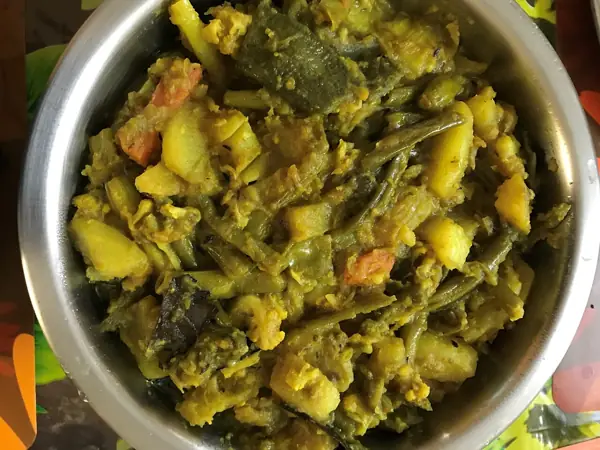 Recipes · 55 minLabraLabra torkari recipe: pumpkin, potato, radish, aubergine and greens cooked soft with panch phoron and ginger, no onion or garlic, as served with khichuri bhog.
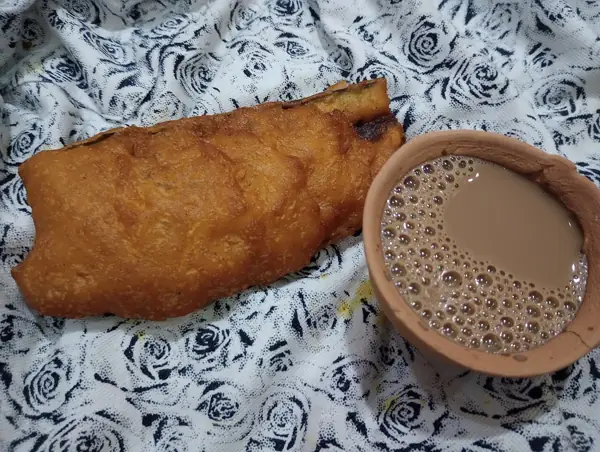 Recipes · 35 minBeguniBeguni recipe: thin aubergine slices dipped in a spiced besan and rice-flour batter and fried crisp, the hot fritter served with khichuri in Durga Puja bhog.
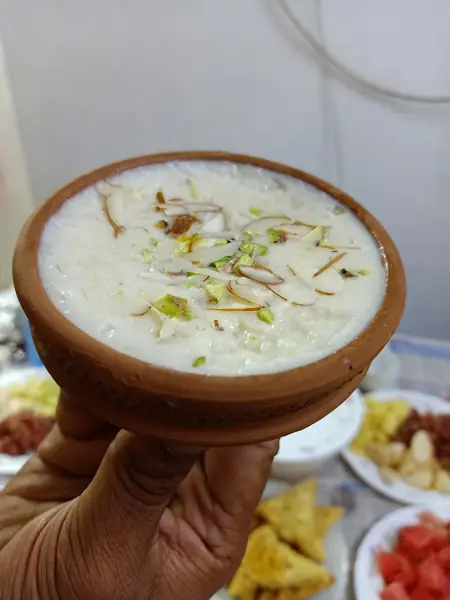 Recipes · 1 h 10 minGobindobhog payeshGobindobhog payesh recipe: fragrant rice simmered in whole milk with bay leaf, cardamom and sugar, the sweet end of Durga Puja bhog, plus a nolen gur version.
- CultureDurga Puja foodWhat people eat at Durga Puja: khichuri bhog, labra, payesh, phuchka, rolls, mughlai paratha, rosogolla and sandesh, plus why bhog is shared and eaten together.
 RitualsMaha AshtamiMaha Ashtami 2026 is Monday 19 October: the morning pushpanjali, Kumari Puja, Sandhi Puja with 108 lotuses and lamps, fasting until anjali and what people wear.