Beguni: crisp brinjal fritters for bhog
 Pujo Parikrama team2 min read · Updated

Beguni is a Bengali fritter of thin aubergine (begun) slices dipped in a spiced gram-flour batter and deep-fried until crisp. It is the hot, crunchy side served with khichuri on the Durga Puja bhog plate and on rainy days all year. The batter uses besan with a little rice flour for crunch, and the recipe takes about 35 minutes.
 ▶ Photo story · 9 pagesBeguni: crisp brinjal fritters for bhog
In this article 5 sections
- Serves
- 4 servings (about 20 slices)
- Prep
- 15 min
- Cook
- 20 min
- Total
- 35 min
- Diet
- Vegan
Ingredients
Tick them off as you go; ticks stay on this phone.
Method
- Slice the aubergines
Wash and dry the aubergines, trim the stalk end and cut them lengthwise or on a slight diagonal into slices about 5 mm thick. Sprinkle with a pinch of salt and turmeric and set aside while you make the batter.
- Mix the batter
In a bowl, whisk together the besan, rice flour, turmeric, chilli powder, nigella seeds, hing, salt and sugar. Add the cold water little by little, whisking, until the batter is smooth and thick enough to coat the back of a spoon, like pouring cream.
- Rest the batter
Leave the batter to rest for 10 minutes. Just before frying, stir in the baking soda if using; it makes the coating lighter.
- Heat the oil
Heat the oil in a kadai or deep pan over medium-high heat to about 175°C. A drop of batter should rise to the top within 2–3 seconds with steady bubbles; if it browns instantly, the oil is too hot.
- Coat the slices
Pat the aubergine slices dry with a paper towel. Dip each slice in the batter, turn to coat both sides and let the excess drip off for a second.
- Fry in batches
Slide 4–5 slices into the oil, without crowding. Fry for 2–3 minutes on medium heat, turn and fry for another 2 minutes, until deep golden and crisp and the aubergine is soft inside.
- Drain and serve
Lift the beguni out with a slotted spoon and drain on a rack or paper towels. Bring the oil back to temperature between batches and serve as hot as possible.
Beguni is what makes a plate of bhoger khichuri feel like a feast. The name comes from begun, the Bengali word for aubergine: slices of it are dipped in a thick, spiced gram-flour batter and fried until the outside is crisp and the inside soft and creamy. It takes very little time, but it needs to be eaten hot.
Its place in the puja
Every Durga Puja bhog plate needs something crisp, and beguni is the most popular choice. At community puja kitchens on Ashtami and Navami, one volunteer often does nothing but fry beguni for hours while others serve. Some pujas serve alu bhaja (fried potato), pumpkin fritters or papad instead. In a home puja, fry the beguni last, just before the bhog is offered, so it reaches the goddess and then the guests while still crisp. See the full plate in our Durga Puja food and bhog guide.
Tips for success
- Slice evenly. Slices about 5 mm thick cook through in the time it takes the batter to brown. Thicker slices stay raw inside, thinner ones turn papery.
- Dry the slices. The salt draws out some moisture; pat the slices dry before dipping so the batter sticks.
- Keep the batter thick. A thin batter slides off and soaks up oil. It should cling in an even, opaque layer.
- Use rice flour. It is the simplest trick for a coating that stays crisp after frying.
- Fry at a steady medium-high heat. Too hot, and the coating browns before the aubergine softens; too cool, and the beguni turns greasy.
- Mustard oil is traditional. If using it, heat it until it just smokes, then bring it down to frying temperature. A neutral oil gives a milder result.
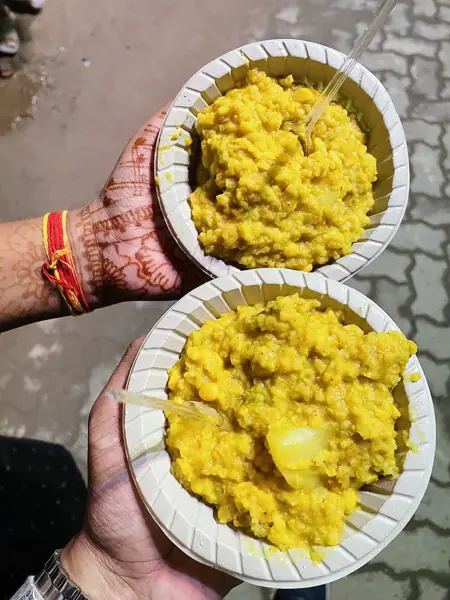 Also readDurga Puja bhog recipes
Variations
- Poppy seeds: sprinkle white poppy seeds (posto) onto the battered slices before frying for extra crunch.
- Other vegetables: the same batter makes thin pumpkin slices, potato slices, cauliflower florets or ponir (paneer) fritters.
- Spicier: add ½ tsp ground cumin and finely chopped green chilli to the batter.
- Shallow-fried: for less oil, shallow-fry in 4 tbsp oil in a flat pan, 3 minutes a side. It will be less puffy but still good.
Storing and reheating
Beguni is best eaten within 10–15 minutes of frying. Leftover batter keeps in the fridge for a day. If you must reheat beguni, crisp it on a tray in a hot oven at 200°C for 5–6 minutes rather than in a microwave, which makes it soft.
Serving
Serve beguni with khichuri and labra, placing it on the side of the plate so it stays crisp. It is equally good with plain rice and dal, with luchi, or on its own with a cup of tea and puffed rice (muri) on a rainy evening.
Questions people ask
How do I make beguni crispy?
Add 2 tbsp rice flour to the besan, keep the batter thick, and fry at about 175°C in small batches. Drain the beguni on a wire rack rather than a plate so the bottom does not turn soggy.
Why is my beguni oily?
Beguni absorbs oil when the oil is not hot enough or when the batter is too thin. Test the temperature with a drop of batter before each batch, and do not add too many slices at once.
Which aubergine is best for beguni?
Long, slender purple aubergines with few seeds are best, because they cut into neat slices and cook through quickly. Large round aubergines also work if you halve them and slice thinly.
Is beguni vegan?
Yes, as written beguni is vegan: it contains only aubergine, gram flour, rice flour, spices, water and oil. Some cooks add a spoon of poppy-seed paste or yoghurt to the batter, which changes that.
Read next
- RecipesDurga Puja bhog recipesHome recipes for the Durga Puja bhog thali: bhoger khichuri, labra, beguni, tomato chutney, payesh, narkel naru and luchi alur dom, mostly no onion or garlic.
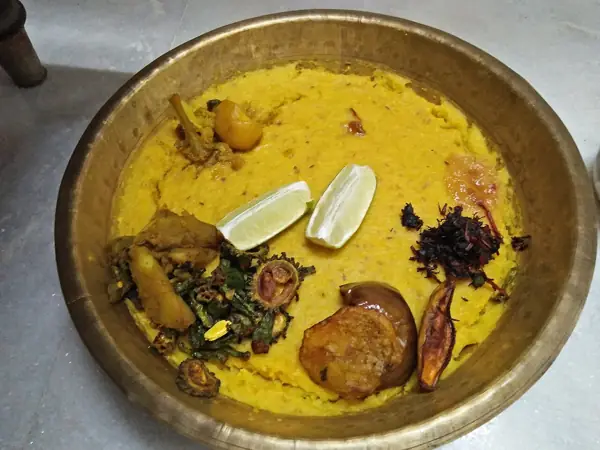 Recipes · 1 h 10 minBhoger khichuriBhoger khichuri recipe with gobindobhog rice, roasted moong dal, ghee, whole spices and ginger, no onion or garlic, just like Durga Puja Ashtami bhog. Serves 4.
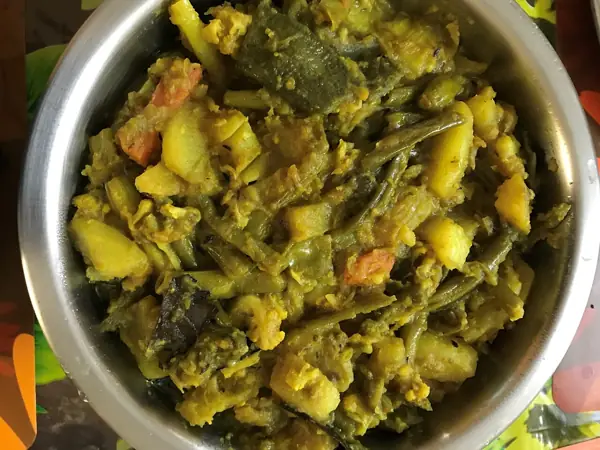 Recipes · 55 minLabraLabra torkari recipe: pumpkin, potato, radish, aubergine and greens cooked soft with panch phoron and ginger, no onion or garlic, as served with khichuri bhog.
 Recipes · 40 minTomato khejur aamsotto chutneyBengali tomato chutney with khejur (dates) and aamsotto (dried mango), tempered with panch phoron: the sweet-sour chutney of the Durga Puja bhog plate. Vegan.
- CultureDurga Puja foodWhat people eat at Durga Puja: khichuri bhog, labra, payesh, phuchka, rolls, mughlai paratha, rosogolla and sandesh, plus why bhog is shared and eaten together.
 RitualsMaha AshtamiMaha Ashtami 2026 is Monday 19 October: the morning pushpanjali, Kumari Puja, Sandhi Puja with 108 lotuses and lamps, fasting until anjali and what people wear.