Durga Puja glossary: Bengali puja words explained
 Pujo Parikrama team2 min read · Updated
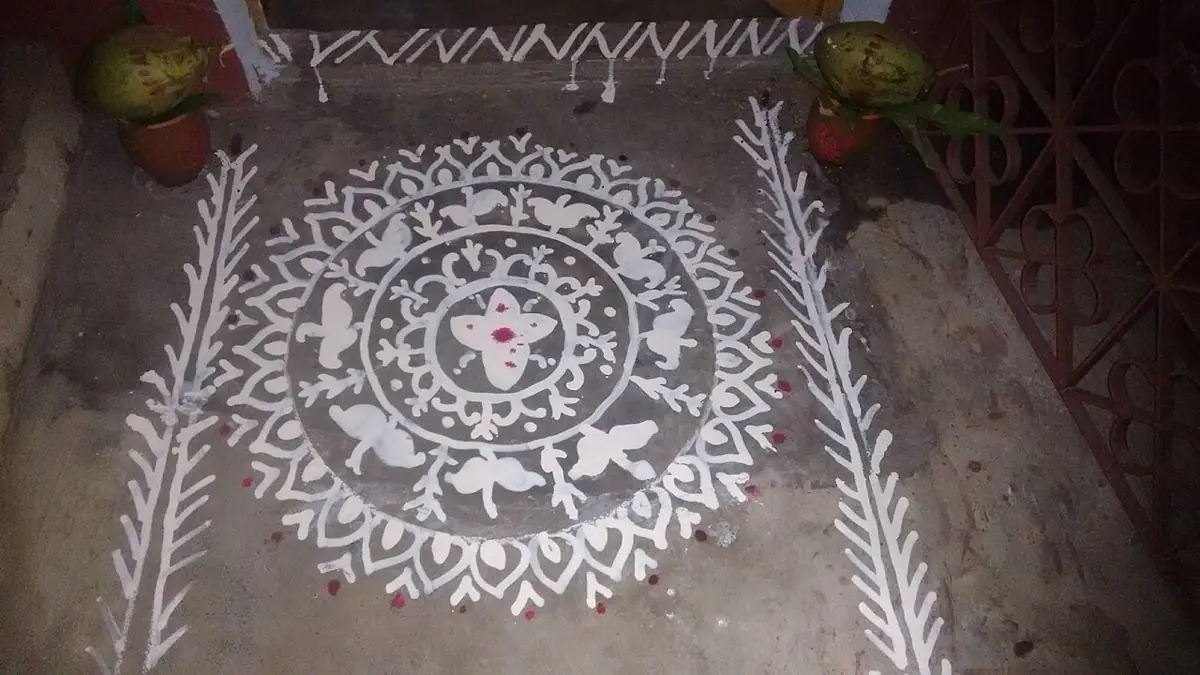
This Durga Puja glossary explains the Bengali and Sanskrit words you will hear during the festival in Kolkata and Bengal, from rituals such as bodhon, anjali and sandhi puja to objects like the dhak and dhunuchi, and everyday puja slang like pujo and thakur dekha. Each term has its Bengali spelling and a short plain-English definition. Practices behind many words vary by family, region and almanac.
 ▶ Photo story · 10 pagesDurga Puja glossary: Bengali puja words explained
This glossary explains the words you will hear at Durga Puja in Kolkata and across Bengal, alphabetically, each with its Bengali spelling and a short definition. Use it alongside our guides to the rituals, pandal hopping and what Durga Puja is.
How Bengali puja vocabulary works
Durga Puja words come from two layers of language. The ritual words are mostly Sanskrit: the names of rites such as bodhon (awakening), prana pratishtha (installing life) and pushpanjali (flower offering), which the priest uses because the mantras themselves are in Sanskrit. The everyday words are Bengali: pujo, thakur, dhak, bhog, kolakuli. In practice people mix both, so a single conversation can move from sandhi puja to thakur dekha without a pause.
Pujo or puja?
Puja is the standard word for worship across India. Bengali speakers usually say pujo (পুজো), because spoken Bengali tends to round the final "a" sound. Written Bengali also has the more formal puja (পূজা). On its own, "Pujo" almost always means Durga Puja, as in "Where are you going this Pujo?"
The "o" sound
The same pattern explains many spellings. Bengali pronounces the short "a" of Sanskrit closer to an "o", so Bodhan becomes Bodhon, Mangal is said "mongol", and Saptami is often said "Shoptomi". You will see words spelled both ways in English; neither is wrong. Similarly, Bengali usually pronounces "s" as "sh", which is why sindoor is often said "shindur" and Shashthi "Shoshthi".
Thakur is the deity
In everyday Bengali, thakur means a deity, and at Pujo it refers to the image of Durga and her family. When people say thakur dekhte jachchhi ("I'm going to see the thakur"), they mean pandal hopping. The same word can also be a surname or a term of respect, so the meaning comes from context.
Ma, Uma and Durga
Bengalis speak of the goddess as Ma (mother) and also as Uma, the daughter who visits her parents' home for a few days each autumn before returning to Kailash. Much of the emotion of the festival, from the welcome on Shashthi to the tears on Dashami, comes from this homecoming story, alongside the warrior goddess who defeats Mahishasura.
Days are tithis
Puja days are named after tithis, lunar days: Shashthi (sixth), Saptami (seventh), Ashtami (eighth), Navami (ninth) and Dashami (tenth). Because tithis do not line up neatly with calendar days, timings for rituals such as sandhi puja change every year and can differ slightly between almanacs. For exact timings, check your local panjika. The 2026 puja dates are on our dates page.
Sounds have names too
Many puja words describe sounds: the dhak drum, the kashor gong, the shankh (conch) and ulu, the ululation women make at auspicious moments. Together they are what people mean when they talk about "the sound of Pujo". Read more on the dhak and dhaki page.
- Aarti আরতি
- Worship by waving lamps, incense, conch, cloth, flowers and other items before the goddess, usually morning and evening, accompanied by the dhak and bells.
- Adhivas অধিবাস
- A preparatory ritual on Shashthi evening that sanctifies the goddess and the puja items before the main days of worship begin.
- Amantran আমন্ত্রণ
- The formal invitation to the goddess to come and accept the worship, performed on Shashthi evening alongside bodhon and adhivas.
- Anjali অঞ্জলি
- An offering of flowers held in cupped hands while repeating mantras after the priest; at Durga Puja it usually means pushpanjali.
- Barowari বারোয়ারি
- An older word for a community puja funded by contributions; it is commonly explained as coming from 'baro' (twelve) and 'yaar' (friends).
- Bhog ভোগ
- Food cooked and offered to the goddess, such as khichuri, labra, fries, chutney and payesh, then shared with devotees as blessed food.
- Bijoya বিজয়া
- Victory; the period after the immersion on Dashami, when people exchange greetings of Subho Bijoya, sweets, pranam and embraces.
- Bisarjan বিসর্জন
- Immersion of the image in a river or pond on Bijoya Dashami or later, marking the goddess's return to Kailash.
- Bodhon বোধন
- The awakening of the goddess on Shashthi evening, traditionally performed under or with a branch of a bel (wood apple) tree.
- Bonedi bari বনেদি বাড়ি
- An old, established family house, often of former landowning or merchant families, whose private Durga Puja follows long-held family customs.
- Boron বরণ
- The farewell welcome on Dashami in which married women offer sweets, betel leaf, sindoor and water to the goddess before sindoor khela.
- Chandi path চণ্ডীপাঠ
- Recitation of the Chandi, also called the Devi Mahatmya or Durga Saptashati, the Sanskrit text telling of the goddess's battles with demons.
- Chinmoyee চিন্ময়ী
- The goddess as pure consciousness; Bengalis often say the clay image becomes chinmoyee, a living presence, once she is invoked.
- Chokkhu daan চক্ষুদান
- Literally 'gift of eyes': the painting of the goddess's eyes by the artisan, often done on or around Mahalaya, which completes the image.
- Daker saaj ডাকের সাজ
- Ornamentation of the idol made from shiny silver-coloured foil and pith; a popular story links the name 'dak' (post) to the material once arriving by post.
- Devi Paksha দেবীপক্ষ
- The fortnight of the goddess, the bright lunar fortnight that begins after Mahalaya and contains the main days of Durga Puja.
- Dhak ঢাক
- The large barrel-shaped drum of Bengal, played with two sticks and decorated with plumes of kash flowers or feathers; the signature sound of the puja.
- Dhaki ঢাকি
- A dhak player; many dhakis come to the city from rural districts of Bengal and are hired by pujas for the festival.
- Dhuno ধুনো
- Fragrant resin, typically from the sal tree, burned in the dhunuchi to make thick, sweet-smelling smoke.
- Dhunuchi ধুনুচি
- A clay incense burner filled with coconut husk and dhuno, used in aarti and in the dhunuchi naach dance to the beat of the dhak.
- Ekchala একচালা
- A single frame ('one roof') that holds Durga and her children together in one structure; typical of traditional and bonedi bari idols.
- Ghat ঘট
- A pot, usually of clay or brass, filled with water and topped with mango leaves; the ghat is worshipped as a seat of the goddess. Also means a river landing.
- Kailash কৈলাস
- The mountain home of Shiva; in Bengali tradition Durga comes from Kailash to her parents' home for the puja and returns there after Dashami.
- Kalash কলস
- A ritual water pot, the Sanskrit and pan-Indian name for the ghat used in worship.
- Kalparambha কল্পারম্ভ
- The formal start of the puja on Shashthi morning, when the ghat is installed and the resolve (sankalpa) to perform the worship is made.
- Kashor ghonta কাঁসর ঘণ্টা
- The kashor, a flat bell-metal gong struck with a stick, and the ghonta, a hand bell; both ring out with the dhak during aarti.
- Kola bou কলা বউ
- Literally 'banana bride': the nabapatrika bundle, draped in a red-bordered sari and placed beside Ganesha, often mistaken for his wife.
- Kolakuli কোলাকুলি
- The embrace exchanged between friends and equals on Bijoya, traditionally repeated on alternate shoulders.
- Kumari puja কুমারী পূজা
- Worship of a young girl as a living form of the goddess, usually on Ashtami or Navami in some pujas, notably at Belur Math.
- Mahalaya মহালয়া
- The new-moon day that ends Pitri Paksha and opens Devi Paksha, about a week before the main puja; marked by tarpan and the dawn radio programme Mahishasuramardini.
- Mahishasura মহিষাসুর
- The buffalo demon whom Durga defeats; he is shown at her feet, emerging from a buffalo, pierced by her trident.
- Mangal ghot মঙ্গল ঘট
- An auspicious water pot, marked with sindoor and topped with mango leaves and a green coconut or fruit, placed at the start of worship.
- Mrinmoyee মৃন্ময়ী
- The goddess in her clay form, the image as made by the artisan, before she is invoked as chinmoyee.
- Nabapatrika নবপত্রিকা
- Nine plants bound together and worshipped as forms of the goddess, bathed at dawn on Saptami: banana, colocasia, turmeric, jayanti, bel, pomegranate, ashoka, arum and paddy.
- Pandal প্যান্ডেল
- The temporary structure, of bamboo, cloth and many other materials, built to house the goddess for the festival; many are elaborate themed works of art.
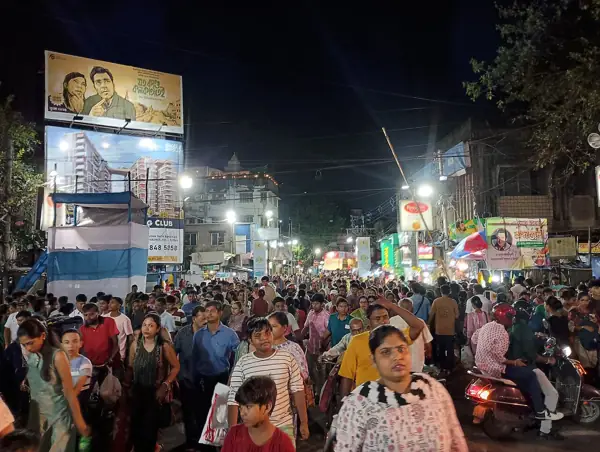
- Pandal hopping প্যান্ডেল হপিং
- Going from pandal to pandal to see as many images and themes as possible; the English name for thakur dekha.
- Panjika পঞ্জিকা
- The Bengali almanac that gives tithis and auspicious times (muhurta) for rituals; different panjikas can give slightly different timings.
- Pitri Paksha পিতৃপক্ষ
- The fortnight of the ancestors that ends on Mahalaya, during which offerings are made to forefathers.
- Prana pratishtha প্রাণপ্রতিষ্ঠা
- The ritual that invokes life into the image, usually on Saptami morning after the nabapatrika is installed.
- Prasad প্রসাদ
- Food or flowers offered to the deity and then given to devotees as a blessing; in Bengali often 'prosad'.
- Protima প্রতিমা
- The image or idol of the goddess and her family, made of clay and straw by artisans such as those of Kumartuli.
- Pujo পুজো
- The Bengali everyday pronunciation of puja; on its own, 'Pujo' usually means Durga Puja itself.
- Purohit পুরোহিত
- The priest who conducts the puja, recites the mantras and guides devotees through anjali and other rituals.
- Pushpanjali পুষ্পাঞ্জলি
- Flower offering made by devotees repeating Sanskrit mantras after the priest, most widely on Ashtami morning, often after fasting.
- Sandhi puja সন্ধিপূজা
- Worship at the juncture of Ashtami and Navami, lasting 48 minutes, with 108 lamps and 108 lotuses; the most intense moment of the puja.
- Sarbojanin সর্বজনীন
- 'For everyone': a public community puja run by a neighbourhood committee and open to all, the most common kind of puja in Kolkata today.
- Shankh শাঁখ
- A conch shell blown at auspicious moments, during aarti and to welcome the goddess.
- Shanti jol শান্তিজল
- 'Water of peace': holy water sprinkled by the priest on family members after the immersion on Dashami.
- Of the autumn (sharat); used for the autumn Durga Puja, for festive greetings and for the special puja issues of Bengali magazines.
- Sholar saaj শোলার সাজ
- Idol ornaments carved from shola, the white spongy pith of a marsh plant, giving a classic white decorative look.
- Sindoor khela সিঁদুর খেলা
- On Dashami, married women offer sindoor (vermilion) to the goddess and then smear it on each other's foreheads and faces.
- Tarpan তর্পণ
- Offering of water, often with sesame and kusha grass, to ancestors; on Mahalaya morning many people perform it at the river ghats.
- Thakur ঠাকুর
- A deity; during the festival it usually means the image of the goddess and her family in the pandal.
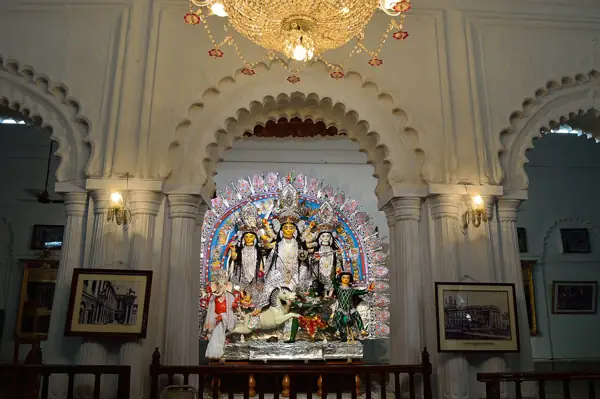
- Thakur dalan ঠাকুরদালান
- A pillared worship hall facing the courtyard in an old family house, where the bonedi bari puja is held.
- Thakur dekha ঠাকুর দেখা
- Literally 'seeing the deity': visiting pandals to see the images, the Bengali phrase for pandal hopping.
- Tithi তিথি
- A lunar day; puja days such as Shashthi, Saptami and Ashtami are tithis, and their start and end times vary each year.
- Ulu উলু
- Ululation: a high, trilling sound made by women with the tongue at auspicious moments, often together with the conch.
- Uma উমা
- A name of Parvati as the daughter of Himalaya and Menaka; in Bengali songs Durga Puja is Uma's yearly homecoming.
Questions people ask
Is it Durga Puja or Durga Pujo?
Both are correct. Puja is the Sanskrit and pan-Indian word for worship, and pujo is how most Bengalis pronounce it in everyday speech, so in Kolkata the festival is often simply called Pujo.
What does thakur mean in Durga Puja?
In everyday Bengali, thakur means a deity, and during the puja it usually refers to the image of the goddess and her family in the pandal. Thakur dekha, seeing the thakur, means going round the pandals.
What is the difference between sarbojanin and bonedi bari puja?
A sarbojanin puja is a community puja organised by a neighbourhood committee and open to all. A bonedi bari puja is held by an old established family in its own house, usually in a courtyard hall called the thakur dalan, and continues family traditions that may be centuries old.
Read next
 RitualsDurga Puja rituals day by dayDurga Puja rituals day by day: Mahalaya, Shashthi bodhon, Saptami Kola Bou, Ashtami anjali and Sandhi Puja, Navami homa, Dashami sindoor khela, 2026 dates.
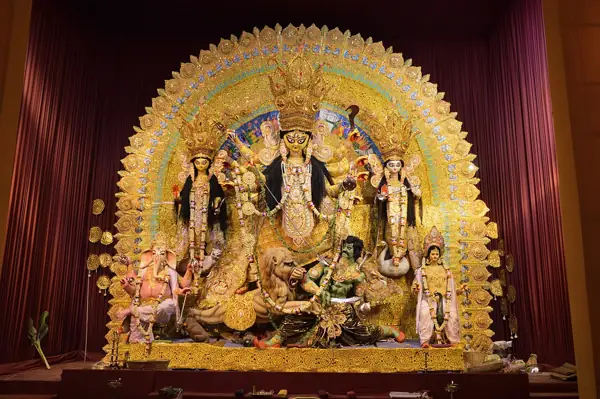 Durga PujaWhat is Durga Puja? The meaning behind the festivalWhat Durga Puja means: the Devi Mahatmya story of Mahishasura, Durga as Shakti, Uma's homecoming, Rama's akal bodhon and why the festival falls in autumn.
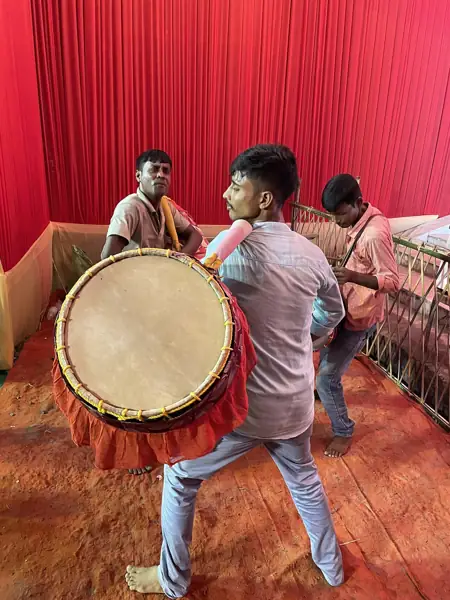 CultureDhak and dhakiThe dhak is the plumed barrel drum of Durga Puja and the dhaki its player: how it is played, where dhakis come from, its rhythms and the kashor gong.
 CultureBonedi bari pujasBonedi bari pujas are Kolkata's old family Durga Pujas, held in thakur dalans with ekchala idols and old rites. What sets them apart, where to go, etiquette.
 CulturePandal hopping in KolkataPractical Kolkata pandal hopping tips: the best hours to beat crowds, using the Metro, what to carry, kids and elders, safety, and which area is known for what.