What is Durga Puja? The meaning behind the festival
 Pujo Parikrama team5 min read · Updated
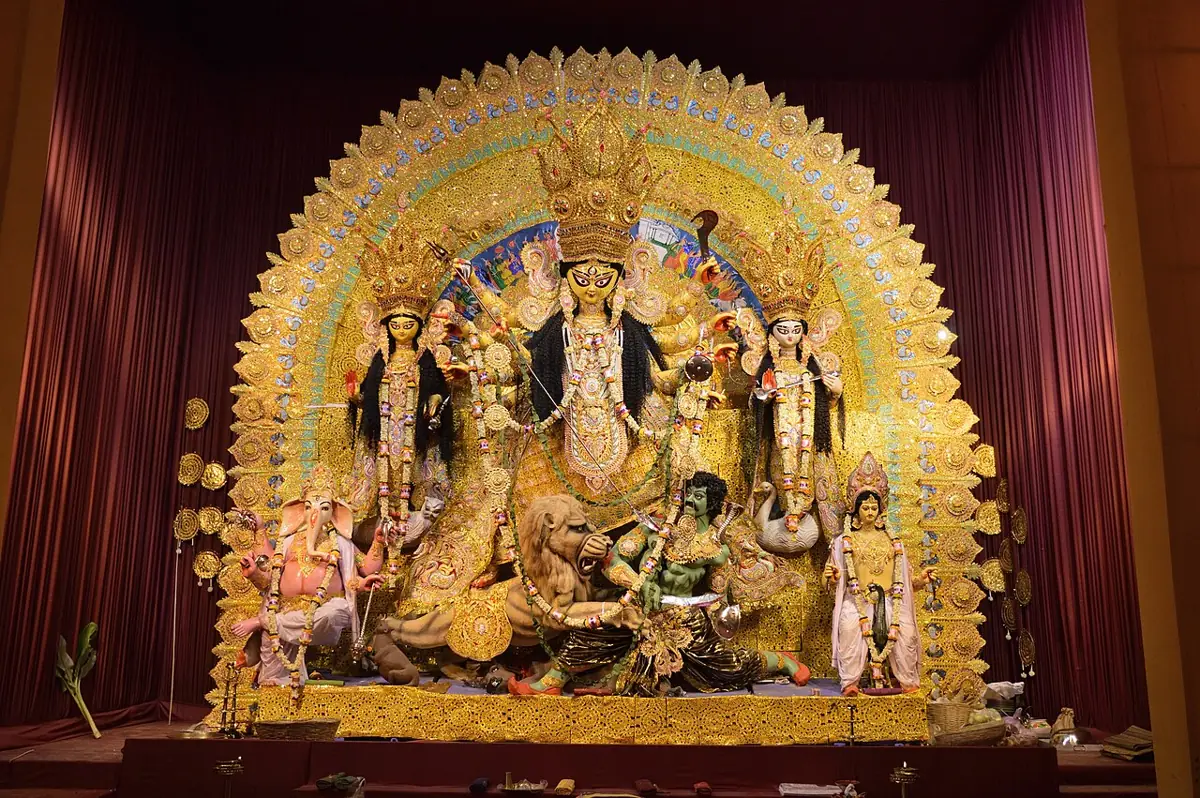
Durga Puja is the Hindu festival that worships the goddess Durga, the embodiment of divine power (Shakti), for slaying the buffalo demon Mahishasura, a story told in the Devi Mahatmya of the Markandeya Purana. In Bengal the goddess is also welcomed as Uma, a daughter returning to her parents' home for a few days each autumn. It is held in the bright fortnight of Ashwin (September or October), which is why it is called Sharadiya, the autumn puja; Bengali tradition links this timing to Rama's untimely invocation of the goddess, the akal bodhon.
 ▶ Photo story · 9 pagesWhat is Durga Puja? The meaning behind the festival
In this article 7 sections
Durga Puja is the worship of the goddess Durga, the fierce and protective form of the divine mother, held each autumn. At its heart is a story: the goddess, created from the combined power of all the gods, defeats the buffalo demon Mahishasura and saves the world. In Bengal that cosmic story sits alongside a very human one. The same goddess is Uma, a married daughter who comes home to her parents for a few days a year, bringing her children, and whose departure on the tenth day is mourned like any family farewell. Understanding both stories explains almost everything you will see at a puja.
The Devi Mahatmya: the source of the story
The main scriptural source is the Devi Mahatmya (Glory of the Goddess), a Sanskrit text of about 700 verses that forms part of the Markandeya Purana. It is also known as the Durga Saptashati (the seven hundred verses) or, in Bengal, simply as the Chandi. Scholars usually place its composition in the middle of the first millennium CE. Its recitation, Chandi path, is part of the worship during Durga Puja, and its verses are the backbone of the famous dawn broadcast on Mahalaya, the Mahishasuramardini programme.
The text tells three episodes of the goddess fighting demons. The middle one is the best known.
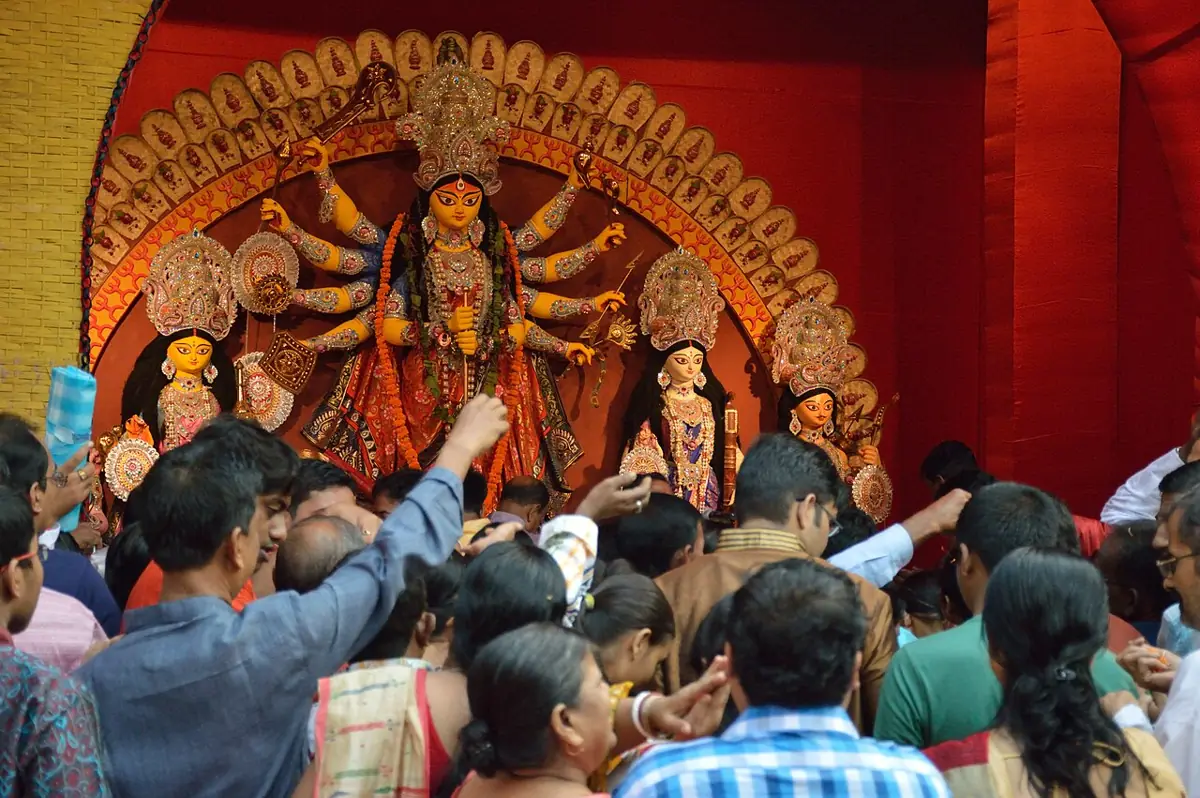

The slaying of Mahishasura
Mahishasura, a demon who could take the form of a buffalo, grows so powerful that he drives the gods out of heaven. The gods go to Brahma, Vishnu and Shiva, and their anger blazes out as light. That radiance, joined with the light of every other god, takes shape as a single goddess of overwhelming beauty and strength.
Each god then gives her a weapon or gift: commonly Shiva's trident, Vishnu's discus, Indra's thunderbolt, and a lion to ride, given by the Himalaya. She enters battle, destroys Mahishasura's army and finally kills him as he emerges from the body of the buffalo. This is the moment frozen in the Bengali clay image, which is why Durga is often called Mahishasuramardini, slayer of Mahishasura. Our guide to the goddess and her iconography explains the image in detail.
Durga as Shakti
In Hindu thought, Shakti is the active power of the divine, often personified as the goddess. Durga is one of her greatest forms. Her name is commonly explained as "the one who is difficult to approach" or "the remover of difficulties", and she is at once warrior and mother. Devotees ask her for protection, strength and the removal of obstacles, and the emphasis on the goddess as the supreme power makes Durga Puja central to the Shakta tradition, which is strong in Bengal and Assam.
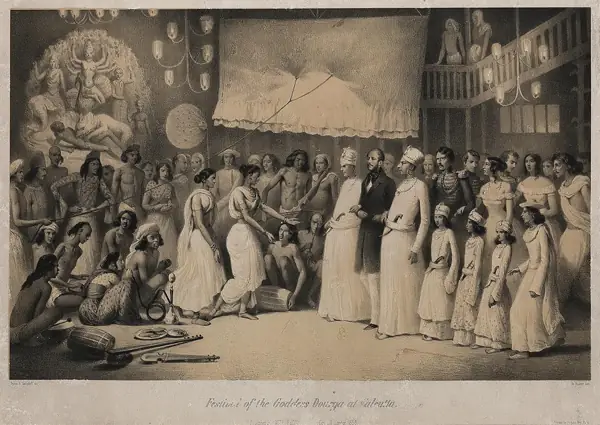 Also readThe history of Durga Puja in Bengal
Uma comes home
Bengali religious culture adds a tender layer. Durga is identified with Uma (Parvati), daughter of Giriraj Himalaya and his wife Menaka, who married Shiva and lives far away on Mount Kailash. Each autumn she is allowed to visit her parents' home for a few days with her four children: Lakshmi, Saraswati, Ganesha and Kartik.
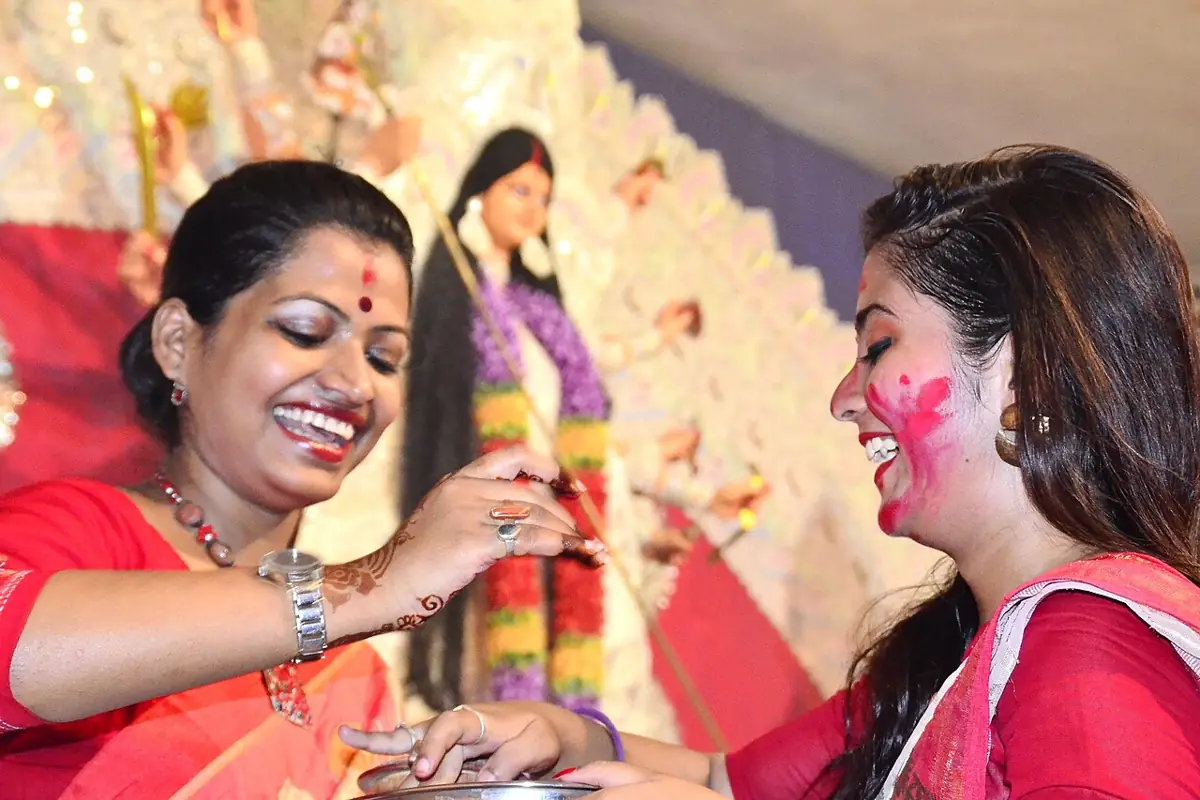
This is why Bengali pujas show the whole family on one platform, and why the festival feels like a homecoming. Traditional agomani songs express Menaka's longing for her daughter's arrival, and bijoya songs express the grief of her leaving. On Dashami, married women bid her farewell as they would a daughter going back to her in-laws, with sweets, vermilion and tears; see sindoor khela and Bijoya Dashami.

Akal Bodhon: the untimely awakening
In older practice the goddess was worshipped in spring, in the month of Chaitra, as Basanti Puja, which some families still hold. Why, then, is the great puja in autumn?
Bengali tradition answers with the akal bodhon, the untimely (akal) awakening (bodhon). It is told in the Ramayana of Krittibas Ojha, the much-loved Bengali retelling of the epic, and not in Valmiki's Sanskrit Ramayana. Before his battle with Ravana, Rama invokes the goddess out of season to win her blessing. He gathers 108 blue lotuses for the worship, and when the goddess hides one to test him, he prepares to offer one of his own eyes, often described as lotus-like, in its place. Moved by his devotion, she stops him and grants him victory.
The idea of an "untimely" puja also connects to the belief that the gods sleep during the southern half of the sun's year, so the goddess must be ritually woken. That waking is performed on Shashthi evening at the bilva (bel) tree, a rite still called bodhon; see Shashthi.
Why autumn: Sharadiya Durgotsav
The festival is formally the Sharadiya (autumn) Durga Puja, held in the bright fortnight of Ashwin, which usually falls in late September or October. In Bengal this is the end of the monsoon: clear skies, white kash grass flowering on riverbanks, and shiuli (night-flowering jasmine) on the ground in the mornings. These images appear in songs and poems as signs that the goddess is on her way.
The same lunar fortnight is kept across much of India as Navratri, the nine nights of the goddess, ending in Dussehra or Vijayadashami.
What the days feel like
The season opens on Mahalaya, the new moon that ends the fortnight of remembering ancestors and begins the Devi Paksha, the fortnight of the goddess. In 2026 Mahalaya is on Saturday 10 October. Many households wake before dawn to the radio.
The main puja then runs from the sixth lunar day to the tenth:
- Shashthi (Saturday 17 October 2026): the goddess is awakened and her face is unveiled. See Shashthi.
- Saptami (Sunday 18 October): the Kola Bou, a banana plant dressed as a bride, is bathed at dawn, and the life of the goddess is invoked into the image. See Saptami.
- Maha Ashtami (Monday 19 October): the most crowded morning, with pushpanjali, Kumari Puja and, at the junction of Ashtami and Navami, Sandhi Puja. See Ashtami.
- Maha Navami (Tuesday 20 October): the last full day, with a sense that time is running out. See Navami.
- Bijoya Dashami (Wednesday 21 October): farewell, immersion and the visits and sweets of Bijoya. See Dashami.
Outside the rituals, the days are about people: new clothes, the beat of the dhak, the bhog shared at community pujas, evening dhunuchi dance, and long nights walking from one pandal to the next. Exact ritual timings depend on the almanac followed, so check your local panjika or the puja committee's notice. To plan your own visit, start with the Kolkata guide and the 2026 dates page.
Questions people ask
Why is Durga Puja celebrated?
It celebrates the goddess Durga's victory over the demon Mahishasura, understood as the triumph of good over evil. In Bengal it is also the annual homecoming of Uma, the goddess as a beloved daughter, to her parents' house.
What is the story of Durga and Mahishasura?
In the Devi Mahatmya, the buffalo demon Mahishasura defeats the gods and takes over heaven. The gods pool their radiance into a single goddess, arm her with their weapons, and she fights and kills Mahishasura, restoring order to the world.
What is Akal Bodhon?
Akal bodhon means untimely awakening. In the Bengali Ramayana of Krittibas, Rama invokes the goddess in autumn, outside her usual spring worship, to win her blessing before fighting Ravana; Bengali tradition sees the autumn Durga Puja as following his example.
Why is Durga Puja called Sharadiya?
Sharadiya means of the autumn (sharat). The festival falls in the bright fortnight of the lunar month of Ashwin, distinguishing it from Basanti Puja, the spring worship of Durga held in Chaitra.
Is Durga Puja the same as Navratri and Dussehra?
They overlap in time and theme. Navratri is the nine nights of the goddess observed across much of India, and Dussehra or Vijayadashami is the tenth day; in Bengal that tenth day is Bijoya Dashami, when Durga's images are immersed.
Read next
- Durga PujaThe history of Durga Puja in BengalHow Durga Puja grew from zamindari and rajbari pujas to barowari and sarbojanin community festivals, theme pandals and UNESCO heritage status in Kolkata.
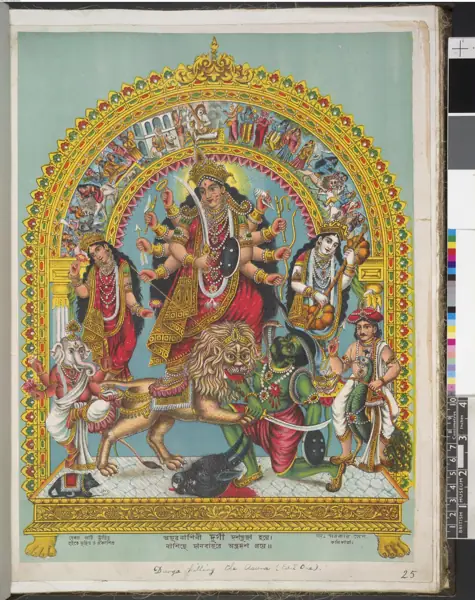 Durga PujaGoddess Durga and her familyHow to read a Durga Puja image: Durga's ten arms and weapons, the lion, Mahishasura, Lakshmi, Saraswati, Ganesha, Kartik, their vahanas, ekchala and daker saaj.
 RitualsDurga Puja rituals day by dayDurga Puja rituals day by day: Mahalaya, Shashthi bodhon, Saptami Kola Bou, Ashtami anjali and Sandhi Puja, Navami homa, Dashami sindoor khela, 2026 dates.
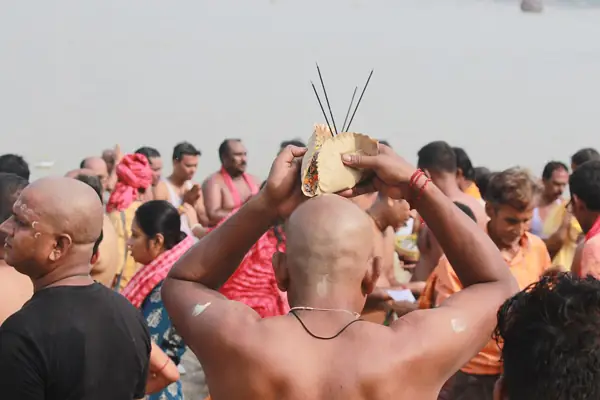 RitualsMahalayaMahalaya 2026 is on Saturday 10 October. What it means: the end of Pitri Paksha, tarpan at the Ganga ghats, the pre-dawn Mahishasuramardini and chokkhu daan.
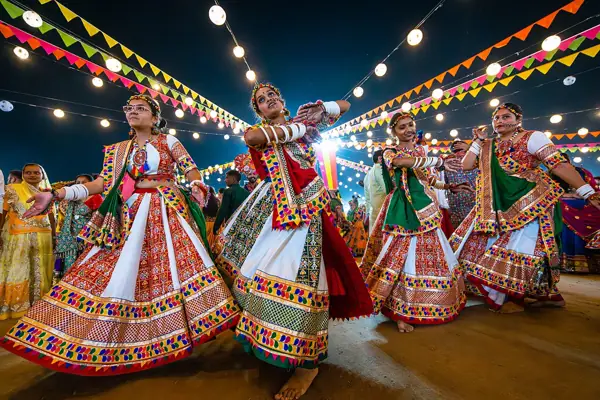 NavratriNavratri 2026What Navratri means, when Sharad Navratri 2026 falls, its rituals (ghatasthapana, Navadurga, fasting, garba) and how it differs from Bengal's Durga Puja.