Saptami: the Kola Bou and the start of the main puja
 Pujo Parikrama team4 min read · Updated
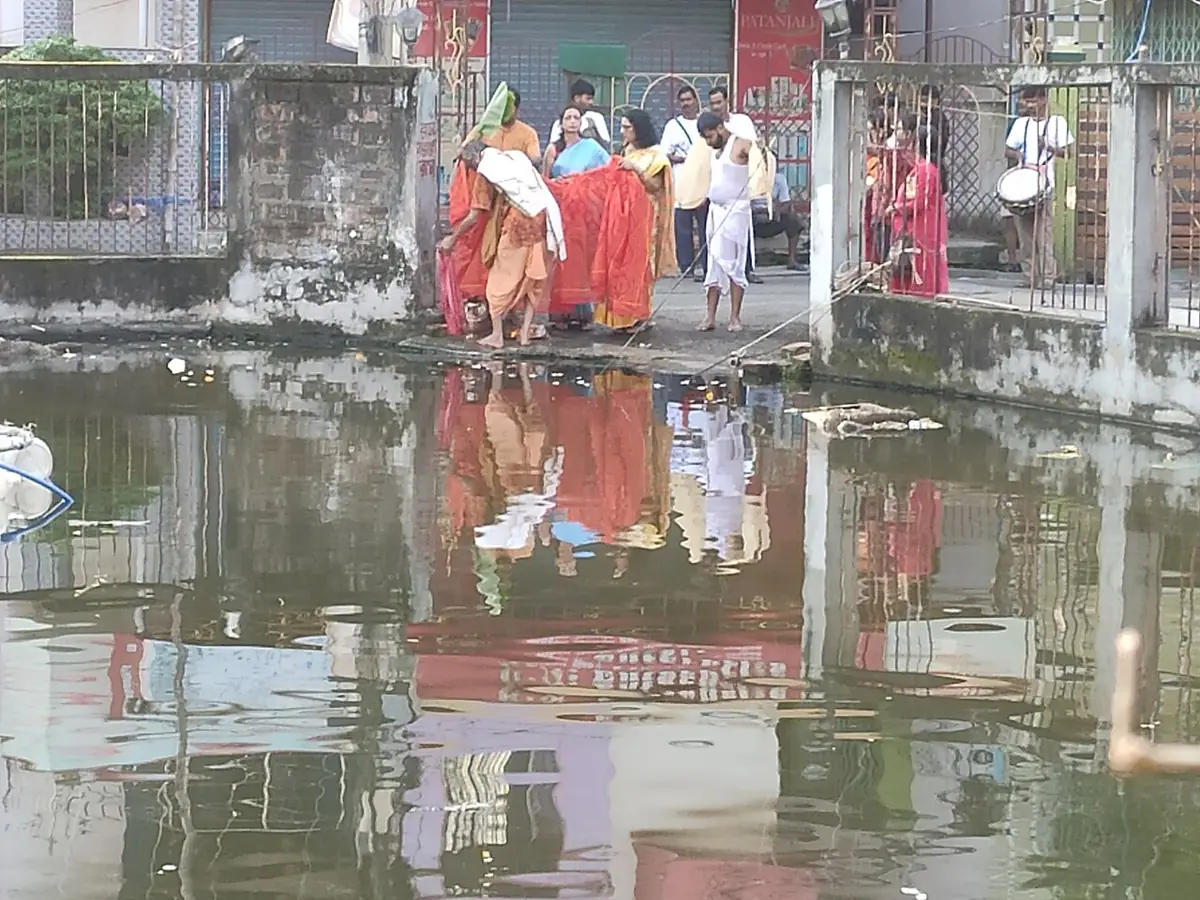
Maha Saptami is the first day of the main Durga Puja worship. At dawn the Nabapatrika, a bundle of nine plants known in Bengal as the Kola Bou, is bathed in a river or at a ghat, dressed in a sari and installed beside Ganesha; the priest then invokes life into the idol (prana pratishtha) and the full puja begins. In 2026 Saptami falls on Sunday 18 October.
 ▶ Photo story · 8 pagesSaptami: the Kola Bou and the start of the main puja
In this article 6 sections
Maha Saptami is the day the main Durga Puja worship begins. Its signature rite happens at dawn: the Nabapatrika (naba, nine; patrika, leaves or plants), affectionately called the Kola Bou (banana bride), is bathed, dressed and carried back to stand beside Ganesha. Then the priest performs prana pratishtha and the puja proper starts. In 2026 Saptami falls on Sunday 18 October.
Nabapatrika snan: the dawn bath
Early in the morning, before or around sunrise, the priest and a small procession take the Nabapatrika to water. In Kolkata that usually means a ghat on the Hooghly; pujas far from the river often use a pond or bathe the plants in the pandal with water brought for the purpose.
The Nabapatrika is a bundle of nine plants (banana, colocasia, turmeric, jayanti, bel, pomegranate, ashoka, arum and paddy), tied with a white aparajita creeper and a pair of bel fruits. Each plant stands for a form of the goddess; see Kola Bou and the nine plants for the full list.
The bath is carried out with mantras and with waters and substances that vary by tradition: river water, scented water, water from different sources and so on. Dhakis play, conch shells sound and women ululate (ulu). It is one of the most photographed scenes of the festival.
Dressing the Kola Bou
After the bath the plants are wrapped in a new sari, usually white or cream with a red border, with the end drawn over the top like a bride's veil. Vermilion is applied, and the Nabapatrika is carried back to the pandal or thakur dalan (worship hall) in procession, under an umbrella in many traditions.
She is placed beside Ganesha, traditionally on his right. Because of this, and because she looks like a veiled bride, she is popularly called Ganesha's wife, but in ritual terms she is the goddess herself in plant form.
Prana pratishtha and the main puja
Once the Nabapatrika is installed, the priest performs prana pratishtha (establishing life), invoking the goddess into the clay image. Some traditions also perform a ritual "opening of the eyes" at this point. From here on the idol is worshipped as the living deity.
The Saptami puja follows, with offerings to Durga and to every deity of the image: Lakshmi, Saraswati, Ganesha, Kartik, the lion, and even Mahishasura. The day's bhog (food offering) is cooked and offered; in the evening comes the sandhya arati, with lamps, the dhunuchi (incense burner), conch and dhak. Many pandals see the first dhunuchi naach of the season after Saptami arati.
The order of these rites, and whether some are done the evening before, varies by family tradition and the panjika followed.
Also readKola BouSaptami at home and in family pujas
In households that hold their own puja, Saptami morning is the busiest of the year in the kitchen and the thakur ghar (prayer room). Women of the family often prepare the offerings: fruit cut and arranged on brass plates, sweets, naibedya (uncooked offerings of rice, fruit and sweets) and the cooked bhog. Many families eat vegetarian food on the puja days until Dashami, though customs vary widely. If you are planning a puja at home, see Durga Puja at home and the samagri list.
Saptami is also when many Bengalis wear the first of their new puja clothes and begin visiting relatives and pandals in earnest.
What to expect as a visitor
- Early morning: the ghats and the procession routes in North Kolkata are lively from first light. Dress modestly, keep a respectful distance from the rites and ask before close-up photography.
- Day: crowds are lighter in the morning and afternoon than in the evening.
- Night: Saptami night is one of the four busiest nights of the festival. See pandal hopping tips and the Kolkata guide for routes and crowd forecasts.
Old family pujas such as Sovabazar Rajbari and community pujas near the river such as Bagbazar and Ahiritola are good places to see the Saptami rites in a traditional setting. The North Kolkata heritage trail strings them together.
Before and after
Saptami follows the awakening on Shashthi and leads into Maha Ashtami, with its pushpanjali and Sandhi Puja. For the full sequence see Durga Puja rituals day by day.
See it in Kolkata
- 📍 Bagbazar SarbojaninOne of the oldest sarbojanin pujas. Traditional daker saaj idol, plus a riverside fair.
- 📍 Sovabazar RajbariA bonedi bari puja started by Raja Nabakrishna Deb. The thakurdalan is stunning.
- 📍 Ahiritola SarbojaninA riverside neighbourhood puja known for large-scale theme work.
Questions people ask
When is Maha Saptami in 2026?
Maha Saptami is on Sunday 18 October 2026, between Shashthi on Saturday 17 October and Maha Ashtami on Monday 19 October.
What is Nabapatrika snan?
It is the ritual bath of the Nabapatrika, nine sacred plants tied together with a white aparajita creeper and bel fruit, held at dawn on Saptami in a river, at a ghat or, in many city pujas, with water brought to the pandal.
Is Kola Bou the wife of Ganesha?
Popularly she is called Ganesha's bride because she stands beside him wearing a sari like a new bride. In ritual terms the Nabapatrika is a form of the goddess Durga herself, and the nine plants represent nine of her forms.
What is prana pratishtha in Durga Puja?
Prana pratishtha means establishing life. With mantras the priest invites the goddess to dwell in the clay image, after which it is treated as the living deity for the rest of the puja.
Where can I see the Kola Bou bath in Kolkata?
The ghats along the Hooghly in North Kolkata, such as those near Bagbazar and Ahiritola, are busy with processions early on Saptami morning. Arrive around sunrise, as the rites are over quite early.
Read next
- RitualsKola BouKola Bou, or Nabapatrika, is the bundle of nine plants worshipped as Goddess Durga on Saptami. The nine plants, their goddesses and why she stands by Ganesha.
 RitualsShashthiShashthi 2026 is Saturday 17 October: Kalparambha, the bodhon awakening of Durga by a bel tree, amantran and adhivas, unveiling of faces and Shashthi fasts.
 RitualsMaha AshtamiMaha Ashtami 2026 is Monday 19 October: the morning pushpanjali, Kumari Puja, Sandhi Puja with 108 lotuses and lamps, fasting until anjali and what people wear.
- RitualsDurga Puja rituals day by dayDurga Puja rituals day by day: Mahalaya, Shashthi bodhon, Saptami Kola Bou, Ashtami anjali and Sandhi Puja, Navami homa, Dashami sindoor khela, 2026 dates.