How to do Durga Puja at home: a simple step-by-step guide
 Pujo Parikrama team6 min read · Updated
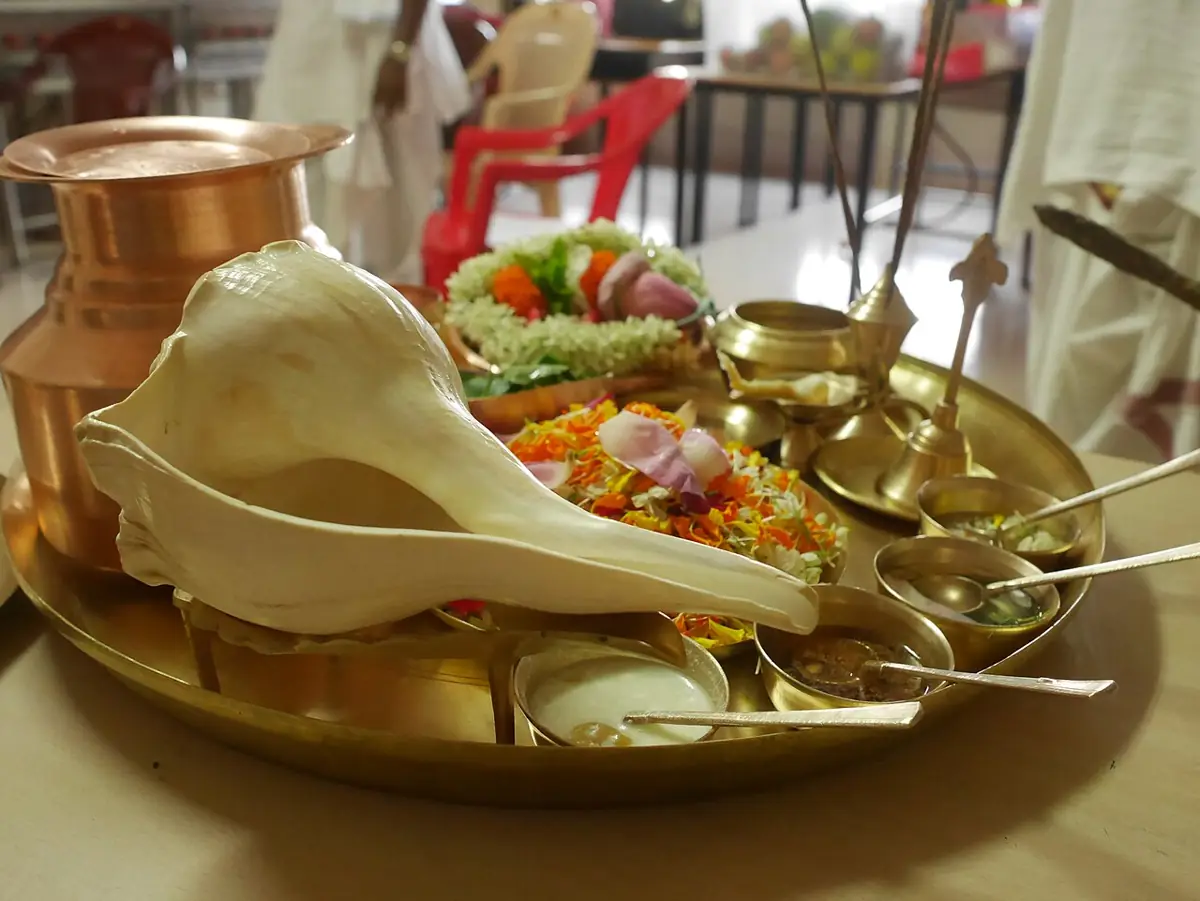
You can do a simple Durga Puja at home by setting up a ghat (a water-filled kalash) or a picture of Ma Durga, making a short sankalpa (intention), and offering flowers, incense, a lamp and bhog each day from Shashthi to Dashami, or across the nine nights of Navratri. Most households also read or listen to the Chandi Path, offer pushpanjali on Ashtami, and respectfully immerse or retire the ghat on Dashami. A full Durga Puja with an idol and prana pratishtha is traditionally performed by a purohit (priest).
 ▶ Photo story · 9 pagesDurga Puja at home, step by step
In this article 12 sections
- What a home puja is, and what it isn't
- When to worship
- Preparing the space
- Ghat sthapana: setting up the ghat
- Sankalpa in simple words
- Dhyana: picturing the Goddess
- The five offerings (panchopachar)
- Chandi Path and aarti
- Pushpanjali on Ashtami
- Bhog ideas
- Visarjan of the ghat on Dashami
- A note on variation
- Questions people ask
What you need
Step by step
- Choose your days and plan
Decide whether you will worship on the five Bengali days (Shashthi to Dashami) or across the nine nights of Navratri. Note the dates and check your family's panjika (almanac) for the tithi and any timings your family follows.
- Clean and prepare the puja space
Clean the corner or room the evening before. Place a low stool or clean platform facing east or north if you can, spread a red or yellow cloth, and draw a simple alpana (rice-paste design) or swastika in front if that is your custom.
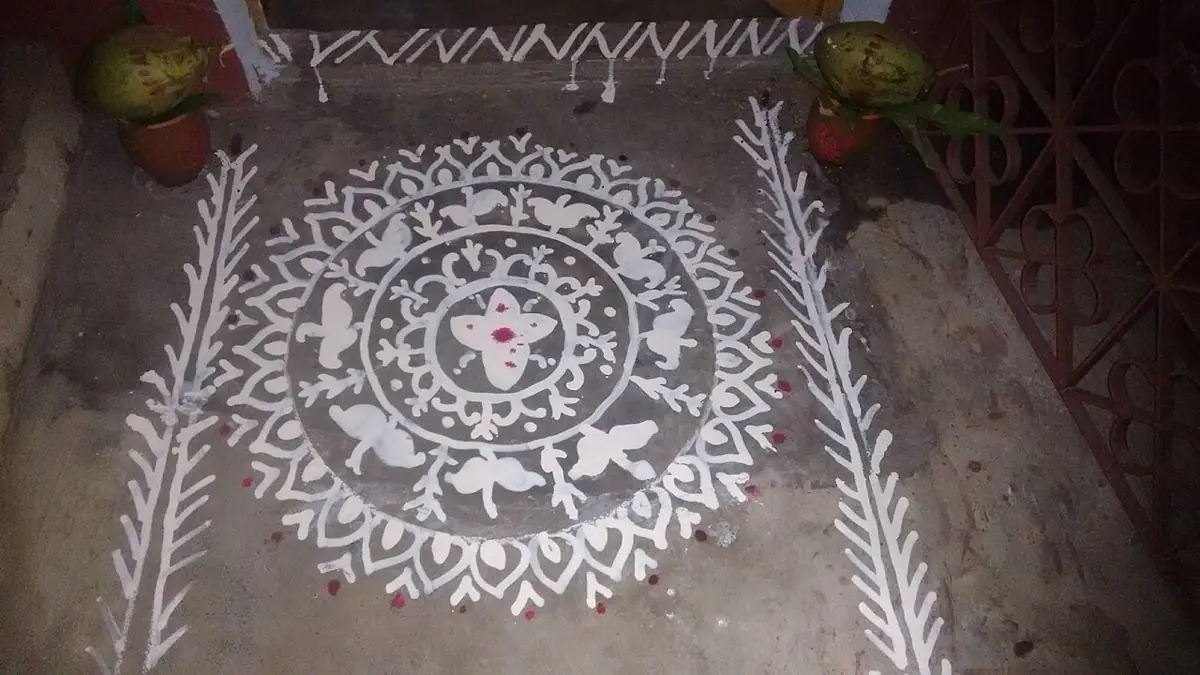
Alpana drawn at the doorstep in rice paste and chalk water. Photo: Shonamug, CC BY-SA 4.0, via Wikimedia Commons - Bathe and get ready
Bathe, wear clean clothes, and keep everything you need within reach so you don't need to get up mid-puja. Many people stay without food until the morning puja or anjali is done, but this is a personal choice.
- Set up the ghat (ghat sthapana)
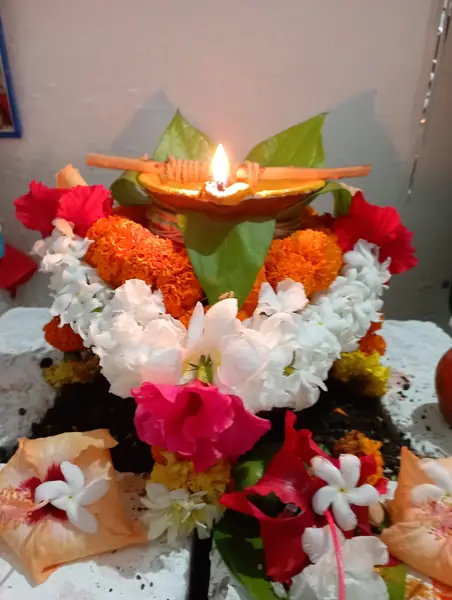
Place a small heap of rice or earth on the cloth, set the water-filled ghat on it, draw a swastika on it with sindoor, put five mango leaves in its mouth and rest a coconut or fruit on top. Place the picture or image of Ma Durga behind or beside it.
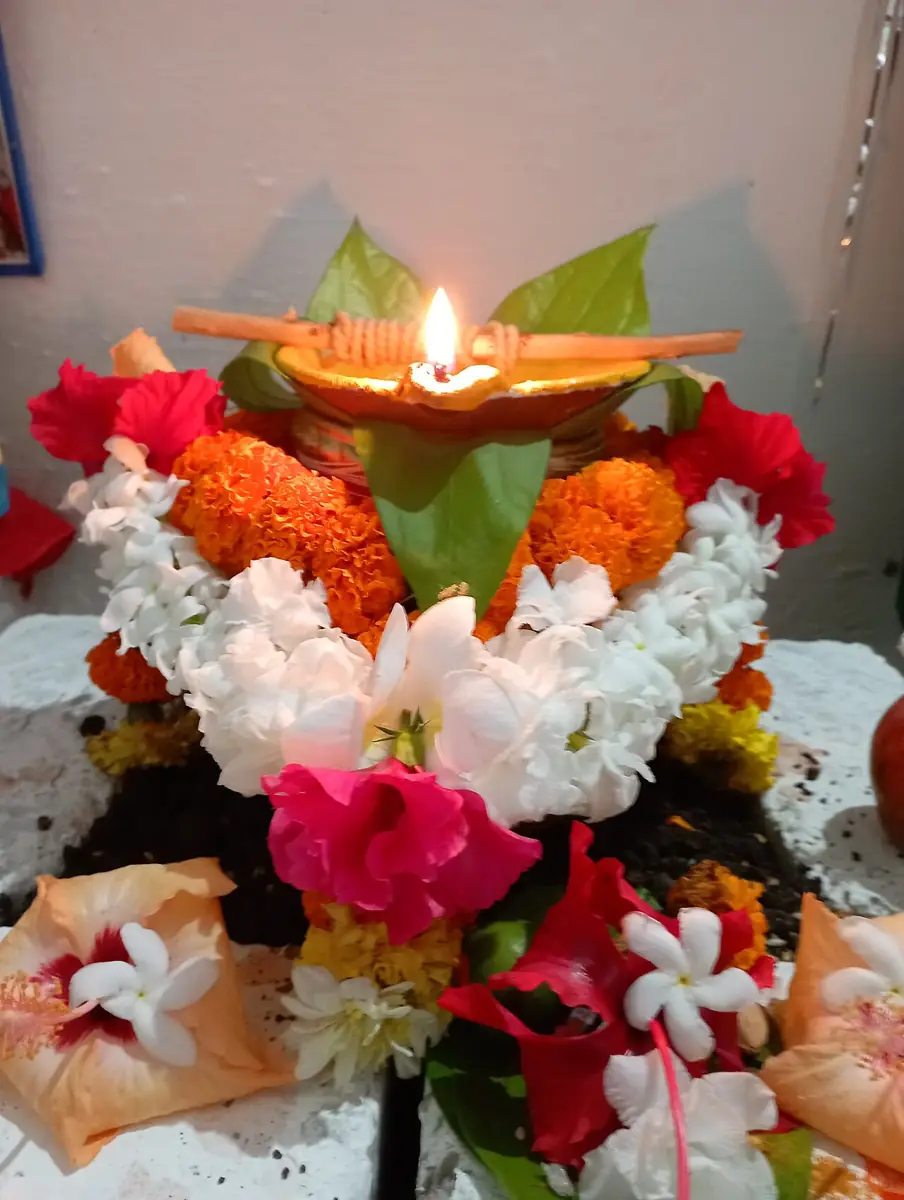
A kalash (ghat) with a lamp, leaves and flowers, set up for worship. Photo: Ashish Suryavanshi858, CC0, via Wikimedia Commons - Light the lamp and make a simple sankalpa
Light the diya and incense. Holding a little water, a flower and a few grains of rice, say in your own language who you are, the day, and that you are worshipping Ma Durga for the wellbeing of your family, then place them before the ghat.
- Invite the Goddess with dhyana
Close your eyes and picture Ma Durga as you know her: ten-armed, on her lion, with her children around her. Chant her name or a verse you know, such as Om Dum Durgayai Namah, and silently invite her to accept your worship.
- Offer the five upacharas (panchopachar)
Offer in order: gandha (sandalwood paste or sindoor), pushpa (flowers and bel leaves), dhoop (incense), deep (lamp) and naivedya (fruit, sweets or cooked bhog). Ring the bell softly as you offer each one.
A worship plate with a conch, lamp and offerings. Photo: Vish79, CC BY-SA 4.0, via Wikimedia Commons - Read or listen to the Chandi Path
Read a chapter or more of the Chandi Path (Durga Saptashati), or listen to a recording with attention. Some families read a set portion each day so that the text is completed by Navami.
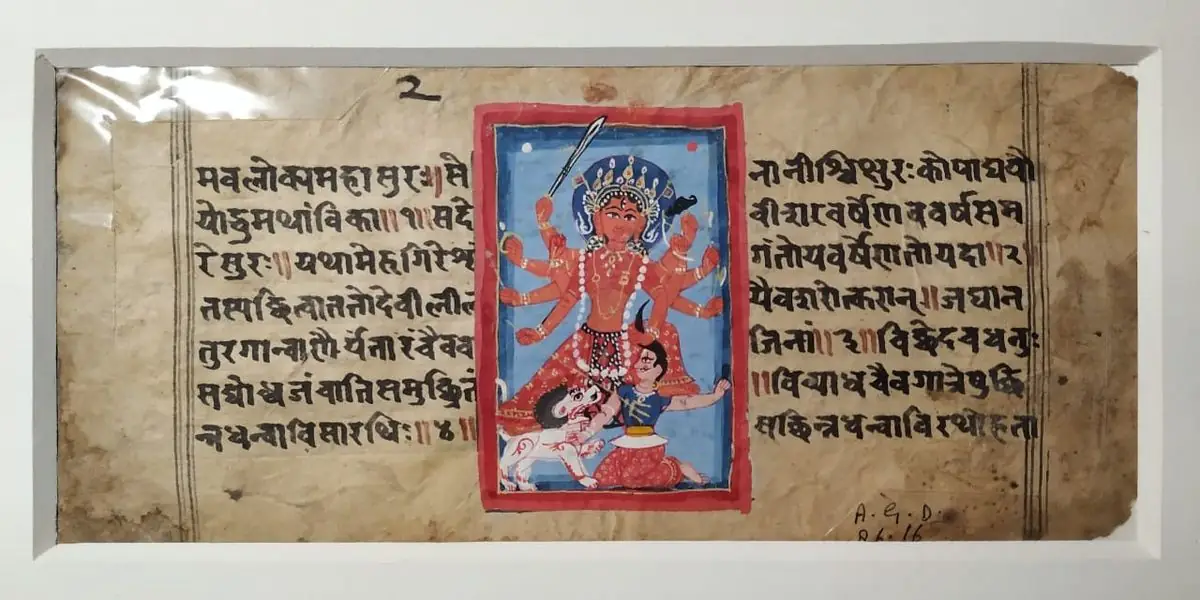
An illustrated leaf of the Devi Mahatmya. Photo: SpeakingArch, CC BY-SA 4.0, via Wikimedia Commons - Perform aarti
Wave the lit lamp, then incense, a conch of water, a cloth and flowers in circles before the Goddess while the family sings or claps. Sprinkle a little of the aarti water on everyone present.
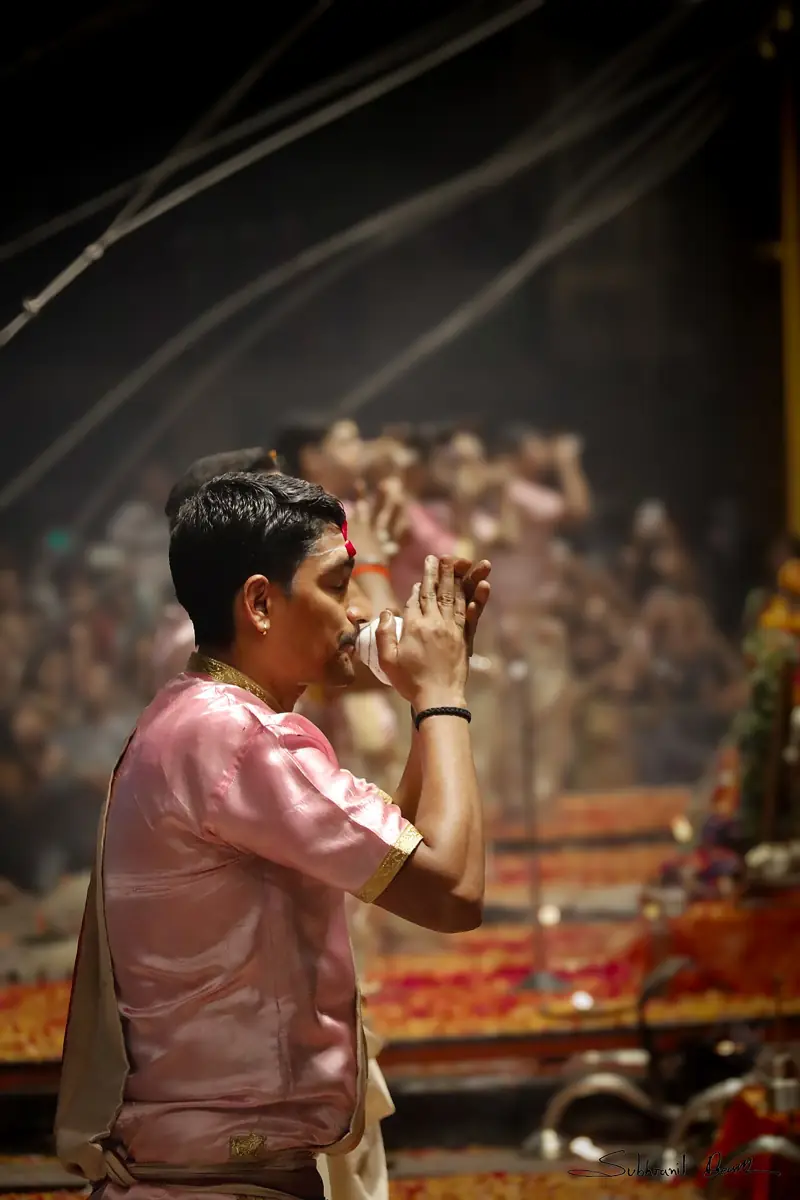
Blowing the shankha, the conch, during worship. Photo: Subhranilbasak0, CC BY-SA 4.0, via Wikimedia Commons - Offer pushpanjali on Ashtami
On Maha Ashtami morning, hold flowers and bel leaves in folded hands, recite the pushpanjali mantra three times (or follow a recording) and offer the flowers at the Goddess's feet.
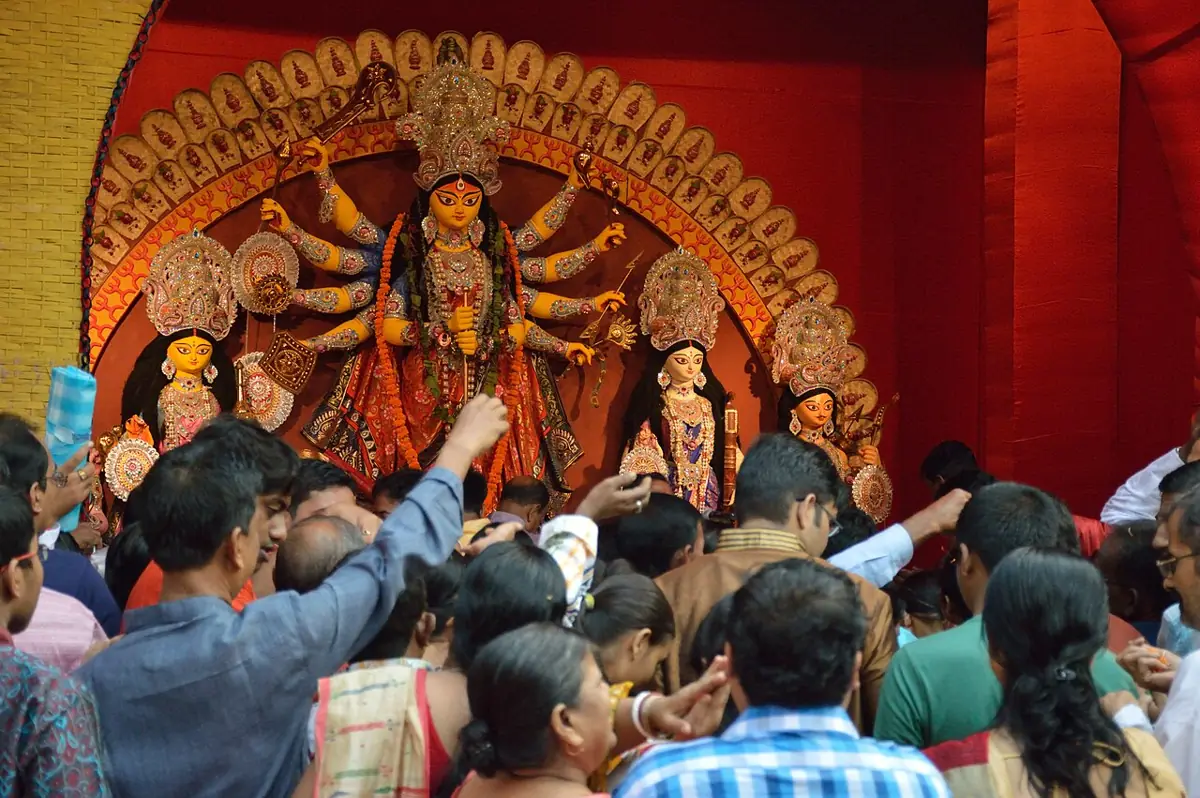
Devotees raise flowers for pushpanjali on Maha Ashtami at a Kolkata pandal. Photo: Biswarup Ganguly, CC BY 3.0, via Wikimedia Commons - Share prasad
Distribute the offered fruit, sweets or bhog to family and neighbours as prasad.
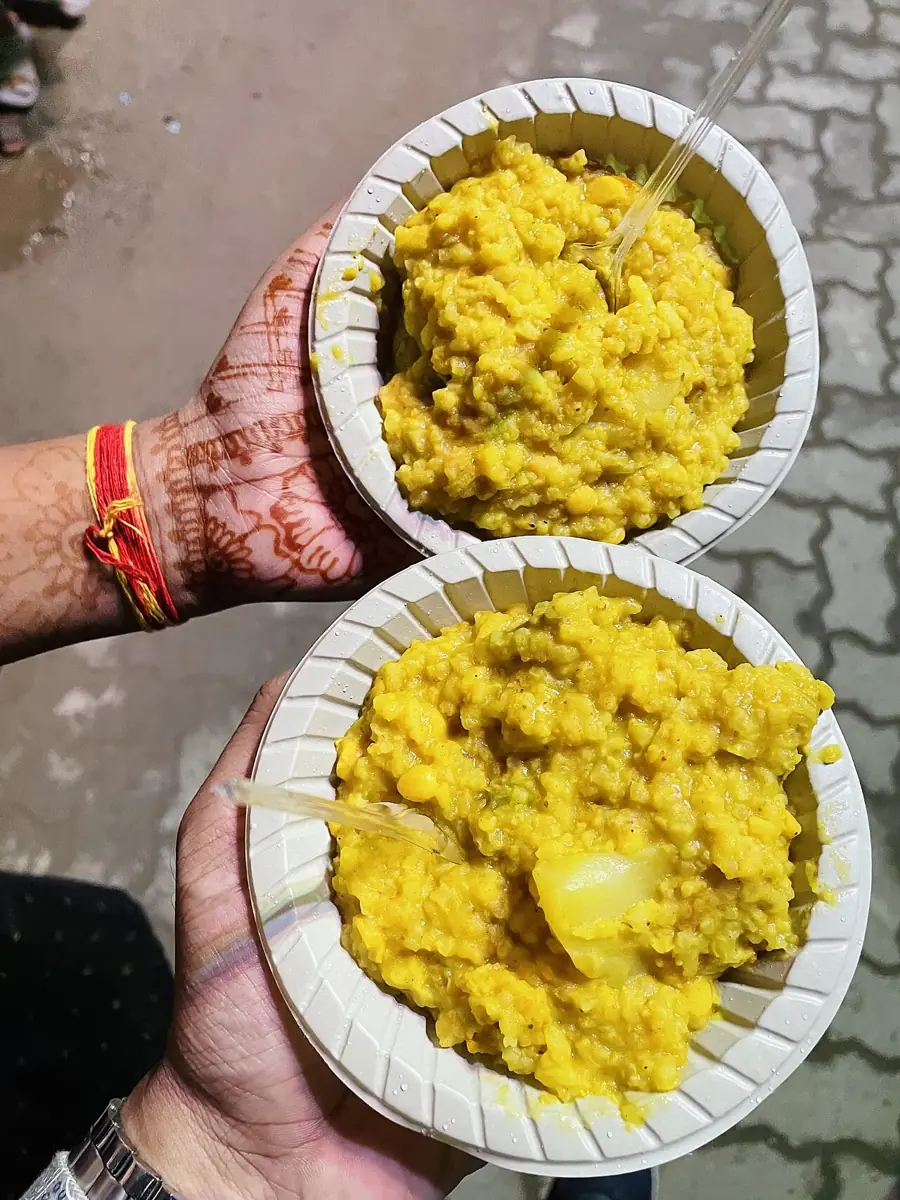
Khichuri bhog served in leaf bowls at a Durga Puja. Photo: AjayDas, CC BY-SA 4.0, via Wikimedia Commons - Retire the ghat on Dashami
On Dashami, offer a final puja, ask forgiveness for any mistakes, gently move the ghat to signal visarjan, and pour the water into a plant or clean flowing water. Exchange Bijoya greetings and sweets.


You can do a meaningful Durga Puja at home without a pandal, an idol or a priest. Set up a ghat (a small water-filled pot that stands for the Goddess's presence) or a picture of Ma Durga, make a simple sankalpa (statement of intention), offer flowers, incense, a lamp and food, perform aarti, and on Maha Ashtami offer pushpanjali (flowers with a mantra). On Dashami you bid her farewell and retire the ghat.
This is how a great many families actually observe the festival. In Bengal, most households go out to see the Goddess at a community (barowari) or family puja, and keep a smaller daily worship at home. Outside Bengal, the same home practice lines up with the nine nights of Navratri.
What a home puja is, and what it isn't
A full Durga Puja, of the kind you see at a pandal or a bonedi bari (old family home), involves bodhon (awakening the Goddess), prana pratishtha (invoking life into the idol), the bathing of the Kola Bou, the sixteen offerings of shodashopachara, Sandhi Puja and a yajna (fire offering). These are traditionally led by a purohit (priest) who knows the mantras and sequence, and many families are careful about not beginning them without that guidance.
A home puja is simpler: it is personal worship, called upasana, done with devotion. Nothing below is a substitute for the full ritual, and nothing below needs special training.
When to worship
- Bengal tradition: Shashthi to Dashami. In 2026 that is Saturday 17 October to Wednesday 21 October, with Saptami on Sunday 18, Maha Ashtami on Monday 19 and Maha Navami on Tuesday 20 October. See Durga Puja 2026 dates.
- Navratri tradition: nine nights from Pratipada, the lunar day that follows the new moon of Mahalaya (Saturday 10 October 2026). Confirm the first day and the ghatasthapana timing in your local panchang.
Morning puja after a bath is most common. Many families also do a short evening aarti.
Preparing the space
Choose a clean corner that won't be disturbed. If you can, face east or north while you sit. Spread a red or yellow cloth on a low stool, keep a mat to sit on, and gather everything from the samagri list on a plate before you begin. A small alpana (white rice-paste design) at the threshold is a lovely Bengali touch.
Ghat sthapana: setting up the ghat
The ghat is the heart of a home puja. Seat it on a small mound of rice or earth, fill it with clean water (a few drops of Ganga water if you have it), draw a swastika on it with sindoor, put five mango leaves in its mouth and rest a coconut or a fruit on top. Some families tie a red thread around its neck. Place the picture of Ma Durga behind it.
Once set up, the ghat is not moved until Dashami.
Sankalpa in simple words
A sankalpa is your promise of what you are about to do. Formal versions name the year, month, tithi and family lineage (gotra). At home, plain words are enough. Hold a little water, a flower and a few grains of rice in your right hand and say something like:
"Today, on Saptami, I, (your name), worship Ma Durga with devotion for the peace and wellbeing of my family. Please accept my offering."
Then let the water and flower fall before the ghat.
Dhyana: picturing the Goddess
Dhyana means meditating on the deity's form. Close your eyes and picture Ma Durga: ten arms holding weapons given by the gods, riding her lion, with Mahishasura at her feet and Lakshmi, Saraswati, Ganesha and Kartik around her. A simple name-mantra many people use is:
ॐ दुं दुर्गायै नमः
Om Dum Durgayai Namah
Salutations to Durga.
Also readDurga Puja samagri listThe five offerings (panchopachar)
Panchopachar means "five services", the simplest complete form of worship:
| Offering | What it is | What to use |
|---|---|---|
| Gandha | Fragrance | Sandalwood paste, sindoor |
| Pushpa | Flowers | Red hibiscus (jaba), lotus, marigold, bel leaves |
| Dhoop | Incense | Agarbatti or dhuno (resin) |
| Deep | Light | Ghee or oil lamp |
| Naivedya | Food | Fruit, sweets or cooked bhog |
Offer each with a short name-mantra or simply "Ma, please accept this."
Chandi Path and aarti
The Chandi Path, also called the Durga Saptashati or Devi Mahatmya, is the 700-verse text that tells of the Goddess's victories. Families who read it often spread its chapters across the puja days. If you don't read Sanskrit, a translation or an attentive listen to a recording is a sincere offering too.
End the puja with aarti: wave the lamp in circles, then incense, then a conch of water and flowers, while others ring a bell, blow the shankha (conch) or sing. Two well-known verses many households recite are:
या देवी सर्वभूतेषु शक्तिरूपेण संस्थिता। नमस्तस्यै नमस्तस्यै नमस्तस्यै नमो नमः॥
Ya devi sarvabhuteshu shakti-rupena samsthita, namastasyai namastasyai namastasyai namo namah.
To the Goddess who dwells in all beings as power: salutations to her, again and again.
सर्वमङ्गलमङ्गल्ये शिवे सर्वार्थसाधिके। शरण्ये त्र्यम्बके गौरि नारायणि नमोऽस्तु ते॥
Sarva-mangala-mangalye shive sarvartha-sadhike, sharanye tryambake gauri narayani namostu te.
O auspicious one, giver of every good, refuge of all, three-eyed Gauri, Narayani: salutations to you.
Pushpanjali on Ashtami
On Maha Ashtami morning, Bengalis offer anjali: flowers and bel leaves held in folded palms, offered after reciting a mantra, usually three times. Many people stay without food until they have offered it. You can do it at home before your ghat, or join your local pandal. The full text, transliteration and meaning are in our pushpanjali mantra guide.
Bhog ideas
Bhog doesn't have to be elaborate. Common home offerings include:
- Simple: cut fruit, sandesh, batasha, a little kheer (payesh).
- Cooked: bhoger khichuri with labra (mixed vegetables) and fried brinjal; luchi with alur dom or chholar dal.
- Navami/Dashami: many Bengali homes cook a festive non-vegetarian lunch for the family, but the offering to the Goddess at home is usually kept vegetarian. Customs differ by family.
Cook bhog fresh, don't taste it before offering, and share it as prasad afterwards. More ideas are in Durga Puja food and bhog.
Visarjan of the ghat on Dashami
On Bijoya Dashami (Wednesday 21 October 2026), do a short final puja, offer curd and flattened rice (doi-chire) if that is your family's custom, and ask forgiveness for any shortcomings. Gently tilt or shift the ghat to mark her departure. Pour the water into a plant or clean water, and return flowers to soil rather than plastic bins. Married women in many families play sindoor khela at the pandal, and everyone exchanges Bijoya greetings and sweets.
A note on variation
Bengali, Odia, Assamese, north Indian and south Indian homes all honour the Goddess differently, and families hand down their own sequence, mantras and food rules. If an elder or your family priest does it a certain way, follow that. This page is a starting point for people who want to begin, not a rulebook.
Questions people ask
Can I do Durga Puja at home without a priest?
Yes. Simple daily worship with a ghat or picture, a lamp, flowers, incense and bhog is done by many households without a priest. A full Durga Puja with an idol, prana pratishtha and shodashopachara is traditionally performed by a trained purohit.
Do I need a Durga idol to do puja at home?
No. Many families worship a ghat (kalash) or a framed picture. Bringing an idol home usually means committing to the full rituals and a proper immersion, so most Bengali households do their idol darshan at a community puja instead.
Which days should I do Durga Puja at home in 2026?
Bengal's main days in 2026 are Shashthi on Saturday 17 October to Bijoya Dashami on Wednesday 21 October, with Maha Ashtami on Monday 19 October. Families following Navratri worship for nine nights starting after Mahalaya; check your local panjika for the first day.
What bhog can I offer at home?
Fruit, sandesh, kheer (payesh), luchi with sabzi or a simple khichuri are all common home offerings. Offer food that is cooked fresh and kept separate before it is tasted by anyone.
What if I make a mistake during the puja?
Traditions stress sincerity over perfection. Many people end each day's puja by folding their hands and asking the Goddess to forgive any errors in their worship.
Read next
- At homeDurga Puja samagri listA complete Durga Puja samagri checklist for home worship: essentials, flowers and leaves, bhog, items for Ashtami anjali and Dashami, plus easy substitutions.
 RitualsDurga Puja pushpanjali mantra, with meaningDurga Puja pushpanjali (anjali) mantras in Bengali and Devanagari with transliteration and meaning: Jayanti Mangala Kali, Sarva Mangala and how to offer.
 Navratri · 10 stepsGhatasthapanaStep-by-step Navratri ghatasthapana (kalash sthapana) at home: sowing barley in soil, setting the kalash, coconut and mango leaves, muhurta tips and supplies.
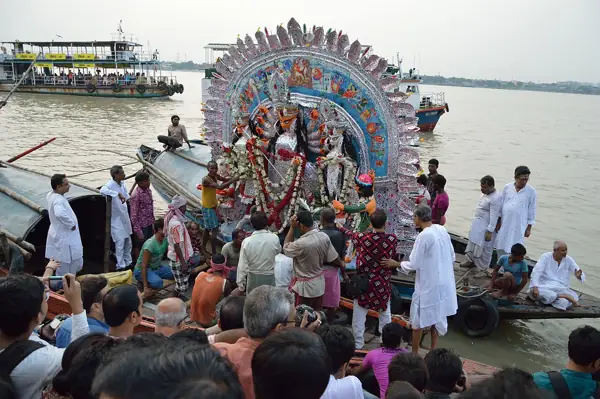 RitualsBijoya DashamiBijoya Dashami 2026 is Wednesday 21 October: darpan bisarjan, boron and sindoor khela, immersion processions, shanti jal and Bijoya greetings explained.
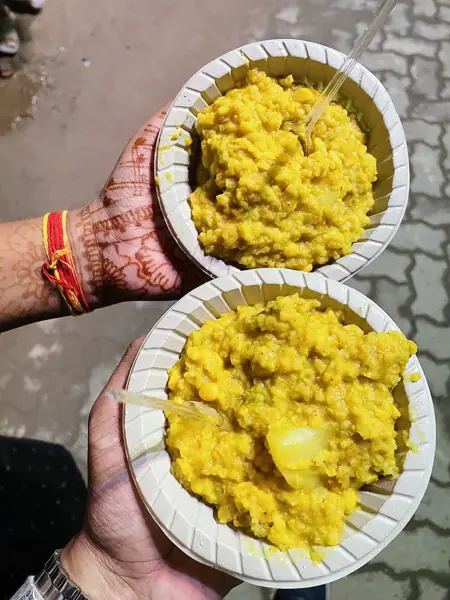 CultureDurga Puja foodWhat people eat at Durga Puja: khichuri bhog, labra, payesh, phuchka, rolls, mughlai paratha, rosogolla and sandesh, plus why bhog is shared and eaten together.