Sindoor khela: the vermilion farewell of Bijoya Dashami
 Pujo Parikrama team3 min read · Updated
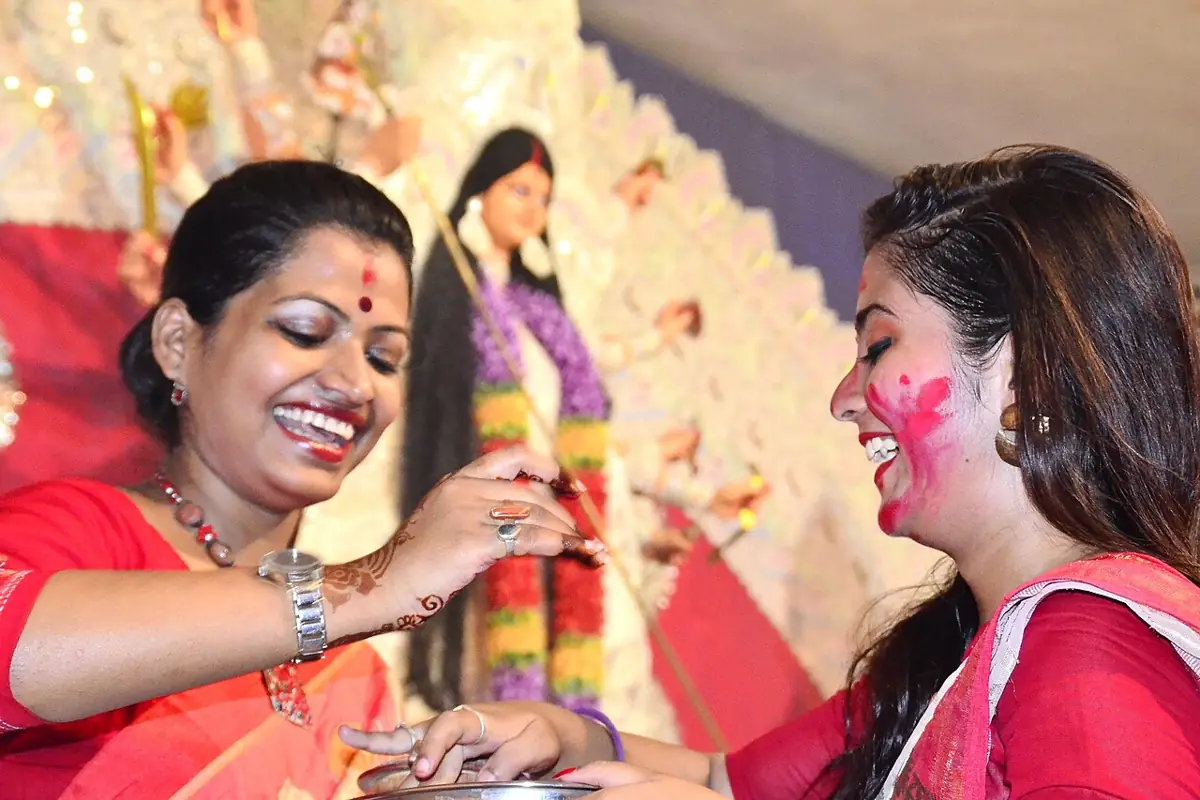
Sindoor khela ("vermilion play") is the Bijoya Dashami ritual in which women first offer sindoor (vermilion) and sweets to Goddess Durga in farewell, then smear it on each other's foreheads, cheeks and bangles, wishing one another a long and happy married life. Traditionally it is performed by married women; today some pujas welcome a wider group of women. In 2026 Bijoya Dashami, and so sindoor khela, falls on Wednesday 21 October.
 ▶ Photo story · 6 pagesSindoor khela: the vermilion farewell of Bijoya Dashami
In this article 6 sections
Sindoor khela (sindur, vermilion; khela, play) is the farewell ritual of Bijoya Dashami. Women first offer sindoor and sweets to the goddess, then smear it on each other's faces, until the pandal is a blur of red. It is a blessing for married life, a goodbye to Durga as a departing daughter, and one of the most joyful moments of the festival. In 2026 it takes place on Wednesday 21 October.
What it means
Sindoor in the parting of the hair is a sign of marriage for many Hindu women in Bengal, along with the red and white conch-shell and lac bangles (shankha and pola). In Bengali tradition, Durga is also Uma, a married daughter who comes home for a few days and returns to Shiva on Dashami. Women send her off as they would a daughter, with sindoor, sweets and tears, and then share the same blessing among themselves: a long life for their husbands and well-being for their families.
How it is done
Customs differ between pujas and families, but the sequence usually runs like this:
- Boron. After the Dashami puja and darpan bisarjan, married women take a boron dala, a plate holding a lamp, sindoor, betel leaves, sweets and other auspicious items, and circle it before the goddess.
- Offering to the goddess. They touch sweets and betel leaf to Durga's lips, apply sindoor to her forehead and the parting of her hair, and wipe her face with a betel leaf, as if drying her tears. Many do the same for Lakshmi, Saraswati and the Kola Bou.
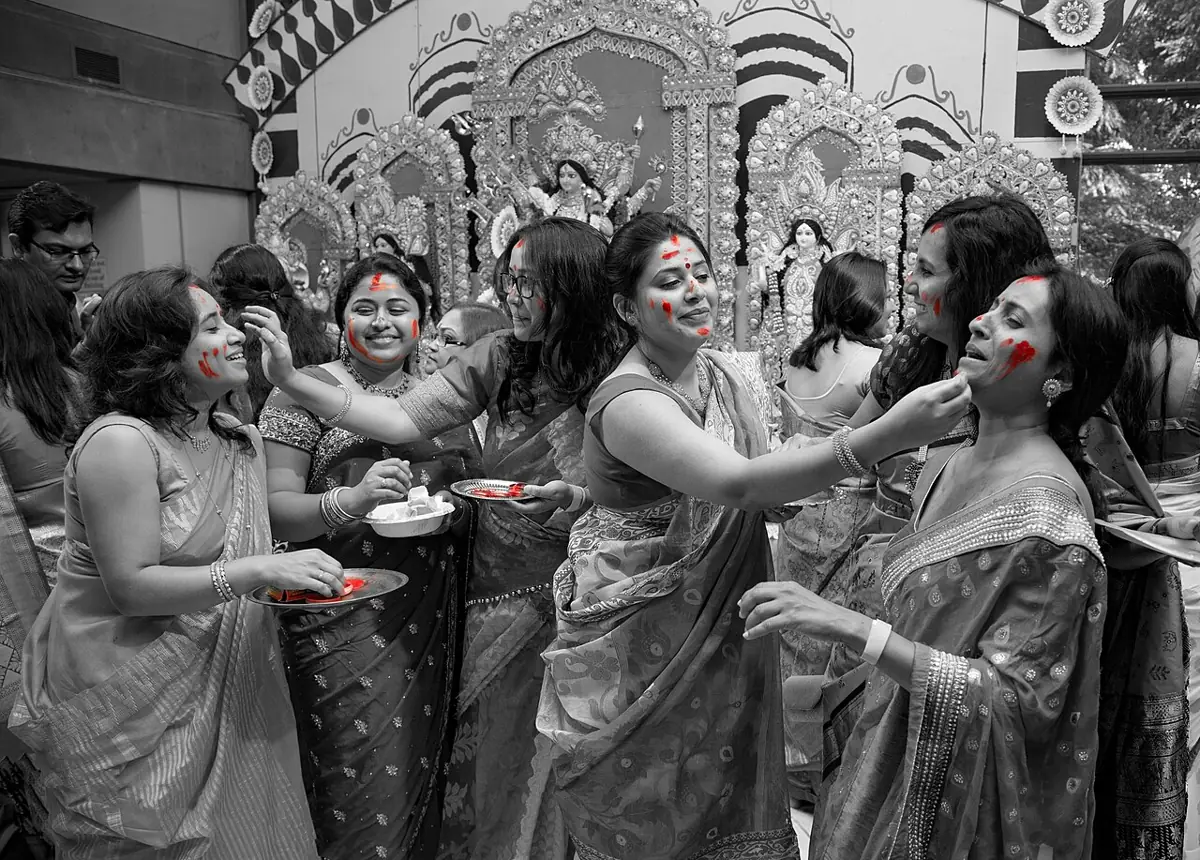
- Sindoor khela. The women then apply sindoor to each other's foreheads, partings and bangles, and soon on cheeks too, with laughter, ululation (ulu), dhak drumming and sweets.
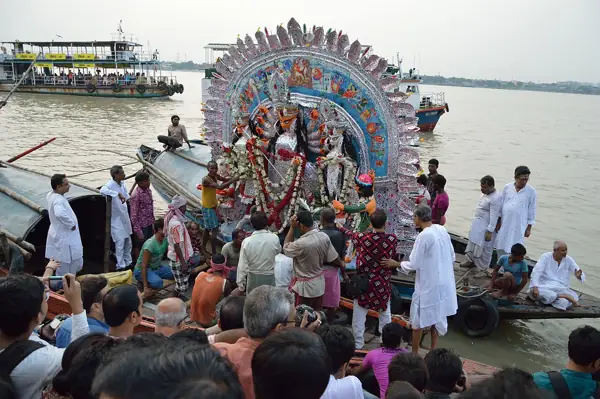
- Farewell. The idol is carried out for immersion, often with cries of "Asche bochor abar hobe" ("it will happen again next year").
.jpg)
Who takes part
Traditionally sindoor khela has been for married women. In recent years some pujas have made a point of welcoming widows, unmarried women and members of other communities, and in many pandals friends and visitors are drawn in. Elsewhere, especially in family pujas, the older practice continues. If you are a visitor, ask the organisers or join only when invited.
 Also readBijoya Dashami
What to wear
- A white or cream sari with a red border (laal paar sada) is the classic choice, often worn with shankha-pola bangles.
- Choose fabric you won't mind staining: sindoor is hard to wash out of silk.
- Tie up long hair, and wear footwear you can easily slip off near the altar.
Tips
- Ask the time. Sindoor khela usually happens in the late morning or afternoon, before the idol leaves, but each puja has its own schedule.
- Protect your skin and eyes. Rub a little coconut oil on your hairline and face beforehand, and keep sindoor away from eyes and mouth. Some synthetic sindoor can irritate skin.
- Photographers: the crowds at famous pujas can be dense. Keep your distance, don't block participants, and ask before close-up portraits.
- Go early to popular pujas such as Bagbazar Sarbojanin and Sovabazar Rajbari.
After sindoor khela
The day continues with the immersion processions and Bijoya greetings: touching elders' feet, embracing friends and sharing sweets. See Bijoya Dashami, Bijoya Dashami wishes and the full ritual sequence.
See it in Kolkata
- 📍 Bagbazar SarbojaninOne of the oldest sarbojanin pujas. Traditional daker saaj idol, plus a riverside fair.
- 📍 Sovabazar RajbariA bonedi bari puja started by Raja Nabakrishna Deb. The thakurdalan is stunning.
Questions people ask
When is sindoor khela in 2026?
On Bijoya Dashami, Wednesday 21 October 2026, usually after the Dashami puja and boron and before the idol leaves for immersion. The exact hour differs from puja to puja, so ask the organisers.
Who can take part in sindoor khela?
Traditionally married women. In recent years some pujas have openly welcomed widows, unmarried women and others; practice depends on the puja and the family, so it is polite to ask the organisers.
What should I wear for sindoor khela?
Many women wear a white sari with a red border, often the laal paar sada sari. Wear something you don't mind staining, because sindoor can be hard to wash out.
Does sindoor come off?
Sindoor stains fabric and can colour skin and hair for a while. Oil your hairline and skin a little beforehand, avoid getting it in your eyes, and wash with mild soap and oil afterwards.
Where is the most famous sindoor khela in Kolkata?
Bagbazar Sarbojanin and old family pujas such as Sovabazar Rajbari are among the best known, and are crowded with photographers as well as participants.
Read next
- RitualsBijoya DashamiBijoya Dashami 2026 is Wednesday 21 October: darpan bisarjan, boron and sindoor khela, immersion processions, shanti jal and Bijoya greetings explained.
- CultureSubho Bijoya and Durga Puja wishesOriginal Subho Bijoya and Durga Puja wishes in Bengali, English and Hindi for family, friends, colleagues and Instagram, plus the custom of pranam and kolakuli.
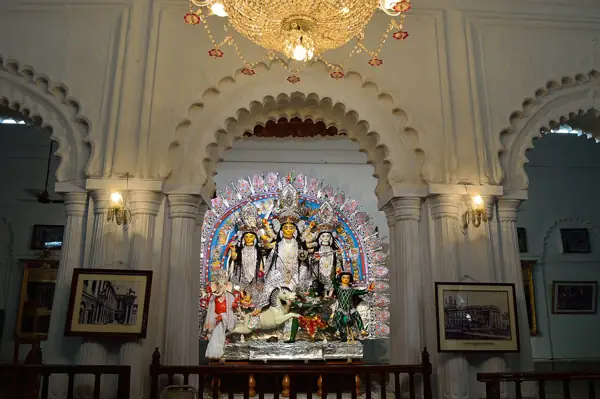 CultureBonedi bari pujasBonedi bari pujas are Kolkata's old family Durga Pujas, held in thakur dalans with ekchala idols and old rites. What sets them apart, where to go, etiquette.
 RitualsDurga Puja rituals day by dayDurga Puja rituals day by day: Mahalaya, Shashthi bodhon, Saptami Kola Bou, Ashtami anjali and Sandhi Puja, Navami homa, Dashami sindoor khela, 2026 dates.