Bijoya Dashami: the farewell to the goddess
 Pujo Parikrama team4 min read · Updated
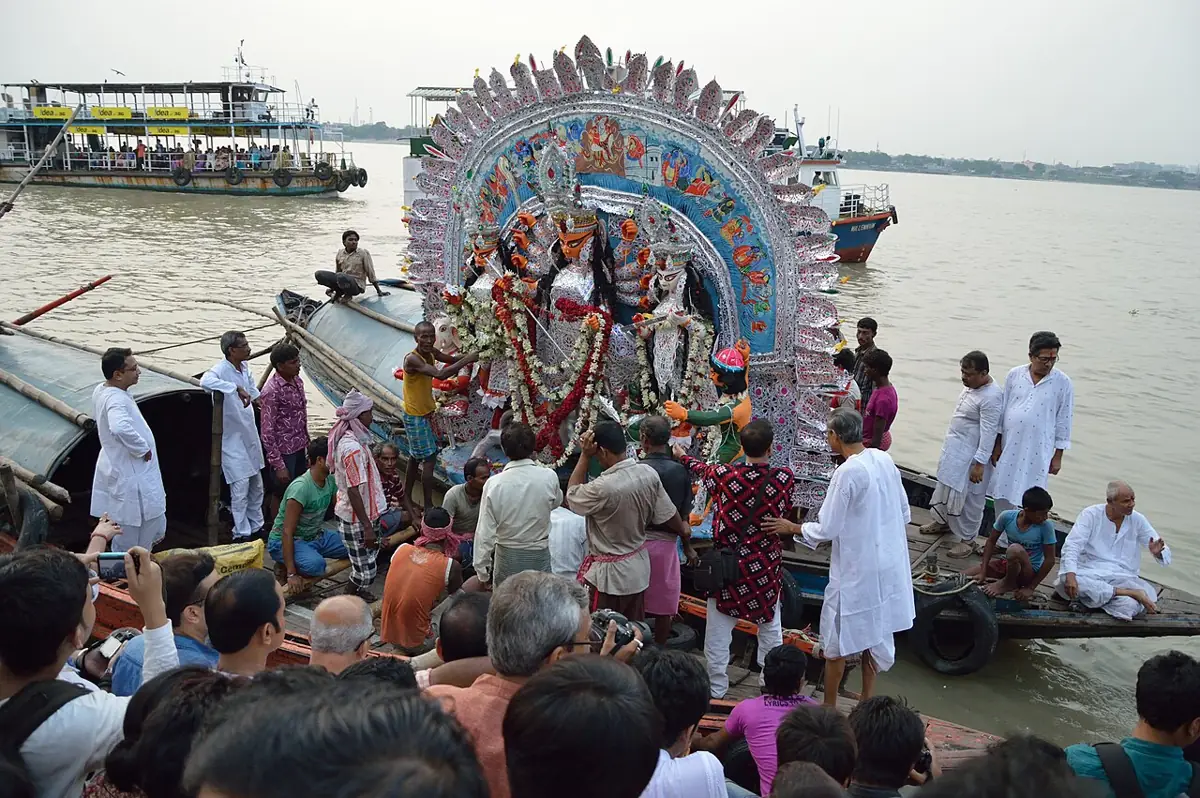
Bijoya Dashami is the tenth and final day of Durga Puja, when the goddess is bid farewell. After the Dashami puja the priest immerses her reflection in a mirror (darpan bisarjan), married women offer boron and play sindoor khela, and the idols are carried in procession to the river for bisarjan (immersion); then people exchange Bijoya greetings. In 2026 Bijoya Dashami falls on Wednesday 21 October.
 ▶ Photo story · 7 pagesBijoya Dashami: the farewell
In this article 7 sections
Bijoya Dashami is the last day of Durga Puja, the day the goddess leaves. Its rites move from worship to farewell: the Dashami puja, darpan bisarjan (immersion in a mirror), boron and sindoor khela by married women, the bisarjan (immersion) processions to the river, and finally Bijoya greetings among family and friends. In 2026 Bijoya Dashami falls on Wednesday 21 October.
In Bengali tradition, Durga is also Uma, a daughter who visits her parents' home every autumn with her children and must return to her husband Shiva on Mount Kailash. That is why Dashami feels like seeing off a daughter: joyful, tender and sad at once.
Dashami puja and darpan bisarjan
The morning begins with a short Dashami puja. Many traditions also worship Aparajita, the "unconquered" goddess, on this day. Then comes the moment that formally ends the worship: darpan bisarjan. The priest holds a mirror (darpan) so that the goddess is reflected in a bowl or vessel of water, and with mantras immerses her reflection. From this point the goddess is understood to have left the clay image, even though it stays in the pandal for some hours or days.
The priest then sprinkles shanti jal (water of peace) on the people gathered, a blessing for wellbeing in the year ahead. The timing of these rites follows the tithi in the panjika and the family's custom.
Boron: the farewell
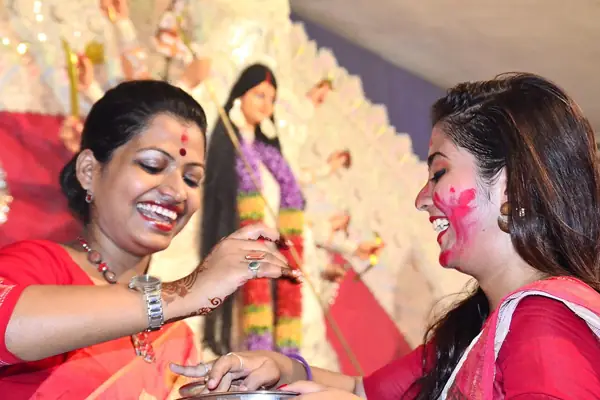
Before the idol leaves, married women perform boron. With a plate (boron dala) holding a lamp, sindoor (vermilion), betel leaves, sweets, durba grass and other auspicious items, they circle the plate before the goddess, touch sweets and paan to her lips, apply sindoor to her forehead and wipe her face with a betel leaf, as if drying the tears of a daughter leaving home. They do the same for Lakshmi, Saraswati, Ganesha, Kartik and the Kola Bou.
Sindoor khela
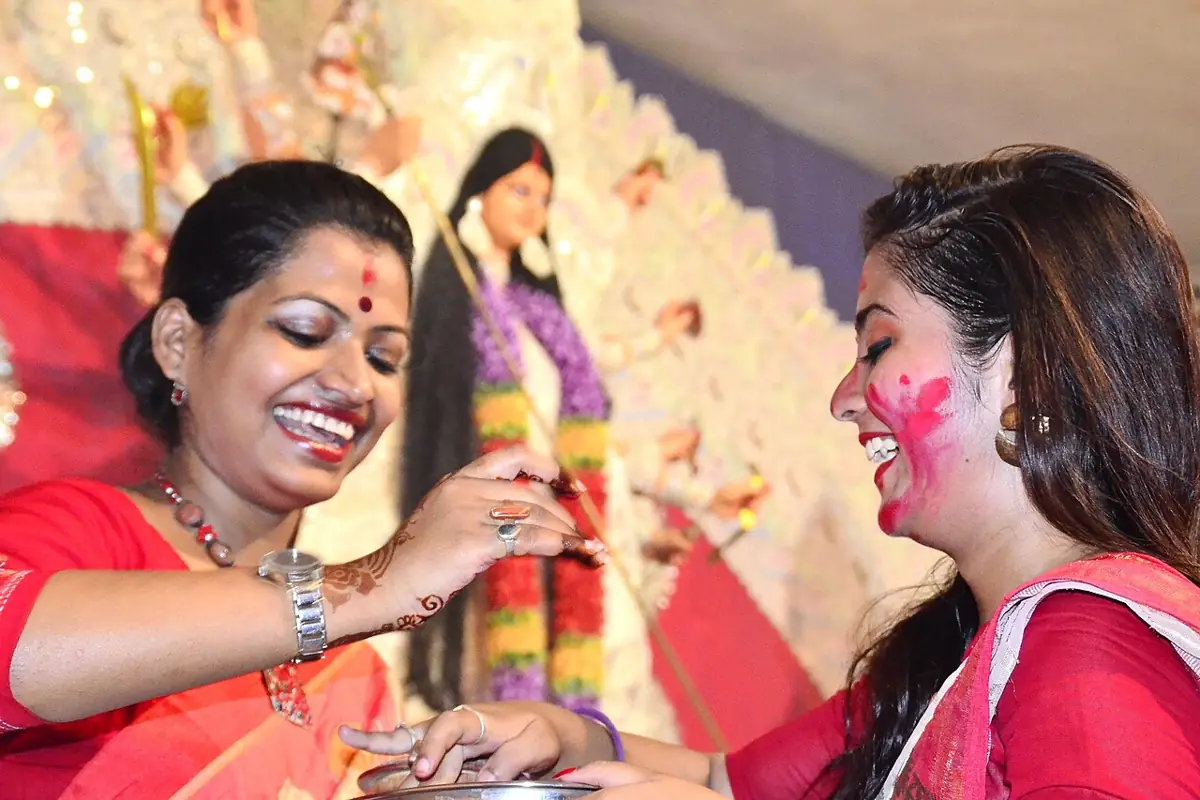
After boron, women smear sindoor on each other's foreheads, cheeks and conch-shell bangles, wishing one another a long and happy married life. Traditionally this is done by married women, though some pujas now welcome a wider group of women. It is one of the most joyful, and most photographed, moments of the festival. See our full guide to sindoor khela.

Bisarjan: the immersion
In the afternoon or evening the idols are lifted onto lorries or carried by hand and taken in procession, with dhak, dancing and cries of "Asche bochor abar hobe" ("it will happen again next year"), to the river. At the ghats they are immersed in the Hooghly. In Kolkata immersions are spread over Dashami and the following days according to a schedule set by the authorities, and in recent years the state government has held a carnival on Red Road where selected idols are paraded. For safety, follow police instructions at the ghats and avoid the riverbank at peak times with small children.
Also readSindoor khelaBijoya greetings
Once the goddess has left, Bengalis exchange Bijoya greetings, saying Shubho Bijoya:
- younger people touch the feet of elders (pranam) and receive blessings;
- people of similar age embrace (kolakuli);
- everyone shares sweets such as naru, sandesh and nimki.
Visits to relatives and neighbours continue for days, sometimes until Kojagari Lakshmi Puja. For messages and wishes see Bijoya Dashami wishes.
After the immersion
When the family or committee returns from the ghat, the empty pandal or thakur dalan has a particular stillness. In many homes a lamp is lit where the goddess stood, and the evening is spent receiving visitors and going on Bijoya rounds. In many families people write the goddess's name, often as "Sri Sri Durga Sahay", on paper on Dashami evening. Such customs vary greatly from home to home.
The festival season does not end entirely: Kojagari Lakshmi Puja follows on the full moon, and Kali Puja, with Diwali, comes about three weeks after Dashami. Many Bengalis say the sadness of Dashami lasts until the first sweets of Bijoya arrive.
Where to see Dashami rites
Bagbazar Sarbojanin is known for a large, lively sindoor khela, and old family pujas such as Sovabazar Rajbari keep traditional farewell rites; see also bonedi bari pujas. Arrive early, as the crowds are heavy.
Elsewhere in India the same day is celebrated as Dussehra or Vijayadashami. For the full Durga Puja sequence, see rituals day by day.
See it in Kolkata
- 📍 Bagbazar SarbojaninOne of the oldest sarbojanin pujas. Traditional daker saaj idol, plus a riverside fair.
- 📍 Sovabazar RajbariA bonedi bari puja started by Raja Nabakrishna Deb. The thakurdalan is stunning.
Questions people ask
When is Bijoya Dashami in 2026?
Bijoya Dashami is on Wednesday 21 October 2026, the day after Maha Navami. Immersions in Kolkata usually continue for a few days afterwards.
What is darpan bisarjan?
Darpan bisarjan is the symbolic immersion of the goddess. A mirror is held so that the goddess's image is reflected in a bowl of water, and the reflection is ritually immersed, marking that she has left the idol.
What is boron?
Boron is the farewell offered by married women before the idol leaves: a plate with a lamp, sindoor, betel leaf, sweets and other items is circled before the goddess, sweets are touched to her lips and her face is wiped as if drying her tears.
What do you say on Bijoya Dashami?
Bengalis say Shubho Bijoya. Younger people touch the feet of elders (pranam), people of similar age embrace (kolakuli), and everyone shares sweets. Visits and greetings continue for days after Dashami.
Why is Dashami called Bijoya?
Bijoya, or Vijaya, means victory, recalling the goddess's victory over Mahishasura; elsewhere in India the same day celebrates Rama's victory over Ravana as Dussehra.
Read next
- RitualsSindoor khelaSindoor khela is the Bijoya Dashami ritual where women offer vermilion to Durga and smear it on each other: who takes part, how it is done, what to wear.
- CultureSubho Bijoya and Durga Puja wishesOriginal Subho Bijoya and Durga Puja wishes in Bengali, English and Hindi for family, friends, colleagues and Instagram, plus the custom of pranam and kolakuli.
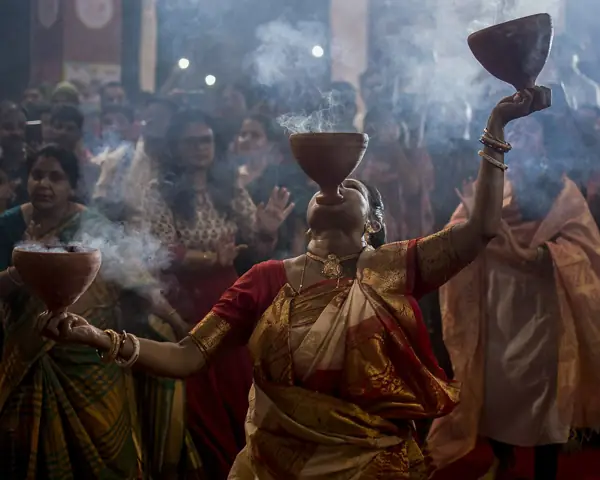 RitualsMaha NavamiMaha Navami 2026 is Tuesday 20 October: the Navami puja, the homa fire offering, khichuri bhog, symbolic offerings in place of sacrifice and dhunuchi naach.
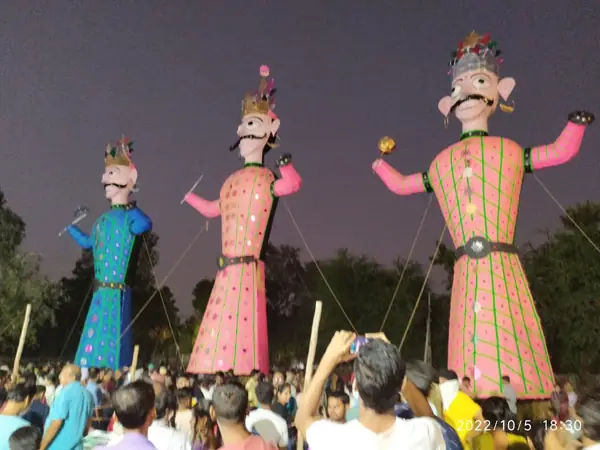 NavratriDussehra and VijayadashamiVijayadashami and Dussehra 2026 explained: Rama's victory over Ravana, Durga's over Mahishasura, Ravan dahan, Mysuru Dasara, Bengal's Bijoya and Shami puja.
 RitualsDurga Puja rituals day by dayDurga Puja rituals day by day: Mahalaya, Shashthi bodhon, Saptami Kola Bou, Ashtami anjali and Sandhi Puja, Navami homa, Dashami sindoor khela, 2026 dates.