Dussehra and Vijayadashami: the victorious tenth day
 Pujo Parikrama team4 min read · Updated
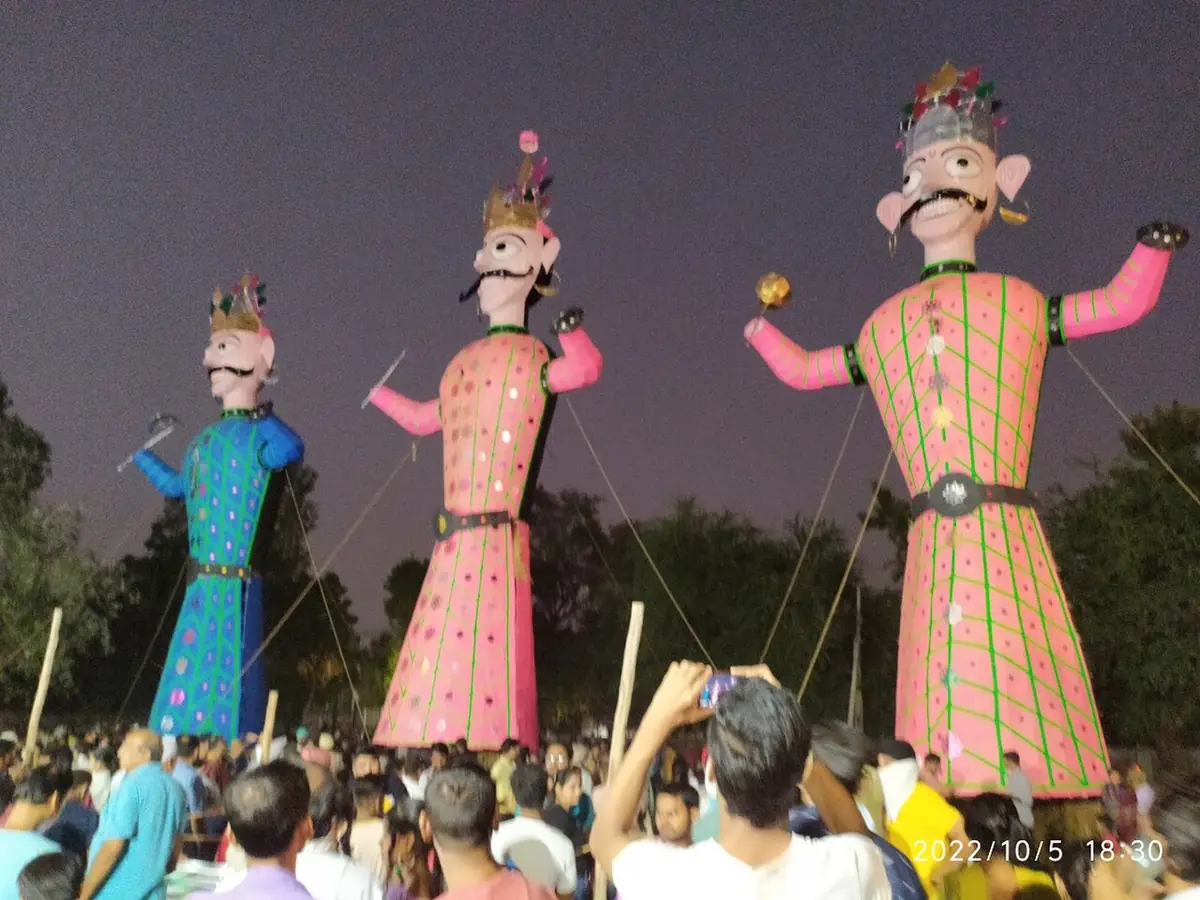
Vijayadashami, also called Dussehra or Dasara, is the tenth day after Sharad Navratri, celebrating the victory of good over evil: Rama's defeat of Ravana and Durga's defeat of Mahishasura. In 2026 it falls on Wednesday 21 October per the Bengal calendar; check your local panchang, as regional calendars can differ. It is marked by Ramlila and the burning of Ravana effigies in north India, the Dasara procession in Mysuru, Shami puja and Ayudha Puja traditions in the west and south, and Bijoya Dashami, with idol immersion and greetings, in Bengal.
 ▶ Photo story · 9 pagesDussehra and Vijayadashami: the victorious tenth day
In this article 8 sections
Vijayadashami ("the victorious tenth"), also called Dussehra or Dasara, is the day after the nine nights of Navratri. It celebrates the victory of good over evil, remembered in two great stories: Rama's defeat of Ravana in the Ramayana and Durga's defeat of Mahishasura in the Devi Mahatmya. In 2026, Vijayadashami falls on Wednesday 21 October per the Bengal calendar; check your local panchang, as regional almanacs can differ.
Across India the day looks very different: burning effigies on Delhi's Ramlila grounds, a royal procession in Mysuru, tearful farewells to the Goddess on Kolkata's ghats, and children starting their first lessons in Kerala.
Two stories of victory
Rama and Ravana. In the Ramayana, Ravana, king of Lanka, abducts Sita. Rama, with Lakshmana, Hanuman and an army, fights Ravana and kills him. In a widely loved retelling, Rama first worships the Goddess for her blessing: Bengal tradition calls this akal bodhon, the untimely awakening of Durga in autumn, and sees in it the origin of the autumn Durga Puja.
Durga and Mahishasura. In the Devi Mahatmya, the buffalo demon Mahishasura can't be defeated by any god. The gods pool their energies to create the Goddess, who fights him and kills him. Navratri is often read as the nine nights of that battle, and the tenth as the day of victory.
North India: Ramlila and Ravan dahan
In much of north India, the nine nights are the season of Ramlila, staged retellings of the Ramayana by local troupes in open grounds, some running for many years in the same neighbourhood. The Ramlila of Ramnagar in Varanasi is among the most famous, and UNESCO has recognised the Ramlila tradition as intangible cultural heritage.
On Dussehra evening, towering effigies of Ravana, often with his brother Kumbhakarna and son Meghnad, are filled with firecrackers and set alight with an arrow after the final scene. This is Ravan dahan. Crowds gather in the thousands in cities and towns, and fairs (melas) sell food and toys. Families also worship weapons, tools and vehicles, and many begin new ventures on this day, which is considered especially auspicious.
Mysuru Dasara
In Karnataka, Mysuru Dasara is the state festival, with a history tied to the Wodeyar royal family and earlier to the Vijayanagara kingdom. Mysore Palace is lit up with thousands of bulbs for the festival. On Vijayadashami, the Jamboo Savari procession carries the image of the goddess Chamundeshwari on a golden howdah atop a decorated elephant through the city, followed by tableaux, music and dance.
Bengal: Bijoya Dashami
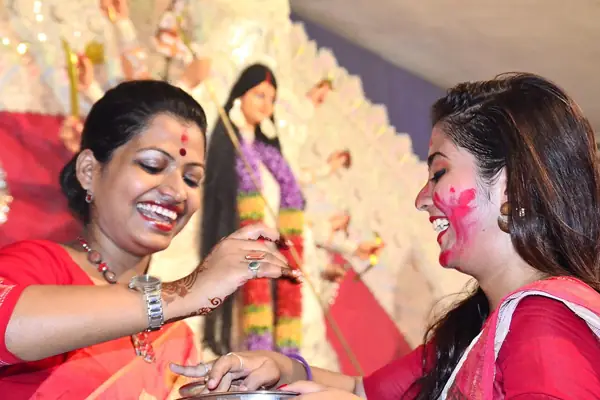
In Bengal, the day is Bijoya Dashami. The mood is bittersweet: the Goddess, seen as a daughter visiting her parents' home, is returning to Shiva in Kailash. After a final puja, the priest performs darpan visarjan, immersing the Goddess's reflection in a mirror or bowl of water. Married women offer sweets and paan to the Goddess and play sindoor khela, smearing vermilion on each other. The idols are then carried, with drums and dancing, for immersion in the river.
After the immersion, people say "Shubho Bijoya", touch elders' feet, embrace friends and share sweets such as narkel naru and nimki. Visiting and Bijoya greetings continue for days. See our Bijoya Dashami wishes page for greetings in Bengali and English.
 Also readNavratri 2026
Western India: Shami puja and apta leaves
In Maharashtra and other regions, people worship the Shami tree on Dasara. The Mahabharata tells how the Pandavas hid their weapons in a Shami tree during their year in disguise and recovered them before battle. Maharashtrian families also exchange apta leaves as sone (gold), with greetings, a symbol of sharing prosperity. Seemollanghan, crossing the village boundary, is another old custom of the day.
South India: Ayudha Puja and new beginnings
In Karnataka, Tamil Nadu, Kerala and Andhra Pradesh, Ayudha Puja is usually observed on Navami: tools, vehicles, books, musical instruments and computers are cleaned, decorated and worshipped alongside Saraswati Puja. On Vijayadashami, many families in Kerala and Tamil Nadu hold Vidyarambham, when young children write their first letters, often in rice or sand. The Golu doll displays of Navratri are put away after the day.
Other regions
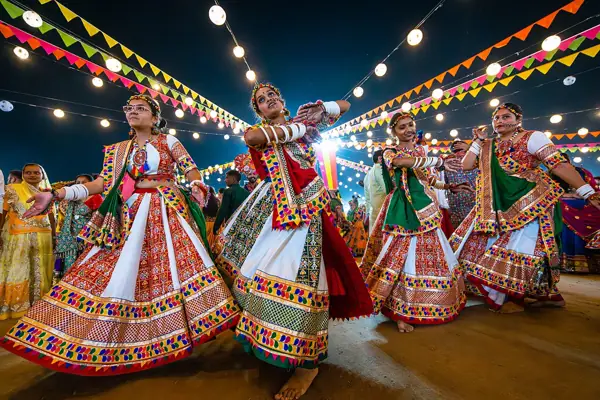
- Gujarat: the last night of garba and Dussehra feasts of fafda and jalebi.
- Himachal Pradesh: Kullu Dussehra begins on Vijayadashami and lasts several days, with deities brought from surrounding villages.
- Nepal: Dashain, the country's biggest festival, where elders give tika and the barley shoots (jamara) from ghatasthapana.
- Chhattisgarh: Bastar Dussehra is a long festival focused on the local goddess Danteshwari rather than on Ravana.
The day after Navratri at home
If you kept a kalash during Navratri, Vijayadashami is often the day to close it: offer a final puja, distribute the barley sprouts and pour the water into plants. Many people also treat it as an auspicious day to buy something new, begin a course or start a business.
Questions people ask
When is Dussehra in 2026?
Vijayadashami (Dussehra) is on Wednesday 21 October 2026 per the Bengal calendar. Some regional calendars may differ, so confirm the date and any muhurta in your local panchang.
Are Dussehra and Vijayadashami the same?
Yes, they are names for the same tenth day. Dussehra (from 'ten' and 'removal' of evil, often linked to Ravana's ten heads) is the common north Indian name; Vijayadashami means 'the victorious tenth'; Dasara is used in Karnataka and Maharashtra.
Why is Ravana's effigy burned on Dussehra?
Burning the effigies of Ravana, often with his brother Kumbhakarna and son Meghnad, re-enacts Rama's victory in the Ramayana and symbolises the destruction of pride and evil. It usually follows days of Ramlila performances.
How is Vijayadashami celebrated in Bengal?
In Bengal it is Bijoya Dashami: the Goddess is bid farewell with a final puja and darpan visarjan, married women play sindoor khela, idols are taken for immersion, and people greet each other with Shubho Bijoya, sweets and embraces.
What is Shami puja on Dussehra?
Shami puja is the worship of the Shami tree on Vijayadashami, linked to the Mahabharata story of the Pandavas hiding their weapons in a Shami tree during exile. In Maharashtra, people also exchange apta leaves as symbolic gold.
Read next
- NavratriNavratri 2026What Navratri means, when Sharad Navratri 2026 falls, its rituals (ghatasthapana, Navadurga, fasting, garba) and how it differs from Bengal's Durga Puja.
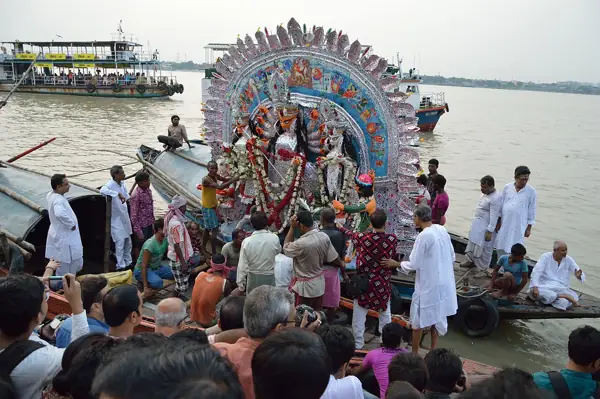 RitualsBijoya DashamiBijoya Dashami 2026 is Wednesday 21 October: darpan bisarjan, boron and sindoor khela, immersion processions, shanti jal and Bijoya greetings explained.
 CultureSubho Bijoya and Durga Puja wishesOriginal Subho Bijoya and Durga Puja wishes in Bengali, English and Hindi for family, friends, colleagues and Instagram, plus the custom of pranam and kolakuli.
- RitualsSindoor khelaSindoor khela is the Bijoya Dashami ritual where women offer vermilion to Durga and smear it on each other: who takes part, how it is done, what to wear.
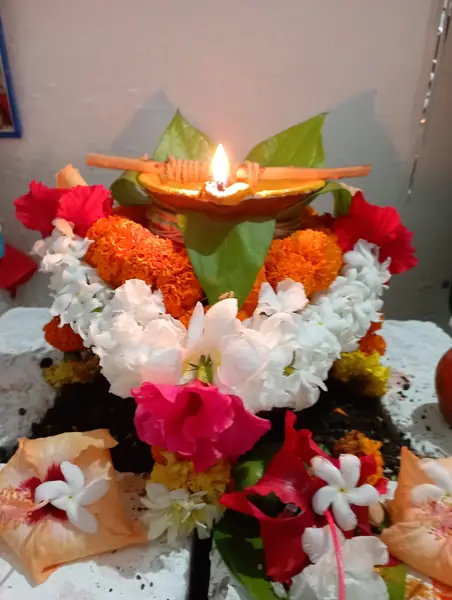 Navratri · 10 stepsGhatasthapanaStep-by-step Navratri ghatasthapana (kalash sthapana) at home: sowing barley in soil, setting the kalash, coconut and mango leaves, muhurta tips and supplies.