Garba and Dandiya Raas: a beginner's guide
 Pujo Parikrama team4 min read · Updated
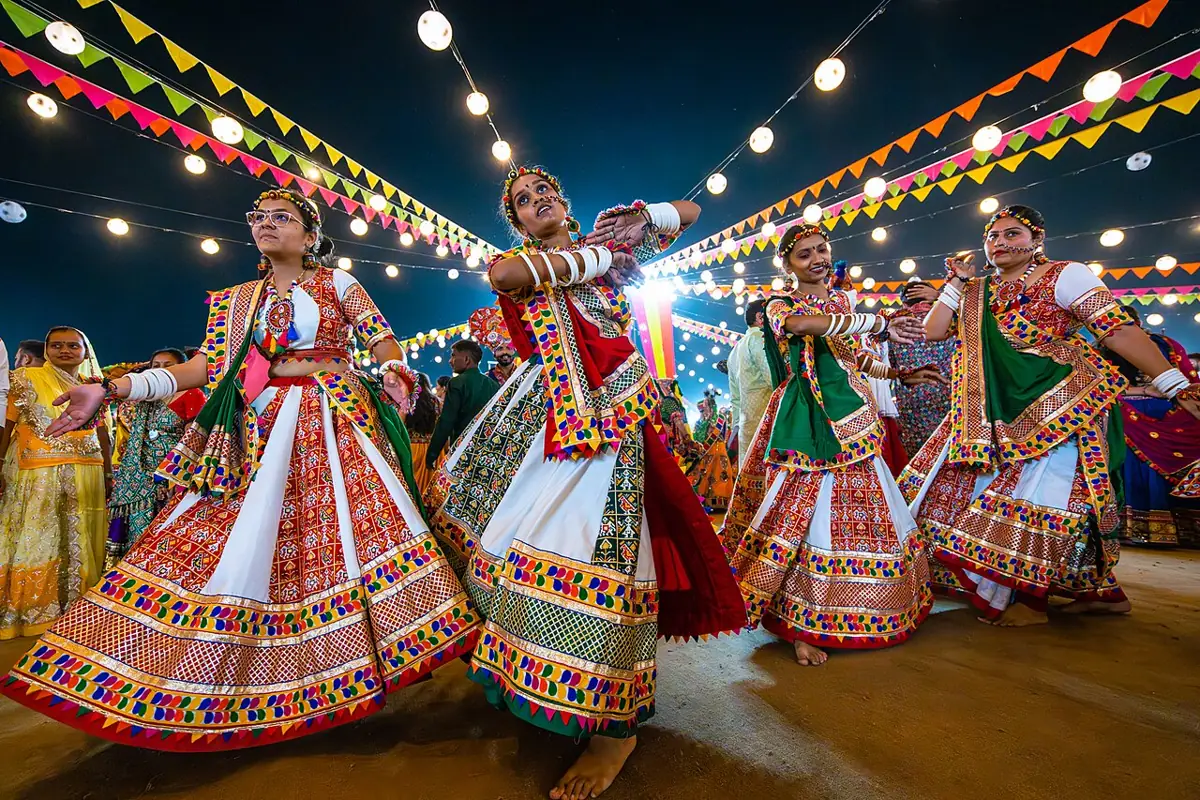
Garba and Dandiya Raas are the circle dances of Navratri from Gujarat. Garba is danced with claps and turns around a garbo, a pierced clay pot with a lamp inside that stands for life and the Goddess, while Dandiya Raas is danced in pairs with decorated sticks and is linked to Krishna's raas. Dancers traditionally wear chaniya choli (women) and kediyu with dhoti or churidar (men), and the dances are now held across India and the world every Navratri night.
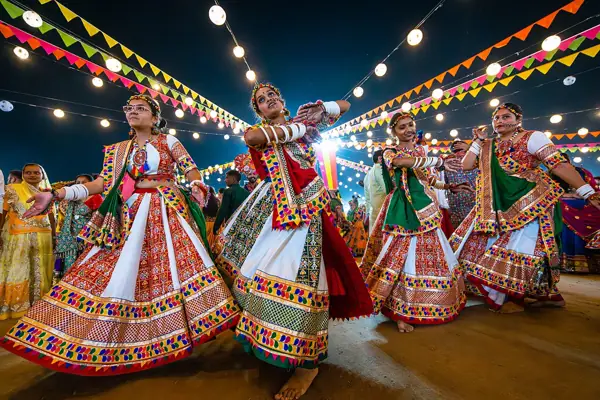 ▶ Photo story · 8 pagesGarba and Dandiya Raas: a beginner's guide
In this article 7 sections
Garba and Dandiya Raas are the devotional circle dances of Navratri, rooted in Gujarat. Garba is danced with claps and turns in concentric circles around a garbo, a pierced clay pot with a lamp inside that symbolises life and the Goddess. Dandiya Raas is danced with a pair of decorated wooden sticks, usually with a partner, and is associated with Krishna's raas. Every Navratri night, from village squares in Gujarat to stadiums in Mumbai and community halls abroad, people dance to honour the Goddess. In 2023, Garba of Gujarat was inscribed on UNESCO's list of the Intangible Cultural Heritage of Humanity.
Origins
Garba grew out of the worship of the Goddess, especially Amba (Ambaji), in Gujarat, where women traditionally danced around the lamp in the evenings of Navratri, singing songs in praise of the Goddess. The songs themselves are called garba too, and many are centuries-old devotional compositions passed down orally.
Dandiya Raas comes from the raas tradition associated with Krishna and the gopis of Vrindavan, and with the folk stick dances of Gujarat and Rajasthan. In some tellings, the sticks represent the swords of the Goddess in her battle with Mahishasura. Over time, the two dances have come to share the same Navratri nights: often garba first, then dandiya later in the evening.
The garbo: lamp in a pot
The word garba comes from Sanskrit garbha, "womb". The garbo is an earthen pot pierced with many holes, with a lamp (garbha deep) burning inside. The light shining through the holes is read as life within the womb, as the divine spark in every person and as the Goddess herself. The pot is placed at the centre of the circle, sometimes beside an image of the Goddess, and the dancers move around it. In some homes, women carry a lit garbo on their heads through the neighbourhood on the first night.
What a garba night looks like
The evening usually begins with an aarti to the Goddess. Then the music starts, slowly at first. Dancers form circles, often several concentric rings, and move together around the centre. The tempo builds through the night. Traditional instruments are the dhol (drum), shehnai and manjira (small cymbals); today many events use live bands, singers and sound systems.

Basic steps for beginners
Every community has its own variations, and there are dozens of named steps. Three common ones to start with:
- Be taali (two-clap): step forward with the right foot and clap, step with the left and clap, then take a few steps turning or moving with the circle. Repeat.
- Tran taali (three-clap): like the two-clap but with three claps in the cycle, often with a small turn.
- Dodhiyu: a faster, bouncier step with a sway and side-to-side movement, popular as the music speeds up.
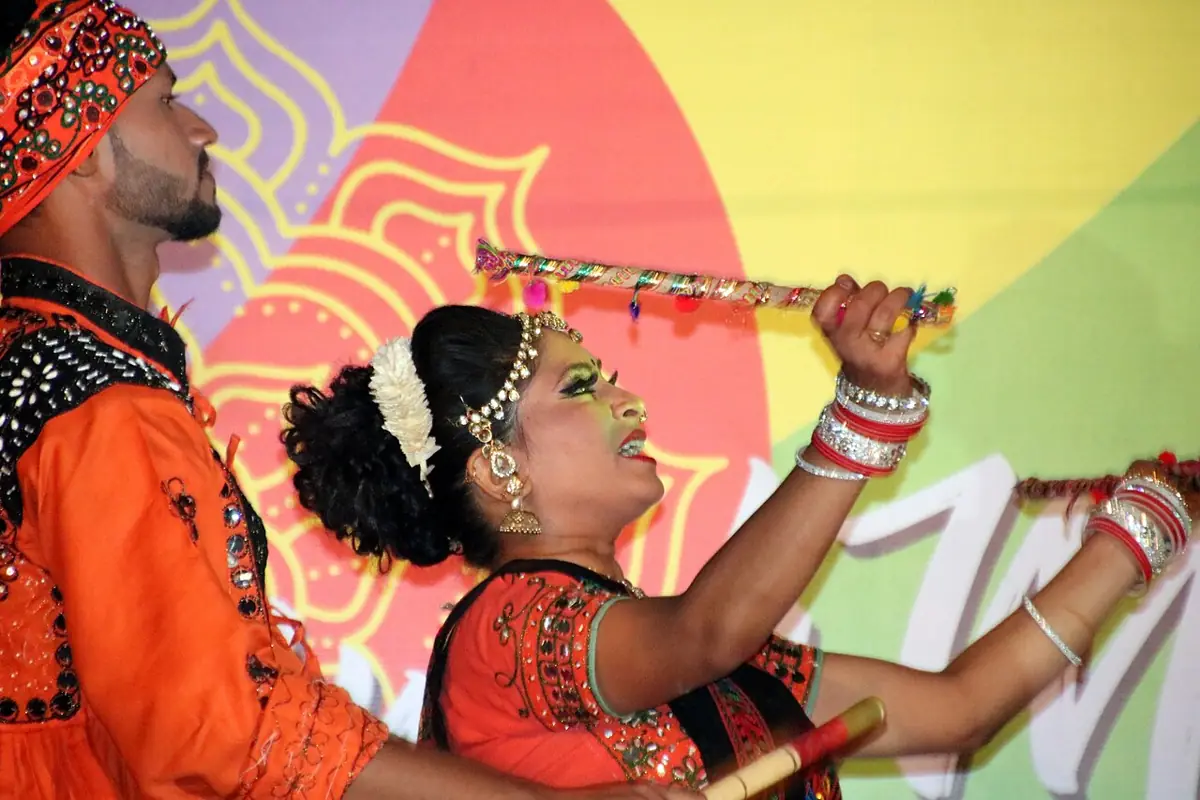
For dandiya, hold a stick in each hand. Partners face each other in two lines or circles, strike their sticks together and against their partner's to the beat, then move on to the next partner as the lines rotate.
Watch a round first, join an outer circle, and match the people next to you. Nobody expects perfection.
Also readNavratri 2026What to wear
| Traditional | Practical tips | |
|---|---|---|
| Women | Chaniya choli: a flared, often mirror-worked skirt (chaniya) with a fitted blouse (choli) and an odhni (stole); oxidised silver jewellery | Pin the odhni securely; choose a skirt you can spin in without tripping |
| Men | Kediyu: a short, gathered, flared top, worn with a dhoti or churidar; sometimes a turban (pagdi) or a mirror-work jacket | Breathable cotton keeps you comfortable for hours |
| Feet | Mojdi or jutti, or barefoot on some grounds | Soft, closed shoes with grip protect toes in a crowded circle |
Some people follow day-specific colours during Navratri. These lists change each year with the calendar, so check a current source if you want to join in.
Etiquette
- Respect the centre. The lamp and image of the Goddess are sacred; don't step into the centre or put bags and drinks near them.
- Join from the outside. Enter a circle gently at a gap and match its direction and speed; don't cut across.
- Mind the sticks. In dandiya, keep strikes controlled and at the agreed height, especially near children.
- Follow venue rules. Many organised events have dress codes, entry passes and no-alcohol rules.
- Ask before photographing people, and keep the circle free of phones and selfie sticks.
- Stay hydrated, and remember many dancers are fasting: offer water, not just snacks.
- Remember it is worship. Garba is joyful and social, but it begins and ends with the Goddess.
Garba and Durga Puja
Bengal's Durga Puja has its own traditions of dhunuchi naach (dancing with incense burners) and dhak drumming rather than garba. In Kolkata, Gujarati and other communities hold garba and dandiya nights during the festival, so visitors can often enjoy a pandal visit and a garba circle in the same evening. Plan your pandal visits with our Kolkata Durga Puja guide.
Questions people ask
What is the difference between garba and dandiya?
Garba is danced with hand claps and flowing turns, usually in circles around a lamp or image of the Goddess. Dandiya Raas is danced with a pair of decorated sticks, often face to face with a partner, and is associated with Krishna's raas lila.
What does the word garba mean?
It comes from garbha, Sanskrit for womb, and refers to the garbo, a clay pot with a lamp inside. The lamp in the pot is understood as life within the womb and as the presence of the Goddess.
What should I wear to a garba night?
Women traditionally wear a chaniya choli with an odhni (stole), and men a kediyu (short flared jacket-kurta) with dhoti or churidar and sometimes a turban. Comfortable, light clothing and secure footwear or bare feet are what matter most.
Can beginners join a garba?
Yes. Most circles welcome newcomers; join an outer circle, watch the basic two-clap or three-clap step for a round, and follow along. Many venues and community groups run short workshops before Navratri.
Is garba recognised by UNESCO?
Yes. Garba of Gujarat was inscribed on UNESCO's Representative List of the Intangible Cultural Heritage of Humanity in 2023.
Read next
- NavratriNavratri 2026What Navratri means, when Sharad Navratri 2026 falls, its rituals (ghatasthapana, Navadurga, fasting, garba) and how it differs from Bengal's Durga Puja.
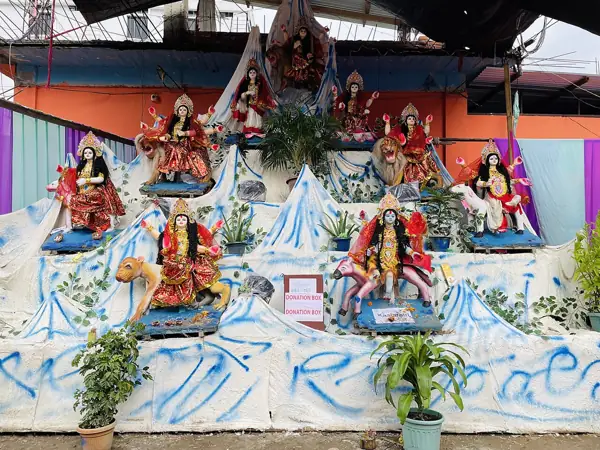 NavratriNavadurgaThe nine forms of Durga, from Shailaputri to Siddhidatri: what each name means, how each is depicted and the offering commonly linked to each Navratri day.
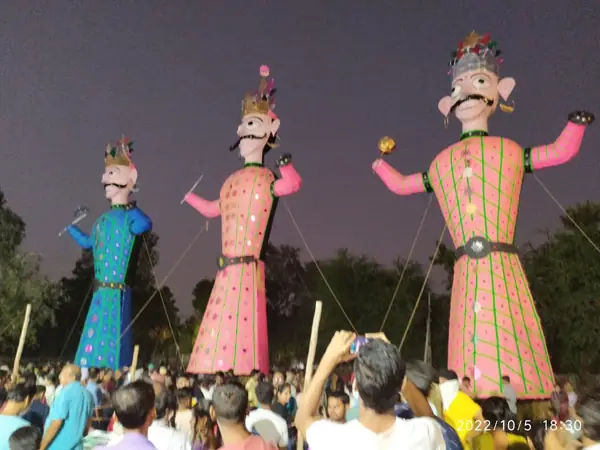 NavratriDussehra and VijayadashamiVijayadashami and Dussehra 2026 explained: Rama's victory over Ravana, Durga's over Mahishasura, Ravan dahan, Mysuru Dasara, Bengal's Bijoya and Shami puja.
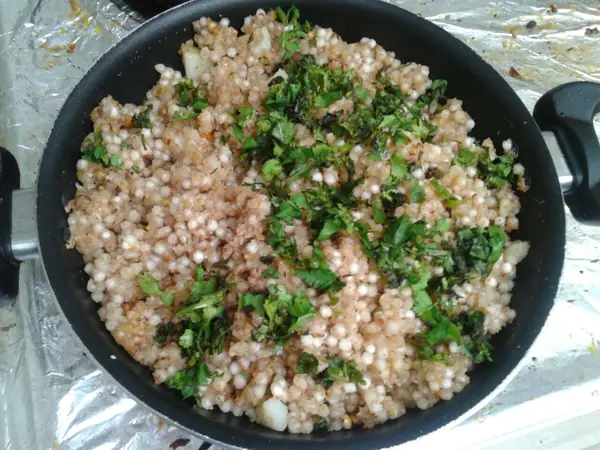 NavratriNavratri fasting rulesNavratri vrat explained: types of fast, foods commonly allowed (kuttu, singhara, sabudana, sama rice) and avoided, a sample day's meals and health cautions.