Bengal's festival season: from Durga Puja to Jagaddhatri Puja
 Pujo Parikrama team3 min read · Updated
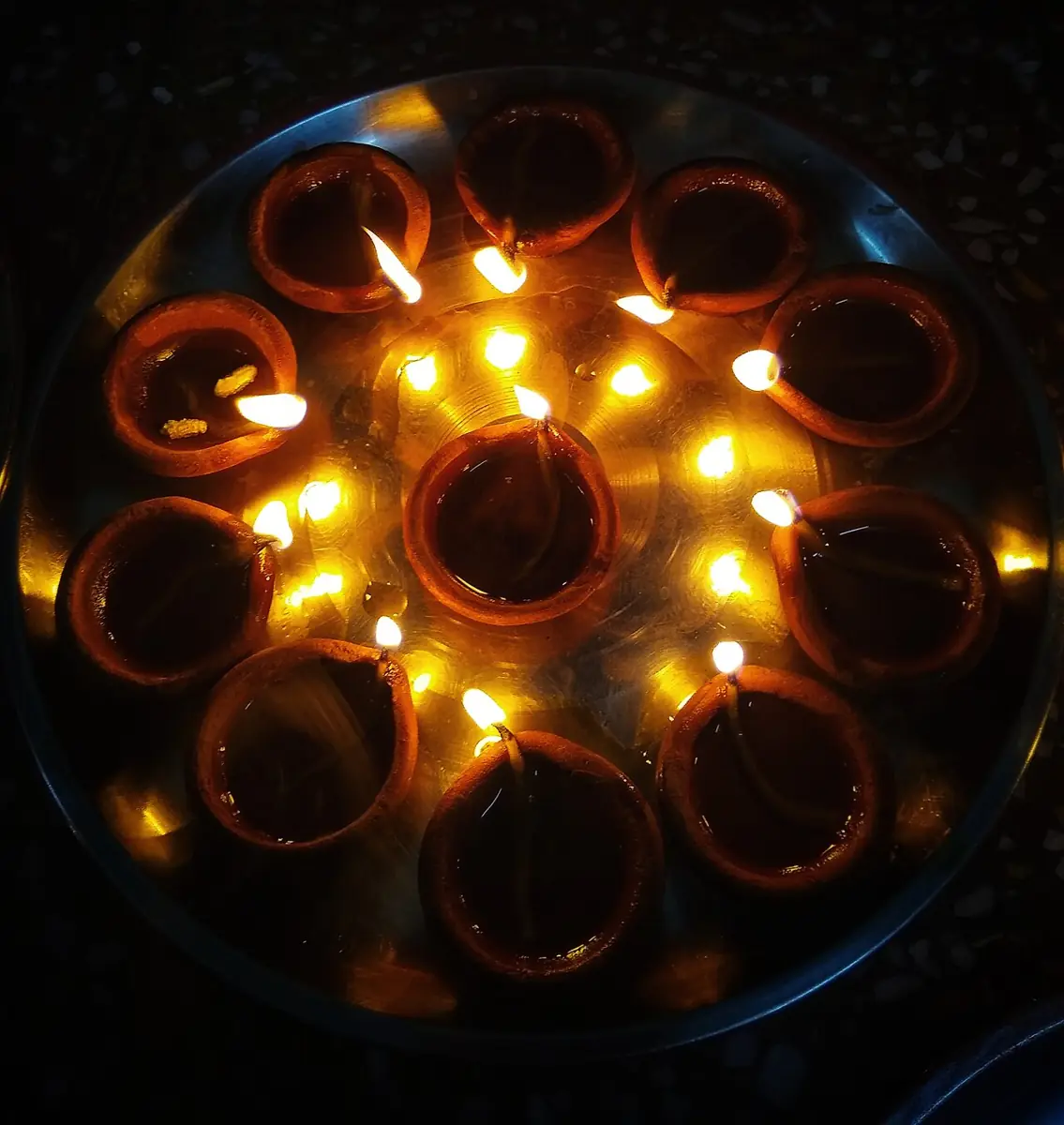
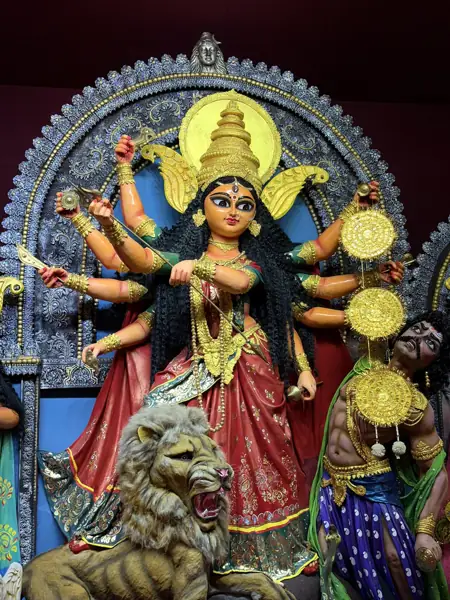
In Bengal, Durga Puja sits inside a longer run of festivals. Vishwakarma Puja comes in mid-September, Durga Puja in the bright fortnight of Ashwin, Kojagari Lakshmi Puja on the full moon a few days after Bijoya Dashami, Kali Puja on the new moon of Kartik alongside Diwali, Bhai Phonta two days later and Jagaddhatri Puja on the ninth lunar day of Kartik's bright fortnight. In spring, Basanti Puja repeats the worship of Durga in the month of Chaitra.
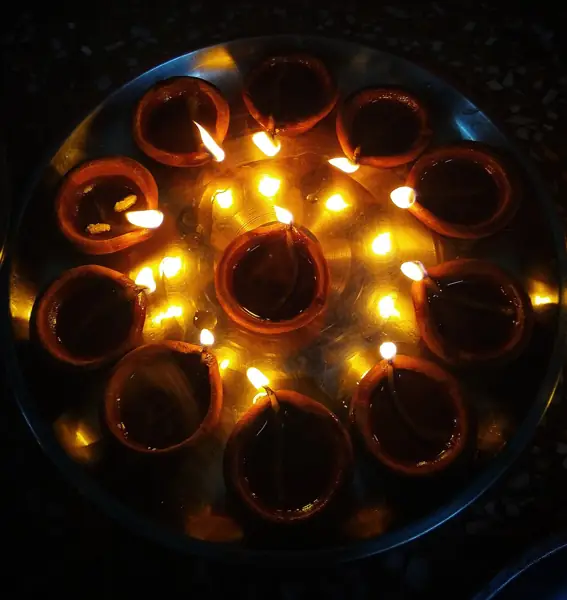 ▶ Photo story · 10 pagesBengal's festival season, from Vishwakarma to Jagaddhatri
In this article 9 sections
For Bengalis, Durga Puja is the high point of a season, not a single festival. It begins with Vishwakarma Puja in mid-September, peaks with the five days of Durga Puja, and carries on through Kojagari Lakshmi Puja, Kali Puja with Diwali, Bhai Phonta and Jagaddhatri Puja until late autumn. In spring, Basanti Puja brings Durga back in the month of Chaitra.
Almost all of these follow the lunar calendar, so their dates shift from year to year. The only dates this guide states as fact are those of Durga Puja 2026, which ends with Bijoya Dashami on Wednesday 21 October 2026; for the rest, check your local panjika (almanac) or our dates page.
The season at a glance
| Festival | When it falls | What it celebrates |
|---|---|---|
| Vishwakarma Puja | Usually 17 September (solar calendar) | The divine architect; tools, machines and workshops |
| Durga Puja | Shashthi to Dashami, bright fortnight of Ashwin | The goddess's homecoming and victory over Mahishasura |
| Kojagari Lakshmi Puja | Full moon (Purnima) of Ashwin, a few days after Dashami | Lakshmi, goddess of prosperity, in the home |
| Kali Puja and Diwali | New moon (Amavasya) of Kartik | Kali, worshipped through the night; lamps everywhere |
| Bhai Phonta | Second lunar day after the Kartik new moon | Sisters praying for their brothers' long life |
| Jagaddhatri Puja | Ninth lunar day (Navami) of Kartik's bright fortnight | Jagaddhatri, "holder of the world" |
| Basanti Puja | Bright fortnight of Chaitra (spring) | Durga worshipped in her "original" season |
Before Durga Puja: Vishwakarma Puja
Vishwakarma, the divine craftsman and architect, is worshipped in factories, workshops, garages and offices, with tools and machines cleaned and garlanded. In Kolkata the day is famous for kite flying from rooftops. For many Bengalis it is the first sign that the Pujas are close. Read more about Vishwakarma Puja.
Durga Puja itself
The season's centre runs from Mahalaya, which opens Devi Paksha, through Shashthi, Saptami, Ashtami and Navami to Bijoya Dashami. If you are new to the festival, start with what Durga Puja is and the rituals day by day.
Kojagari Lakshmi Puja
On the full moon after Dashami, many Bengali homes worship Lakshmi with alpana (rice-paste floor designs), small footprints drawn leading into the house, and a simple bhog of khichuri and naru. The name comes from ko jagarti, "who is awake?", the question Lakshmi is said to ask as she visits homes that night. See Kojagari Lakshmi Puja.
Kali Puja and Diwali
On the new moon night of Kartik, while much of India celebrates Diwali, Bengal worships Kali, often through the night, with lamps on every ledge and fireworks in the streets. The evening before is Bhoot Chaturdashi, with fourteen lamps and fourteen leafy greens. Read about Kali Puja and Diwali.
Bhai Phonta
Two days after Kali Puja, sisters put a phonta (forehead mark) of sandal paste, kajal and curd on their brothers and pray for their long life, followed by a large family meal and gifts. It is Bengal's version of Bhai Dooj. See Bhai Phonta.
Jagaddhatri Puja
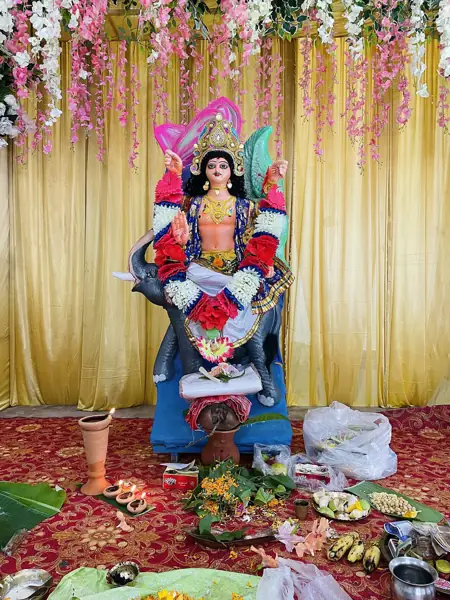
On the ninth lunar day of Kartik's bright fortnight, Jagaddhatri, a form of Durga riding a lion that stands over an elephant, is worshipped. The festival is biggest in Chandannagar, known for its light art, and in Krishnanagar, which tradition links to Raja Krishnachandra of Nadia. Read about Jagaddhatri Puja in Chandannagar.
In spring: Basanti Puja
Basanti Puja is Durga Puja in the month of Chaitra. In the Puranic account, spring was the season of Durga's worship; the autumn festival recalls Rama's akal bodhon, the "untimely awakening". Basanti Puja is kept by a number of families and temples and coincides with Chaitra Navratri. See Basanti Puja.
Planning around the season
If you are visiting Kolkata, the city stays festive long after Dashami: Bijoya visits continue until Lakshmi Puja, Kali Puja pandals rise within three weeks, and Chandannagar's Jagaddhatri lights draw crowds from across the region. For pandal-hopping during Durga Puja, see the Kolkata guide. For the wider Indian picture, including Dussehra, see our Navratri section and Dussehra and Vijayadashami.
In this section
 FestivalsVishwakarma PujaVishwakarma Puja usually falls on 17 September: worship of the divine architect in factories and workshops, tools and machines, and kite flying over Kolkata.
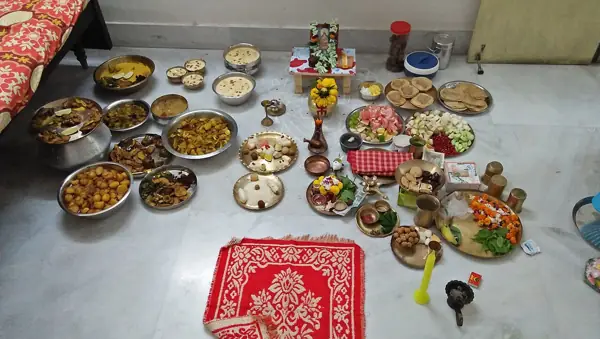 FestivalsKojagari Lakshmi PujaKojagari Lakshmi Puja on Sharad Purnima, the full moon after Bijoya Dashami: what ko jagarti means, alpana and footprints, the home puja, bhog and the story.
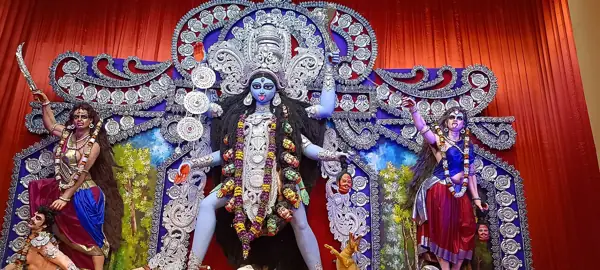 FestivalsKali Puja and DiwaliKali Puja in Bengal falls on the new moon of Kartik, with Diwali: Kali's iconography, night-long worship, Dakshineswar, Kalighat, Bhoot Chaturdashi and lamps.
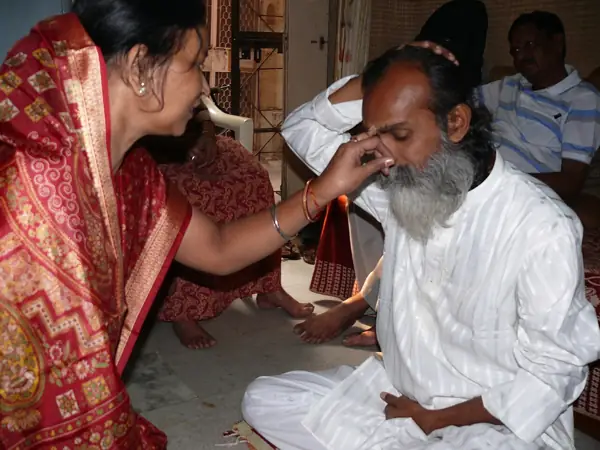 FestivalsBhai PhontaBhai Phonta, Bengal's Bhai Dooj: sisters put a phonta of sandal paste, kajal and curd on brothers, the famous chant, the meal, gifts and the Yama-Yamuna story.
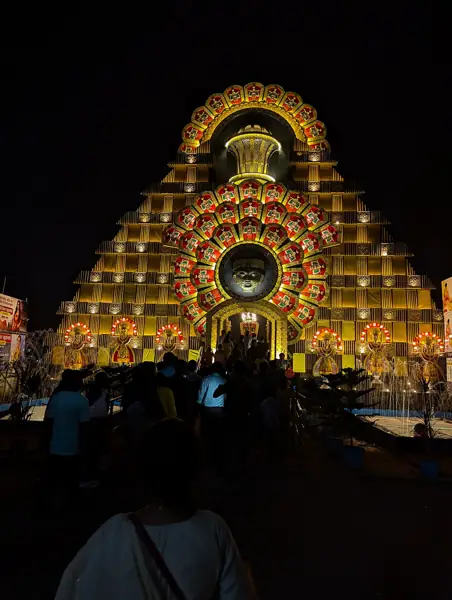 FestivalsJagaddhatri PujaJagaddhatri Puja on Shukla Navami of Kartik: the goddess on a lion over an elephant, Krishnanagar and Raja Krishnachandra, Chandannagar's lights and procession.
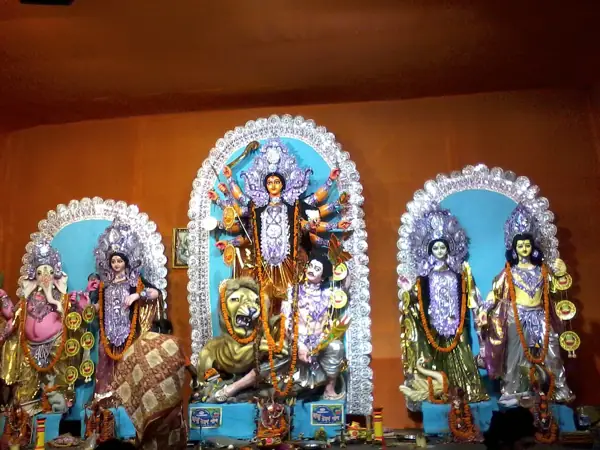 FestivalsBasanti PujaBasanti Puja is Durga Puja in spring, in Chaitra: its original season in Puranic tradition, King Suratha and Samadhi, family observance, Chaitra Navratri.
Questions people ask
Which festivals come after Durga Puja in Bengal?
After Bijoya Dashami come Kojagari Lakshmi Puja on the following full moon, Kali Puja on the new moon of Kartik (the same night as Diwali), Bhai Phonta two days later, and Jagaddhatri Puja on the ninth day of Kartik's bright fortnight.
How many days after Durga Puja is Kali Puja?
Kali Puja falls on the new moon of Kartik, roughly three weeks after Bijoya Dashami. The exact date changes every year, so check the panjika.
Is Lakshmi Puja the same as Diwali Lakshmi Puja?
Not quite. Many Bengali households worship Lakshmi on Kojagari Purnima, the full moon after Durga Puja, while elsewhere in India Lakshmi is worshipped on Diwali night. Some Bengali families also worship Lakshmi on the Diwali new moon; custom varies by family.
Why do the festival dates change every year?
Most of these festivals follow the lunar calendar, set by the tithi (lunar day) in the panjika, so their Gregorian dates move from year to year. Vishwakarma Puja is an exception: it follows the solar calendar and usually falls on 17 September.
What is Basanti Puja?
Basanti Puja is the worship of Durga in spring, in the bright fortnight of Chaitra. In Puranic tradition spring is the original season for her worship, and the autumn puja is the akal bodhon, the untimely awakening.
Read next
- FestivalsVishwakarma PujaVishwakarma Puja usually falls on 17 September: worship of the divine architect in factories and workshops, tools and machines, and kite flying over Kolkata.
- FestivalsKojagari Lakshmi PujaKojagari Lakshmi Puja on Sharad Purnima, the full moon after Bijoya Dashami: what ko jagarti means, alpana and footprints, the home puja, bhog and the story.
- FestivalsKali Puja and DiwaliKali Puja in Bengal falls on the new moon of Kartik, with Diwali: Kali's iconography, night-long worship, Dakshineswar, Kalighat, Bhoot Chaturdashi and lamps.
- FestivalsBhai PhontaBhai Phonta, Bengal's Bhai Dooj: sisters put a phonta of sandal paste, kajal and curd on brothers, the famous chant, the meal, gifts and the Yama-Yamuna story.
- FestivalsJagaddhatri PujaJagaddhatri Puja on Shukla Navami of Kartik: the goddess on a lion over an elephant, Krishnanagar and Raja Krishnachandra, Chandannagar's lights and procession.
- FestivalsBasanti PujaBasanti Puja is Durga Puja in spring, in Chaitra: its original season in Puranic tradition, King Suratha and Samadhi, family observance, Chaitra Navratri.
 Durga PujaDurga PujaDurga Puja explained: what it is, its history and rituals, the goddess and her family, Kumartuli idols, the 2026 dates and how to see Kolkata's pandals.