Akal Bodhon: why Durga is worshipped in autumn
 Pujo Parikrama team4 min read · Updated
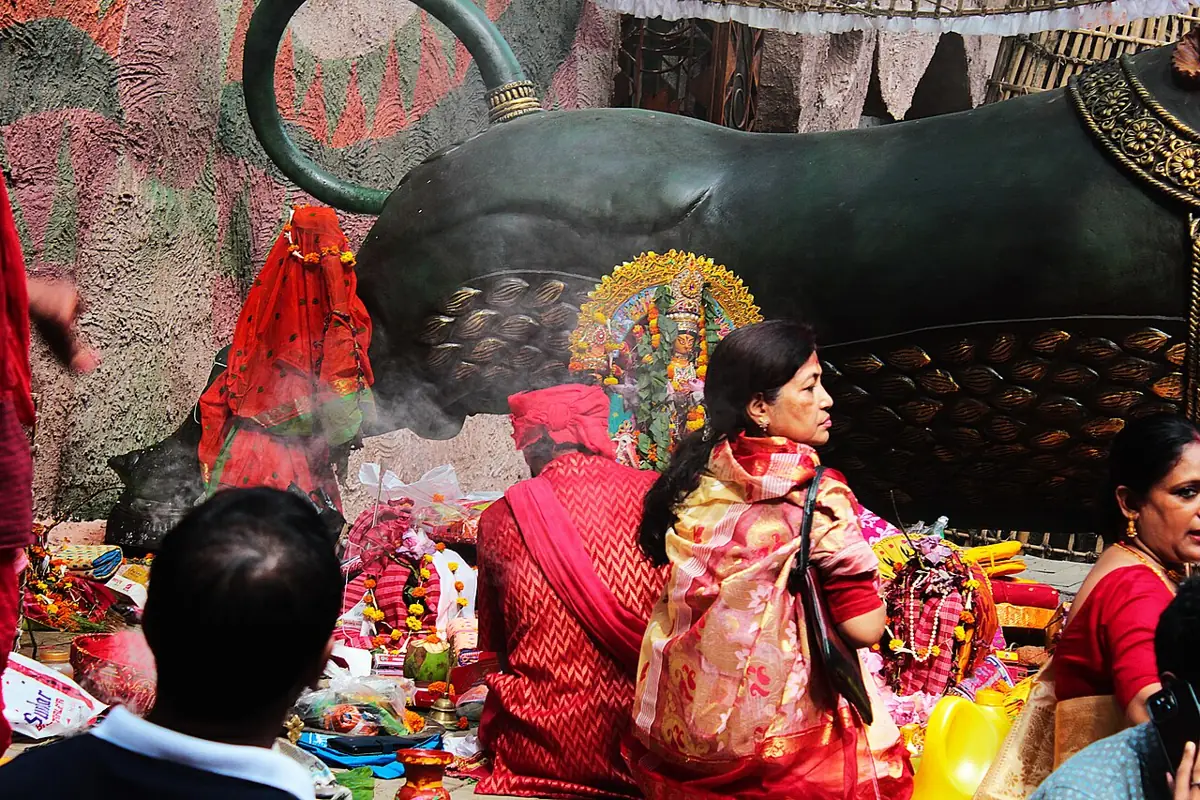
Akal Bodhon means untimely (akal) awakening (bodhon): the story that Rama invoked the goddess Durga in autumn, out of her proper season, to win her blessing before his final battle with Ravana. It is told in the Ramayana of Krittibas Ojha, the Bengali retelling of the epic, and not in Valmiki's Sanskrit Ramayana. Bengali tradition holds that the autumn (Sharadiya) Durga Puja follows Rama's example, while the scripturally older spring worship survives as Basanti Puja.
 ▶ Photo story · 7 pagesAkal Bodhon: why Durga is worshipped in autumn
In this article 5 sections
Akal Bodhon is the Bengali name for the story that explains why Durga Puja is held in autumn. Akal means untimely or out of season; bodhon means awakening. Before his final battle with Ravana, Rama is said to have awakened and worshipped the goddess Durga in the autumn month of Ashwin, outside her usual season, to win her blessing. Bengali tradition sees every Sharadiya (autumn) Durga Puja as following his example. The rite of bodhon itself is still performed at the start of the puja, on Shashthi evening.
Where the story comes from
The best-known source is the Krittivasi Ramayana, the Bengali retelling of the Ramayana by the poet Krittibas Ojha, usually dated to around the fifteenth century. Written in simple Bengali verse, it became one of the most widely read books in Bengal, recited in homes and at gatherings for centuries, and it shaped how Bengalis imagine Rama's story.
It is important to be clear: the episode is not in Valmiki's Sanskrit Ramayana. In Valmiki, before the decisive duel, the sage Agastya teaches Rama the Aditya Hridayam, a hymn to the sun, and it is the sun's blessing he seeks. The idea that Rama worshipped Durga out of season appears in some later Sanskrit texts associated with eastern India, and the Kalika Purana and the Brihaddharma Purana are often cited for it, but it was Krittibas's telling that made it part of everyday Bengali belief. Details differ between versions and manuscripts; what follows is the outline most Bengalis know.
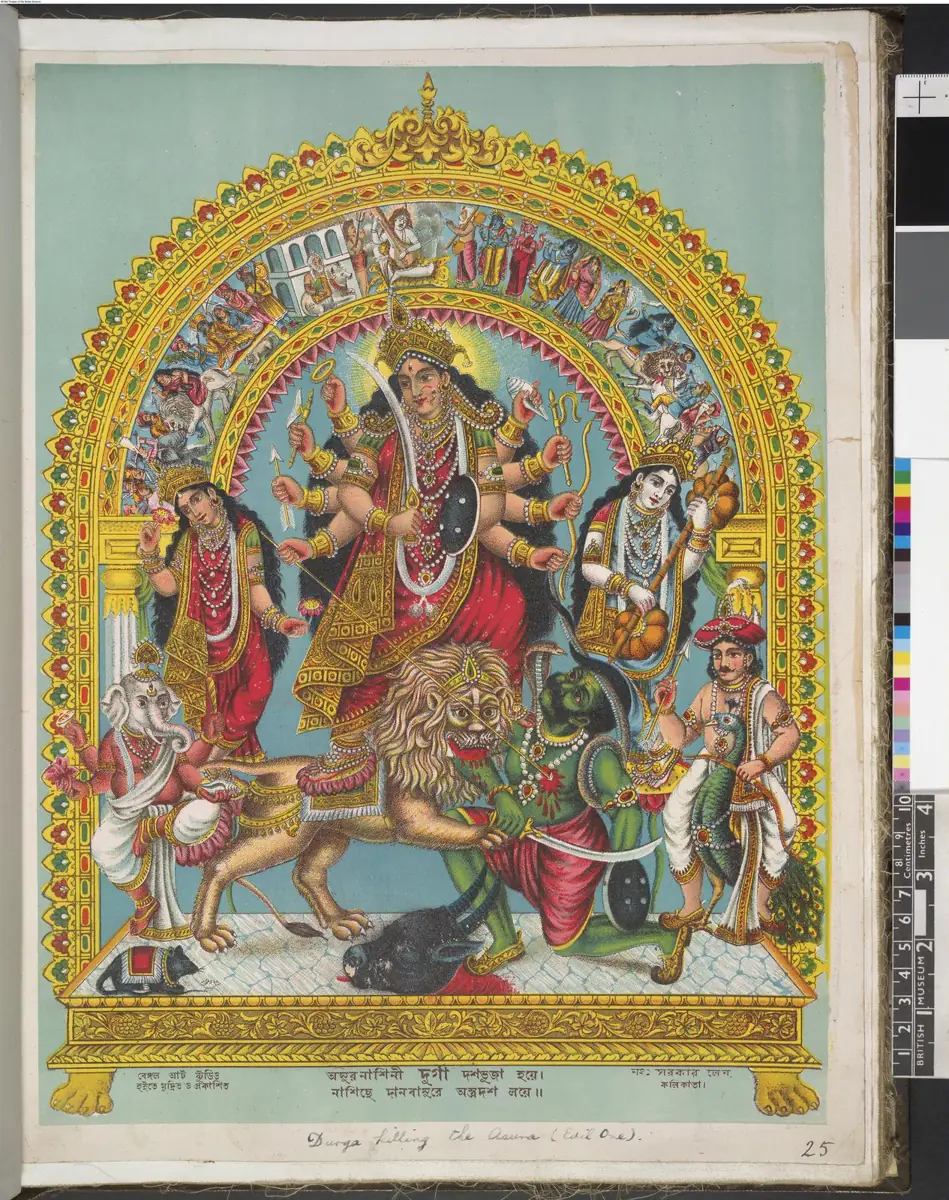
.jpg)
Rama's untimely puja
The war in Lanka is going badly. In the Bengali telling Ravana is himself a devotee of the goddess and enjoys her protection, and Rama cannot defeat him. Rama is advised, in the commonly told version by Brahma, that he must win the goddess to his side by worshipping her himself.
There is a problem of timing. The goddess's proper worship falls in spring. Autumn lies in dakshinayana, the half of the sun's year that counts as the night of the gods, when they sleep. To worship her now, Rama must first wake her. So he performs the bodhon at the foot of a bel tree, on the sixth lunar day, and begins the puja.
 Also readWhat is Durga Puja? The meaning behind the festival
The 108 blue lotuses
For the worship Rama needs 108 blue lotuses (nil padma), a rare flower. Hanuman flies off and brings them back from a distant lake. As the worship nears its climax, in many tellings at the juncture of the eighth and ninth lunar days, Rama counts the flowers and finds only 107. The goddess herself has hidden one to test his devotion.
There is no time to search again. Then Rama remembers that people call him Rajivlochan or Kamallochan, the lotus-eyed. If his eyes are like blue lotuses, one of them can complete the offering. He takes up an arrow to pluck out his eye.
Before he can do it, the goddess appears and stops his hand. Moved by his devotion, she blesses him and promises him victory. In the story Rama goes on to defeat Ravana, and the goddess is bid farewell on the tenth day: the Vijaya or Bijoya Dashami.
Bengali pujas still carry echoes of this tale. The 108 lotuses and 108 lamps offered at Sandhi Puja, the juncture of Ashtami and Navami, are often explained by reference to Rama's offering, and many people link the "victory" of Bijoya Dashami to his triumph over Ravana, which is also celebrated across North India as Dussehra.
Spring and autumn: Basanti Puja and Sharadiya
Why call the autumn puja "untimely" at all? Because tradition places the original worship of Durga in spring, in the bright fortnight of Chaitra (March or April). Bengali tradition often connects this spring worship to King Suratha, whose story frames the Devi Mahatmya: having lost his kingdom, he learns of the goddess from the sage Medhas and worships her, and many Bengalis remember him as the first to perform Durga Puja. That spring puja is Basanti Puja, basanta meaning spring. It coincides with Chaitra Navratri elsewhere in India.
The autumn puja, though "out of season", became by far the greater festival in Bengal, the Sharadiya Durgotsav. Historians link its growth to the patronage of zamindar families and later to community pujas; see the history of Durga Puja. Basanti Puja did not disappear. Some old families and temples still hold it, with the same sequence of rituals on a smaller scale.
The bodhon today
The story lives on in the ritual calendar. On Shashthi, in 2026 on Saturday 17 October, the priest performs the bodhon, the amantran (invitation) and the adhivas (preliminary consecration) at a bel tree or a bel branch set up in the pandal, waking the goddess as Rama did. The exact time depends on the tithi, so check your local panjika or the puja committee's notice.
For the wider background, read what Durga Puja means, the story of Mahishasura, and the day-by-day rituals.
Questions people ask
What is the meaning of Akal Bodhon?
Akal means untimely or out of season, and bodhon means awakening. It refers to Rama awakening the goddess Durga in autumn, a time when the gods are believed to be asleep, so that he could worship her before fighting Ravana.
Is Akal Bodhon in the Valmiki Ramayana?
No. In Valmiki's Ramayana Rama does not worship Durga before the final battle; instead the sage Agastya teaches him the Aditya Hridayam, a hymn to the sun. The Durga worship story is best known from Krittibas Ojha's Bengali Ramayana.
Why did Rama offer his eye to Durga?
In the Krittibas story Rama needed 108 blue lotuses for the worship, but the goddess hid one to test him. Remembering that people called his eyes lotus-like, he prepared to offer one eye in its place, and the goddess appeared, stopped him and blessed him.
Why is Durga Puja held in autumn and not spring?
Tradition places the original worship of Durga in spring, as Basanti Puja in Chaitra. Bengali tradition holds that the autumn puja follows Rama's untimely invocation, and it became the far bigger festival, while Basanti Puja is still kept by some families and temples.
When is the bodhon done during Durga Puja?
In most Bengali pujas the bodhon, the ritual awakening of the goddess, is performed on Shashthi evening at a bel (bilva) tree or a bel branch. In 2026 Shashthi falls on Saturday 17 October; check your local panjika for timings.
Read next
- Durga PujaWhat is Durga Puja? The meaning behind the festivalWhat Durga Puja means: the Devi Mahatmya story of Mahishasura, Durga as Shakti, Uma's homecoming, Rama's akal bodhon and why the festival falls in autumn.
- RitualsShashthiShashthi 2026 is Saturday 17 October: Kalparambha, the bodhon awakening of Durga by a bel tree, amantran and adhivas, unveiling of faces and Shashthi fasts.
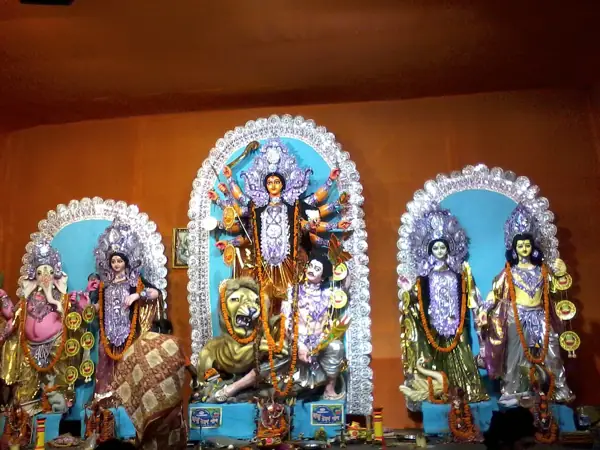 FestivalsBasanti PujaBasanti Puja is Durga Puja in spring, in Chaitra: its original season in Puranic tradition, King Suratha and Samadhi, family observance, Chaitra Navratri.
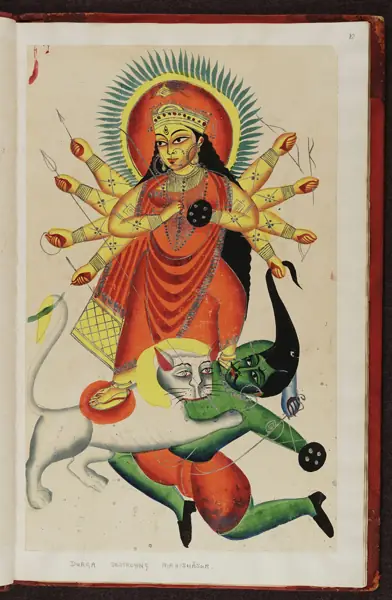 Durga PujaThe story of Durga and MahishasuraThe story of Durga slaying Mahishasura from the Devi Mahatmya: the gods' radiance, the gifts of weapons, the shape-shifting buffalo demon and what it all means.
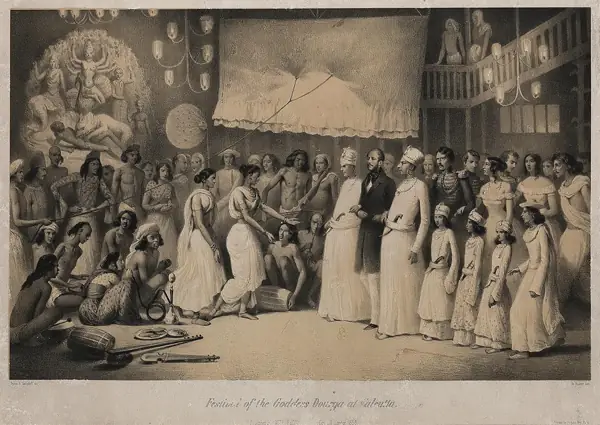 Durga PujaThe history of Durga Puja in BengalHow Durga Puja grew from zamindari and rajbari pujas to barowari and sarbojanin community festivals, theme pandals and UNESCO heritage status in Kolkata.