The story of Durga and Mahishasura
 Pujo Parikrama team6 min read · Updated
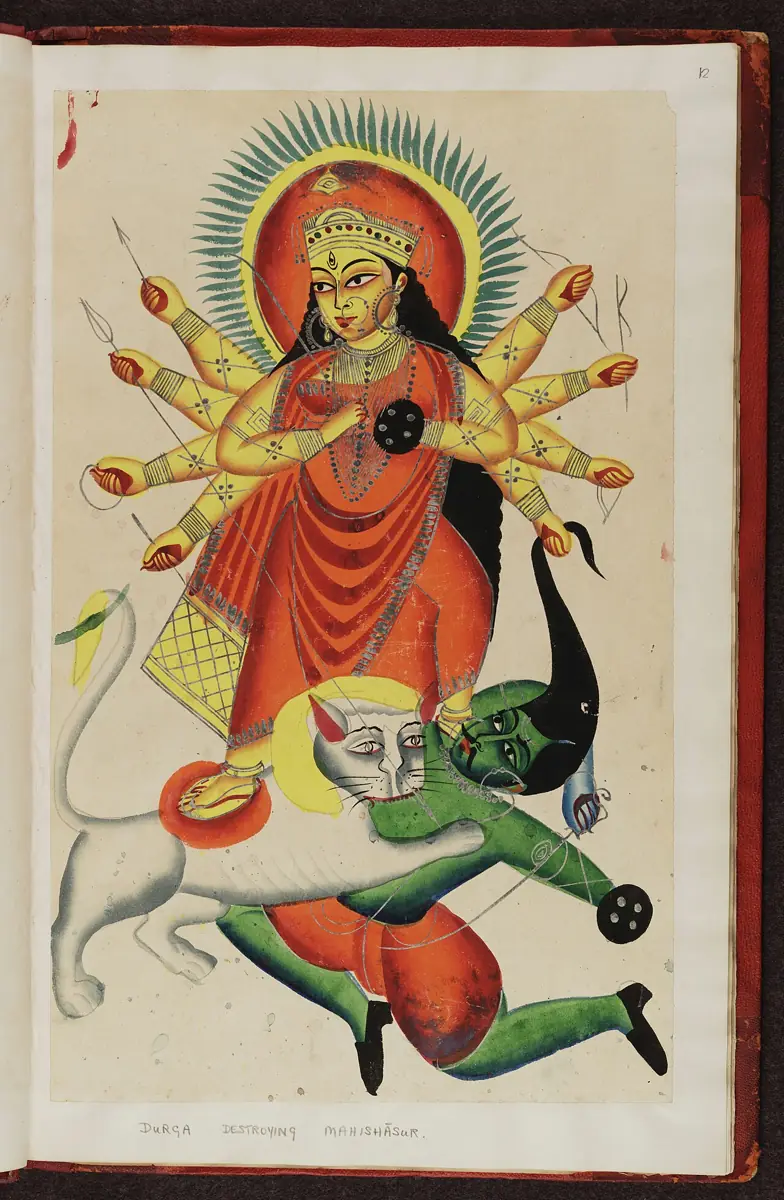
The story of Durga and Mahishasura is told in chapters 2 to 4 of the Devi Mahatmya, part of the Markandeya Purana. The buffalo demon Mahishasura defeats the gods and seizes heaven; the gods' blazing anger joins into a single radiant goddess, they arm her with their own weapons, and she destroys his army and kills him as he changes shape from buffalo to lion to man to elephant and back. Durga Puja celebrates this victory of divine power (Shakti) over arrogance and disorder, and the Bengali clay image freezes its final moment.
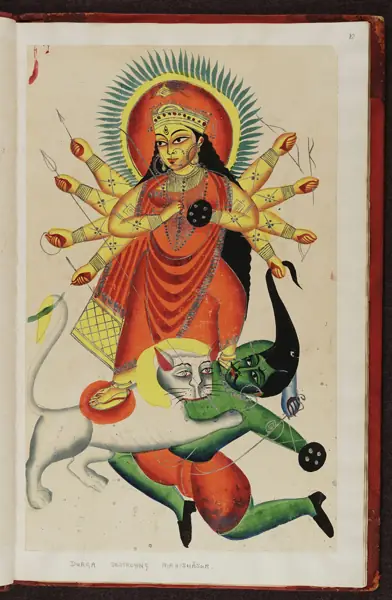 ▶ Photo story · 9 pagesThe story of Durga and Mahishasura
In this article 7 sections
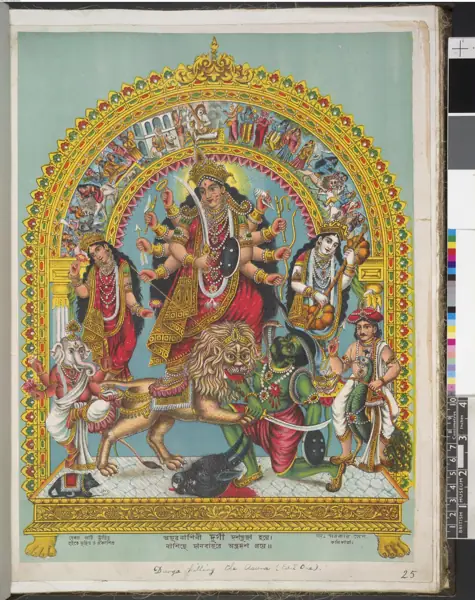
Every Durga Puja image in Bengal shows the same instant: a ten-armed goddess on a lion, her trident in the chest of a man who is climbing out of the severed body of a buffalo. That man is Mahishasura, and the scene is the climax of the best-known story in the Devi Mahatmya (Glory of the Goddess), the Sanskrit text of about 700 verses that forms part of the Markandeya Purana and is recited as the Chandi during the puja. The Mahishasura episode fills its chapters 2 to 4, known as the madhyama charitra, the middle episode. Here it is, retold in our own words but faithful to the text.
How Mahishasura took heaven
The Devi Mahatmya opens the episode bluntly. Long ago the gods and the asuras (demons) fought a war that lasted a hundred years. The asuras were led by Mahisha, a demon who could take the form of a buffalo (mahisha); the gods were led by Indra. The gods lost. Mahishasura drove them out of heaven and made himself Indra, taking over the duties of the sun, the moon, the wind, fire and the other gods. The defeated gods wandered the earth like mortals.
The text does not say why he was so hard to defeat. Later retellings fill the gap. In the Devi Bhagavata Purana and in many popular versions, Mahishasura performs severe austerities and wins a boon from Brahma that no man or god can kill him; in his pride he never imagines a woman could. That boon is the reason many people give for why the gods had to create a goddess, but it is a later addition, not part of the Devi Mahatmya.
The goddess born of light
Led by Brahma, the gods went to Shiva and Vishnu and told them everything. As they listened, Vishnu and Shiva grew furious, their faces creased with anger, and a great light (tejas, fiery radiance) burst out of them. Light came out of Brahma too, and out of Indra and every other god. The streams of radiance met and merged into a blazing mass, like a mountain on fire, filling every direction.
That light took the shape of a woman. The text even says which god's radiance formed which part of her: her face came from Shiva's light, her hair from Yama's, her arms from Vishnu's, and so on through the gods. She was not one god's consort or daughter. She was the combined power of them all, more than any of them alone.
The gifts of the gods
Then each god gave her a weapon drawn out of his own. Shiva gave a trident from his trident and Vishnu a discus from his discus. Varuna gave a conch and a noose, Agni a spear, the wind god a bow and quivers of arrows, and Indra a thunderbolt and a bell from his elephant Airavata. Yama gave his staff of death, Brahma a rosary and a water pot, and Kala (time) a sword and a shield. The sun filled the pores of her skin with his rays. The ocean of milk gave jewels, garments and an unfading garland, Vishwakarma an axe and armour, and Himavat, king of the mountains, gave her a lion to ride.
Armed and adorned, the goddess laughed aloud again and again. Her roar shook the earth, the oceans and the mountains, and the gods cried "Victory!"

The battle
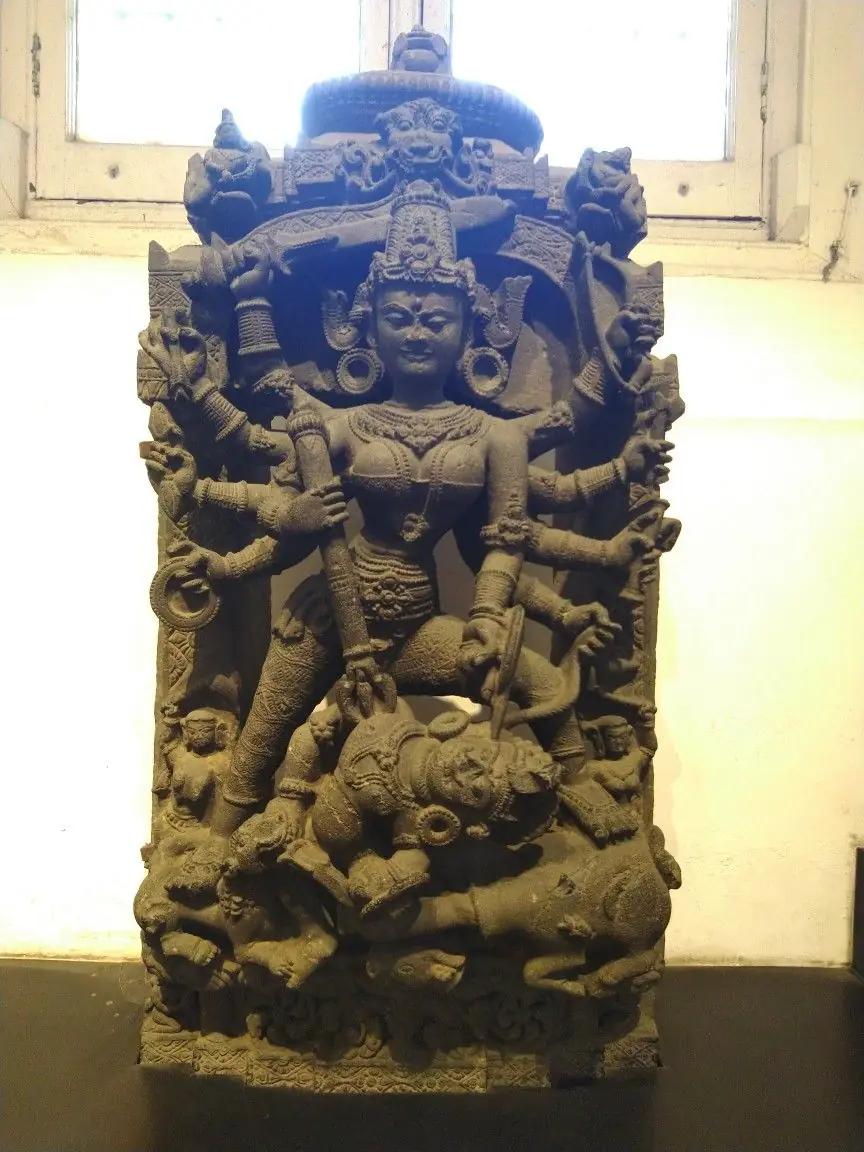
Mahishasura heard the noise and rushed towards it with his army. He saw a goddess whose radiance lit up the three worlds, her thousand arms filling the sky. His generals came at her with chariots, elephants, horses and countless soldiers, raining weapons on her. She cut their weapons to pieces as if playing. Her lion tore through the army, and companions sprang from her very breath to fight beside her. One by one she killed the demon generals, the text naming several, among them Chikshura and Chamara.
 Also readWhat is Durga Puja? The meaning behind the festival
The shape-shifter
At last Mahishasura came himself, in his buffalo form. He trampled the goddess's companions, gored them with his horns, lashed the earth with his tail and tossed mountains into the air. Enraged, the goddess threw her noose over him. To escape, he became a lion. As she cut off the lion's head, he became a man with a sword. She shot him down with arrows, and he became a huge elephant that seized her lion in its trunk and dragged it. She cut off the trunk with her sword, and he became a buffalo again, shaking the worlds.
The goddess drank a divine drink, her eyes reddening, and laughed. In the text she taunts him to roar while he can, because soon the gods will be roaring over his death. Then she leapt on him, pinned his neck under her foot and struck him with her spear. Half-emerged from his own buffalo mouth, still fighting, Mahishasura was struck down when she cut off his head with her great sword. His army fled, the gods rejoiced, and they sang her praises in a hymn that fills chapter 4. Pleased, she promised to return whenever they called on her in trouble.
What the story means
Most devotees read the story on several levels at once.
- Good over evil. Mahishasura is power without restraint: he takes what is not his and upsets the order of the world. The goddess restores it.
- Shakti, divine power. The gods are helpless on their own; only their united energy, personified as the goddess, succeeds. In the Shakta tradition strong in Bengal, she is not a creation of the gods so much as the supreme power they were always drawing on.
- The inner battle. Many teachers read the buffalo as ignorance, pride or animal impulse, and its shape-shifting as the way our faults change form when confronted. The goddess cuts through each disguise.
- Protection. Her final promise to return is why people call on her in crisis, and why the hymns of the Devi Mahatmya, including the Ya Devi Sarvabhuteshu verses of a later episode, are still recited.
The story on the pandal dais
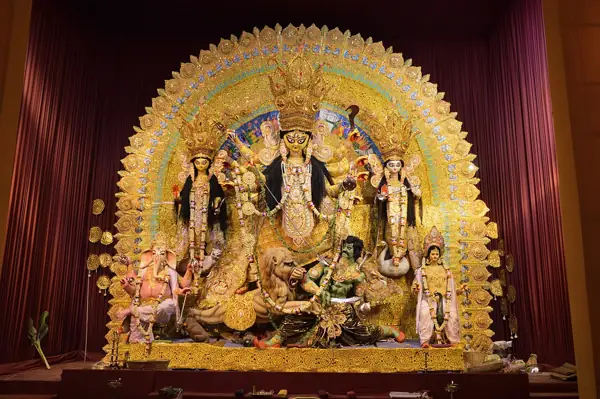
Look closely at a traditional Bengali image and you will see the text. Durga stands on her lion, one foot on the lion and one on Mahishasura or the buffalo. Her trident pierces the chest of the demon, who is shown as a man, often green-skinned, with a sword and shield, emerging from the decapitated buffalo at her feet: exactly the moment when he is half out of his buffalo body. The lion bites his arm. Her ten arms hold the gods' gifts: trident, sword, discus, arrow, spear, bow, noose, conch, thunderbolt, and a shield or bell, though the selection and order vary.
Bengal adds what the text does not: her four children, Lakshmi, Saraswati, Ganesha and Kartik, standing beside her, often under a single arched frame (ekchala) with a painted backdrop (chalchitra). Our guide to reading the Durga image explains each figure, and Kumartuli shows how the clay images are made.
You can hear the story too. The Devi Mahatmya is read during the puja as Chandi path, and its verses run through the Mahishasuramardini radio programme broadcast at dawn on Mahalaya, which in 2026 falls on Saturday 10 October. For the wider meaning of the festival, see what is Durga Puja.
Questions people ask
Who was Mahishasura?
Mahishasura was an asura (demon) king who could take the form of a buffalo; mahisha means buffalo. In the Devi Mahatmya he defeats the gods, takes Indra's place as lord of heaven, and is finally killed by the goddess Durga.
Why could only a goddess kill Mahishasura?
The Devi Mahatmya itself does not say this. The idea comes from later retellings, such as the Devi Bhagavata Purana, in which Mahishasura wins a boon from Brahma that no man or god can kill him, so the gods create a goddess.
Who gave Durga her weapons?
In the Devi Mahatmya each god gives her a copy of his own weapon: Shiva a trident, Vishnu a discus, Indra a thunderbolt, Varuna a conch and noose, Agni a spear, Yama a staff, and Himavat, the mountain king, a lion. Lists differ slightly between texts and images.
How long did Durga fight Mahishasura?
The Devi Mahatmya does not give a length for the goddess's battle. It says the earlier war between the gods and Mahishasura's armies lasted a hundred years; popular tradition sometimes links the goddess's fight to the nine nights of Navratri.
Why is Durga called Mahishasuramardini?
Mahishasuramardini means the one who crushes or slays Mahishasura. It is one of Durga's best-known names, and also the title of the famous Mahalaya dawn radio programme in Bengal.
Read next
- Durga PujaWhat is Durga Puja? The meaning behind the festivalWhat Durga Puja means: the Devi Mahatmya story of Mahishasura, Durga as Shakti, Uma's homecoming, Rama's akal bodhon and why the festival falls in autumn.
 Durga PujaGoddess Durga and her familyHow to read a Durga Puja image: Durga's ten arms and weapons, the lion, Mahishasura, Lakshmi, Saraswati, Ganesha, Kartik, their vahanas, ekchala and daker saaj.
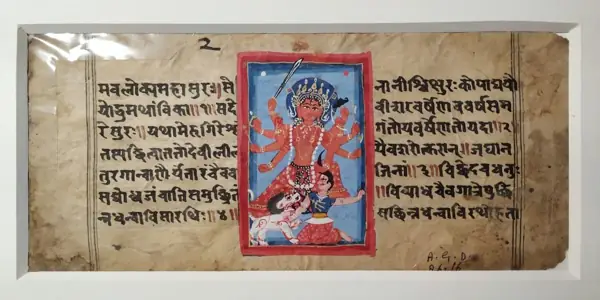 RitualsChandi PathChandi Path explained: the Durga Saptashati's 700 verses in 13 chapters, its three episodes, Kavacham, Argala and Kilakam, and how to read or listen at home.
- RitualsYa Devi SarvabhuteshuYa Devi Sarvabhuteshu verses from Devi Mahatmya chapter 5 in Devanagari and Bengali with transliteration and meaning, plus when they are recited at Durga Puja.
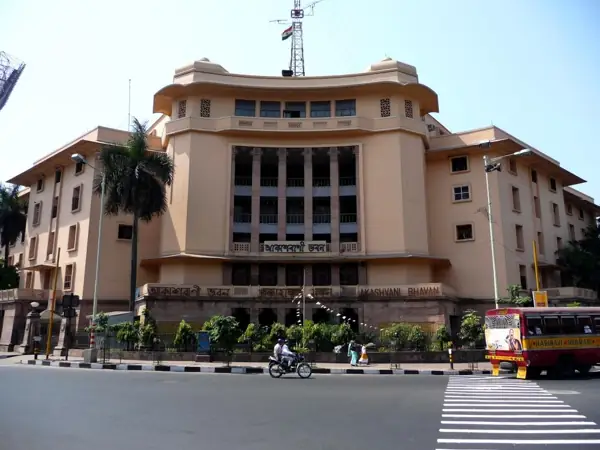 CultureMahishasuramardiniMahishasuramardini, the Mahalaya dawn broadcast on All India Radio: Birendra Krishna Bhadra's Chandi recitation, Pankaj Kumar Mullick's music, how to listen.