The history of Durga Puja in Bengal
 Pujo Parikrama team6 min read · Updated
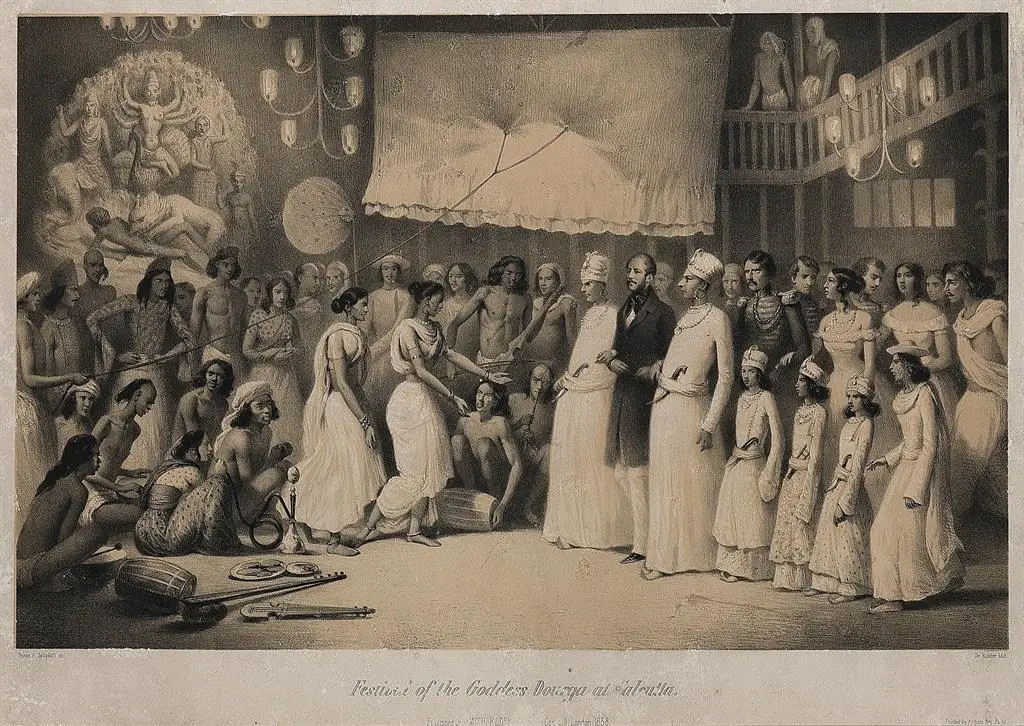
Durga Puja in Bengal began as a private festival of landowning and royal families, whose grand household pujas are documented from at least the eighteenth century. It then spread to barowari pujas paid for by groups of neighbours, traditionally traced to Guptipara around 1790, and in the early twentieth century to sarbojanin (public) pujas open to everyone in Kolkata. Theme pandals transformed it into a public art festival from the 1990s onwards, and UNESCO recognised Durga Puja in Kolkata as intangible cultural heritage in 2021.
 ▶ Photo story · 10 pagesThree centuries of Durga Puja in Bengal
In this article 9 sections
- At a glance
- Before Kolkata: rajas and zamindars
- Sovabazar Rajbari and the colonial city
- Barowari: the puja of the twelve friends
- Sarbojanin: a puja for everyone
- The nationalist era
- After independence: the neighbourhood festival
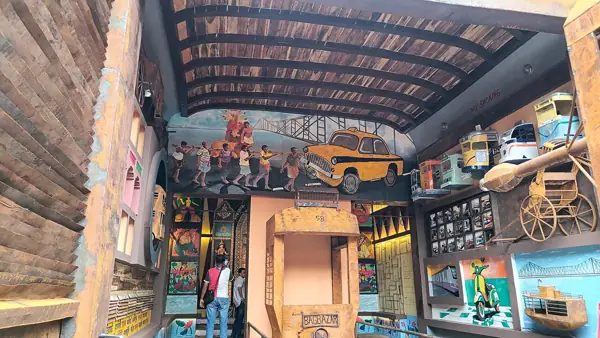
- The theme-pandal era
- UNESCO recognition, 2021
- Seeing the history today
- Questions people ask
At a glance
- Late 1500sAn early grand puja
By tradition, Raja Kangsanarayan of Taherpur holds one of the first lavish Durga Pujas in Bengal.
- Early 1600sBarisha
The Sabarna Roy Choudhury family's puja at Barisha, by family tradition the oldest in the Kolkata area.
- 1700sKrishnanagar
Raja Krishnachandra Roy of Nadia popularises elaborate Durga and Jagaddhatri pujas.
- 1757
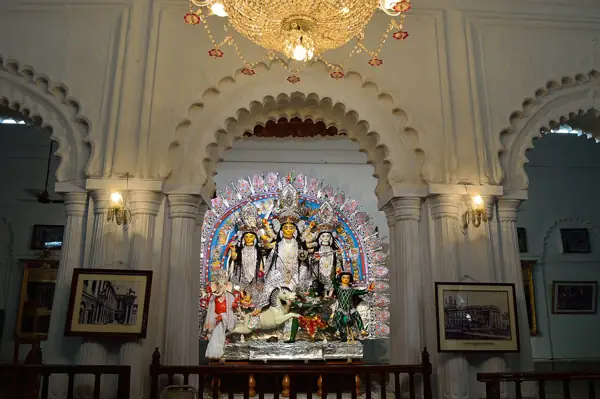 Sovabazar Rajbari
Raja Nabakrishna Deb's puja in north Kolkata, traditionally dated to the year of Plassey.
- Around 1790Barowari at Guptipara
Twelve friends pool their money for a puja of their own: the first puja owned by a group, not a family.
- 1910The first sarbojanin
A puja in Bhowanipore, often cited as Kolkata's first puja open to everyone.
- 1918 or 1919
 Bagbazar Sarbojanin
One of the city's best-known community pujas begins in north Kolkata.
- 1920s–30sThe nationalist era
Community pujas become gathering places for the freedom movement.
- 1980s–2000s
- December 2021UNESCO
Durga Puja in Kolkata is inscribed on UNESCO's list of the Intangible Cultural Heritage of Humanity.
Durga Puja in Bengal has moved, over roughly three centuries, from the courtyards of a few wealthy houses to the streets of an entire city. The shape of that journey is clear even where individual dates are debated: first household pujas of landowners and kings, then pujas paid for by groups of neighbours (barowari), then fully public pujas open to everyone (sarbojanin), and finally the theme pandals and global recognition of today. Much of the early history survives as family tradition and later retelling, so the dates below are given as they are traditionally cited.
Before Kolkata: rajas and zamindars
The worship of Durga in Bengal is far older than the big autumn festival. Bengali texts on the goddess and her worship were in circulation by the late medieval period, and the autumn puja with a clay image of the goddess and her family took shape among the region's landholding elite.
Many accounts point to the late sixteenth century, when a landowner, Raja Kangsanarayan of Taherpur, is said to have held a lavish Durga Puja; this is commonly cited as one of the earliest grand pujas in Bengal, though it rests on tradition rather than contemporary records. In the eighteenth century Raja Krishnachandra Roy of Nadia (Krishnanagar), a celebrated patron of religion and the arts, is credited with popularising elaborate Durga and Jagaddhatri pujas. For a zamindar (landholder) or raja, the puja was devotion, but also a display of wealth and standing: feasts for the poor, music and dance, and invitations to the powerful.
In the Kolkata area, the Sabarna Roy Choudhury family's puja at Barisha is often said to date to the early seventeenth century, which would make it the oldest in the region. Like most such claims, the date comes from family tradition.
Sovabazar Rajbari and the colonial city
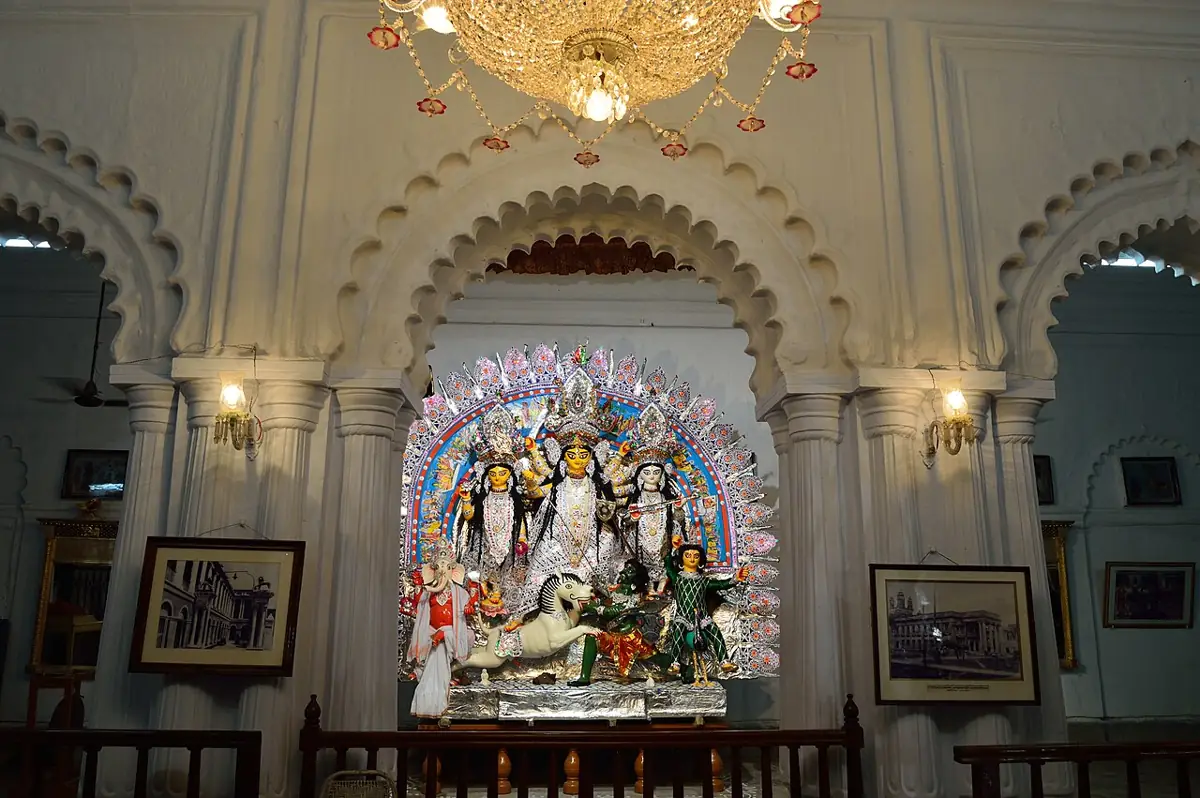
The most famous early puja in Kolkata is at Sovabazar Rajbari in the north of the city, the palace of Raja Nabakrishna Deb. His Durga Puja is traditionally dated to 1757, the year of the Battle of Plassey, and is widely said to have been held partly to celebrate the British victory, with Robert Clive among the guests. Nabakrishna had worked closely with the East India Company and rose with it.
Whether or not every detail is exact, the story captures something real about eighteenth- and nineteenth-century Kolkata. The new merchant and landed families of the colonial capital, the babus, competed in the scale of their pujas, inviting Company officials, hiring famous singers and dancers, and spending lavishly. These households, now called bonedi bari (old aristocratic houses), still hold many of the city's most traditional pujas. Read more in Bonedi bari pujas.

Barowari: the puja of the twelve friends
The first step away from the single patron was the barowari puja, funded by subscription. The usual origin story places it at Guptipara in Hooghly district, where, it is said, twelve friends who were not allowed to take part in a household puja pooled money to hold their own. The date commonly given is around 1790, and the word is popularly explained as baro (twelve) and yaar (friends). Historians treat both the date and the etymology with some caution, but the idea it describes, a puja owned by a group instead of a family, changed everything that followed.
Through the nineteenth century, barowari pujas spread across Bengal's towns. Subscriptions, not one family's purse, now paid for the image, the priest and the celebrations.
Sarbojanin: a puja for everyone
In the early twentieth century, Kolkata saw the rise of the sarbojanin (for everyone) puja, organised by a neighbourhood committee and open to all regardless of caste, class or means. A puja in Bhowanipore in 1910 is frequently cited as the first sarbojanin puja in the city, and many famous committees trace their origins to the 1910s and 1920s.
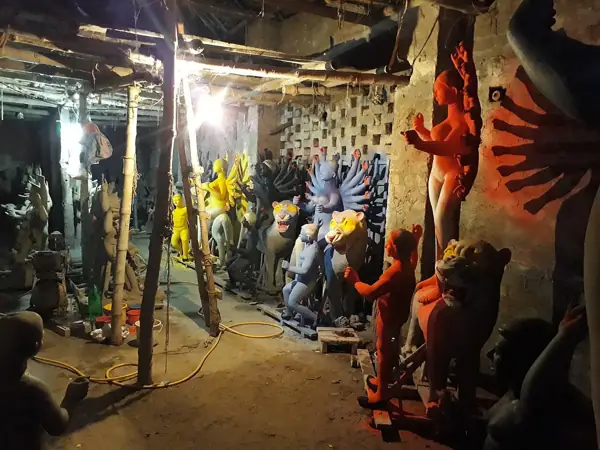
Among them is Bagbazar Sarbojanin in north Kolkata, whose beginnings are usually dated to 1918 or 1919 (accounts differ) and which is still known for a traditional image and a large fair. Nearby, the potters' quarter of Kumartuli supplied images for the growing number of pujas; see Kumartuli and idol making and visit Kumartuli Park.
Also readBonedi bari pujasThe nationalist era
The sarbojanin puja grew up at the same time as the freedom movement, and the two became linked. Community pujas were gathering places, and in the 1920s and 1930s some were associated with nationalist leaders, most famously Subhas Chandra Bose, who was connected with several Kolkata puja committees. Pujas encouraged swadeshi (Indian-made) goods, physical culture clubs organised pujas, and the image of the goddess as mother was easily read as an image of the motherland. The colonial authorities sometimes viewed these gatherings with suspicion.

After independence: the neighbourhood festival
From the mid-twentieth century Kolkata's population grew rapidly, including many families who came from East Bengal after Partition, and new neighbourhoods built their own pujas. The city's festival became a dense network of local committees, each raising funds from residents and businesses. Images grew larger, lighting more ambitious, and pandals began to copy famous buildings. Light artists from Chandannagar became known for illuminated displays.
The theme-pandal era
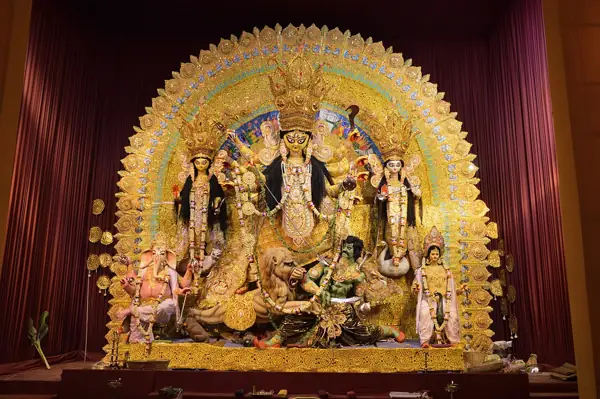
From the 1980s and especially through the late 1990s and 2000s, Kolkata's pujas turned into a large public art event. Theme pandals replaced the standard decorated structure with a single artistic idea: a village craft, a social issue, a material such as clay pots or jute, or an imagined world. The image itself was often redesigned to match. Trained artists and art-college graduates were commissioned, corporate sponsors offered awards for the best pandals, and crowds began to travel across the city to see the most talked-about ones.
Today the big community pujas of central and south Kolkata are as much about art and design as worship, while the bonedi bari and older sarbojanin pujas keep traditional forms. Both are part of the festival. Our central Kolkata blockbusters trail and south Kolkata classics trail show the range.
UNESCO recognition, 2021
In December 2021 Durga Puja in Kolkata was inscribed on UNESCO's Representative List of the Intangible Cultural Heritage of Humanity. The listing recognises the festival as a living tradition of craft, performance and community that cuts across religion, caste and class. See Durga Puja and UNESCO.
Seeing the history today
North Kolkata is the best place to feel the older layers of this story. A single walk can take in a rajbari puja, an early sarbojanin puja and the workshops where images are still made by hand. Follow the North Kolkata heritage trail, which links Sovabazar Rajbari, Bagbazar and Kumartuli Park, and see the north Kolkata area guide. In 2026 the main puja days run from Shashthi on Saturday 17 October to Bijoya Dashami on Wednesday 21 October; family pujas often have limited visiting hours, so check locally before you go.
See it in Kolkata
- 📍 Sovabazar RajbariA bonedi bari puja started by Raja Nabakrishna Deb. The thakurdalan is stunning.
- 📍 Bagbazar SarbojaninOne of the oldest sarbojanin pujas. Traditional daker saaj idol, plus a riverside fair.
- 📍 Kumartuli Park SarbojaninNext door to the idol-makers' quarter. Expect bold, artistic themes every year.
Questions people ask
When did Durga Puja start in Bengal?
No single start date is known. Worship of Durga is ancient, and grand household pujas by Bengali landowning and royal families are recorded from at least the eighteenth century, with family traditions claiming older origins.
Which is the oldest Durga Puja in Kolkata?
Several family pujas claim the title. The Sabarna Roy Choudhury family's puja at Barisha is often said to be the oldest in the Kolkata area, and the Sovabazar Rajbari puja, traditionally dated to 1757, is the most famous early one.
What is the difference between barowari and sarbojanin puja?
A barowari puja is organised and funded by a group of people rather than one family, the name commonly explained as baro (twelve) and yaar (friends). Sarbojanin means for everyone: a public puja, usually run by a neighbourhood committee, open to all regardless of caste or class.
When did theme pandals start in Kolkata?
Experimental and themed pandals grew steadily from the 1980s and became the dominant style in the late 1990s and 2000s, encouraged by corporate sponsorship and awards for art and design.
Why did Robert Clive go to Sovabazar Rajbari?
According to a widely told account, Raja Nabakrishna Deb held his first Durga Puja in 1757, after the Battle of Plassey, and invited Robert Clive as a guest, partly as a celebration of the East India Company's victory. The details come from tradition and later writers rather than a precise record.
Read next
- CultureBonedi bari pujasBonedi bari pujas are Kolkata's old family Durga Pujas, held in thakur dalans with ekchala idols and old rites. What sets them apart, where to go, etiquette.
 Durga PujaWhat is Durga Puja? The meaning behind the festivalWhat Durga Puja means: the Devi Mahatmya story of Mahishasura, Durga as Shakti, Uma's homecoming, Rama's akal bodhon and why the festival falls in autumn.
 Durga PujaDurga Puja and UNESCOIn December 2021 UNESCO inscribed Durga Puja in Kolkata on its intangible cultural heritage list. What the listing means, why it was chosen and what changed.
- Durga PujaKumartuli and the making of Durga idolsHow Kumartuli's potters make Durga idols: bamboo frame, straw, Ganga clay, punya mati, painting, shola, daker saaj, chokkhu daan on Mahalaya and visiting tips.