Pandal art and themes: how Kolkata's pandals are made
 Pujo Parikrama team6 min read · Updated
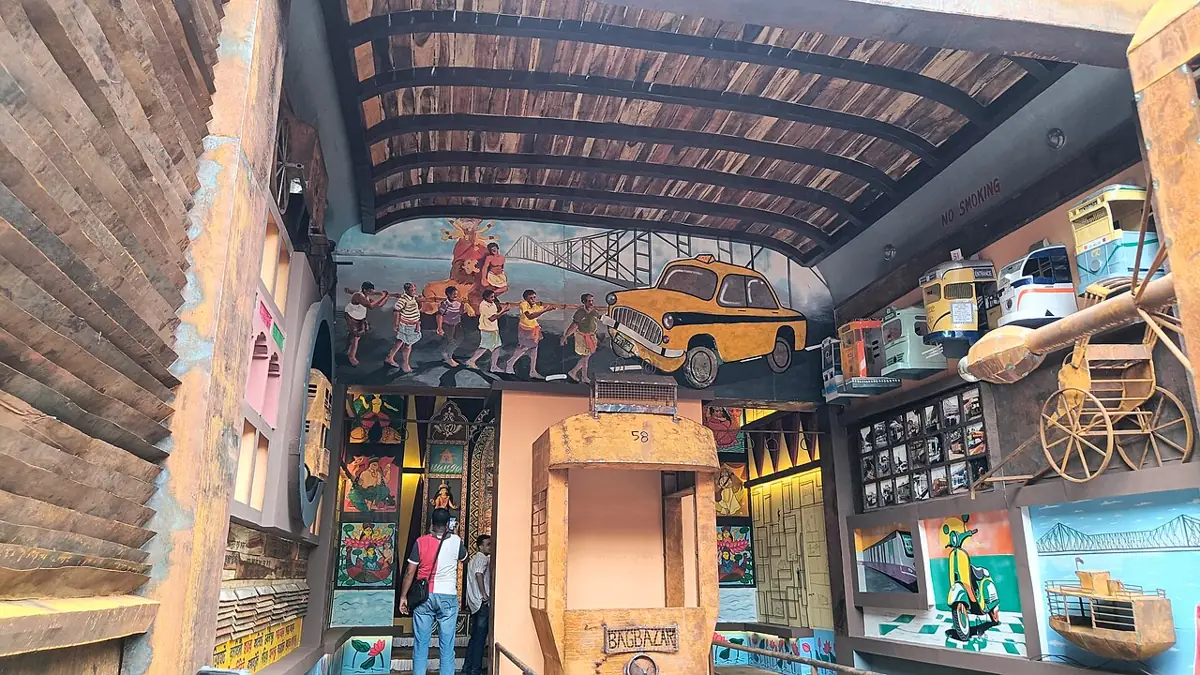
A Durga Puja pandal is a temporary shrine built for the festival, usually on a frame of bamboo and wood covered with cloth, plywood and other materials, and decorated by professional decorators or, for theme pandals, by artists and collectives who design the whole space as one work of art. In Kolkata, work traditionally begins with a khuti puja (worship of the first bamboo pole) that many committees hold around Rath Yatra, months before the festival. Artisans from across rural Bengal and beyond build and decorate pandals, illumination often comes from Chandannagar's lighting artists, awards add competition, and almost everything is dismantled within weeks of Bijoya Dashami.
 ▶ Photo story · 10 pagesPandal art and themes: how Kolkata's pandals are made
In this article 8 sections
The short answer: a pandal is a temporary shrine, usually a bamboo frame dressed in cloth, wood and whatever materials the designer imagines, built over weeks or months by skilled crews and taken down soon after the festival. In Kolkata, pandals have grown from simple canopies sheltering the goddess into immersive installations that draw millions of visitors, and the city's pujas are now celebrated as much for their art as for their rituals. That creative culture is part of why UNESCO inscribed Durga Puja in Kolkata on its intangible cultural heritage list in 2021; see Durga Puja and UNESCO.
What a pandal is
The word pandal simply means a temporary structure or marquee. For Durga Puja it houses the protima (idol) of the goddess with her children and Mahishasura, a space for priests to perform the rituals, and room for visitors to see her. Some pujas, especially the old family pujas or bonedi bari pujas, take place in a permanent thakur dalan (worship hall) instead and need no pandal at all. The community or sarbojanin pujas that grew up in the twentieth century needed somewhere to worship in the street or park, and the pandal became their stage. Read more in our history of Durga Puja.
Bamboo, cloth and craft: how they are built
Most pandals start the same way, with bamboo. Crews of specialist workers tie poles together with rope into a frame that can be remarkably tall and wide, sometimes reinforced with wood, steel or scaffolding for large structures. Bamboo is cheap, light, strong, flexible and reusable, and the skill of tying it securely is passed down through families of pandal workers.
Over the frame go the skins: cloth stretched and pleated in traditional decorator pandals, or plywood, fibreboard, thermocol, fibreglass and painted panels shaped into temple façades, palaces or abstract forms. Inside, the space is divided into an entry path, a viewing area, the altar for the protima and a working area for the priests. Electricians run lighting and sound, and committees arrange fire safety, barricades and queue paths, often under rules set by local authorities. Check locally for current requirements; they are the committees' responsibility, not visitors'.
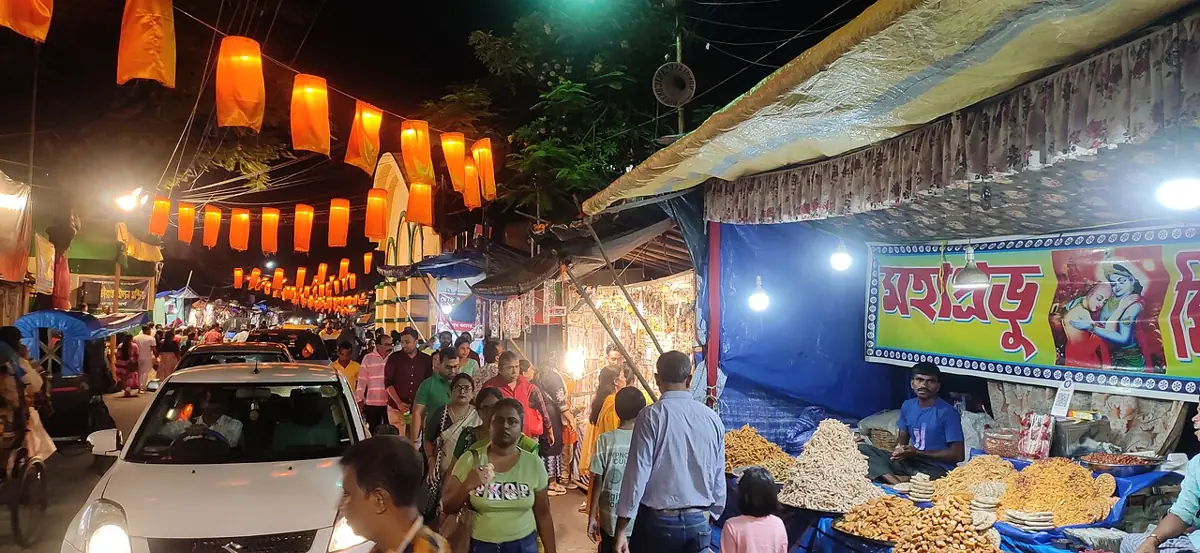

Decorators and designers
Traditionally, a puja committee hired a decorator, a contractor who supplied bamboo, cloth and labour and built a standard or customised pandal. Many neighbourhood pujas still work this way, and some decorator firms have served the same pujas for generations.
From around the 1990s and especially the 2000s, Kolkata saw the rise of the theme puja. Committees began commissioning artists, art-college graduates, set designers and craft collectives to design the entire experience around a single idea: a village craft, a social or environmental message, a memory of a place, or a purely imaginative world. In a theme puja, the pandal, lighting, sound, path and often the idol are all conceived together. Some theme pandals deliberately replicate famous buildings; others are abstract installations that look more like a gallery than a temple. Our guide lists pujas known for this, such as Suruchi Sangha, Chetla Agrani, Tridhara and Sreebhumi, alongside traditional pujas that keep the classic look. Themes change every year.
Artisans from the districts
Much of the handwork in Kolkata's pandals comes from outside the city. Committees and designers bring in artisans from districts across West Bengal and from other states: weavers, potters, terracotta workers, woodcarvers, dokra metal casters, pattachitra scroll painters, shola-pith craftspeople and many others. Some spend weeks living on site to complete a pandal. For many crafts, puja season is an important source of income and recognition, and theme pujas have brought rural traditions in front of huge urban audiences.
The idols themselves are usually made separately, in workshops such as those of Kumartuli, and arrive at the pandal in the days before the festival.

Lighting from Chandannagar
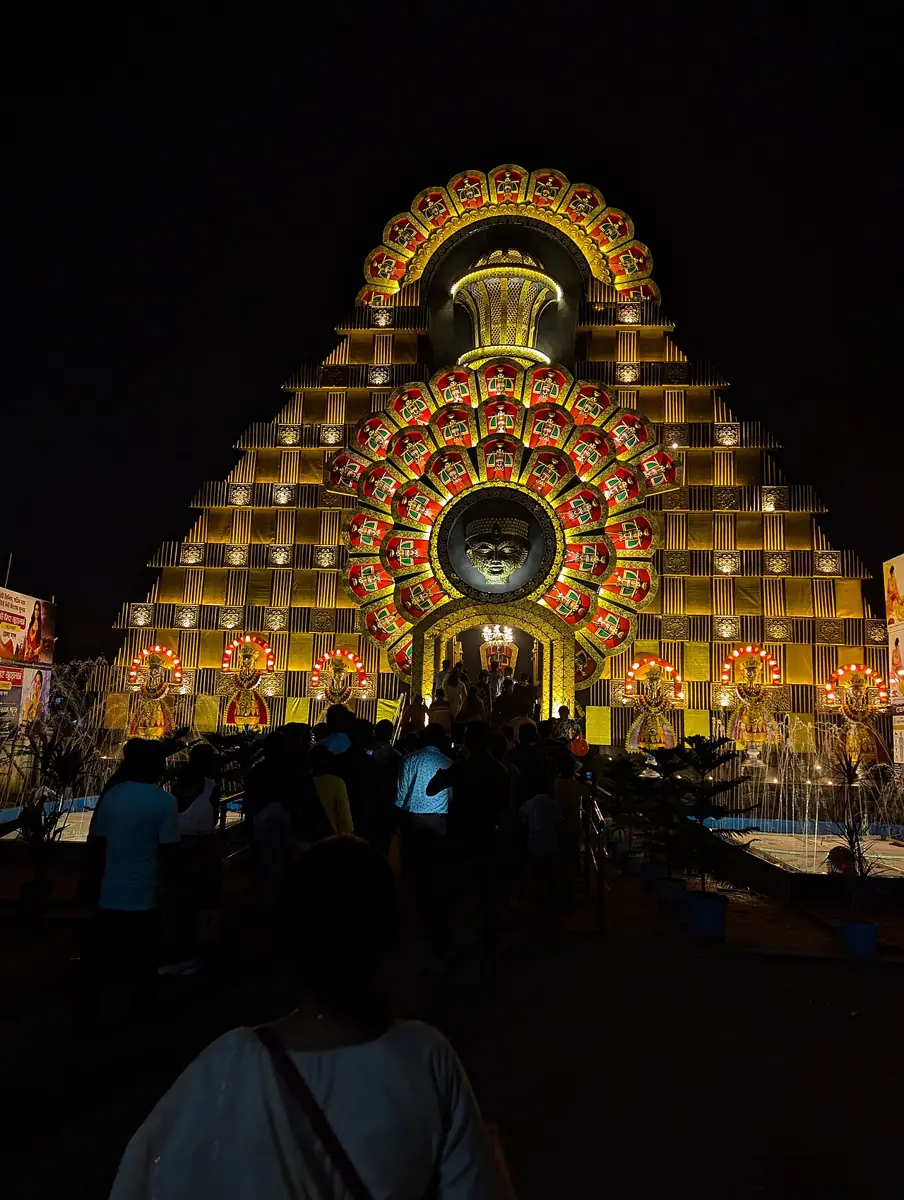
Look up and around at night: much of the illumination you see in and around pandals, from glowing archways to animated figures made of thousands of small bulbs and LEDs, is associated with lighting artists from Chandannagar, a riverside town in Hooghly district. The town is known for its own grand Jagaddhatri Puja and has long been a centre of decorative lighting, with its craftspeople working at festivals across Bengal and beyond. Light is now part of the art, and some pujas are best seen after dark; others, like College Square, are known for lights reflected in water.
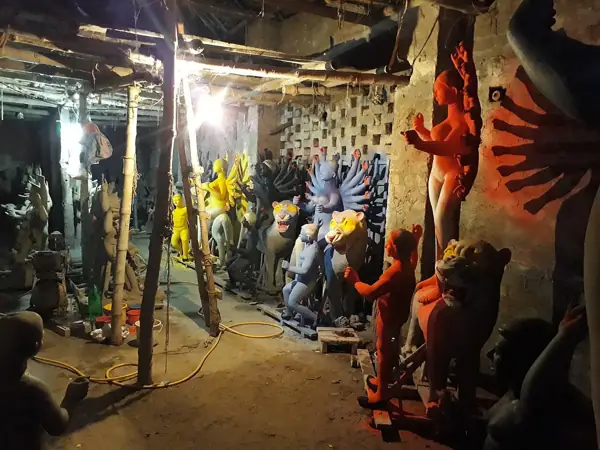 Also readKumartuli and the making of Durga idols
The awards culture
Kolkata's pujas compete, gently and sometimes fiercely, for awards. Companies, media houses and the state government give prizes for the best idol, pandal, lighting, theme and overall puja. Two of the best known are the Asian Paints Sharad Shamman, a long-running corporate award, and the state government's Biswa Bangla Sharad Samman. Award results are announced during the festival and often send fresh crowds to the winners. Awards and their categories change from year to year, so check current announcements.
The timeline: from khuti puja to dismantling
Timelines vary, but a large Kolkata puja often follows something like this:
- Soon after the previous puja. Committees review the year and some start thinking about the next theme.
- Around Rath Yatra (usually June or July). Many committees hold the khuti puja, worshipping the first bamboo pole as the ceremonial start of work. Dates vary by committee, and some hold it later.
- Summer and monsoon. Designers finalise the theme; artisans prepare panels and craftwork, often off-site.
- Six to eight weeks before the puja. Frames go up on site and crews work long hours. Larger theme pandals may start earlier.
- The final week. Lighting is tested, idols arrive from the studios, and many pandals open to visitors around Panchami or even before; in 2026 Panchami is Friday 16 October and Shashthi, when the goddess is formally awakened at most pujas, is Saturday 17 October.
- Bijoya Dashami and after. Immersions begin on Bijoya Dashami (Wednesday 21 October 2026) and may continue for days at some pujas. Pandals are then dismantled, bamboo and many materials are reused or sold, and some artworks are preserved or moved; check locally for any that remain on display.
How to see pandal art well
- Go early in the morning for empty interiors and time to look at details.
- Read the theme board at the entrance, if there is one; it often credits the artist and craftspeople.
- Look up, down and behind you: ceilings, floors and entry paths are part of the design.
- Plan by area with our pandal hopping tips and the Kolkata guide, which marks theme pujas and shows live crowd check-ins.
- Photographing? See our photography tips.
Pandals are temporary by design, and their materials raise real questions about waste and the river. We cover those in eco-friendly Durga Puja.
See it in Kolkata
- 📍 Suruchi SanghaNew Alipore's showpiece, famous for themes that bring in the art of a different Indian state each year.
- 📍 Chetla Agrani ClubCelebrity-studded inaugurations and blockbuster themes across Tolly Nullah.
- 📍 Tridhara SammilaniA South Kolkata showstopper with dazzling theme and light work.
- 📍 Sreebhumi Sporting ClubInsta-famous replica pandals and huge gold jewellery on the idol. Lake Town gridlocks for hours.
- 📍 Kumartuli Park SarbojaninNext door to the idol-makers' quarter. Expect bold, artistic themes every year.
- 📍 Mohammad Ali ParkA Central Avenue giant known for lavish replicas and theme pandals.
Questions people ask
What is a pandal made of?
Most pandals are built on a frame of bamboo, tied together with rope and sometimes reinforced with wood or metal, then covered with cloth, tarpaulin, plywood or fibre panels. Theme pandals add almost any material: clay, jute, terracotta, glass, metal, textiles, paper or recycled objects.
What is a theme pandal?
A theme pandal is designed around one idea, such as a craft tradition, a social issue or an imagined place, so that the structure, decoration, lighting, sound and often the idol itself form a single artwork. Theme pujas became prominent in Kolkata from around the 1990s onwards.
What is khuti puja?
Khuti puja is the worship of the first bamboo pole (khuti) of a pandal, marking the start of construction. Many Kolkata committees hold it around Rath Yatra, months before Durga Puja, though the date varies from puja to puja.
How long does it take to build a Durga Puja pandal?
It varies widely. A simple pandal can go up in a few weeks, while a large theme pandal may take several months of design and on-site work. Many big committees start planning a year's theme soon after the previous puja ends.
Why is Chandannagar famous for lighting?
Chandannagar, a town on the Hooghly north of Kolkata, has a long tradition of decorative illumination linked to its own Jagaddhatri Puja. Its lighting artists are known for animated light displays and are hired for festivals across Bengal and beyond.
Read next
- Durga PujaKumartuli and the making of Durga idolsHow Kumartuli's potters make Durga idols: bamboo frame, straw, Ganga clay, punya mati, painting, shola, daker saaj, chokkhu daan on Mahalaya and visiting tips.
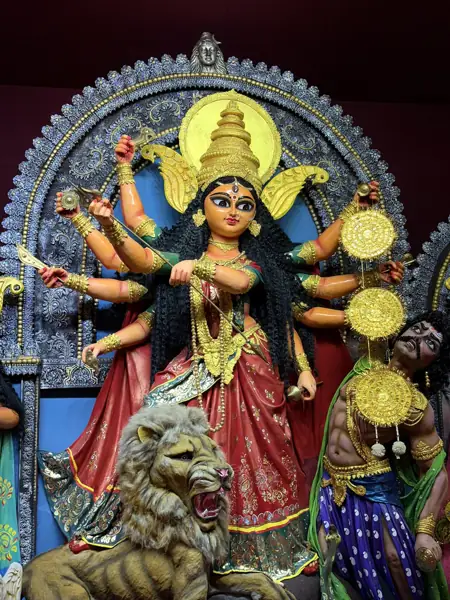 Durga PujaDurga Puja and UNESCOIn December 2021 UNESCO inscribed Durga Puja in Kolkata on its intangible cultural heritage list. What the listing means, why it was chosen and what changed.
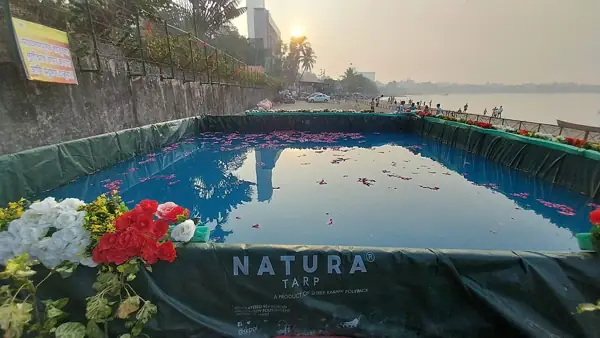 CultureEco-friendly Durga PujaHow to celebrate an eco-friendly Durga Puja: clay vs plaster of Paris idols, natural colours, immersion rules, artificial ponds, and less plastic and noise.
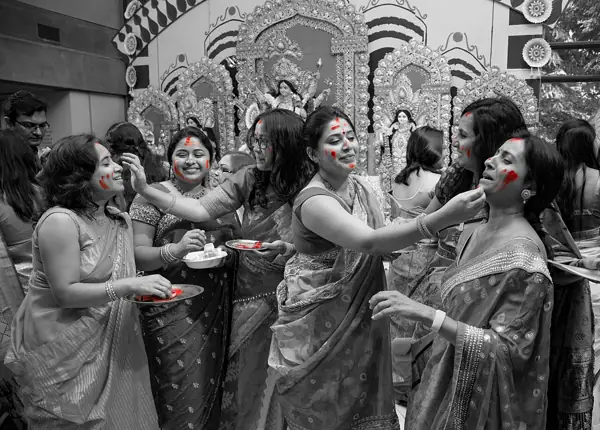 VisitPhotographing Durga PujaHow to photograph Durga Puja on a phone or camera: pandal lighting, the goddess's face, crowds, dhunuchi at night, Kumartuli workshops, and photo etiquette.
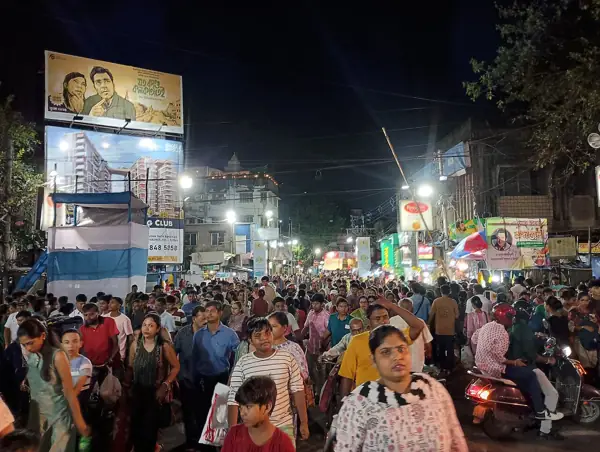 CulturePandal hopping in KolkataPractical Kolkata pandal hopping tips: the best hours to beat crowds, using the Metro, what to carry, kids and elders, safety, and which area is known for what.
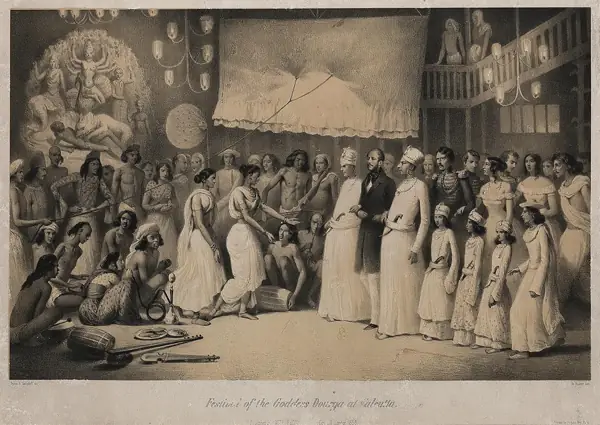 Durga PujaThe history of Durga Puja in BengalHow Durga Puja grew from zamindari and rajbari pujas to barowari and sarbojanin community festivals, theme pandals and UNESCO heritage status in Kolkata.