Photographing Durga Puja: phone and camera tips
 Pujo Parikrama team5 min read · Updated
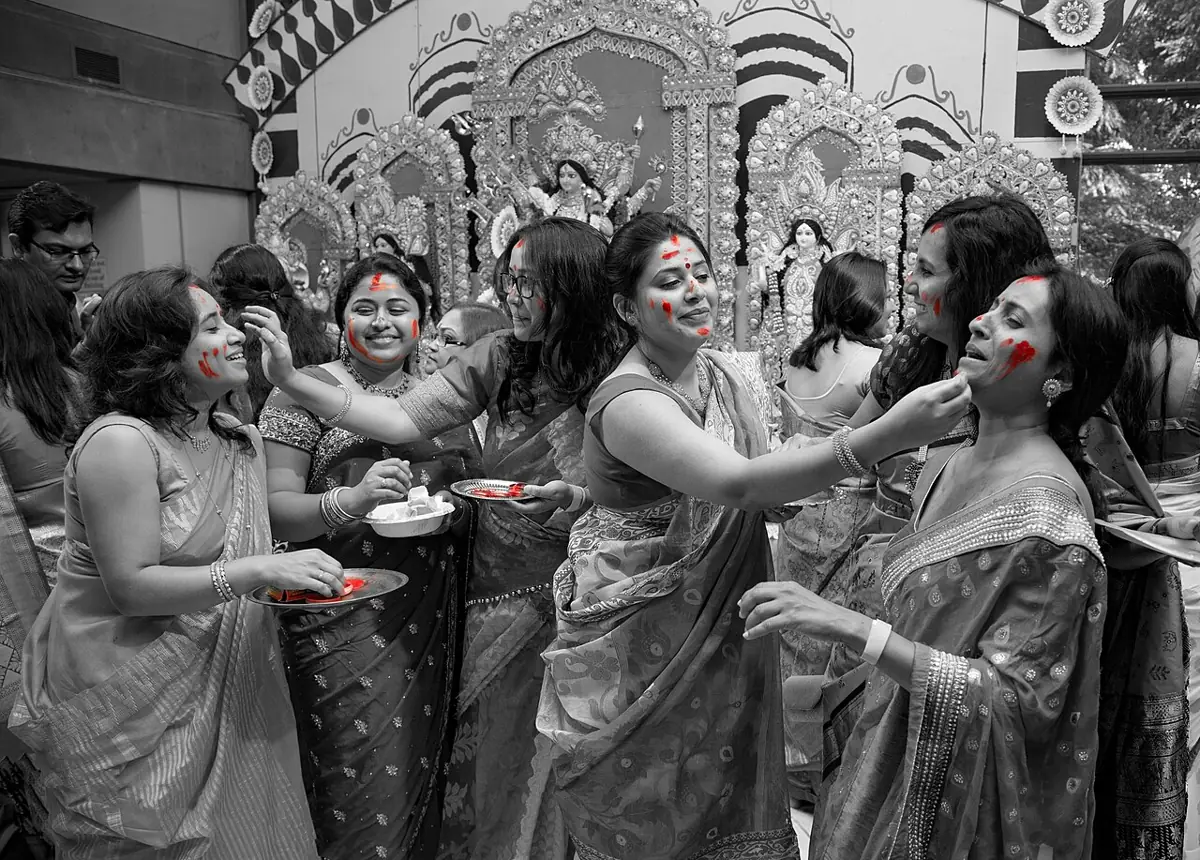
To photograph Durga Puja well, go early in the morning or late at night when crowds are thinner, expose for the bright idol rather than the dark pandal, hold steady or brace against something instead of using flash, and wait for the evening aarti and dhunuchi naach for the most atmospheric shots. Ask before photographing people, priests and artisans, respect no-photo signs at family pujas and some pandals, never block the aarti or a queue, and treat drones as restricted unless you have checked current local rules.
 ▶ Photo story · 9 pagesPhotographing Durga Puja: phone and camera tips
In this article 9 sections
The short answer: shoot early or late, expose for the goddess's face, skip the flash, and ask before you photograph people. Durga Puja is one of the most photogenic festivals anywhere, with sculpted idols, pandals that are works of art, light installations, and the smoke and swirl of dhunuchi at night. It's also crowded, dimly lit in places, and a living act of worship. These tips work for a phone or a camera, and the etiquette section matters as much as the technique.
Plan around light and crowds
- Dawn to about 9 am. The best time for clean shots of the protima (idol) and the pandal interior with few people. Our Central Blockbusters at Dawn trail is timed for exactly this.
- Blue hour, just after sunset. Pandal exteriors and street lighting look their best against a deep blue sky rather than black.
- Evening aarti. The most atmospheric moment, with lamps, incense and the dhak, but also the most crowded.
- After about 1 am. Queues thin; good for interiors and street scenes.
For more on beating the crowds, see our pandal hopping tips, and check live crowd check-ins in the free Pujo Parikrama guide before you set off.
Pandal lighting
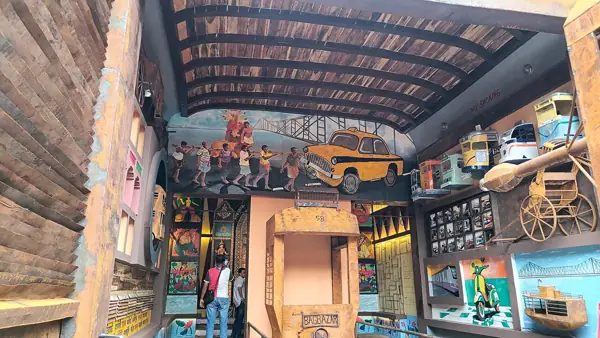
Pandal interiors mix spotlights on the idol, coloured LEDs, chandeliers and deep shadow. Cameras struggle with this range.
- Expose for the idol. Tap on the goddess's face on a phone, or spot-meter on it with a camera, then pull exposure down a little so gold ornaments and white faces keep detail.
- Use night mode or a fast lens. A wide-aperture prime (for example f/1.8) lets in far more light than a kit zoom.
- Raise ISO before slowing the shutter. A little noise is better than motion blur from people jostling around you.
- Brace yourself. Lean on a barricade or pillar, tuck elbows in and exhale as you shoot. Tripods are rarely practical, and often not allowed, in crowded pandals.
- Shoot RAW if your phone or camera supports it; mixed coloured lighting is much easier to correct afterwards.
- Watch white balance. Warm tungsten and cool LEDs can clash. Decide whether to keep the mood or neutralise it, and be consistent.
Faces of the goddess
The mukh (face) of the protima, with its large eyes and third eye, is what most people want to capture.
- Use a short telephoto (or your phone's 2x or 3x lens) from the front of the viewing area. It flattens perspective and isolates the face from the crowd.
- Focus on the eyes. Make sure focus lands there, not on the crown or garland.
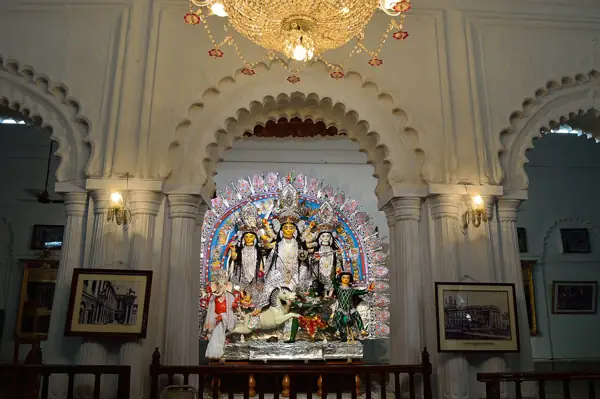
- Show the whole family too. A classic Durga image includes Lakshmi, Saraswati, Kartik, Ganesh and Mahishasura with the lion; step back for a wide shot that shows the full chala (frame). Learn who's who in Goddess Durga.
- Look for details. Hands with weapons, the lion's mane, the daker saaj (traditional white ornaments made of shola pith) and painted textures make strong close-ups.

Crowds and street scenes
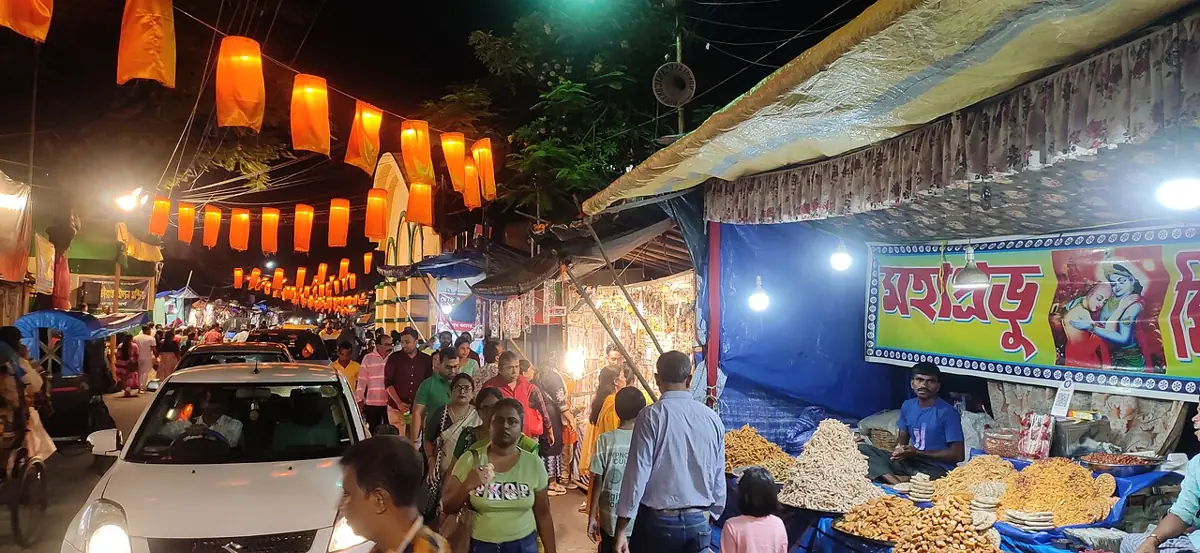
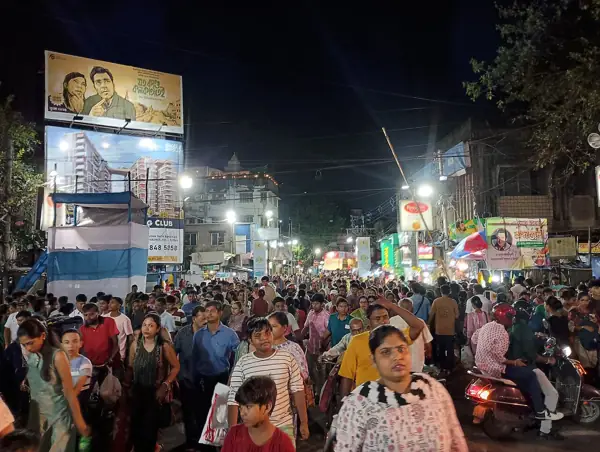
- Use the crowd. A sea of heads with a lit pandal behind tells the story of pujo better than an empty frame.
- Shoot from height when it's safe: a footbridge or a raised pavement, never from stairways or blocking an exit.
- Slow shutter for motion. On a steady surface, a half-second exposure turns flowing crowds into streaks around a sharp pandal.
- Keep it moving. Take your shot and step aside. Don't stop in entry or exit paths.
 Also readKumartuli and the making of Durga idols
Dhunuchi at night
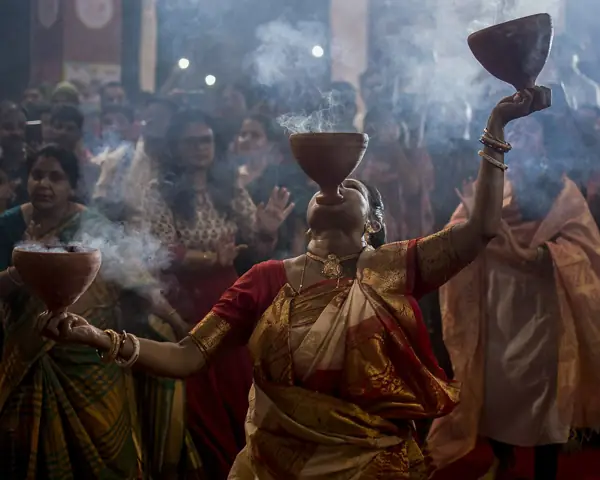
Dhunuchi naach, the dance with clay incense burners to the beat of the dhak, usually happens during the evening aarti, especially on Ashtami and Navami.
- Raise ISO and use continuous shooting to freeze motion, or try a slower shutter to capture swirling smoke and embers.
- Find light. The burning coconut husk lights faces from below; position yourself so the pandal lights are behind or beside the dancer.
- Keep your distance. Dhunuchis are hot and swung fast. Don't step into the dance space for a shot.
- Protect your gear. Smoke and ash get everywhere; a lens hood and a cloth help.
Kumartuli workshops
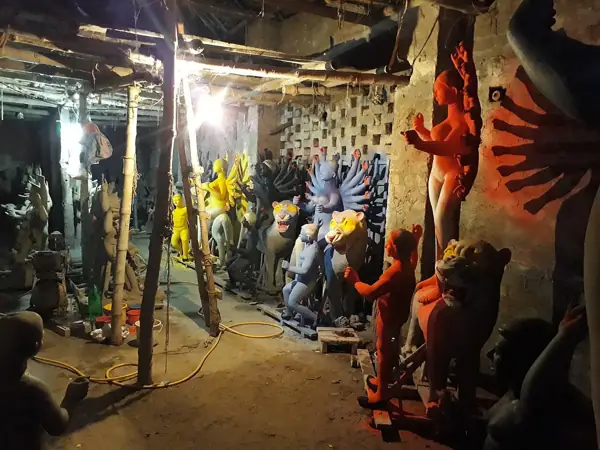
In the weeks before the puja, the idol-makers' quarter of Kumartuli in north Kolkata is full of half-finished idols, straw frames and clay faces drying in the lanes.
- Visit in the morning, when light falls into the lanes and artisans are at work.
- Ask first. These are workplaces and often homes. Ask before photographing artisans or entering a studio, and accept a no.
- Don't touch idols or tools, and don't block the narrow lanes where idols are being moved.
- Go before Panchami for workshop scenes; by Shashthi most idols have left for their pandals. The North Kolkata Heritage Trail passes through the area.
Etiquette
Photography should never come at the cost of someone's worship.
- Ask before photographing people, especially priests, women at prayer, children and anyone during a ritual.
- Respect restrictions. Some bonedi bari pujas (old family pujas) and some pandals don't allow photography, or don't allow it near the altar or during certain rituals. Look for signs and ask.
- No flash where you're asked not to use it, and avoid it during puja and aarti everywhere. It distracts priests and worshippers and rarely improves the picture.
- Don't block the aarti, anjali or queue. Stand to the side, keep your arms down when others are offering flowers, and take your turn.
- Selfie sticks and tripods are often unwelcome in crowded pandals; leave them at home.
- Remove shoes where asked, and don't climb on barricades or decorations.
- Sindoor khela on Dashami is personal; ask the women involved before photographing them up close. See sindoor khela.
Drones
Drones are generally restricted in crowded public spaces, and Kolkata Police often issue puja-time restrictions. Do not fly a drone over pandals, crowds or immersion ghats unless you have checked current national and local rules and have any permissions required. Rules change, so check locally.
Practical kit
- Phone with storage space cleared, plus a power bank
- Spare camera batteries and memory cards
- A small, fast prime lens and a short zoom
- Lens cloth for smoke, humidity and drizzle
- A rain cover or zip bag for sudden showers
- A cross-body strap, so you can hold the camera securely in crowds
Want to know what you're photographing? Read about how pandals are made and the Kolkata trip guide.
See it in Kolkata
- 📍 Kumartuli Park SarbojaninNext door to the idol-makers' quarter. Expect bold, artistic themes every year.
- 📍 Bagbazar SarbojaninOne of the oldest sarbojanin pujas. Traditional daker saaj idol, plus a riverside fair.
- 📍 College Square SarbojaninThe lighting reflected on the College Square pond is iconic at night.
- 📍 Sovabazar RajbariA bonedi bari puja started by Raja Nabakrishna Deb. The thakurdalan is stunning.
Questions people ask
Can you take photos inside Durga Puja pandals?
In most public (sarbojanin) pandals, photography is allowed, though volunteers may ask you to keep moving in queues. Some family pujas and a few pandals restrict photos or flash, so look for signs and ask a volunteer if unsure.
What are the best camera settings for pandal photography?
Meter for the idol's face, which is much brighter than the surroundings, and underexpose slightly so the lights and gold don't burn out. Use a fast lens or your phone's night mode, raise ISO rather than using flash, and keep the shutter fast enough for a sharp handheld shot.
Can I photograph artisans at Kumartuli?
Many workshops in Kumartuli allow photography from the lane, but these are working studios. Ask before entering or photographing artisans up close, don't touch idols or block paths, and buying something or simply showing interest in the work is appreciated.
Are drones allowed at Durga Puja in Kolkata?
Drones are generally restricted in crowded areas and near sensitive zones, and police often add puja-time restrictions in Kolkata. Do not fly one unless you have checked current rules and obtained any required permissions.
What is the best time to photograph pandals?
Early morning, from about dawn to 9 am, for empty pandals and soft light; and blue hour after sunset for pandal exteriors with their lights on. Late night after about 1 am is also calmer.
Read next
- Durga PujaKumartuli and the making of Durga idolsHow Kumartuli's potters make Durga idols: bamboo frame, straw, Ganga clay, punya mati, painting, shola, daker saaj, chokkhu daan on Mahalaya and visiting tips.
 RitualsDhunuchi naachDhunuchi naach is Durga Puja's dance with smoking clay incense burners to the dhak, held at evening arati from Saptami to Navami. Its meaning and safety tips.
 CulturePandal hopping in KolkataPractical Kolkata pandal hopping tips: the best hours to beat crowds, using the Metro, what to carry, kids and elders, safety, and which area is known for what.
 CulturePandal art and themesHow Kolkata's Durga Puja pandals are built: bamboo and cloth frames, decorators, theme pandals, rural artisans, Chandannagar lights, awards, and the timeline.
 CultureBonedi bari pujasBonedi bari pujas are Kolkata's old family Durga Pujas, held in thakur dalans with ekchala idols and old rites. What sets them apart, where to go, etiquette.