Dhak and dhaki: the sound of Durga Puja
 Pujo Parikrama team4 min read · Updated
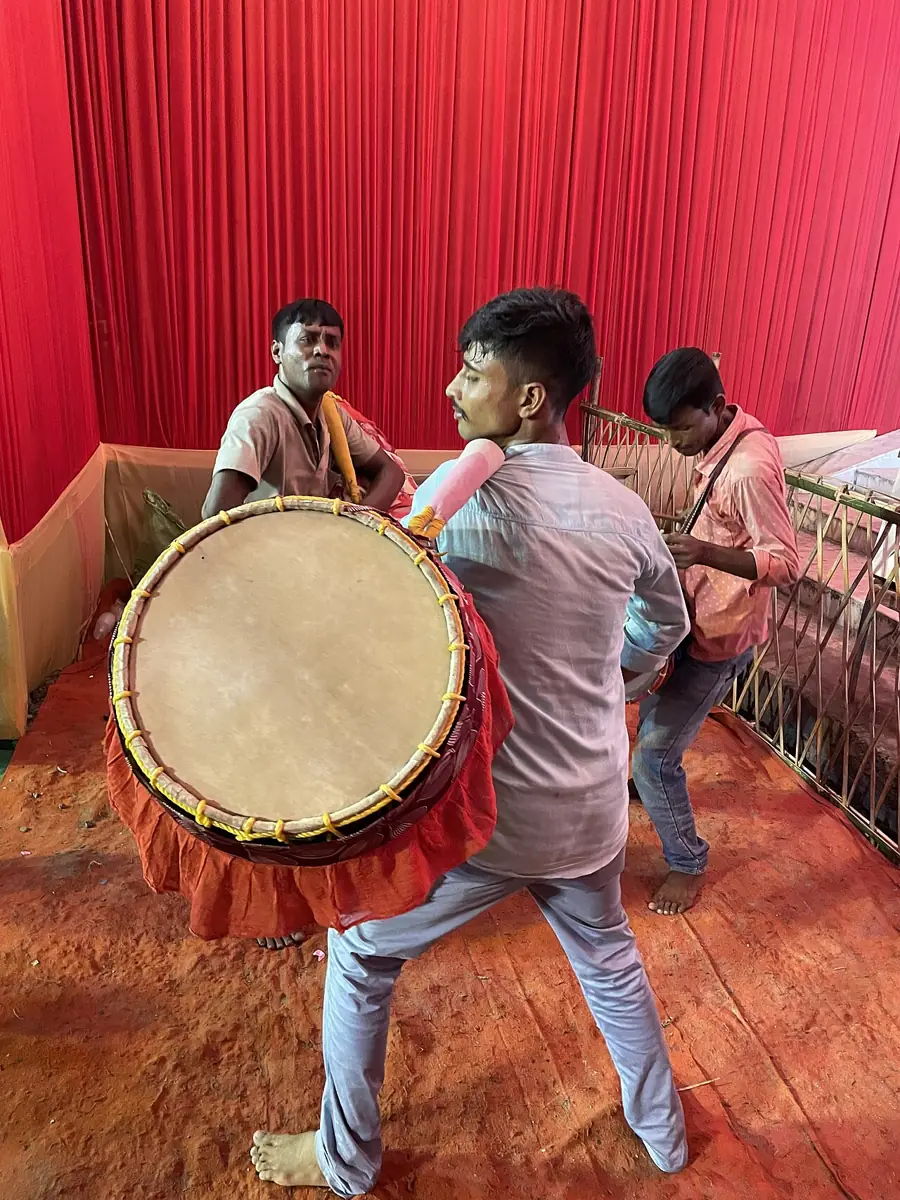
The dhak is the large barrel-shaped drum of Bengal, played with two sticks and topped with white plumes of kash flowers or feathers, and the dhaki is the drummer who plays it. During Durga Puja, dhakis, many of them from rural districts of West Bengal who travel to Kolkata to be hired, play through the rituals: at aarti, for dhunuchi naach, at Sandhi Puja and on the immersion procession. With the kashor gong, conch and ululation, the dhak is the sound most Bengalis associate with Pujo.
 ▶ Photo story · 7 pagesThe sounds of Durga Puja
In this article 5 sections
The dhak (ঢাক) is the big barrel drum you hear everywhere during Durga Puja, and the dhaki (ঢাকি) is the musician who plays it. Hung from the shoulder and crowned with white plumes, it sets the pace of every ritual, from the first morning aarti to the final immersion. Ask a Bengali what Pujo sounds like and the answer is almost always the dhak, with the clang of the kashor, the call of the shankh (conch) and the trill of ulu (ululation).
What the dhak is
The dhak is a large, roughly barrel-shaped wooden drum with animal-skin heads stretched over both ends and laced with cords. It is heavy and loud, built to carry over crowds and across neighbourhoods.
- How it's held. The dhaki slings the drum from a strap over the shoulder or around the neck, so it hangs at an angle in front of the body, and plays standing or walking.
- How it's played. It is usually struck with two thin sticks, often of cane or bamboo, on one head. The sticks produce sharp, fast, cracking strokes and deep resonant ones, depending on where and how the head is struck.
- The plumes. For the puja the drum is decorated with tall white plumes, made of kash phool (kash flowers, a wild grass whose white plumes fill the Bengal countryside in autumn) or bird feathers. Kash flowers are themselves a symbol of sharat (autumn) and of the coming of the goddess, so the plume links the drum to the season.
Drums of this family have long been played across Bengal for festivals, processions and worship. The dhak is associated with Durga Puja above all, but you will also hear it at Kali Puja and other occasions.

Who the dhakis are
Most dhakis are not professional musicians in the concert sense. Many are farmers or labourers from rural districts of West Bengal, and the craft often passes from father to son, so a family may have played the dhak for generations. Young boys often accompany their fathers, playing the kashor (a bell-metal gong) or a smaller drum.
It is widely reported that, in the days before the puja, many dhakis travel to Kolkata and wait at railway stations, especially at Sealdah, where puja committees and families come to hear them play and hire them. The scene of drummers playing on the station platform, each trying to catch a buyer's ear, has become one of the familiar images of the run-up to Pujo. Other dhakis are booked in advance through long relationships with a particular para (neighbourhood) or family. Once hired, a dhaki usually stays with the puja for all the main days, playing from dawn into the night.
The work is seasonal and often modestly paid, and many dhakis rely on the tips and gifts they receive from families and visitors during the festival.
 Also readDhunuchi naach
Rhythms of the puja
Dhakis play different rhythms for different moments in the ritual. Exact patterns vary by region, family tradition and the individual drummer, and there is no single fixed list, but in general:
- Aarti. During the morning and evening aarti the rhythm is steady and driving, building in intensity with the waving of lamps, the conch and the bells. It often speeds up towards the end.
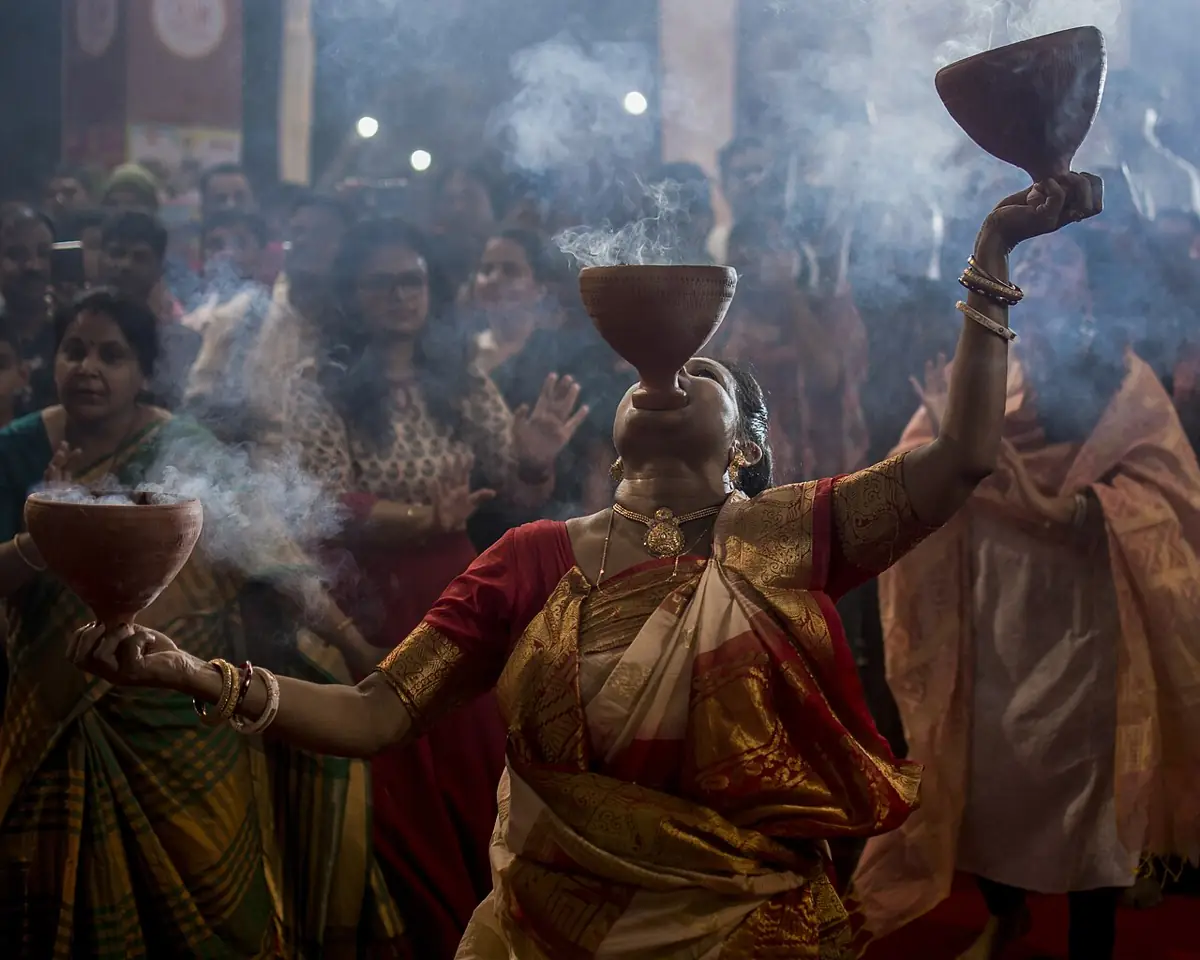
- Dhunuchi naach. For the dhunuchi dance, where dancers move with smoking clay incense burners, the beat is fast, energetic and playful, and dancers and drummer often egg each other on, the dhaki picking up speed as the dance grows wilder.
- Ritual moments. At key rituals such as bodhon, the bathing of the nabapatrika and Sandhi Puja, the dhak marks the beginning and climax of the rite and can be urgent and loud.
- Bisarjan. On Dashami, as the goddess is carried to the river, the rhythm becomes a processional beat for walking and dancing, and many people hear in it both celebration and sadness.
Listen for how the same dhaki changes tone across a single day: calm and steady in the morning, festive at night.
Kashor, ghonta and the other sounds
The dhak rarely plays alone.
- Kashor (কাঁসর): a flat bell-metal gong, held by a cord and struck with a stick, giving a bright metallic clang that cuts through the drum. It is often played by a boy or a second musician.
- Ghonta (ঘণ্টা): the hand bell rung by the priest during worship.
- Shankh (শাঁখ): the conch, blown at auspicious moments.
- Ulu (উলু): the high trilling ululation made by women at moments of welcome and blessing.
Together, dhak, kashor, shankh and ulu make up what people mean by the sound of Pujo. Read about the other words in our glossary.
Hearing the dhak in Kolkata
- Early morning is the best time to hear a dhaki properly, during the morning puja and aarti, before crowds and loudspeakers take over. See our pandal hopping tips for timing.
- Evening aarti at a neighbourhood puja, with dhunuchi naach, is one of the liveliest scenes of the festival.
- Bonedi bari pujas in north Kolkata often keep their dhakis close to the thakur dalan, so you hear them in a quiet courtyard; see bonedi bari pujas and the North Kolkata Heritage Trail.
- Dashami processions carry the dhak through the streets to the ghats.
If you enjoy the playing, it's a kind gesture to give the dhaki a small tip, and if you film, ask first.
Questions people ask
What is a dhak?
A dhak is a large wooden barrel drum from Bengal with skin heads on both ends. It is hung from the shoulder or around the neck, played with two thin sticks on one face, and decorated with tall white plumes, and it is the main instrument of Durga Puja.
What are the white feathers on a dhak?
They are plumes made of kash flowers (a tall wild grass that blooms in autumn) or bird feathers, fixed to the top of the drum. They are decorative and mark the drum as festive; kash flowers are themselves a symbol of the puja season in Bengal.
Where do dhakis come from?
Many dhakis come from villages in rural districts of West Bengal, often from families that have played for generations. It is widely reported that many travel to Kolkata before the puja and wait at railway stations, especially Sealdah, to be hired by puja committees and families.
When is the dhak played during Durga Puja?
Throughout the puja: during the morning and evening aarti, for dhunuchi naach, at bodhon and nabapatrika bathing, at Sandhi Puja and during the immersion procession on Dashami. The rhythm changes with each occasion.
Can visitors play the dhak?
Some dhakis let visitors try a few beats, especially at community pujas on quieter mornings, but always ask first and offer something in thanks. During rituals the drum is part of the worship, so watch rather than interrupt.
Read next
- RitualsDhunuchi naachDhunuchi naach is Durga Puja's dance with smoking clay incense burners to the dhak, held at evening arati from Saptami to Navami. Its meaning and safety tips.
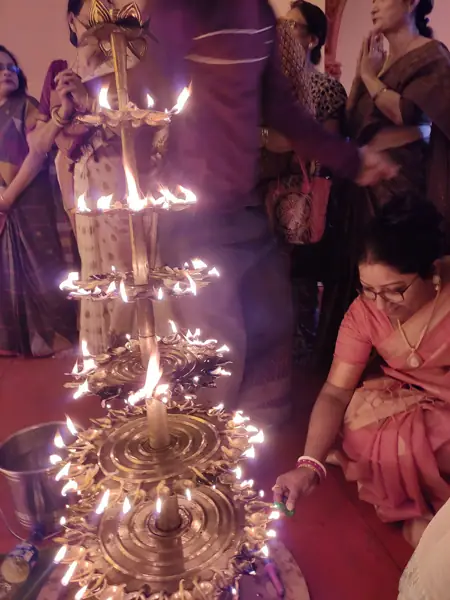 RitualsSandhi PujaSandhi Puja is the worship of Durga as Chamunda in the 48 minutes where Ashtami ends and Navami begins, with 108 lotuses and 108 lamps. Timing and legend.
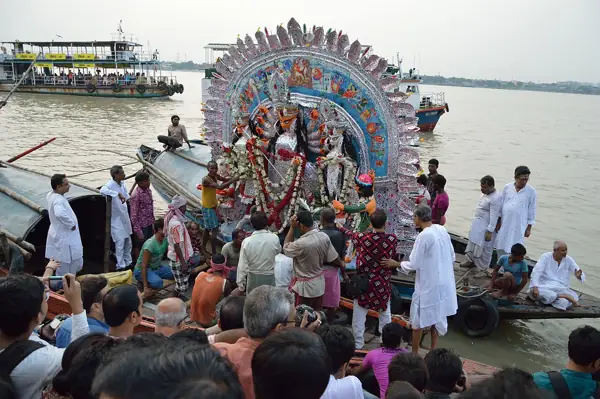 RitualsBijoya DashamiBijoya Dashami 2026 is Wednesday 21 October: darpan bisarjan, boron and sindoor khela, immersion processions, shanti jal and Bijoya greetings explained.
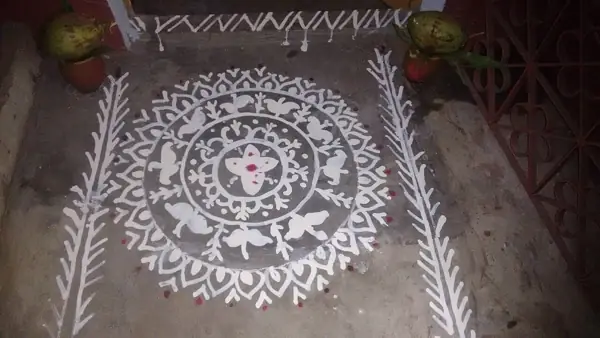 CultureDurga Puja glossaryA Durga Puja glossary: 58 Bengali and Sanskrit words explained, from anjali, bodhon and dhunuchi to sindoor khela, daker saaj, bonedi bari and thakur dekha.
 CultureMahishasuramardiniMahishasuramardini, the Mahalaya dawn broadcast on All India Radio: Birendra Krishna Bhadra's Chandi recitation, Pankaj Kumar Mullick's music, how to listen.