Bonedi bari pujas: Kolkata's old family Durga Pujas
 Pujo Parikrama team5 min read · Updated
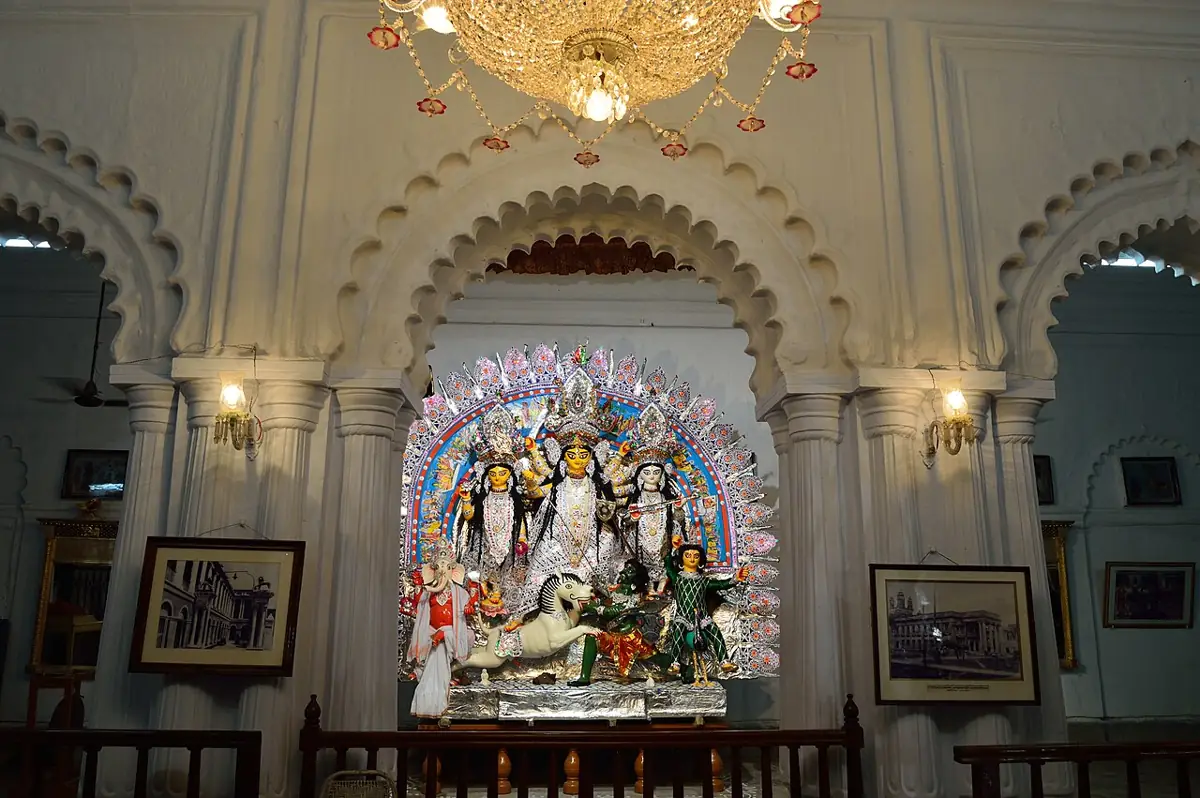
Bonedi bari pujas are the Durga Pujas of Kolkata's old established families, held in the pillared worship hall (thakur dalan) of the family house rather than in a street pandal. They are known for traditional ekchala idols, rituals followed the same way for generations, and an intimate courtyard atmosphere; well-known examples include Sovabazar Rajbari, the family house of Rani Rashmoni at Janbazar, and the houses of the Laha, Mallick, Dawn and Dey families. Many welcome respectful visitors during the day, especially in north Kolkata.
 ▶ Photo story · 6 pagesBonedi bari pujas: Kolkata's old family Durga Pujas
In this article 4 sections
A bonedi bari puja (বনেদি বাড়ির পুজো, "the puja of an established house") is a Durga Puja held by one of Kolkata's old families in its own ancestral home. Instead of a themed pandal on the street, you step into a courtyard surrounded by verandas, and at one end, on a raised, pillared platform called the thakur dalan, stands the goddess with her children in a single traditional frame. The puja is run the way the family has run it for generations, sometimes for well over two centuries. Many of these houses are in north Kolkata, and several welcome respectful visitors.
What makes a bonedi bari puja different
The thakur dalan
The thakur dalan is a worship hall built into the house, usually facing a central courtyard, with columns, arches and often decorative plasterwork. It was designed for exactly this puja: the goddess sits in the hall, the family and guests gather in the courtyard, and the dhakis play nearby. Some thakur dalans are architecturally striking, a reminder of the wealth of the families who built them in colonial Calcutta.
Ekchala idols and old forms
Most bonedi bari idols are ekchala (একচালা), with Durga, Lakshmi, Saraswati, Ganesha and Kartik in one frame under a single arched backdrop. Families typically keep to the same form year after year: the same style of face, the same colours, the same daker saaj (silver-foil decoration) or sholar saaj (white pith decoration). In several houses the image is made in the courtyard itself, by artisans whose families have worked for that house for generations.
Family rituals
Rituals follow the family's own customs, and these vary a great deal:
- Each house keeps its own panjika (almanac) traditions and order of rites, guided by its family purohit (priest).
- Bhog may follow old family recipes, and some houses are known for particular offerings such as sweets made at home.
- In some old families animal sacrifice (bali) was once part of the puja; many have long since replaced it with symbolic offerings such as ash gourd or sugarcane, or stopped the practice. Customs differ, so don't assume any one house's practice.
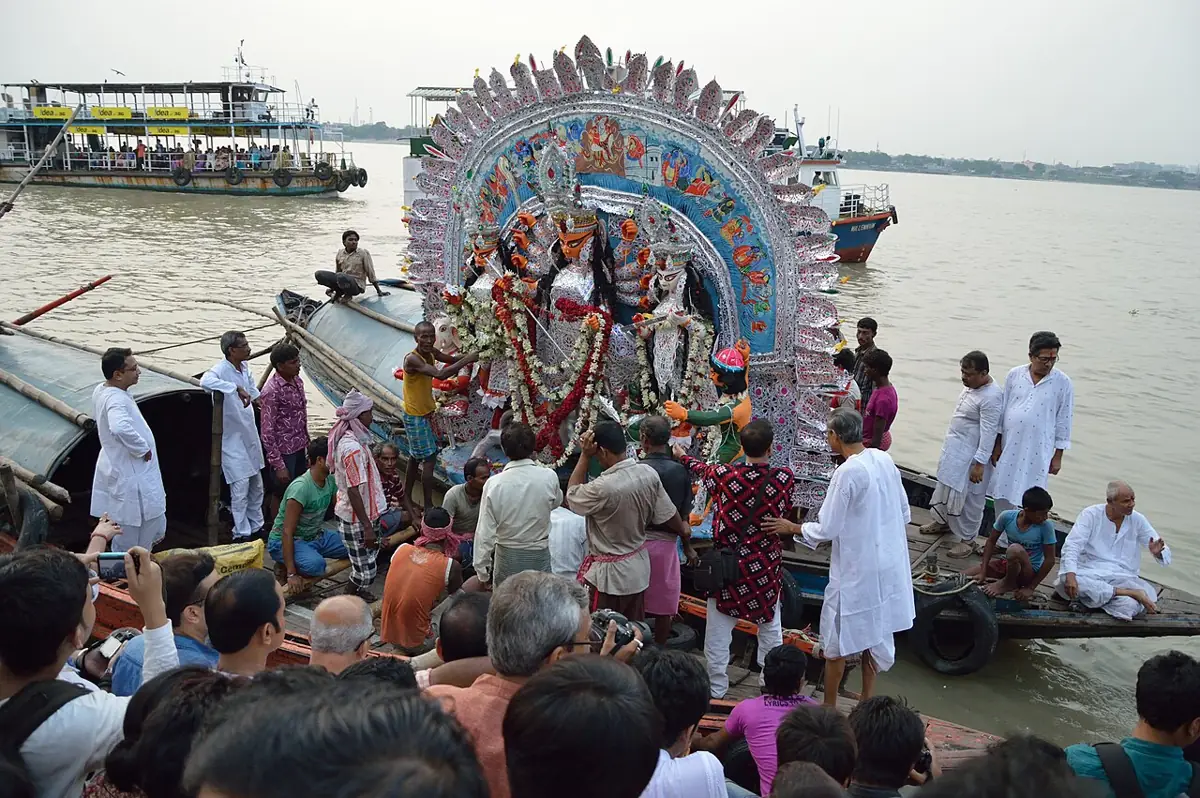
- Some families perform Kumari Puja or hold their own immersion customs on Dashami.
Atmosphere
Compared with the big sarbojanin (community) pandals, bonedi bari pujas are quieter and more intimate. You see the puja as a household event: relatives back from abroad, elders seated in the verandas, children running around, and the priest at work a few metres away. Many visitors come for exactly this feeling of an older Calcutta.

Well-known bonedi bari pujas
These are among the most widely known family pujas in Kolkata. Timings, access and customs change, so check locally before you go.
- Sovabazar Rajbari (north Kolkata). The puja is traditionally said to have been started in 1757 by Raja Nabakrishna Deb, and popular accounts link its first celebration to the aftermath of the Battle of Plassey. The family's branches hold pujas in the old palace complex, whose thakur dalan is among the most photographed in the city. See Sovabazar Rajbari in our guide.
- Rani Rashmoni's family house, Janbazar (central Kolkata). The Durga Puja of the house associated with Rani Rashmoni, the nineteenth-century landowner and philanthropist who founded the Dakshineswar temple, is one of the best known family pujas in the city.
- Laha Bari (north Kolkata). The Laha family, an old merchant family, is known for its long-running puja.
- Mallick Bari. Several branches of the Mallick family hold old pujas, including the well-known Mallick Bari puja in Bhowanipore.
- Chhatu Babu–Latu Babu Bari (north Kolkata). The puja of the house associated with the sons of the merchant Ramdulal Dey, popularly known as Chhatu Babu and Latu Babu.
- Dawn Bari, Jorasanko (north Kolkata). The Dawn family puja is especially known for the ornaments and decoration of its goddess.
- Sabarna Roy Choudhury family puja (Barisha, Behala). Often cited as one of the oldest Durga Pujas in the Kolkata area, commonly dated to the early seventeenth century.
Many other family pujas continue across north and south Kolkata and in the districts, some well known and some known only to their neighbourhoods.
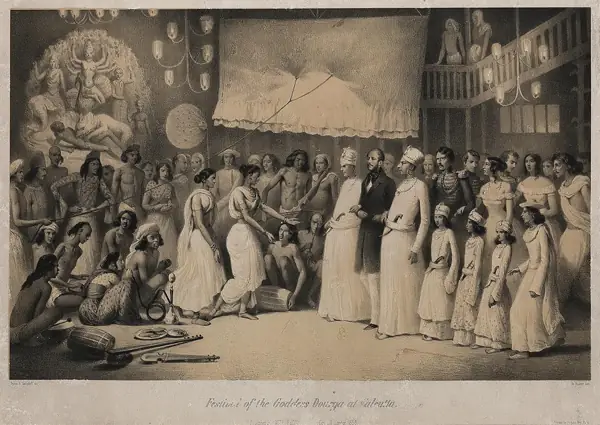 Also readThe history of Durga Puja in Bengal
How to visit
The easiest way is to combine bonedi baris with the old community pujas of north Kolkata. Our North Kolkata Heritage Trail starts near Sovabazar Metro and passes Kumartuli and Bagbazar; the north Kolkata area guide lists more pujas, food and parking nearby. See Kumartuli idol-making for the artisans' quarter on the same walk.
- When: late morning to afternoon, Saptami (Sunday 18 October 2026) to Navami (Tuesday 20 October 2026), is usually best.
- Getting there: Metro to Sovabazar or Shyambazar for most north Kolkata houses; lanes are narrow and parking is scarce.
Visiting etiquette
You are a guest in someone's home and place of worship.
- Ask before entering if there is no clear visitor entry, and follow the family's or volunteers' directions.
- Dress modestly and remove shoes where asked, especially near the thakur dalan.
- Don't climb onto the thakur dalan or touch the idol, ritual items or bhog unless invited.
- Photography: ask first; some families restrict it, particularly during rituals. Avoid flash.
- Keep your voice down during puja, aarti and anjali, and step aside for family members performing rites.
- Don't treat private rooms as part of the visit. Only the courtyard and areas opened to guests are for visitors.
- If you are offered prasad or bhog, accept it with thanks.
To understand what you're seeing, keep our glossary handy, and read the history of Durga Puja for how these family pujas shaped the festival before community pujas took over the streets.
See it in Kolkata
Questions people ask
What is a bonedi bari puja?
It is a Durga Puja held by an old, established Bengali family in its ancestral house, usually in a courtyard worship hall called the thakur dalan. The family pays for and runs the puja, and follows customs handed down over generations.
Can outsiders visit bonedi bari pujas in Kolkata?
Many of the well-known bonedi bari pujas allow visitors into the courtyard to see the goddess, usually during the day and early evening. Access rules, timings and photography policies vary from house to house, so follow the family's instructions and volunteers on the spot.
Which is the oldest bonedi bari puja in Kolkata?
Several families claim very old origins. The Sabarna Roy Choudhury family puja is commonly dated to the early 1600s, and the Sovabazar Rajbari puja to 1757. Exact founding dates come mostly from family records and tradition.
What is the best time to visit bonedi bari pujas?
Late morning to late afternoon on Saptami, Ashtami and Navami, when the rituals are under way and crowds are lighter than in the evening. Avoid crowding the thakur dalan during key rites such as Sandhi Puja.
How are bonedi bari idols different from pandal idols?
Bonedi bari idols are usually traditional in style: Durga and her children in a single ekchala frame, with classic faces and decoration such as daker saaj or sholar saaj. Many families use the same form every year rather than following new themes.
Read next
- Durga PujaThe history of Durga Puja in BengalHow Durga Puja grew from zamindari and rajbari pujas to barowari and sarbojanin community festivals, theme pandals and UNESCO heritage status in Kolkata.
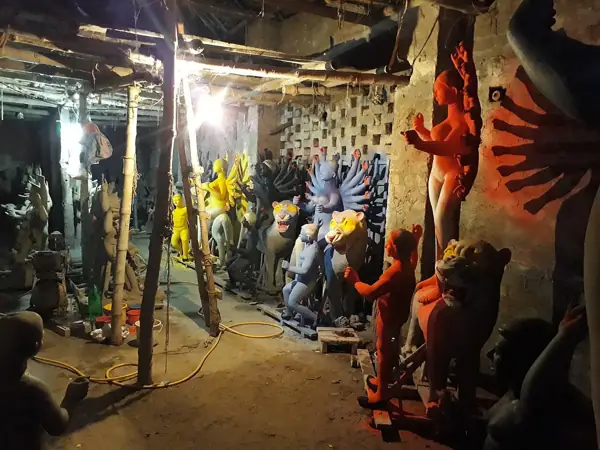 Durga PujaKumartuli and the making of Durga idolsHow Kumartuli's potters make Durga idols: bamboo frame, straw, Ganga clay, punya mati, painting, shola, daker saaj, chokkhu daan on Mahalaya and visiting tips.
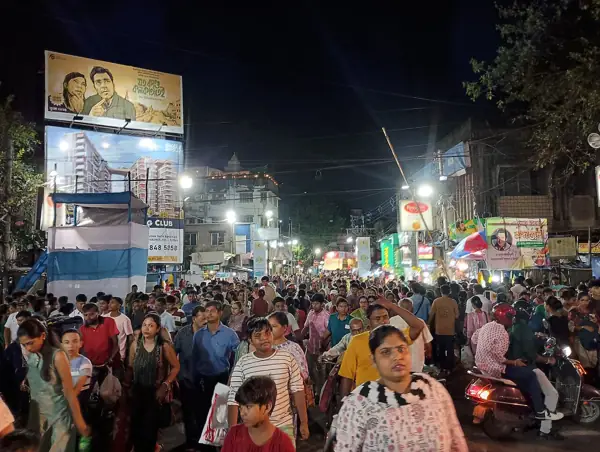 CulturePandal hopping in KolkataPractical Kolkata pandal hopping tips: the best hours to beat crowds, using the Metro, what to carry, kids and elders, safety, and which area is known for what.
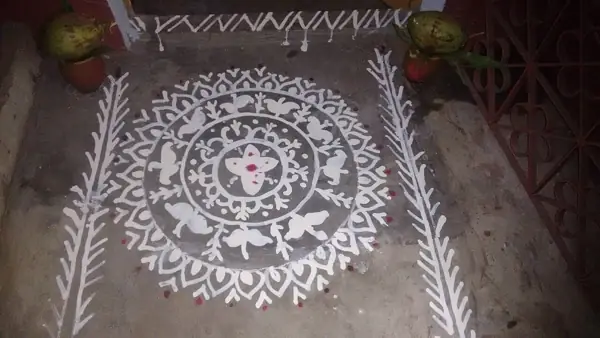 CultureDurga Puja glossaryA Durga Puja glossary: 58 Bengali and Sanskrit words explained, from anjali, bodhon and dhunuchi to sindoor khela, daker saaj, bonedi bari and thakur dekha.
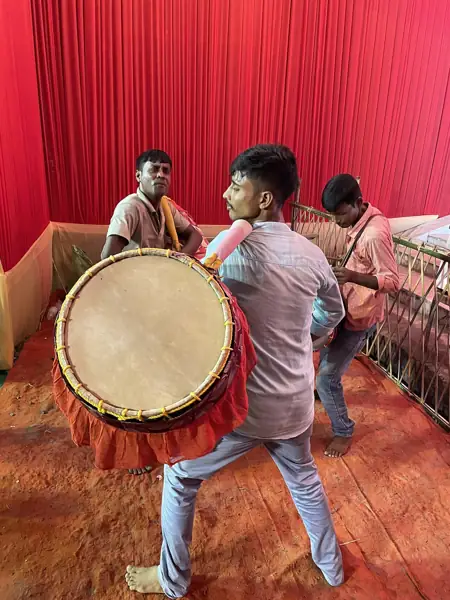 CultureDhak and dhakiThe dhak is the plumed barrel drum of Durga Puja and the dhaki its player: how it is played, where dhakis come from, its rhythms and the kashor gong.