Pandal hopping in Kolkata: practical tips
 Pujo Parikrama team5 min read · Updated
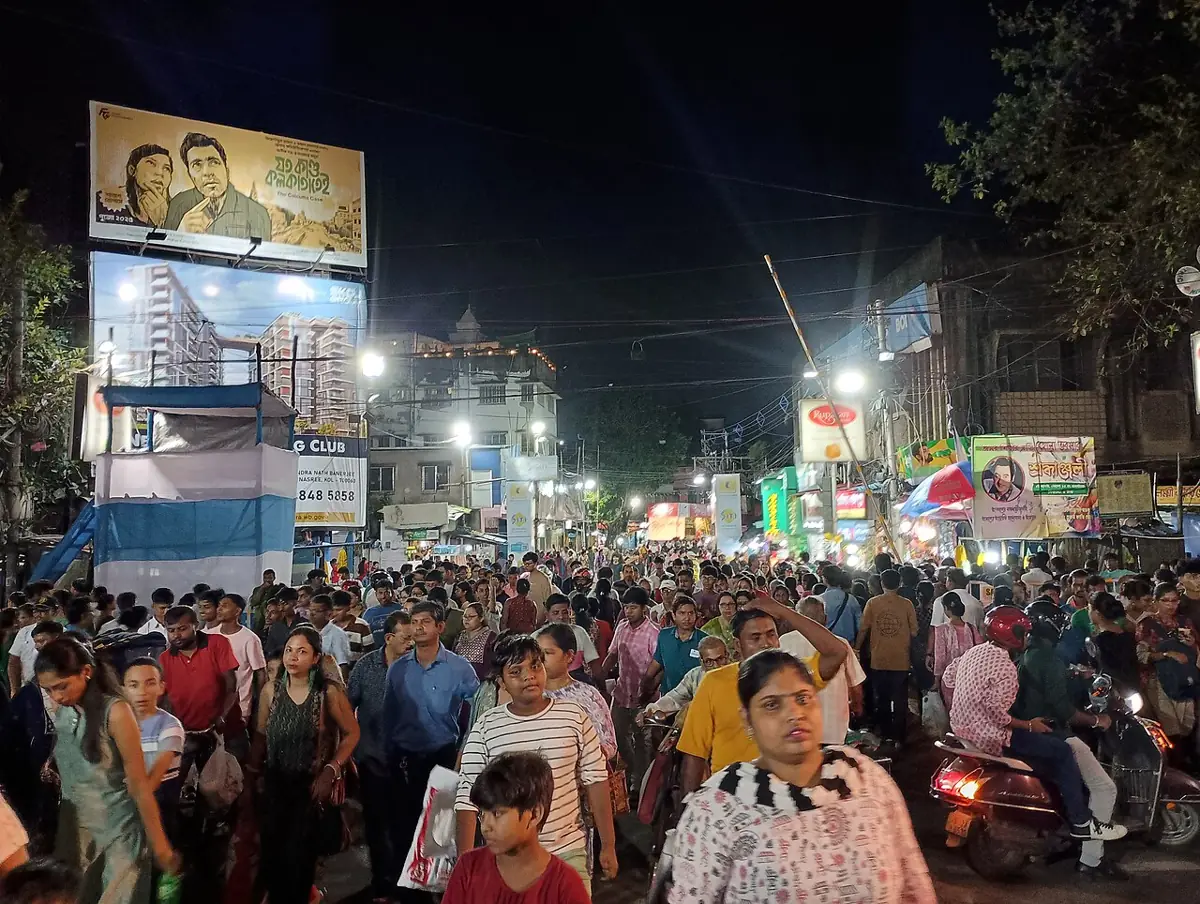
To enjoy pandal hopping in Kolkata, go early in the morning or after 1 am when queues are shortest, use the Metro instead of a car, wear comfortable shoes, and carry water, a charged power bank and both cash and UPI. Plan one or two neighbouring areas per outing rather than crossing the city, keep children close with a contact card in their pocket, and use the police help desks found near big pandals if anyone gets lost. In 2026 the main puja days run from Shashthi, Saturday 17 October, to Bijoya Dashami, Wednesday 21 October.
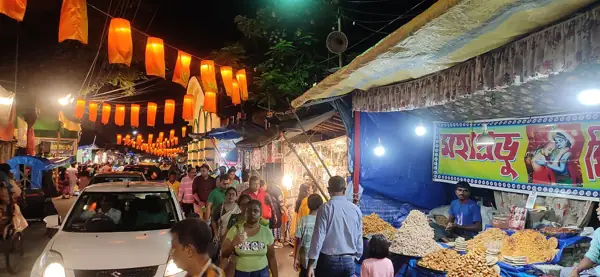 ▶ Photo story · 8 pagesPandal hopping in Kolkata: how to do it right
In this article 10 sections
The short answer: go early or go late, travel by Metro, walk in comfortable shoes, and plan one area at a time. Pandal hopping, called thakur dekha ("seeing the goddess") in Bengali, is the heart of Durga Puja in Kolkata, and the city has hundreds of pandals spread over a large area. A little planning turns a night of queues and traffic into one of the best walks of your year. In 2026 the main puja days are Shashthi (Saturday 17 October) to Bijoya Dashami (Wednesday 21 October); see the full 2026 dates.
Pick the right hours
Crowds follow a predictable daily rhythm.
- Early morning (dawn to about 9 am). The calmest time. Pandals are open, the light is soft, and you will often hear the morning puja and the dhak. Our Central Blockbusters at Dawn trail is built for this.
- Midday and afternoon. Moderate crowds and heat. A good time for heritage pujas, such as the bonedi bari pujas of north Kolkata.
- Evening (about 6 pm to midnight). Peak hours. The lights are at their best, but queues at famous pandals can be very long, especially from Saptami to Navami.
- After about 1 am. Crowds thin out noticeably, though the city stays awake. The All-Nighter trail runs north to south through the night.
Many big pandals open to visitors before Shashthi, often from Panchami (Friday 16 October 2026) or even earlier, which is a good time to see them with fewer people. Opening days vary by committee.
Use the Metro and walk
Car travel near major pandals is slow, and many lanes are closed to vehicles in the evenings. The Kolkata Metro is the quickest way to move between clusters: stations such as Sovabazar, Shyambazar, MG Road, Central, Kalighat and Rabindra Sarobar are within walking distance of well-known pujas. Expect stations to be crowded at peak hours and check extended puja-time schedules locally.
If you do drive, park once and walk. Our parking guide lists car parks near each area, and each area page shows the nearest Metro station.
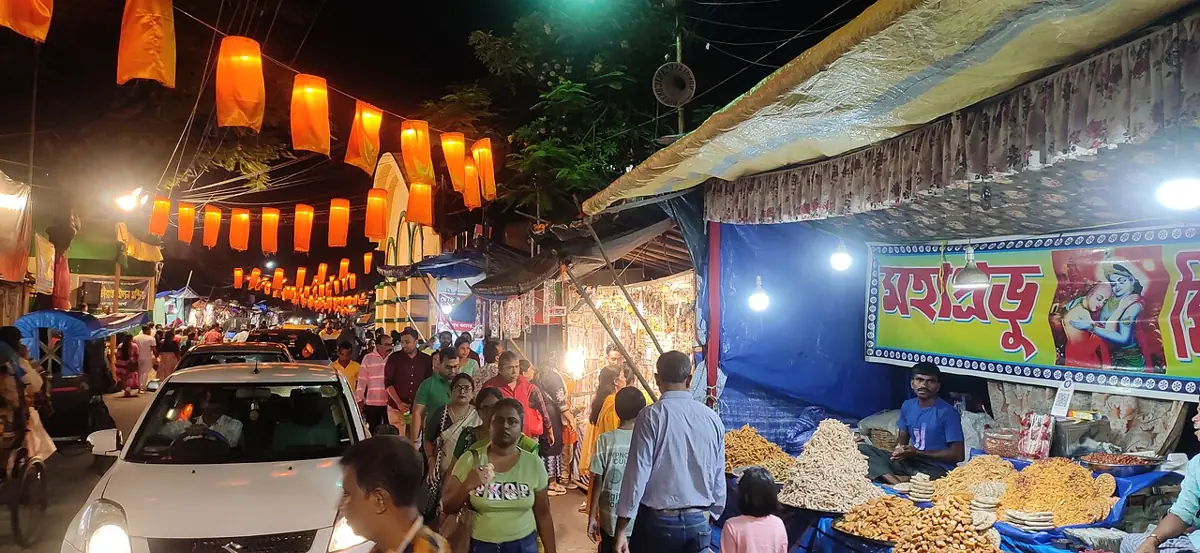

What to carry
- Comfortable shoes. You may walk 10 km or more in a night. Wear shoes you have already broken in; new festive footwear is best kept for one or two pandals.
- Water. Carry a bottle and refill it; queues can be long and humid.
- Phone and power bank. Maps, UPI and calls drain batteries fast in crowds.
- Cash and UPI. Many stalls accept UPI, but networks get congested in dense crowds; keep small notes as backup.
- A small bag that zips. Keep valuables in front pockets or a cross-body bag.
- Basics. Tissues, a light scarf or umbrella (October can still bring rain), and any personal medicines.
Kids and elderly visitors
- Put a card with your phone number in each child's pocket, and agree on a meeting point at every pandal.
- Choose morning or afternoon visits with children and older relatives, and keep the list short.
- Avoid the narrowest entry lanes at peak time; ask volunteers whether a separate entrance exists for elderly or differently abled visitors. Some committees provide one, but not all.
- Plan rest stops: a café, a park or a quiet bonedi bari courtyard helps.
Safety and help
- Police help desks and control rooms are usually set up near large pandals and along main roads. They help with lost children, lost phones and first aid. Pandal committees also run their own volunteer and announcement desks.
- Follow barricades and volunteers' directions; queues move in one direction for a reason.
- Do not stop to take photos on stairways or in narrow entry and exit paths.
- If you feel unwell in a crowd, move to the side and ask a volunteer for help.
- Keep emergency numbers saved, and share your live location with a friend if you split up.
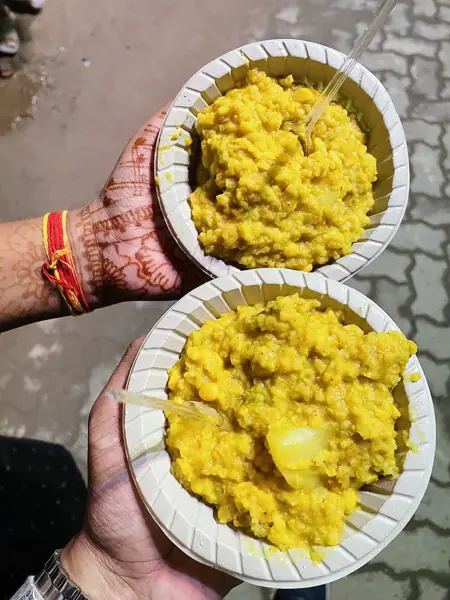 Also readDurga Puja food
Respect at the pandal
A pandal is a place of worship. Remove shoes where asked, don't touch the protima (idol) or ritual items, keep flash and selfie sticks away from the altar during puja and aarti, and don't block others' view for long. Read the glossary to understand what you're seeing.

Know your areas
Kolkata's pujas cluster into neighbourhoods with distinct personalities. Plan one or two neighbouring areas per outing.
| Area | Known for |
|---|---|
| North Kolkata: Kumartuli, Bagbazar, Hatibagan | Old sarbojanin pujas, the idol-makers' quarter, bonedi bari pujas, narrow lanes |
| Central: College Street and Sealdah | Large theme pandals with very big crowds and long queues |
| Bhowanipore | Long-running neighbourhood pujas near Kalighat and Maddox Square's famous adda |
| South: Lake Market and Chetla | Several heavyweight pujas close together, good for a walking loop |
| South: Gariahat and Ballygunge | Well-known pujas such as Ekdalia and Singhi Park, plus shopping streets |
| Kasba | Theme pandals that draw big crowds |
| Jadavpur and Santoshpur | Neighbourhood pujas with creative themes |
| Tollygunge and Naktala | Popular pujas in south Kolkata's residential areas |
| Behala and southwest | Theme pujas packed along a long stretch |
| Salt Lake | Block-based pujas, wider roads, easier for families |
| Lake Town and Dum Dum | Large-scale pandals near the airport road |
| Beleghata | Neighbourhood pujas in the east |
| Howrah | Pujas across the river, quieter than central Kolkata |
Ready-made trails
If you'd rather not plan, follow a trail:
- North Kolkata Heritage Trail: Kumartuli, Bagbazar and the old family pujas.
- Central Blockbusters at Dawn: the giant theme pandals before the crowds wake up.
- South Heavyweights: the classic south Kolkata loop.
- Behala and New Alipore Theme Trail: theme pujas of the southwest.
- Salt Lake and Lake Town Hop: the eastern side, good for families.
- The All-Nighter: north to south through the night.
Eat along the way
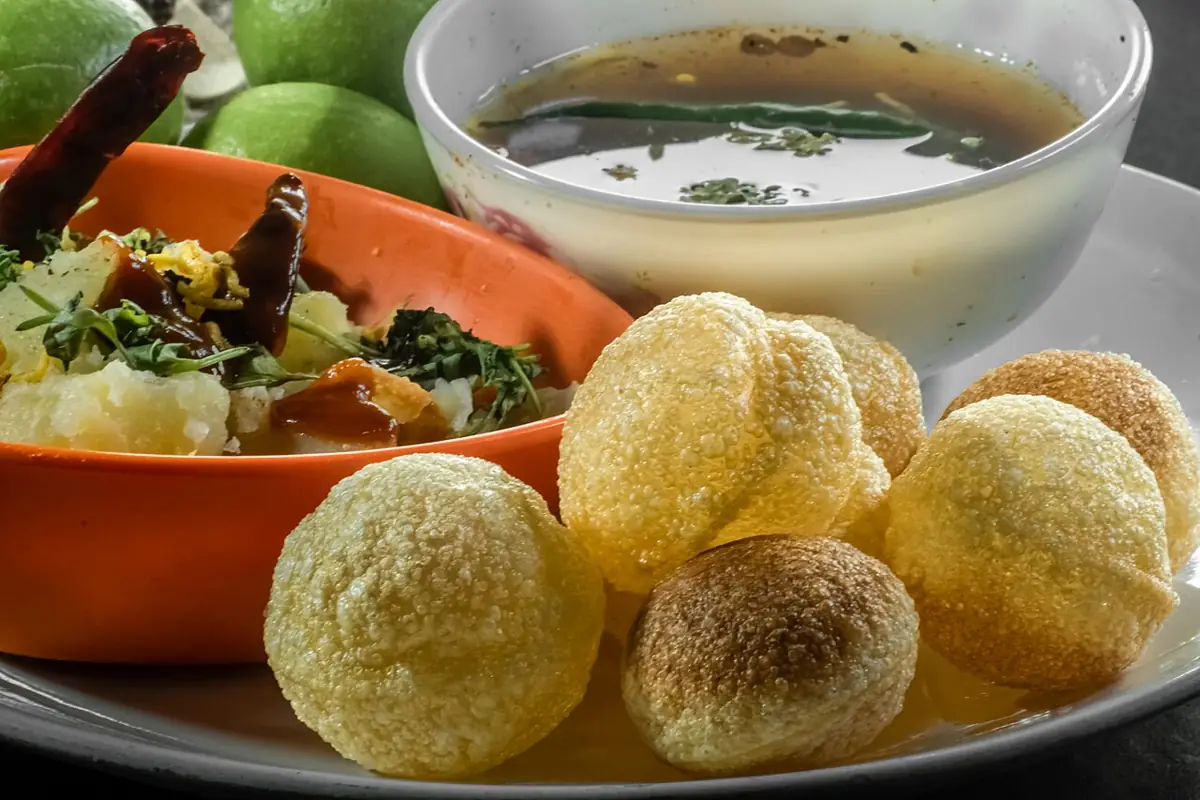
Plan food stops into your route: phuchka, rolls and mughlai paratha are everywhere, and old cabins near the pandals make good rest stops. Our Durga Puja food guide explains bhog and the classic pujo snacks.
Use the free Pujo Parikrama app
The free Pujo Parikrama app shows pandals on a map with routes, nearest Metro stations, nearby food and parking, and live crowd check-ins from other visitors, so you can see which pandals are busy right now and adjust your plan. Start with the Kolkata guide to browse areas and pandals before you leave home.
Questions people ask
What is the best time for pandal hopping in Kolkata?
Early morning, roughly from dawn until about 9 am, and late night after about 1 am are usually the least crowded. Evenings from about 6 pm to midnight, especially on Saptami, Ashtami and Navami, are the busiest.
Is it better to go pandal hopping by car or by Metro?
By Metro and on foot, in most cases. Many roads near big pandals are closed to cars or jammed in the evening, while Metro stations sit within walking distance of several pandal clusters. If you must drive, park once and walk; see the parking guide.
How many pandals can you see in one night?
On a busy evening, most people manage somewhere between five and ten, depending on queues and distances. Grouping pandals by area and going at off-peak hours lets you see far more.
Which day is least crowded for pandal hopping?
The days before Shashthi, when many pandals already open to visitors, and the early hours of each puja day are generally calmer. Saptami to Navami evenings are the most crowded.
What should I carry for pandal hopping?
Water, a charged phone and power bank, some cash plus UPI, a small bag that closes, any medicines you need, and a contact card for each child. Wear comfortable, broken-in shoes.
Read next
- CultureDurga Puja foodWhat people eat at Durga Puja: khichuri bhog, labra, payesh, phuchka, rolls, mughlai paratha, rosogolla and sandesh, plus why bhog is shared and eaten together.
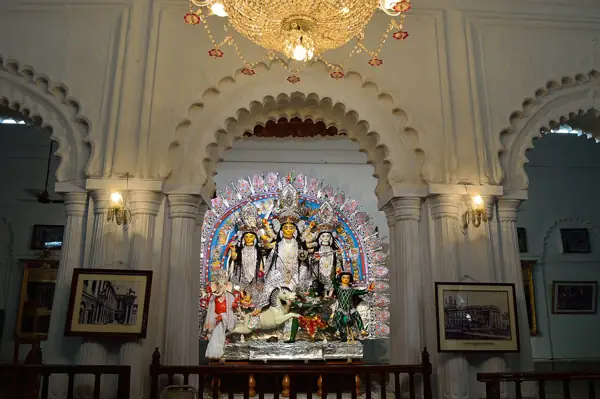 CultureBonedi bari pujasBonedi bari pujas are Kolkata's old family Durga Pujas, held in thakur dalans with ekchala idols and old rites. What sets them apart, where to go, etiquette.
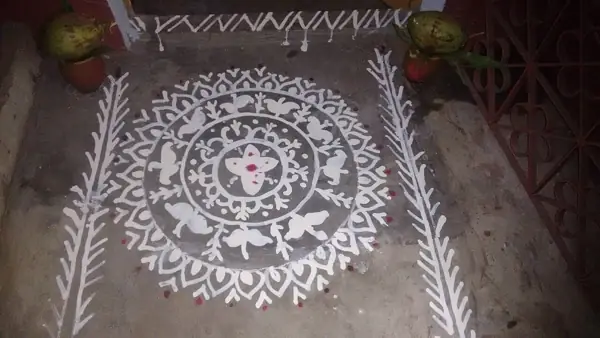 CultureDurga Puja glossaryA Durga Puja glossary: 58 Bengali and Sanskrit words explained, from anjali, bodhon and dhunuchi to sindoor khela, daker saaj, bonedi bari and thakur dekha.
 RitualsDurga Puja rituals day by dayDurga Puja rituals day by day: Mahalaya, Shashthi bodhon, Saptami Kola Bou, Ashtami anjali and Sandhi Puja, Navami homa, Dashami sindoor khela, 2026 dates.
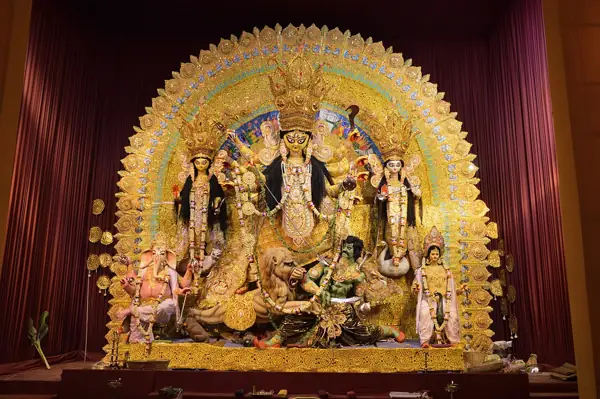 Durga PujaWhat is Durga Puja? The meaning behind the festivalWhat Durga Puja means: the Devi Mahatmya story of Mahishasura, Durga as Shakti, Uma's homecoming, Rama's akal bodhon and why the festival falls in autumn.