Sandhi Puja: the juncture of Ashtami and Navami
 Pujo Parikrama team3 min read · Updated
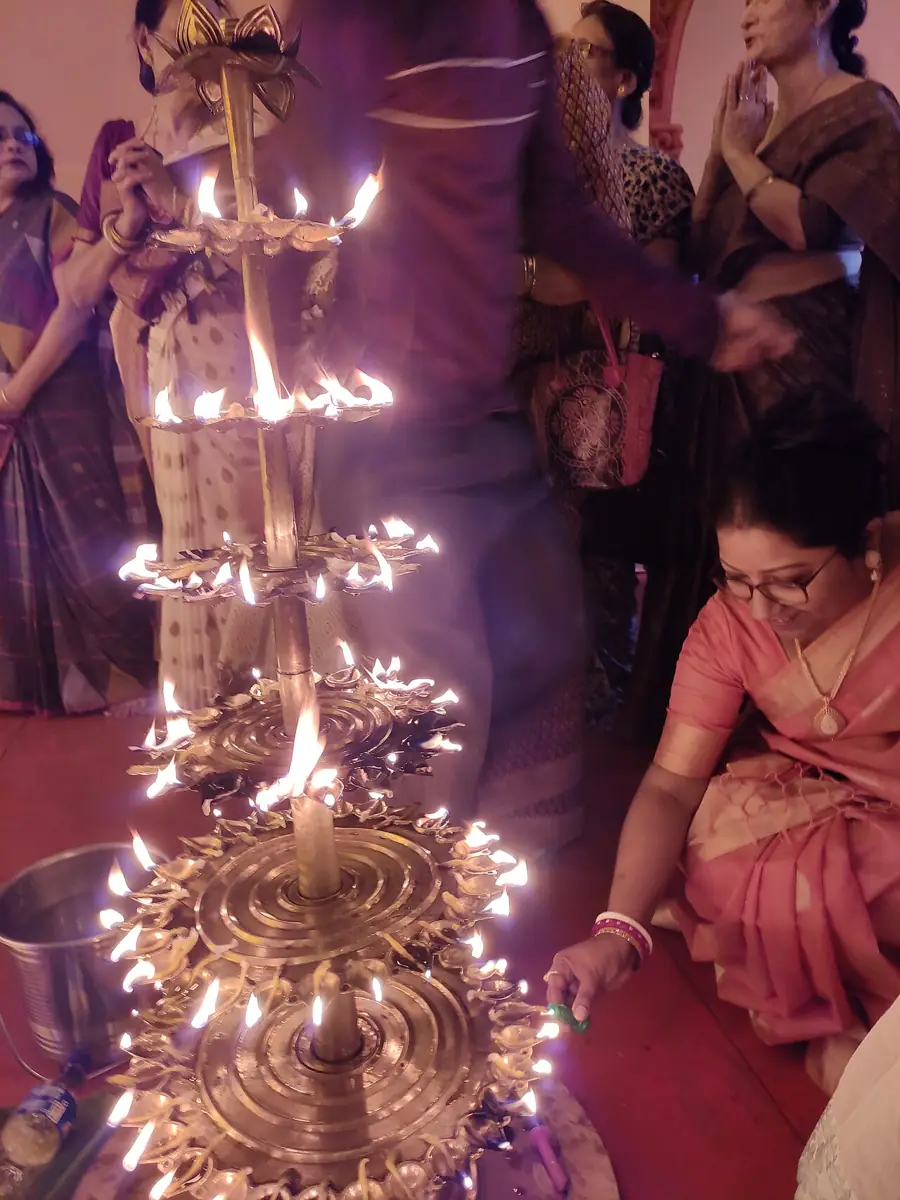
Sandhi Puja is the worship of Goddess Durga in her fierce Chamunda form during the junction (sandhi) of the Ashtami and Navami lunar days, traditionally the last 24 minutes of Ashtami and the first 24 minutes of Navami, 48 minutes in all. It is marked by offerings of 108 lotuses and 108 lamps. Its clock time changes every year with the tithi, so it must be checked in the panjika; in 2026 Maha Ashtami is Monday 19 October and Maha Navami Tuesday 20 October.
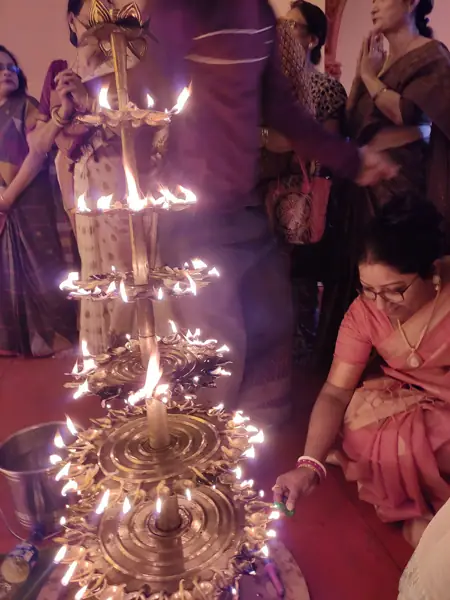 ▶ Photo story · 7 pagesSandhi Puja: the juncture of Ashtami and Navami
In this article 5 sections
Sandhi Puja (sandhi, junction) is the worship of the goddess at the precise moment the Ashtami lunar day gives way to Navami. Traditionally it occupies 48 minutes: the last 24 minutes of Ashtami and the first 24 minutes of Navami. The goddess is worshipped as Chamunda, and the offerings include 108 lotuses and 108 lamps. For many Bengalis it is the most powerful moment of the whole puja.
When it happens
Hindu ritual days follow the tithi, the lunar day, not the calendar day. A tithi can begin and end at any hour, so Sandhi Puja may fall in the afternoon, late at night or before dawn, and on either 19 or 20 October in 2026. The exact time depends on the tithi junction in the panjika (almanac) the priest follows, and different almanacs can differ slightly. Ask your puja committee, or check a reliable local panjika; don't rely on a time you read for another year or another city.
Chamunda and the junction
In the Devi Mahatmya, the goddess's fierce form Chamunda slays the demon generals Chanda and Munda, and takes her name from that victory. Bengali tradition places this battle at the junction of Ashtami and Navami, which is why the goddess is invoked as Chamunda at Sandhi Puja. Many households treat the junction with special solemnity: the pandal falls quiet before it, and when it arrives, the dhak, conch shells and ululation (ulu) rise together.
 Also readMaha Ashtami
108 lotuses and 108 lamps
The best-known offerings are 108 lotuses and 108 lamps (pradip), lit and arranged before the goddess. 108 is a sacred number throughout Hindu worship, and in Bengal the lotus offering is tied to a story from the Ramayana.
The story of the 108th lotus
In Krittibas Ojha's Bengali Ramayana, which differs from Valmiki's Sanskrit text here, Rama worships Durga in autumn before his final battle with Ravana, the akal bodhon or untimely awakening. He gathers 108 blue lotuses for her. To test him, the goddess hides one. Finding only 107, Rama, who was called "lotus-eyed", resolves to offer one of his own eyes in its place. As he raises his arrow, the goddess appears, stops him, and grants him victory. Sandhi Puja's 108 lotuses recall that devotion.
Other offerings and older customs
Besides lotuses and lamps, offerings typically include flowers, bel leaves, fruit, sweets, rice and cooked food, according to the tradition of the puja. Historically some households and temples offered an animal sacrifice at Sandhi Puja; most pujas today do not, and many offer a symbolic substitute such as an ash gourd, sugarcane or banana. See Navami for more.
Seeing Sandhi Puja in Kolkata
Old family pujas, such as Sovabazar Rajbari, and community pujas such as Bagbazar Sarbojanin perform it with full ceremony; see also bonedi bari pujas. Pandals fill up well before the junction, so arrive early and be ready for crowds on Ashtami night.
For the full sequence of the puja, see Durga Puja rituals day by day.
See it in Kolkata
- 📍 Sovabazar RajbariA bonedi bari puja started by Raja Nabakrishna Deb. The thakurdalan is stunning.
- 📍 Bagbazar SarbojaninOne of the oldest sarbojanin pujas. Traditional daker saaj idol, plus a riverside fair.
Questions people ask
What time is Sandhi Puja in 2026?
Sandhi Puja falls at the junction of the Ashtami and Navami tithis, which in 2026 comes around Maha Ashtami (Monday 19 October) and Maha Navami (Tuesday 20 October). The exact clock time depends on the tithi junction in the panjika your priest follows, so check with your puja committee or a reliable local almanac.
How long is Sandhi Puja?
Traditionally 48 minutes: the last 24 minutes of Ashtami and the first 24 minutes of Navami. The preparations and the rites around it can take longer.
Why are 108 lotuses offered at Sandhi Puja?
108 is a sacred number in Hindu worship. Bengali tradition also links the offering to the Ramayana story in which Rama offered 108 blue lotuses to Durga before fighting Ravana.
Which form of Durga is worshipped at Sandhi Puja?
Chamunda, the fierce form of the goddess who, in the Devi Mahatmya, slays the demons Chanda and Munda.
Can I attend Sandhi Puja?
Yes, at most community pujas visitors can watch. Because it can fall late at night or before dawn, ask the organisers for the time and arrive early, since the pandal fills before the junction.
Read next
- RitualsMaha AshtamiMaha Ashtami 2026 is Monday 19 October: the morning pushpanjali, Kumari Puja, Sandhi Puja with 108 lotuses and lamps, fasting until anjali and what people wear.
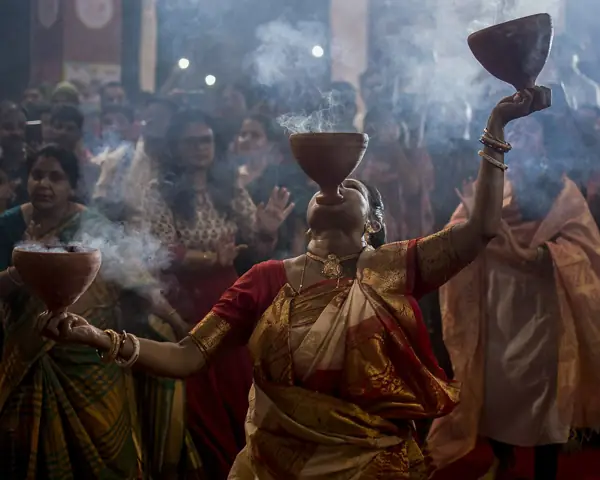 RitualsMaha NavamiMaha Navami 2026 is Tuesday 20 October: the Navami puja, the homa fire offering, khichuri bhog, symbolic offerings in place of sacrifice and dhunuchi naach.
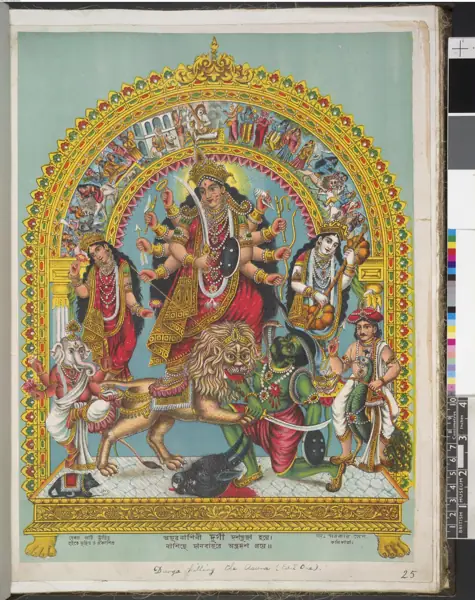 Durga PujaGoddess Durga and her familyHow to read a Durga Puja image: Durga's ten arms and weapons, the lion, Mahishasura, Lakshmi, Saraswati, Ganesha, Kartik, their vahanas, ekchala and daker saaj.
- RitualsDurga Puja rituals day by dayDurga Puja rituals day by day: Mahalaya, Shashthi bodhon, Saptami Kola Bou, Ashtami anjali and Sandhi Puja, Navami homa, Dashami sindoor khela, 2026 dates.