Maha Navami: homa, bhog and the last night of the puja
 Pujo Parikrama team4 min read · Updated
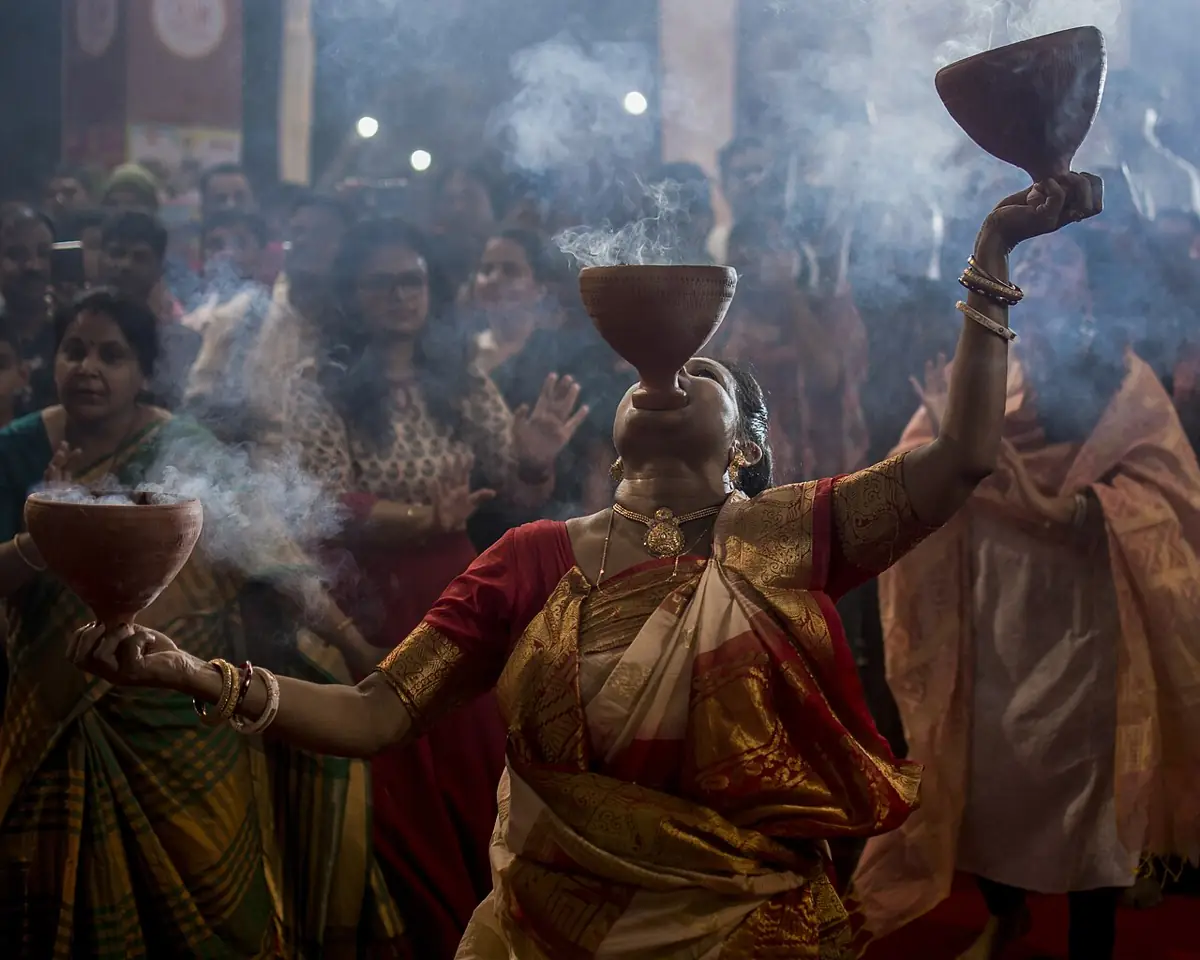
Maha Navami, the ninth day of the bright fortnight, is the final full day of Durga Puja worship. It has its own puja, a homa or yajna (fire offering) that completes the worship, and a large bhog of dishes such as khichuri that is offered to the goddess and shared, and in the evening the last night of arati and dhunuchi naach. In 2026 Maha Navami falls on Tuesday 20 October.
 ▶ Photo story · 9 pagesMaha Navami: homa, bhog and the last night of the puja
In this article 7 sections
Maha Navami is the last full day of Durga Puja worship. Its rites complete what began on Shashthi: the Navami puja, the homa (fire offering), and the bhog, the cooked food offered to the goddess and then shared. By evening the mood turns bittersweet, because Navami night is the goddess's last night on earth before she leaves on Dashami. In 2026 Maha Navami falls on Tuesday 20 October.
Depending on the tithi timings in a given year, the second half of Sandhi Puja falls at the very start of Navami. As always, details and timings follow the family tradition and the panjika.
The Navami puja
The priest performs the day's worship to Durga and all the deities of the image, much as on the previous days, with flowers, lamps, incense, fruit, sweets and cooked offerings. Many pujas hold a Navami pushpanjali as well, usually less crowded than the one on Ashtami.
Homa: the fire offering
The homa or yajna is a ritual fire, kindled in a small square pit or vessel, into which the priest offers ghee, wood from sacred trees such as bel, and other materials while chanting mantras, often with a set number of offerings. It is understood to complete and seal the worship of the puja days. Families and committee members often sit around the fire, and in some pujas the ash is afterwards applied as a mark on the forehead.
Bhog: food for the goddess and for everyone
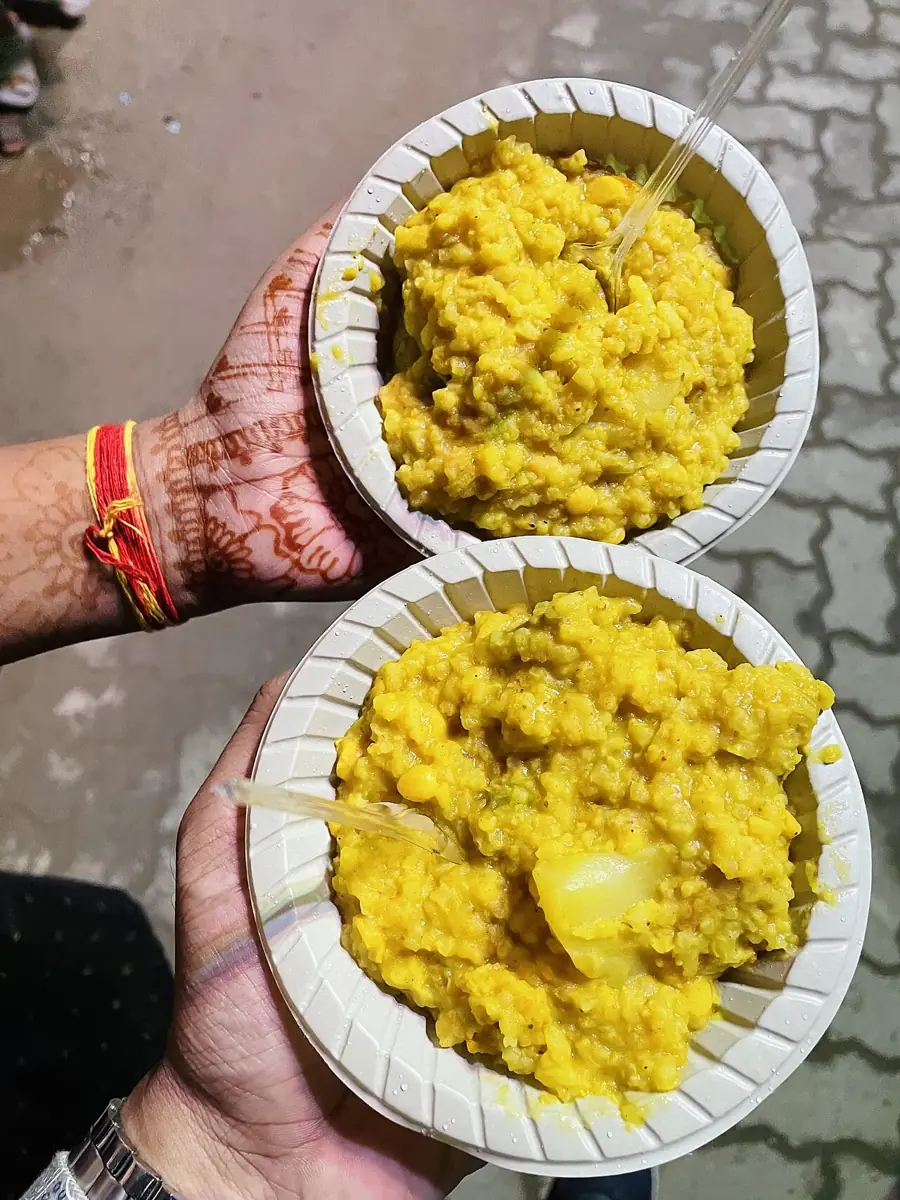
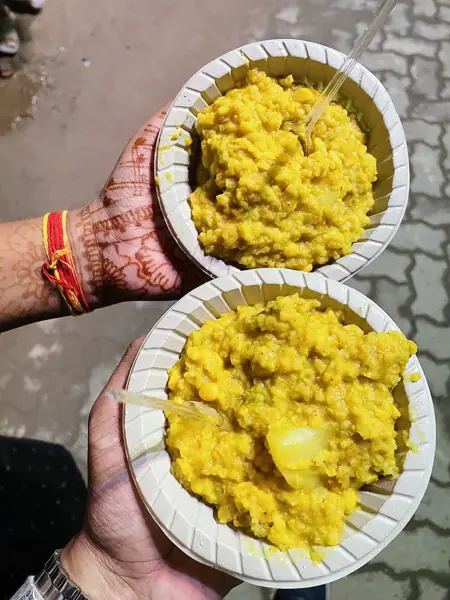
Navami bhog is usually the largest of the festival. In many community pujas the menu includes:
- khichuri, rice and lentils cooked together, often with vegetables;
- labra, a mixed vegetable dish;
- bhaja, fried vegetables such as brinjal;
- chutney, often tomato or plum;
- payesh, rice pudding, and sweets.
The food is first offered to the goddess, after which it becomes prasad and is shared. Many neighbourhood pujas serve bhog to anyone who joins the queue; some issue coupons in advance. Old family pujas follow their own menus, and in some of them fish or other non-vegetarian items are part of the offering, according to family custom. Read more in food and bhog.

Sacrifice and its symbolic replacements
Historically, bali (sacrifice), including animal sacrifice, was part of Durga Puja in some Bengali households and temples, most often at Sandhi Puja and on Navami. Over the last century most pujas have stopped the practice. Many now offer symbolic substitutes such as an ash gourd (chalkumro), sugarcane or banana, cut ritually in its place. The Ramakrishna Mission's pujas, for example, do not include animal sacrifice. A small number of older traditions still continue it where the law permits. Practices differ, and this page describes them without endorsing or judging any.
 Also readMaha Ashtami
Joining the bhog queue
If you would like to receive bhog at a community puja, a few things help:
- Ask a volunteer when bhog will be served; it usually follows the midday puja, and the time depends on how long the rites take.
- Some pujas give bhog only to residents or coupon holders, others to anyone in the queue. Respect whichever system is in use.
- Bhog is often served on sal-leaf plates or in earthen cups. Eat it where indicated and dispose of the plate in the bins provided.
- Take only what you will eat; bhog is prasad, and wasting it is frowned on.
The last night
Navami evening's sandhya arati is often the most charged of the festival. Dhakis play with full force, and men and women dance with smoking clay incense burners in the dhunuchi naach. Many pujas hold cultural programmes, and the streets stay full until very late, because tomorrow the goddess leaves. Bengalis often speak of a particular sadness on Navami night, the sense that the festival is ending.
If you are visiting, Navami night is one of the two most crowded nights in Kolkata. Plan your route with the Kolkata guide and our pandal hopping tips, and see the dhak and dhaki page to understand the rhythms you will hear.
What comes next
On Bijoya Dashami the goddess is bid farewell with darpan bisarjan, sindoor khela and immersion. For the full sequence see Durga Puja rituals day by day. Outside Bengal, Navami is the last day of Navratri, often marked by kanya pujan.
See it in Kolkata
- 📍 Bagbazar SarbojaninOne of the oldest sarbojanin pujas. Traditional daker saaj idol, plus a riverside fair.
- 📍 Sovabazar RajbariA bonedi bari puja started by Raja Nabakrishna Deb. The thakurdalan is stunning.
- 📍 College Square SarbojaninThe lighting reflected on the College Square pond is iconic at night.
Questions people ask
When is Maha Navami in 2026?
Maha Navami is on Tuesday 20 October 2026, after Maha Ashtami on Monday 19 October and before Bijoya Dashami on Wednesday 21 October.
What is the Navami homa?
The homa, or yajna, is a fire offering in which the priest pours ghee and other offerings into a consecrated fire while reciting mantras. On Navami it rounds off the worship of the previous days.
What is served as Navami bhog?
It varies by puja, but khichuri (rice and lentils), labra (mixed vegetables), fried vegetables, chutney, payesh (rice pudding) and sweets are typical. Many community pujas share bhog with visitors after it has been offered.
Is there animal sacrifice in Durga Puja?
Historically, some Bengali households and temples offered animal sacrifice, especially at Sandhi Puja and on Navami. Most pujas today, including most community pujas, do not; many offer symbolic substitutes such as ash gourd, sugarcane or banana instead, while a few older traditions continue the practice where it is allowed by law.
Why is Navami night special?
It is the last night the goddess is believed to be on earth before she leaves on Dashami, so the evening arati and dhunuchi naach are especially intense and many people stay out pandal hopping until very late.
Read next
- RitualsMaha AshtamiMaha Ashtami 2026 is Monday 19 October: the morning pushpanjali, Kumari Puja, Sandhi Puja with 108 lotuses and lamps, fasting until anjali and what people wear.
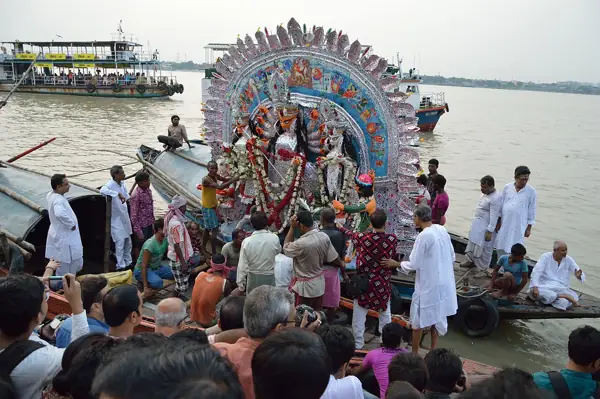 RitualsBijoya DashamiBijoya Dashami 2026 is Wednesday 21 October: darpan bisarjan, boron and sindoor khela, immersion processions, shanti jal and Bijoya greetings explained.
- RitualsDhunuchi naachDhunuchi naach is Durga Puja's dance with smoking clay incense burners to the dhak, held at evening arati from Saptami to Navami. Its meaning and safety tips.
 CultureDurga Puja foodWhat people eat at Durga Puja: khichuri bhog, labra, payesh, phuchka, rolls, mughlai paratha, rosogolla and sandesh, plus why bhog is shared and eaten together.
- RitualsDurga Puja rituals day by dayDurga Puja rituals day by day: Mahalaya, Shashthi bodhon, Saptami Kola Bou, Ashtami anjali and Sandhi Puja, Navami homa, Dashami sindoor khela, 2026 dates.