Dhunuchi naach: the incense dance of Durga Puja
 Pujo Parikrama team3 min read · Updated
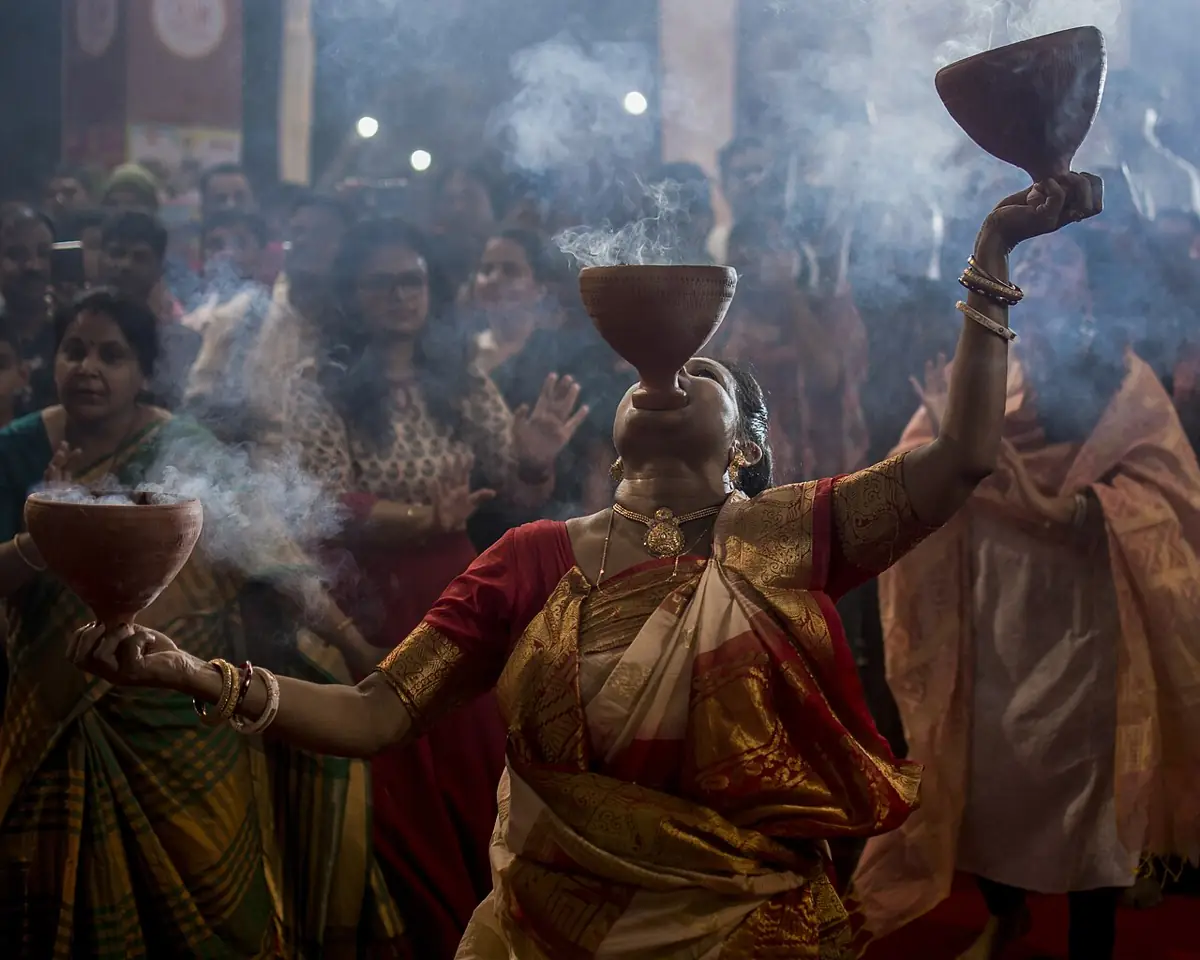
Dhunuchi naach is a devotional dance performed during Durga Puja with a dhunuchi, a clay incense burner filled with burning coconut husk and dhuno (a fragrant resin), to the rhythm of the dhak drum. It is usually performed at the evening arati on Saptami, Ashtami and Navami, and reaches its peak on Navami night. Anyone may join, but burning embers mean care is essential.
 ▶ Photo story · 6 pagesDhunuchi naach: the incense dance of Durga Puja
In this article 5 sections
Dhunuchi naach (dhunuchi, incense burner; naach, dance) is the dance Bengalis perform before the goddess with smoking clay incense burners, to the pounding rhythm of the dhak drum. It belongs to the evening arati of Durga Puja, usually from Saptami to Navami, and it reaches its peak on Navami night, the last night before the goddess leaves.
What the dhunuchi is
A dhunuchi is a clay vessel with a broad, open bowl on a short stem or base. It is filled with dried coconut husk (narkel chhobra), which smoulders steadily, and fed with dhuno, a resin, traditionally from the sal tree, that throws up thick, sweet-smelling white smoke. Offering incense and smoke is part of the arati itself; the dance grows out of that offering.

How it is danced
There is no single fixed choreography. The dancer holds the dhunuchi in one hand, sometimes one in each hand, and moves to the dhak's rhythm, swaying, turning, bending and raising the burner towards the goddess. Skilled dancers hold a dhunuchi in their teeth or balance one on the head while dancing with two more. The smoke, the drumming, the conch shells and the lamp-lit idol make it one of the most atmospheric sights of the festival.
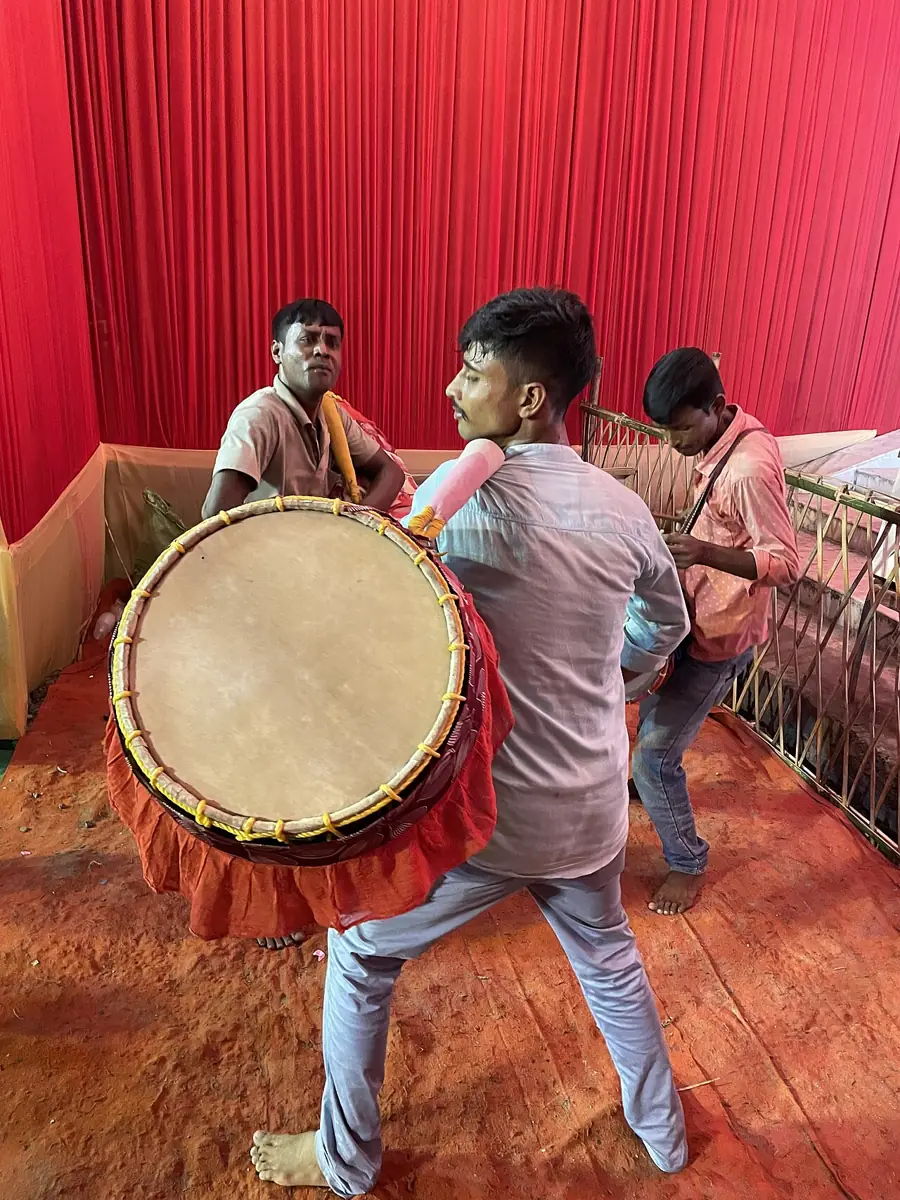
The dancers follow the dhaki (drummer), and the dhaki follows them; the rhythms change and quicken as the arati builds. Read about the drummers on our dhak and dhaki page.
Traditions differ. In some family pujas it is mostly the men of the household who dance; in many community pujas women, men and older children take turns, and some pujas hold friendly dhunuchi naach competitions.
 Also readDhak and dhaki
Where and when to see it
- Time: at the evening arati, whose time varies by puja and by the tithi. Ask the organisers, or simply arrive early in the evening and wait.
- Days: Saptami, Ashtami and Navami; Navami is the most intense. See Navami.
- Places: neighbourhood and traditional pujas such as Bagbazar, College Square and Md. Ali Park are good bets, as are the old bonedi bari pujas.
Safety tips
The dhunuchi holds burning embers. A few simple precautions keep the dance joyful:
- Heat. The clay gets very hot. Hold it by the stem or base, and use a folded cloth if needed.
- Clothing and hair. Loose sari ends, dupattas, scarves and long hair can catch fire. Tuck them in or tie them back.
- Space. Dance only where there is room, away from children, decorations and dense crowds. Organisers often clear a space; respect it.
- Embers. Burning husk can fall out. Keep water or sand nearby, and never leave a dhunuchi on cloth or a wooden floor.
- Smoke. The smoke is thick. If you have asthma or another breathing condition, watch from a distance.
- Spectators: stand back from the dancers, don't push in for photographs, and keep children close.
Related reading
The arati that frames the dance is part of each evening's rites; see Saptami, Ashtami and the full ritual sequence. For a night out, plan with our pandal hopping tips.
See it in Kolkata
- 📍 Bagbazar SarbojaninOne of the oldest sarbojanin pujas. Traditional daker saaj idol, plus a riverside fair.
- 📍 Mohammad Ali ParkA Central Avenue giant known for lavish replicas and theme pandals.
- 📍 College Square SarbojaninThe lighting reflected on the College Square pond is iconic at night.
Questions people ask
What is a dhunuchi?
A dhunuchi is a clay incense burner with a wide bowl on a short stem or handle. It is filled with dried coconut husk, which burns slowly, and sprinkled with dhuno, a resin that gives off thick, fragrant white smoke.
When is dhunuchi naach performed?
At the evening arati (sandhya arati) of the main puja days, usually Saptami, Ashtami and Navami. Navami night, the last night of the puja, is when it is most intense. Many pujas also hold dhunuchi naach competitions.
Who can do dhunuchi naach?
Anyone at many community pujas: men, women and older children dance it, often taking turns. At family pujas it is usually the household who dance. Ask the organisers before joining in.
Is dhunuchi naach dangerous?
It can be, because the dhunuchi holds burning embers and gets very hot. Hold it with a cloth if needed, keep clear of saris, dupattas and hair, and don't dance in a packed crowd or near children.
Read next
- CultureDhak and dhakiThe dhak is the plumed barrel drum of Durga Puja and the dhaki its player: how it is played, where dhakis come from, its rhythms and the kashor gong.
- RitualsMaha NavamiMaha Navami 2026 is Tuesday 20 October: the Navami puja, the homa fire offering, khichuri bhog, symbolic offerings in place of sacrifice and dhunuchi naach.
 RitualsSaptamiSaptami 2026 is Sunday 18 October: the dawn bath of the Nabapatrika (Kola Bou), its procession from the ghat, prana pratishtha and the start of the main puja.
 RitualsDurga Puja rituals day by dayDurga Puja rituals day by day: Mahalaya, Shashthi bodhon, Saptami Kola Bou, Ashtami anjali and Sandhi Puja, Navami homa, Dashami sindoor khela, 2026 dates.