Eco-friendly Durga Puja: celebrating greener
 Pujo Parikrama team5 min read · Updated
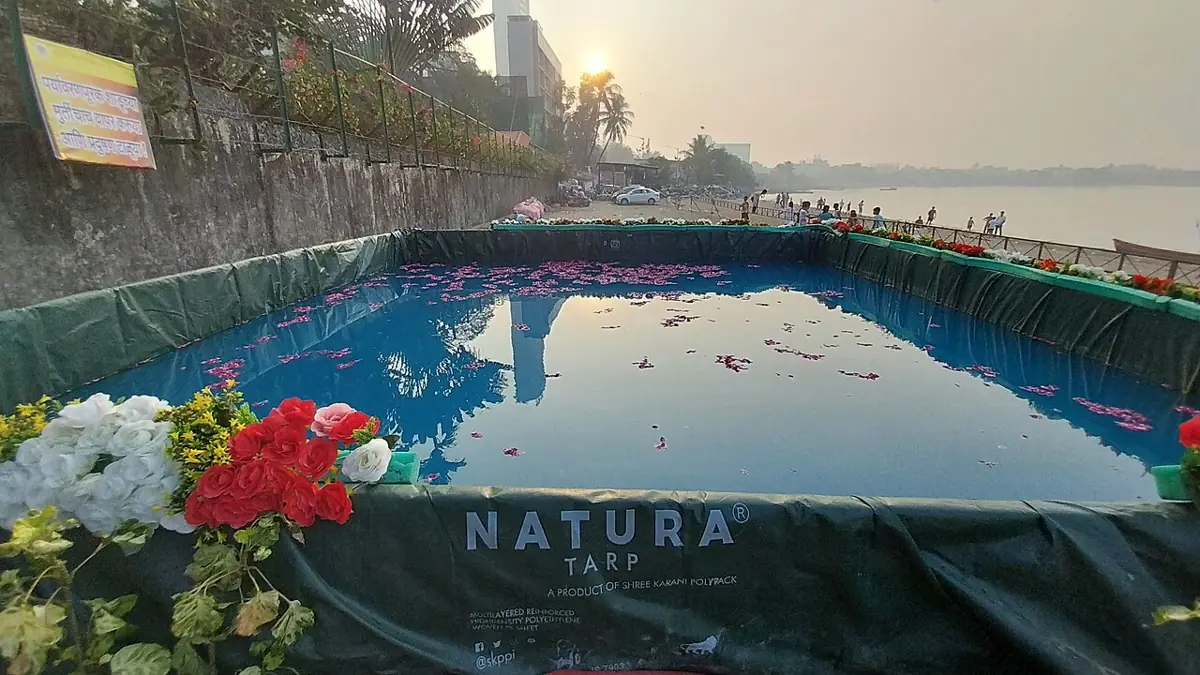
An eco-friendly Durga Puja uses idols made of unbaked clay, straw and bamboo with natural or non-toxic colours instead of plaster of Paris and heavy-metal paints, immerses them in a way that keeps waste out of rivers and ponds (often in artificial immersion tanks or by removing decorations first), and cuts down on single-use plastic, thermocol and loud noise. Pollution control boards and courts in India have issued guidelines on idol materials and immersion over the years; these vary by state and change, so check current local rules. Families can do the same at home with a small clay idol, natural flowers, steel or leaf plates and a home or community immersion.
 ▶ Photo story · 9 pagesEco-friendly Durga Puja: celebrating greener
In this article 7 sections
The short answer: choose clay over plaster of Paris, natural colours over toxic paint, controlled immersion over dumping in rivers, and reusable materials over plastic and thermocol. Durga Puja's traditional materials were already close to the earth: straw, bamboo, river clay and plant-based colours. Many of today's environmental problems come from newer additions, so going greener often means going back to the old ways, while following current rules on immersion. Here's what matters, for pujas big and small.
Clay versus plaster of Paris
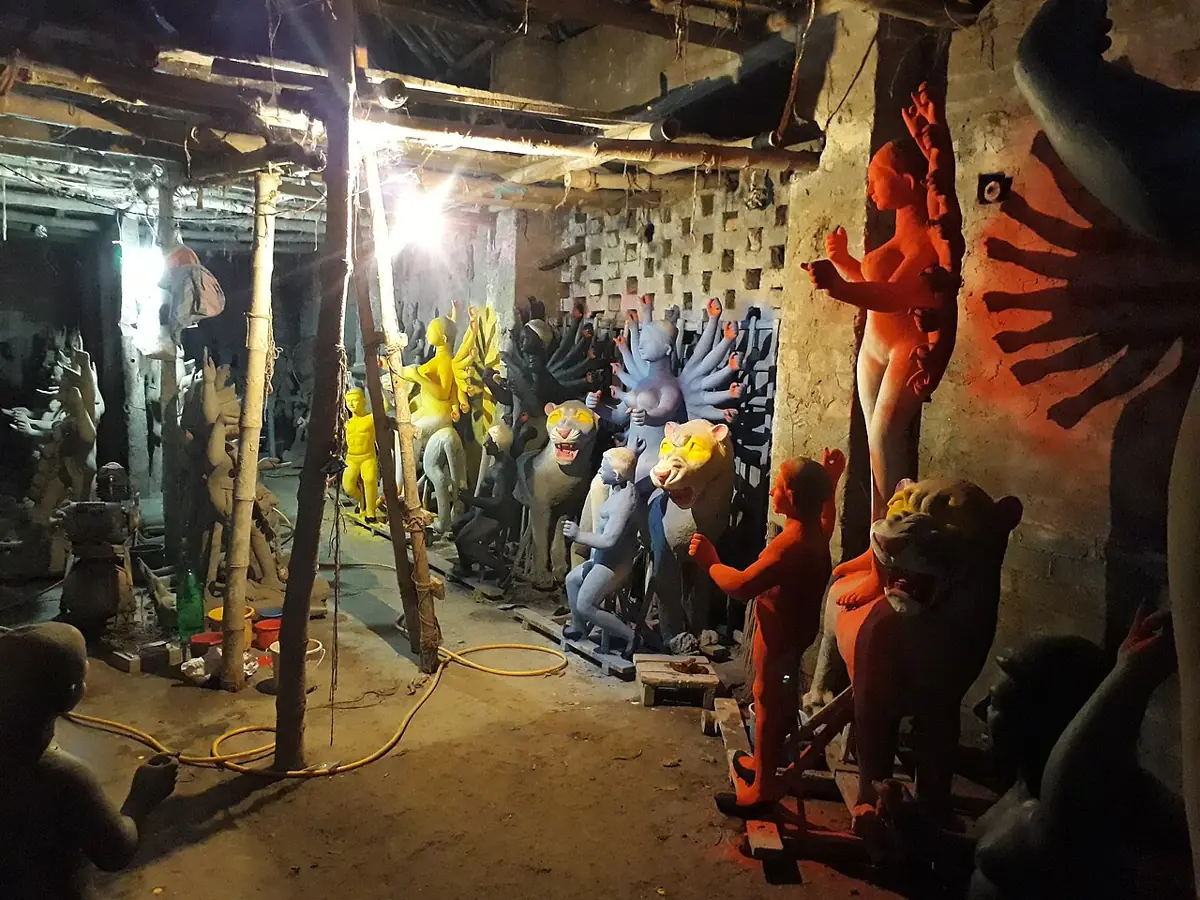
The classic Bengal Durga is built on a bamboo and straw frame, coated in layers of clay, often including clay from the banks of the Ganga, then dried and painted. You can watch this process in Kumartuli. Unbaked clay softens and breaks down in water, returning to the riverbed as sediment.
Plaster of Paris (PoP) idols are lighter, quicker to cast and often cheaper, and they are common in some festivals elsewhere in India. But PoP sets hard and dissolves very slowly in water, so immersed idols can sit in rivers, lakes and ponds for a long time. Pollution regulators in India have discouraged or restricted PoP idols in many places. Bengal's Durga idols are still largely clay-based, but ornaments, bases and decorations can include PoP, fibreglass or thermocol.
What to look for:
- An idol made of straw, bamboo and unbaked clay.
- No thermocol or fibreglass ornaments, or ornaments that can be removed and kept before immersion.
- A smaller idol: less clay, less paint, easier immersion.
Natural and non-toxic colours
Idols are traditionally painted with mineral and plant-based pigments and a natural binder. Bright synthetic paints, some of which have contained heavy metals such as lead or chromium, came later. When colours wash off into water during immersion, those chemicals go with them.
- Ask the artisan whether they use water-based, non-toxic or natural colours.
- Choose lightly painted or unpainted idols for home pujas.
- Avoid glitter and metallic sprays, which are usually plastic-based or synthetic.
Immersion: rivers, rules and artificial ponds
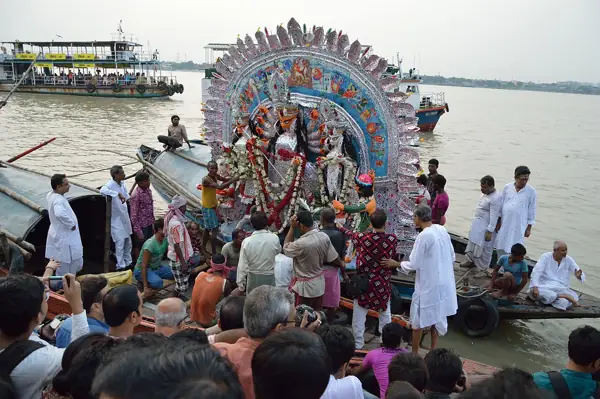
Bisarjan (immersion) on Bijoya Dashami, which falls on Wednesday 21 October in 2026, is the most moving moment of the festival, and also the one with the biggest environmental footprint. A great many idols, with their flowers, cloth, ornaments and frames, go into the Hooghly and local ponds over a few days.
Over the years, pollution control boards, courts and local authorities in India have issued guidelines on idol materials, colours and immersion. They have covered matters such as discouraging PoP and toxic paint, removing flowers, cloth and ornaments before immersion, collecting debris quickly, and providing designated immersion sites. The details vary by state and city and change from year to year, so we don't summarise specific rulings here. Check current notices from the West Bengal Pollution Control Board, your municipality and the police before you plan an immersion.
In Kolkata, the municipal authorities have typically arranged designated ghats, cranes and clearing crews so that frames and debris are removed soon after immersion. In many cities and housing complexes, artificial ponds or immersion tanks are set up so that idols never enter a natural water body; the clay settles and is collected separately. If one is available near you, it is the simplest green choice.
Before immersion, families and committees can:
- Remove flowers, garlands, cloth, ornaments and plastic for composting, reuse or proper disposal.
- Keep ritual items such as the kola bou materials and leftover samagri for composting where customs allow.
- Avoid throwing plastic bags, bottles and decorations into the water.

Reducing plastic and waste
A large pandal generates a lot of waste over five days: plates, cups, bottles, flex banners, thermocol and food. Committees and visitors both have a part to play.
For committees:
- Use bamboo, cloth, jute and other reusable or biodegradable materials in the pandal; reuse frames and panels. See pandal art and themes for how pandals are built.
- Serve bhog on sal-leaf, banana-leaf or areca plates, or in steel, rather than thermocol or plastic.
- Provide clearly marked bins for wet and dry waste, and arrange collection with local authorities.
- Use LED lighting, and switch off decorative lights in the small hours if possible.
- Replace plastic flex with cloth or reusable signs.
For visitors:
- Carry a refillable water bottle and a cloth bag.
- Eat from stalls that use leaf or paper plates, and put waste in bins.
- Skip plastic toys, balloons and glitter.
 Also readKumartuli and the making of Durga idols
Keeping the noise down
The dhak is the soul of pujo, but loudspeakers and firecrackers can push noise far beyond comfort, especially for elderly people, infants, patients and animals. India has rules on noise limits and loudspeaker hours, and West Bengal has had its own restrictions on firecrackers; these are set and enforced locally and change from year to year, so check current notices. Committees can keep amplified sound moderate and switch it off at night, and families can skip loud firecrackers altogether.
A greener puja at home
If you hold a small puja at home, you have the most control:
- Idol. A small, unpainted or naturally coloured clay idol, or a picture or ghot (sacred pot) instead, as many families have traditionally done.
- Decoration. Fresh flowers, mango leaves, banana stems, alpana drawn with rice paste, and cloth instead of plastic.
- Lighting. Clay diyas and LED strings instead of disposable plastic decorations.
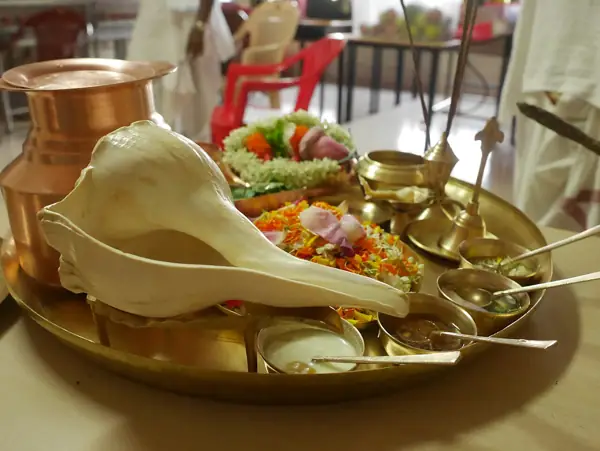
- Bhog and prasad. Serve on steel or leaf plates; see our samagri list for natural materials.
- Flowers afterwards. Compost them or put them under a tree, rather than in a plastic bag in the river.
- Immersion at home. Many families now immerse a small clay idol in a bucket or tub of water, let it dissolve, and pour the clay into a garden or potted plant. Ask your family priest whether this fits your tradition.
Is an eco-friendly puja still traditional?
Yes. Clay, straw, natural colours, flowers, leaf plates and the dhak are the oldest parts of the festival. Many puja committees in Kolkata have already built eco-themed pandals, and some, such as Mudiali Club, have been associated with environmental themes. Rituals vary by family and panjika, so speak with your priest about any change, but the spirit of the festival, welcoming the goddess home and letting her go with love, does not depend on plastic.
See it in Kolkata
Questions people ask
Are Durga idols made of clay or plaster of Paris?
Traditional Bengal Durga idols are made of straw, bamboo and river clay, as in Kumartuli. Plaster of Paris idols exist elsewhere and are cheaper and lighter, but they do not dissolve easily in water and are discouraged by pollution regulators in many places.
Why is plaster of Paris bad for immersion?
Plaster of Paris sets hard and dissolves very slowly, so it can sit in rivers and ponds for a long time, and it is often painted with synthetic colours that may contain harmful chemicals. Unbaked clay breaks down and returns to the earth far more readily.
What is an artificial immersion pond?
It is a temporary tank or pond set up by a municipality, housing society or puja committee so that idols can be immersed without going into a river or natural water body. The clay and debris are then collected and disposed of separately.
Are there rules for idol immersion in Kolkata?
Yes. Over the years, pollution control boards and courts have issued guidelines on idol materials, colours and immersion, and local authorities set ghat arrangements and timings each year. Rules change, so check current notices from the state pollution control board, the municipality and the police.
How can I celebrate an eco-friendly Durga Puja at home?
Choose a small unpainted or naturally coloured clay idol, use fresh flowers and leaves rather than plastic decorations, serve bhog on steel, sal-leaf or banana-leaf plates, compost flowers afterwards, and immerse the idol in a bucket or tub at home and use the dissolved clay in your garden.
Read next
- Durga PujaKumartuli and the making of Durga idolsHow Kumartuli's potters make Durga idols: bamboo frame, straw, Ganga clay, punya mati, painting, shola, daker saaj, chokkhu daan on Mahalaya and visiting tips.
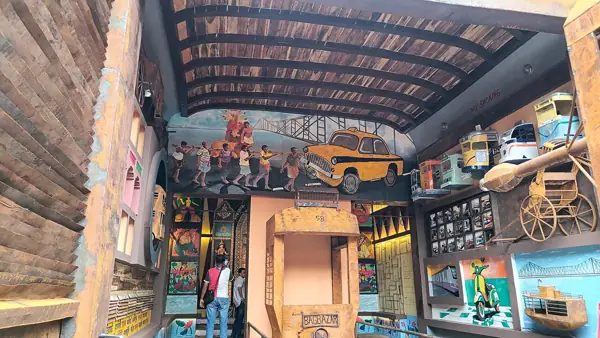 CulturePandal art and themesHow Kolkata's Durga Puja pandals are built: bamboo and cloth frames, decorators, theme pandals, rural artisans, Chandannagar lights, awards, and the timeline.
 At home · 12 stepsHow to do Durga Puja at homeA simple, respectful way to do Durga Puja at home: setting up a ghat, sankalpa, offerings, aarti, Ashtami anjali and Dashami visarjan, with a supplies list.
- At homeDurga Puja samagri listA complete Durga Puja samagri checklist for home worship: essentials, flowers and leaves, bhog, items for Ashtami anjali and Dashami, plus easy substitutions.
 RitualsBijoya DashamiBijoya Dashami 2026 is Wednesday 21 October: darpan bisarjan, boron and sindoor khela, immersion processions, shanti jal and Bijoya greetings explained.