Jagaddhatri Puja: Chandannagar, Krishnanagar and the goddess who holds the world
 Pujo Parikrama team4 min read · Updated
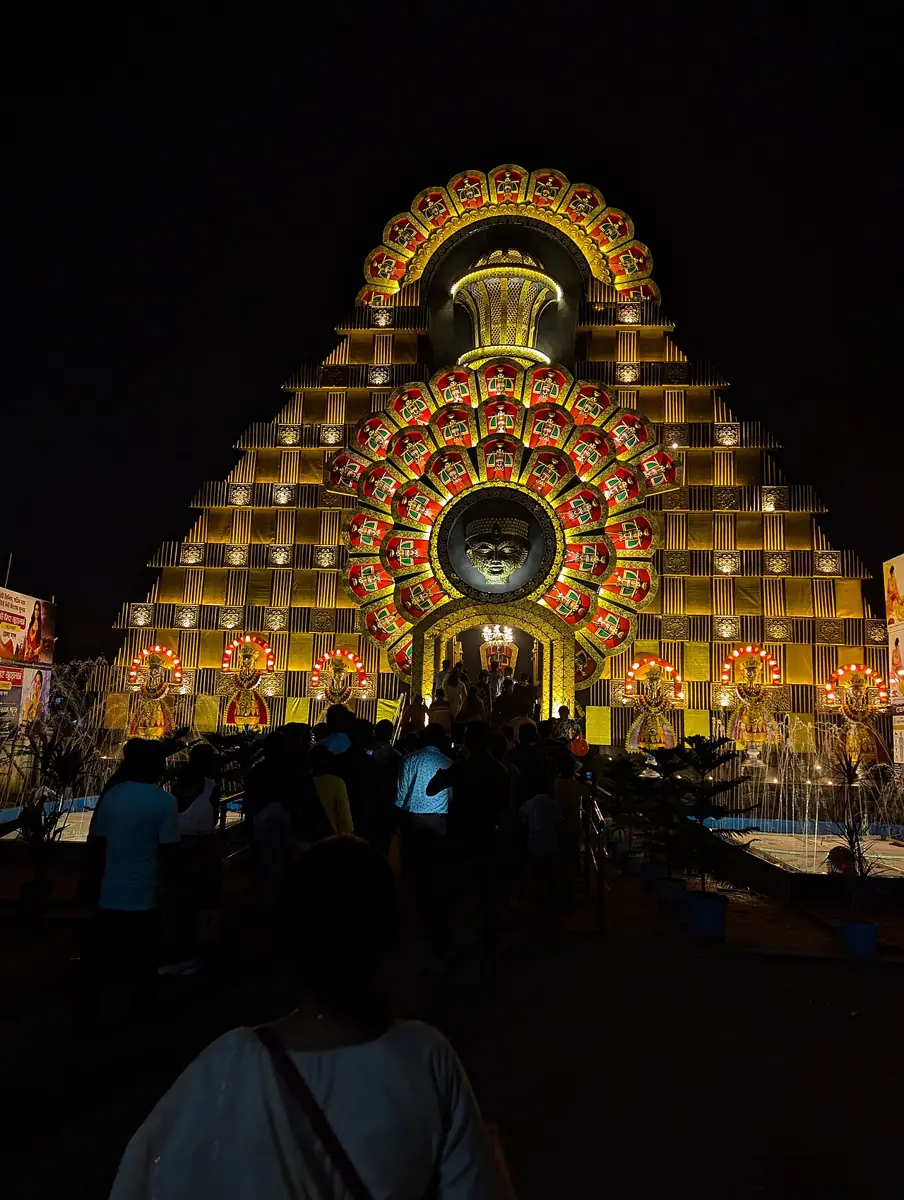
Jagaddhatri Puja is the worship of Jagaddhatri, "the holder of the world", a form of Durga shown riding a lion that stands over an elephant. It falls on Navami, the ninth lunar day of the bright fortnight of Kartik, a few weeks after Durga Puja, and is celebrated most grandly in Chandannagar, famous for its light art and immersion procession, and in Krishnanagar, which tradition links to Raja Krishnachandra of Nadia. The date changes every year; check the panjika.
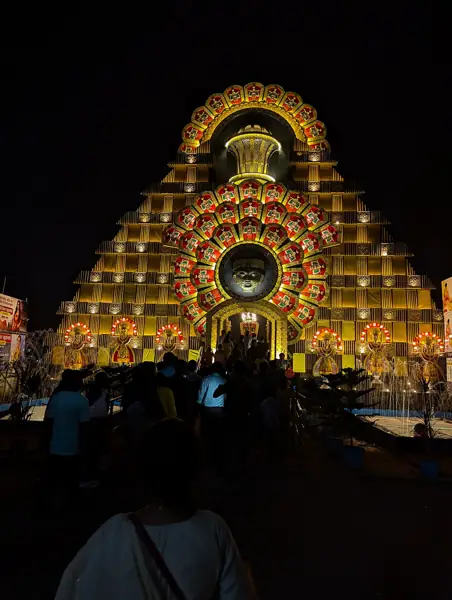 ▶ Photo story · 8 pagesJagaddhatri Puja: Chandannagar, Krishnanagar and the goddess who holds the world
In this article 7 sections
Jagaddhatri Puja is the worship of Jagaddhatri, whose name means "the holder (or sustainer) of the world", a form of Durga worshipped in Bengal on Navami, the ninth lunar day of the bright fortnight of Kartik. That is about nine days after Kali Puja, a few weeks after Durga Puja. It is the last great goddess festival of Bengal's autumn, and it is celebrated on a spectacular scale in two towns: Chandannagar in Hooghly district and Krishnanagar in Nadia. The date changes each year with the lunar calendar, so check your local panjika.
Who is Jagaddhatri?
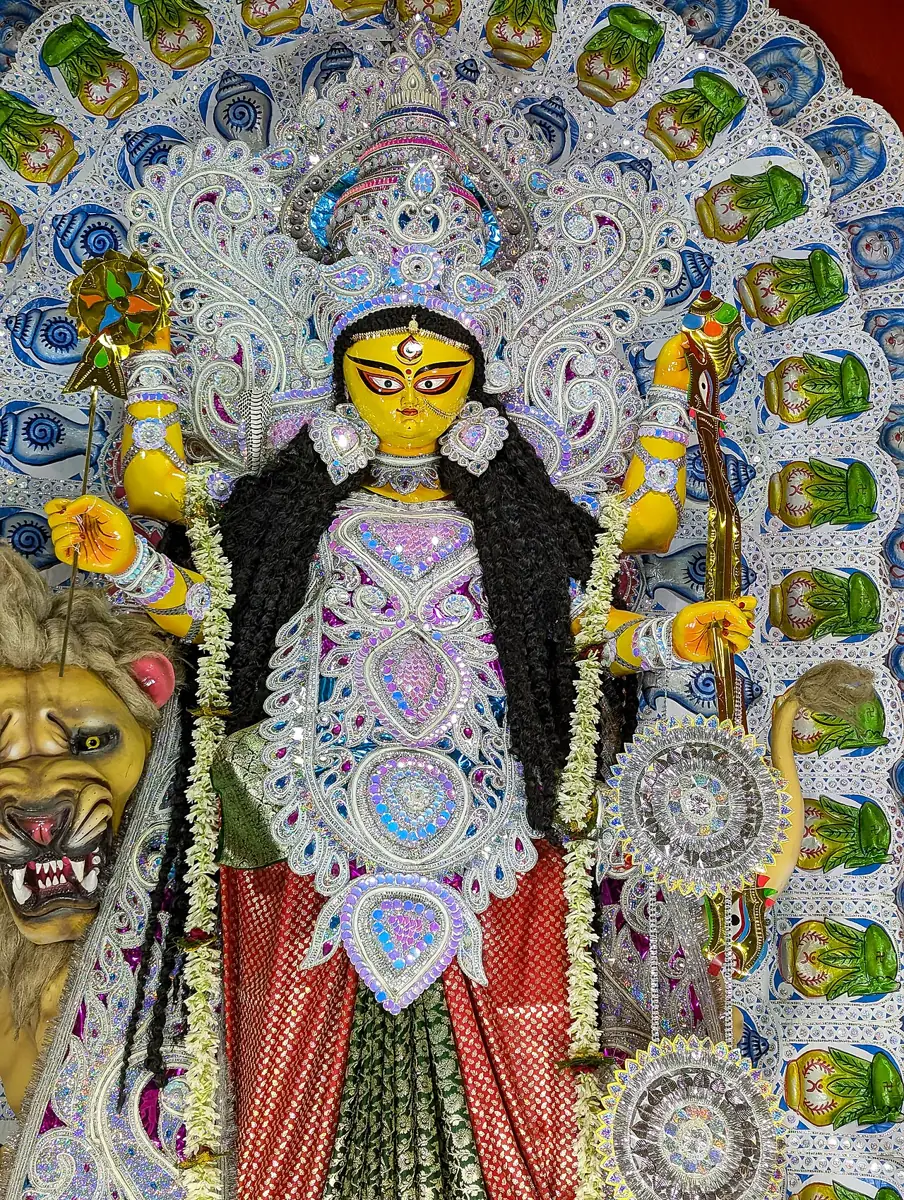
Jagaddhatri is understood as Durga in her role as the one who supports and sustains the universe. Her image is distinctive:
- she is usually four-armed, holding a conch, a discus, a bow and arrows, though details vary;
- her complexion is often shown as golden or like the morning sun;
- she is seated calmly on a lion, and the lion stands over an elephant;
- she wears red and is adorned like a queen, with a serene expression.
The elephant is commonly explained as a demon in elephant form, sometimes named Karindrasura, subdued by the goddess. A popular reading also sees the elephant as the restless, proud mind, and the goddess as the steady power that holds it in check. Unlike Durga's battle scene with Mahishasura, Jagaddhatri's image is calm: the struggle is over.
How it is worshipped
The structure of the worship resembles Durga Puja. In some places all the rites of Saptami, Ashtami and Navami are performed on the single day of Navami; in others, especially Chandannagar, the festival is spread over four days, from Saptami to Dashami. Practice varies by town, committee and family, and the panjika sets the timings.
Krishnanagar and Raja Krishnachandra
In Krishnanagar, the old capital of the Nadia Raj, Jagaddhatri Puja is closely associated with Raja Krishnachandra Roy, the eighteenth-century ruler of Nadia and a major patron of Bengali arts and religion. A widely told story says that the king was held by the Nawab's authorities during Durga Puja and missed the festival, and was then shown in a dream how to worship the goddess in this form a month later. Accounts differ on details and dates, and historians treat the story as tradition rather than documented fact, but it is central to how Krishnanagar tells the history of its puja.
Krishnanagar is also known for its clay modellers, and its Jagaddhatri images and the immersion, when many idols are carried through town, often on the shoulders of bearers, are a highlight of the festival.

Chandannagar: the town of lights
Chandannagar, north of Kolkata on the Hooghly, was a French settlement until the mid-twentieth century. Its Jagaddhatri Puja is traditionally said to have been begun in the eighteenth century by Indranarayan Roy Chowdhury, a local merchant associated with the French, inspired by the puja in Krishnanagar; again, this is a traditional account.
Today the town hosts a large number of community pujas, many with tall images and elaborate pandals. What makes Chandannagar famous across India, however, is its light art. Local light artists build huge illuminated panels and figures, once from small bulbs and now largely with LEDs, showing scenes from mythology, folk tales, current events and pure fantasy, often animated by sequenced switching. These lighting makers are in demand far beyond the town, including for Durga Puja pandals in Kolkata.
The procession
On immersion night, decorated idols and giant light installations are taken in a long procession through the town to the river, typically on trucks. The procession usually runs late into the night and draws very large crowds. If you go:
- arrive early and agree on a meeting point, as phone networks may be congested;
- wear comfortable shoes and carry water and a little cash;
- follow police barricades and announcements, and avoid the riverbank in the densest crowds;
- check the year's route and timings with local authorities or puja committees.
 Also readBengal's festival season
Other places
Jagaddhatri Puja is also celebrated in other towns along the Hooghly and in parts of Kolkata, in temples and in some old family homes. Neighbouring areas around Chandannagar, such as Bhadreswar, are also known for their pujas.
Getting there
Chandannagar is on the Howrah to Bandel suburban railway line, and Krishnanagar is reached by train from Sealdah. During the festival both trains and roads are crowded, so plan your return carefully, especially late at night.
Related reading
See the festival season hub for the full run of autumn festivals, Kali Puja and Diwali and Bhai Phonta for the festivals just before, and the history of Durga Puja for the role of Bengal's zamindars and rajas in shaping the Pujas.
Questions people ask
When is Jagaddhatri Puja?
Jagaddhatri Puja falls on Navami, the ninth lunar day of the bright fortnight of Kartik, about nine days after Kali Puja. Many places celebrate over several days around it. The date changes every year, so check your local panjika.
Who is Goddess Jagaddhatri?
Jagaddhatri, meaning the holder or sustainer of the world, is a form of Durga. She is usually shown with four arms, seated on a lion that stands over an elephant, and is worshipped with the same broad structure as Durga Puja.
Why is Chandannagar famous for Jagaddhatri Puja?
Chandannagar, a former French settlement on the Hooghly, holds many large community Jagaddhatri Pujas and is renowned for its elaborate electric light displays made by local light artists, which are paraded in a long procession on immersion night.
Who started Jagaddhatri Puja in Krishnanagar?
By tradition, Jagaddhatri Puja in Krishnanagar is credited to Raja Krishnachandra Roy of Nadia in the eighteenth century. The popular story says he began it after missing Durga Puja, but accounts differ and should be treated as tradition rather than settled history.
How do I get to Chandannagar for Jagaddhatri Puja?
Chandannagar lies on the Howrah to Bandel suburban railway line in Hooghly district. During the festival trains and roads are very crowded, so travel early in the evening and check local transport and police advisories.
Read next
- FestivalsBengal's festival seasonBengal's festival season in order: Vishwakarma Puja, Durga Puja, Kojagari Lakshmi Puja, Kali Puja with Diwali, Bhai Phonta, Jagaddhatri and Basanti Puja.
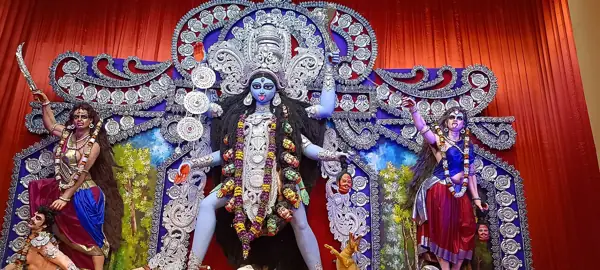 FestivalsKali Puja and DiwaliKali Puja in Bengal falls on the new moon of Kartik, with Diwali: Kali's iconography, night-long worship, Dakshineswar, Kalighat, Bhoot Chaturdashi and lamps.
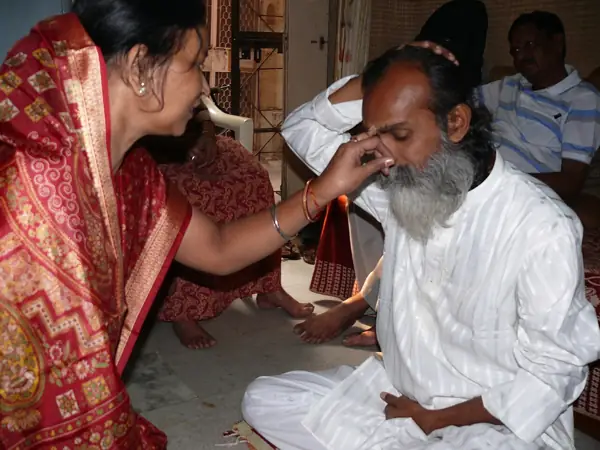 FestivalsBhai PhontaBhai Phonta, Bengal's Bhai Dooj: sisters put a phonta of sandal paste, kajal and curd on brothers, the famous chant, the meal, gifts and the Yama-Yamuna story.
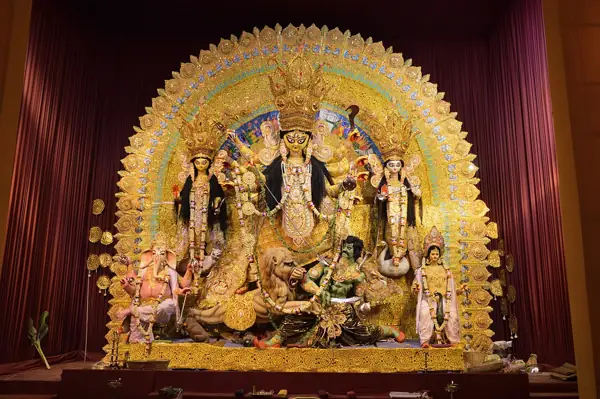 Durga PujaWhat is Durga Puja? The meaning behind the festivalWhat Durga Puja means: the Devi Mahatmya story of Mahishasura, Durga as Shakti, Uma's homecoming, Rama's akal bodhon and why the festival falls in autumn.
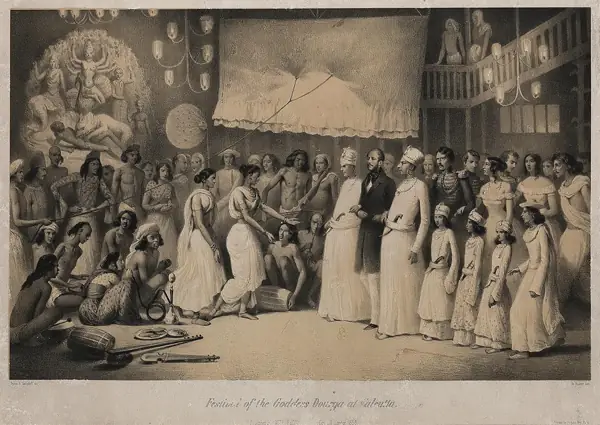 Durga PujaThe history of Durga Puja in BengalHow Durga Puja grew from zamindari and rajbari pujas to barowari and sarbojanin community festivals, theme pandals and UNESCO heritage status in Kolkata.