Navadurga: the nine forms of Durga in Navratri
 Pujo Parikrama team4 min read · Updated
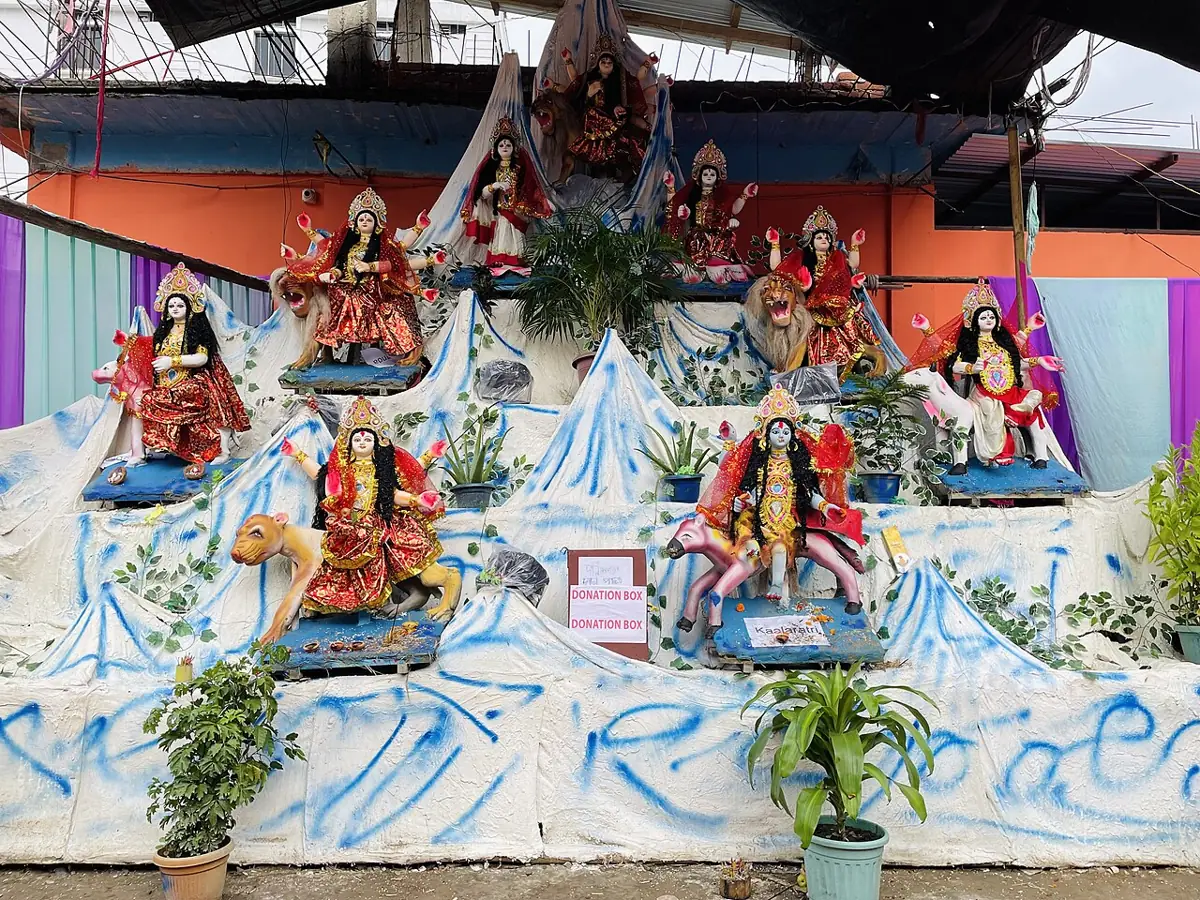
The Navadurga are the nine forms of the Goddess Durga worshipped one per day during Navratri: Shailaputri, Brahmacharini, Chandraghanta, Kushmanda, Skandamata, Katyayani, Kalaratri, Mahagauri and Siddhidatri. Together they trace the Goddess from the daughter of the mountain, through austerity and fierce protection, to the giver of spiritual fulfilment. Offerings and colours linked to each day vary by region and family.
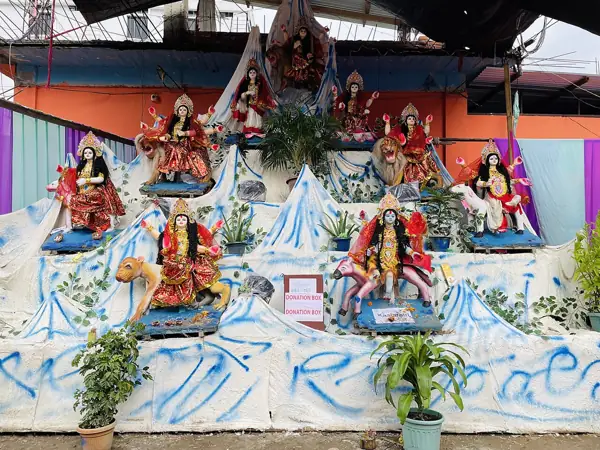 ▶ Photo story · 10 pagesNavadurga: the nine forms of Durga in Navratri
In this article 12 sections
The Navadurga ("nine Durgas") are the nine forms of the Goddess worshipped one after another across the nine days of Navratri. In order they are Shailaputri, Brahmacharini, Chandraghanta, Kushmanda, Skandamata, Katyayani, Kalaratri, Mahagauri and Siddhidatri. The sequence is often read as the story of Parvati's life and as a spiritual path: birth, austerity, courage, creation, motherhood, battle, destruction of darkness, purity and, finally, perfection.
The list is widely followed in north and west India. Iconography follows common temple and print traditions, and the "commonly associated offering" column records popular practice, not scripture: families and regions differ.
The nine forms at a glance
| Day | Form | Meaning of the name | Iconography | Commonly associated offering |
|---|---|---|---|---|
| 1 (Pratipada) | Shailaputri | Daughter of the mountain | Rides a bull; holds a trident and a lotus; crescent moon on her head | Ghee |
| 2 (Dwitiya) | Brahmacharini | She who practises austerity | Walks barefoot; holds a rosary and a water pot (kamandalu) | Sugar, fruit |
| 3 (Tritiya) | Chandraghanta | She who wears a bell-shaped half-moon | Half-moon like a bell on her forehead; rides a lion or tiger; ten arms with weapons | Milk, kheer |
| 4 (Chaturthi) | Kushmanda | She who created the cosmic egg with her smile | Eight arms; rides a lion; holds a water pot, bow, arrow, lotus, nectar pot, discus, mace and rosary | Malpua |
| 5 (Panchami) | Skandamata | Mother of Skanda (Kartikeya) | Holds the infant Skanda on her lap; four arms, two with lotuses; seated on a lotus or riding a lion | Banana |
| 6 (Shashthi) | Katyayani | Daughter of the sage Katyayana | Rides a lion; four arms with a sword and a lotus, others in blessing gestures | Honey |
| 7 (Saptami) | Kalaratri | The dark night (of destruction) | Dark complexion, loose hair, three eyes; rides a donkey; holds a cleaver or sword and an iron hook | Jaggery |
| 8 (Ashtami) | Mahagauri | The very fair, radiant one | Dressed in white; rides a bull; holds a trident and a damaru (small drum) | Coconut |
| 9 (Navami) | Siddhidatri | Giver of siddhis (spiritual powers) | Seated on a lotus; four arms with discus, conch, mace and lotus | Sesame seeds, simple home-cooked food |
Day 1: Shailaputri
Shaila means mountain and putri daughter. She is Parvati as the daughter of Himavat, king of the Himalayas, and in many tellings the rebirth of Sati. Her worship begins Navratri on the same day as ghatasthapana, and she is associated with steadiness and the root of spiritual life.
Day 2: Brahmacharini
The young Parvati performing long austerities to win Shiva as her husband. Shown walking barefoot with a rosary and water pot, she stands for discipline, devotion and endurance, and is often honoured by people beginning a fast.
Day 3: Chandraghanta
After her marriage, the Goddess adorns her forehead with a half-moon shaped like a temple bell (ghanta). Her form is martial and alert, and the sound of her bell is said to drive away negative forces. She combines grace with readiness to protect.
Day 4: Kushmanda
Her name is traditionally explained as the one who brought the universe (the cosmic egg, anda) into being with a gentle smile when only darkness existed. She is linked to the sun's energy, health and creative power. Ash gourd (kushmanda in Sanskrit) is associated with her in some offerings.
Day 5: Skandamata
The mother of Skanda, also called Kartikeya or Murugan, the gods' commander. She holds her infant son on her lap and is worshipped as the loving, protective mother. In Bengal, Kartik stands at Durga's side in every pandal idol, a reminder of this bond.
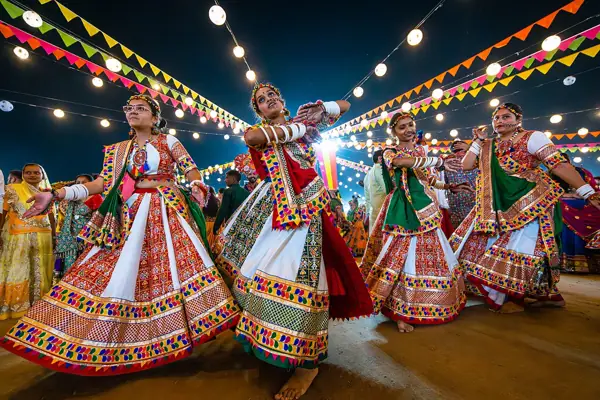 Also readNavratri 2026
Day 6: Katyayani
Born, in one account, in the hermitage of the sage Katyayana, she is the warrior form who slays Mahishasura. In parts of north India, unmarried young women pray to Katyayani for a good marriage, a tradition linked to the gopis of Vrindavan in the Bhagavata Purana.
Day 7: Kalaratri
The fiercest form: dark, wild-haired and fearsome, riding a donkey. She destroys darkness, ignorance and fear itself. Despite her appearance she is also called Shubhankari, "the one who does good", because her ferocity protects devotees. In Bengal, Saptami is when the Kola Bou is bathed and the Goddess is installed in the idol; see Saptami.
Day 8: Mahagauri
After long austerities, the Goddess regains a radiant, fair complexion. Dressed in white, calm and gentle, Mahagauri represents purity and forgiveness. Ashtami is one of the most important days of the festival everywhere, the day of kanya pujan in many north Indian homes and of pushpanjali in Bengal.
Day 9: Siddhidatri
The giver of siddhis, spiritual attainments. Seated on a lotus, she is worshipped by gods, sages and seekers, and her day closes Navratri with prayers for fulfilment. Many households hold a havan (fire ritual) and kanya pujan on Navami.
Navadurga in Bengal
Bengal's Durga Puja does not follow the day-by-day Navadurga sequence; its focus is the ten-armed Durga slaying Mahishasura, with her children around her. The nine forms do appear, though, in the Kola Bou, or Navapatrika: nine plants bound together and worshipped on Saptami, each representing a form of the Goddess (a different set of nine from the Navadurga). Read more about the Goddess Durga herself.
About Navratri colours
You may see lists of nine colours, one per day, especially in Maharashtra. These are not fixed: the colour for each day is generally chosen by the weekday on which that day falls, so the list changes every year. Treat any colour list as a fun, local custom and use a current year's source if you want to follow it.
Questions people ask
What are the nine forms of Durga in order?
Shailaputri, Brahmacharini, Chandraghanta, Kushmanda, Skandamata, Katyayani, Kalaratri, Mahagauri and Siddhidatri, worshipped from the first to the ninth day of Navratri.
Which goddess is worshipped on Navratri Ashtami?
Mahagauri is worshipped on the eighth day (Ashtami) in the Navadurga sequence, and Siddhidatri on the ninth (Navami).
What are the Navratri colours for 2026?
Day-colour lists, popularised in Maharashtra, are fixed fresh each year according to the weekday on which each Navratri day falls, so they are not permanent. Check a current local almanac or newspaper rather than older lists.
Is the Navadurga worshipped in Bengal's Durga Puja?
Bengal's Durga Puja centres on Durga as Mahishasuramardini with her children, rather than a day-by-day Navadurga sequence. The idea of nine goddesses does appear in the Kola Bou (Navapatrika), whose nine plants each represent a form of the Goddess, though that list differs from the Navadurga.
Are the offerings for each Navadurga fixed?
No. Popular lists link foods such as ghee, sugar, milk and jaggery to particular days, but families and regions follow different customs. Any pure, sincerely offered food is accepted in household worship.
Read next
- NavratriNavratri 2026What Navratri means, when Sharad Navratri 2026 falls, its rituals (ghatasthapana, Navadurga, fasting, garba) and how it differs from Bengal's Durga Puja.
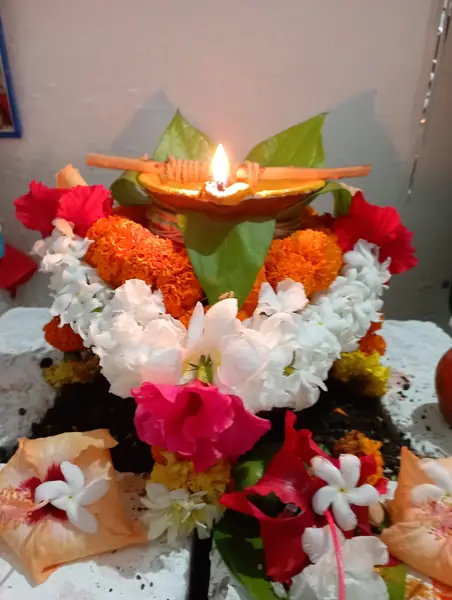 Navratri · 10 stepsGhatasthapanaStep-by-step Navratri ghatasthapana (kalash sthapana) at home: sowing barley in soil, setting the kalash, coconut and mango leaves, muhurta tips and supplies.
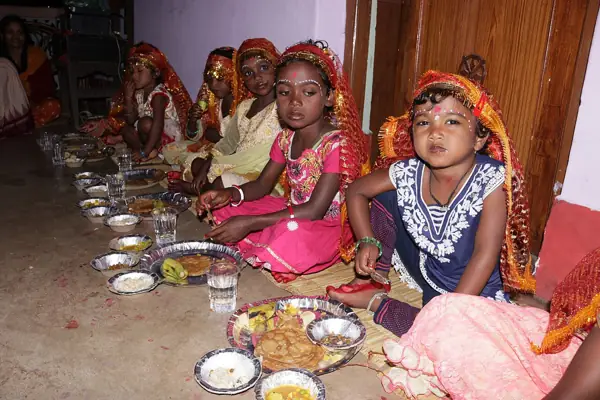 Navratri · 8 stepsKanya pujanHow to do kanya pujan (kanjak) on Navratri Ashtami or Navami: inviting girls, washing feet, tilak, kalawa, the puri, chana and halwa meal, gifts and meaning.
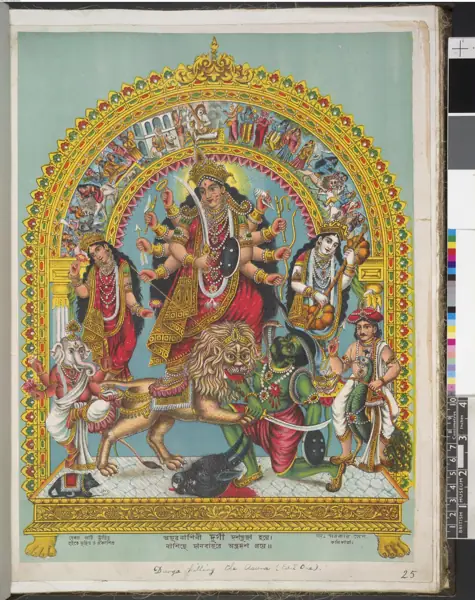 Durga PujaGoddess Durga and her familyHow to read a Durga Puja image: Durga's ten arms and weapons, the lion, Mahishasura, Lakshmi, Saraswati, Ganesha, Kartik, their vahanas, ekchala and daker saaj.