Durga Puja pushpanjali mantra, with meaning
 Pujo Parikrama team4 min read · Updated
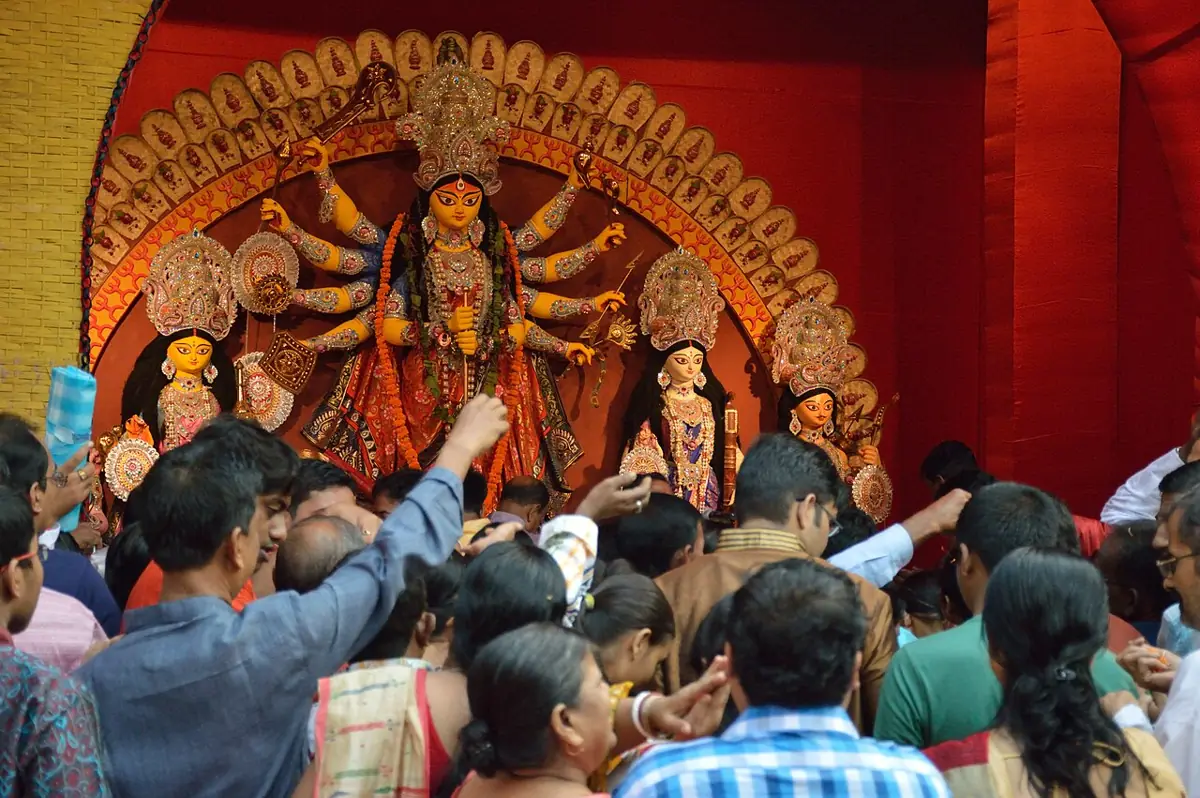
Pushpanjali, or anjali, is the offering of flowers and bel leaves to Goddess Durga while repeating Sanskrit mantras after the priest, most famously on Maha Ashtami morning. The verses most often recited in Bengal include "Om jayanti mangala kali bhadrakali kapalini" from the Argala Stotram and "Sarva mangala mangalye" from the Devi Mahatmya, followed by the offering formula "esha sachandana pushpa bilwa patranjali". It is usually done in three rounds, after which the flowers are offered at the goddess's feet.
 ▶ Photo story · 7 pagesDurga Puja pushpanjali mantra, with meaning
In this article 7 sections
Pushpanjali (pushpa, flower; anjali, offering with cupped hands), usually just called anjali, is the moment during Durga Puja when ordinary devotees offer flowers to the goddess with Sanskrit mantras, repeating each phrase after the priest. It happens every day of the puja, but the Maha Ashtami morning anjali is the one most Bengalis never miss. In 2026 Maha Ashtami falls on Monday 19 October.
Below are the verses most commonly recited in Bengali pujas, each in Bengali script (as recited in Bengal), Devanagari, Roman transliteration and an English meaning. Priests' wording and the order of verses vary between families and pujas, so follow your priest when they differ from this page.
How anjali is done
- Wash your hands, and take off your shoes near the altar.
- Take a few flowers and bel (wood apple) leaves from the plate passed around. Many people also receive a little sandalwood paste on the flowers.
- Hold them in your cupped hands, palms together, in front of your chest.
- Repeat each line after the priest, in a clear voice.
- When the priest finishes the round with the offering line, offer the flowers towards the goddess's feet, usually into a basket or onto the altar, without throwing them at the image.
- Take fresh flowers and repeat. Most pujas do three rounds.
- Fold your hands for the closing pranam mantra, then receive shanti jal (sprinkled holy water) or prasad if offered.
Verse 1: Jayanti Mangala Kali
This verse is from the Argala Stotram, a hymn recited with the Devi Mahatmya (Chandi). It is the most widely used anjali verse in Bengal.
ওঁ জয়ন্তী মঙ্গলা কালী ভদ্রকালী কপালিনী।
দুর্গা শিবা ক্ষমা ধাত্রী স্বাহা স্বধা নমোঽস্তু তে॥
ॐ जयन्ती मङ्गला काली भद्रकाली कपालिनी । दुर्गा क्षमा शिवा धात्री स्वाहा स्वधा नमोऽस्तु ते ॥
Om jayanti mangala kali bhadrakali kapalini, durga shiva kshama dhatri swaha swadha namo'stu te.
Meaning: "O Victorious One, Auspicious One, Kali, Bhadrakali, bearer of the skull; Durga, Benevolent One, Forgiving One, Sustainer of all; you who are Swaha and Swadha (the offerings made to the gods and to the ancestors): salutations to you."
In the standard Argala Stotram the second line reads durga kshama shiva dhatri, as in the Devanagari above. In Bengal it is commonly recited durga shiva kshama dhatri. Both are in use.
The offering line
After the verse, each round ends with a formula that names what is being offered and to whom. A commonly recited form is:
এষ সচন্দন পুষ্প বিল্বপত্রাঞ্জলি ওঁ শ্রী শ্রী দুর্গায়ৈ নমঃ।
Esha sachandana pushpa bilwapatranjali, om shri shri durgayai namah.
Meaning: "This offering of flowers and bel leaves with sandalwood: Om, salutations to Sri Durga."
Priests vary this line. Some add a seed syllable (such as hrim) before the goddess's name, and many repeat the line for the other deities of the image or for the goddess "with her vehicle, weapons and companions".
Also readMaha AshtamiVerse 2: Mahishaghni Mahamaye
This prayer is commonly recited in a later round of the Bengali anjali.
ওঁ মহিষঘ্নি মহামায়ে চামুণ্ডে মুণ্ডমালিনি।
আয়ুরারোগ্যবিজয়ং দেহি দেবি নমোঽস্তু তে॥
Om mahishaghni mahamaye chamunde mundamalini, ayur-arogya-vijayam dehi devi namo'stu te.
Meaning: "O slayer of Mahisha, great power of illusion, Chamunda, wearer of the garland of heads: grant long life, health and victory, O Goddess; salutations to you."
Verse 3: Sarva Mangala Mangalye
These three verses come from the Narayani Stuti in chapter 11 of the Devi Mahatmya, where the gods praise the goddess after her victory. They are usually recited in the last round, or as the closing pranam.
সর্বমঙ্গলমঙ্গল্যে শিবে সর্বার্থসাধিকে।
শরণ্যে ত্র্যম্বকে গৌরি নারায়ণি নমোঽস্তু তে॥
सर्वमङ्गलमाङ्गल्ये शिवे सर्वार्थसाधिके । शरण्ये त्र्यम्बके गौरि नारायणि नमोऽस्तु ते ॥
Sarva mangala mangalye shive sarvartha sadhike, sharanye tryambake gauri narayani namo'stu te.
Meaning: "O auspiciousness of all that is auspicious, O Benevolent One who fulfils every aim, O refuge of all, three-eyed Gauri, Narayani: salutations to you."
সৃষ্টিস্থিতিবিনাশানাং শক্তিভূতে সনাতনি।
গুণাশ্রয়ে গুণময়ে নারায়ণি নমোঽস্তু তে॥
Srishti sthiti vinashanam shakti bhute sanatani, gunashraye gunamaye narayani namo'stu te.
Meaning: "Eternal One, you are the power behind creation, preservation and dissolution; support of the qualities of nature and made of them, Narayani: salutations to you."
শরণাগতদীনার্তপরিত্রাণপরায়ণে।
সর্বস্যার্তিহরে দেবি নারায়ণি নমোঽস্তু তে॥
Sharanagata dinarta paritrana parayane, sarvasyarti hare devi narayani namo'stu te.
Meaning: "You who are devoted to saving the humble and the suffering who come to you for refuge, Goddess who removes the pain of all, Narayani: salutations to you."
A common order
Many Bengali pujas follow a pattern like this, though it is not universal:
| Round | Verse | Ends with |
|---|---|---|
| 1 | Om jayanti mangala kali | Esha sachandana pushpa bilwapatranjali |
| 2 | Om jayanti mangala kali, or Om mahishaghni mahamaye | Esha sachandana pushpa bilwapatranjali |
| 3 | Om jayanti mangala kali, then Sarva mangala mangalye and the other Narayani verses | Pranam and offering of flowers |
Tips for Ashtami anjali
- Big pujas run several batches through the morning; ask when yours starts, as it depends on the Ashtami tithi that year.
- Arrive early: queues at popular pandals such as Bagbazar can be long.
- Wear clothes you can stand in comfortably for a while; most people dress in new clothes for Ashtami.
- Doing puja at home? See Durga Puja at home and the samagri list.
Read more about Maha Ashtami, the goddess Durga and the full ritual sequence.
See it in Kolkata
- 📍 Bagbazar SarbojaninOne of the oldest sarbojanin pujas. Traditional daker saaj idol, plus a riverside fair.
- 📍 Sovabazar RajbariA bonedi bari puja started by Raja Nabakrishna Deb. The thakurdalan is stunning.
Questions people ask
What is the Durga Puja anjali mantra?
A widely used anjali verse is: Om jayanti mangala kali bhadrakali kapalini, durga shiva kshama dhatri swaha swadha namo'stu te, followed by the offering line esha sachandana pushpa bilwa patranjali and the goddess's name. Priests add other verses such as Sarva mangala mangalye.
Where does the Jayanti Mangala Kali verse come from?
It is from the Argala Stotram, a hymn traditionally recited with the Devi Mahatmya (Chandi). In the standard Argala text the names run durga kshama shiva dhatri; in Bengal it is commonly recited as durga shiva kshama dhatri.
How many times is anjali offered?
Usually three rounds. In each round you take fresh flowers and bel leaves, repeat the mantras after the priest and offer them at the goddess's feet. Some pujas do fewer rounds when queues are long.
Do I need to fast before anjali?
Many Bengalis fast on Ashtami morning until they have offered anjali, but it is a family custom rather than a rule; visitors are welcome to take part either way.
Can I offer anjali if I don't know Sanskrit?
Yes. The priest says each phrase and everyone repeats it, so you only need to listen and follow. Knowing the meaning, given on this page, makes it more personal.
Read next
- RitualsMaha AshtamiMaha Ashtami 2026 is Monday 19 October: the morning pushpanjali, Kumari Puja, Sandhi Puja with 108 lotuses and lamps, fasting until anjali and what people wear.
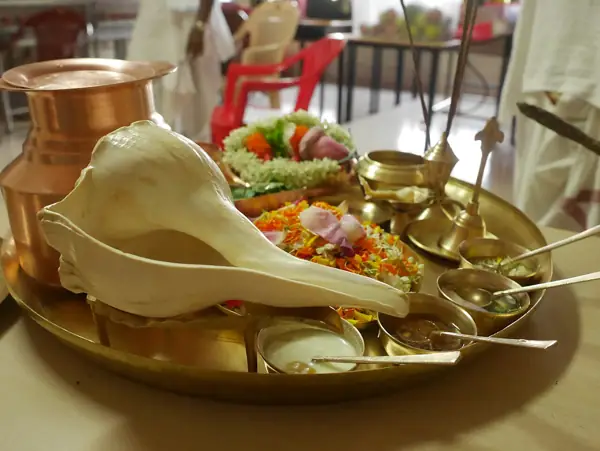 At home · 12 stepsHow to do Durga Puja at homeA simple, respectful way to do Durga Puja at home: setting up a ghat, sankalpa, offerings, aarti, Ashtami anjali and Dashami visarjan, with a supplies list.
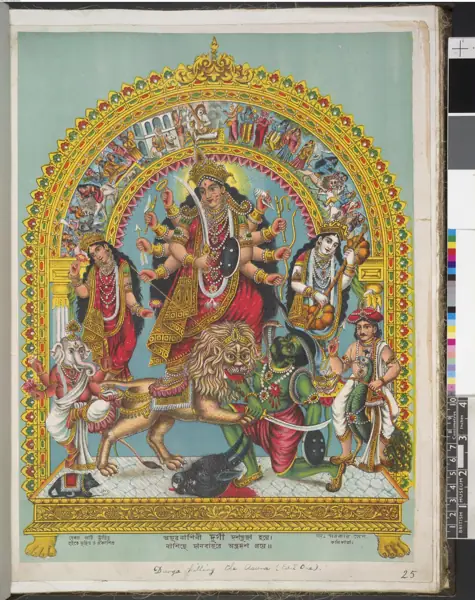 Durga PujaGoddess Durga and her familyHow to read a Durga Puja image: Durga's ten arms and weapons, the lion, Mahishasura, Lakshmi, Saraswati, Ganesha, Kartik, their vahanas, ekchala and daker saaj.
- At homeDurga Puja samagri listA complete Durga Puja samagri checklist for home worship: essentials, flowers and leaves, bhog, items for Ashtami anjali and Dashami, plus easy substitutions.