Kola Bou: the Nabapatrika and its nine plants
 Pujo Parikrama team3 min read · Updated
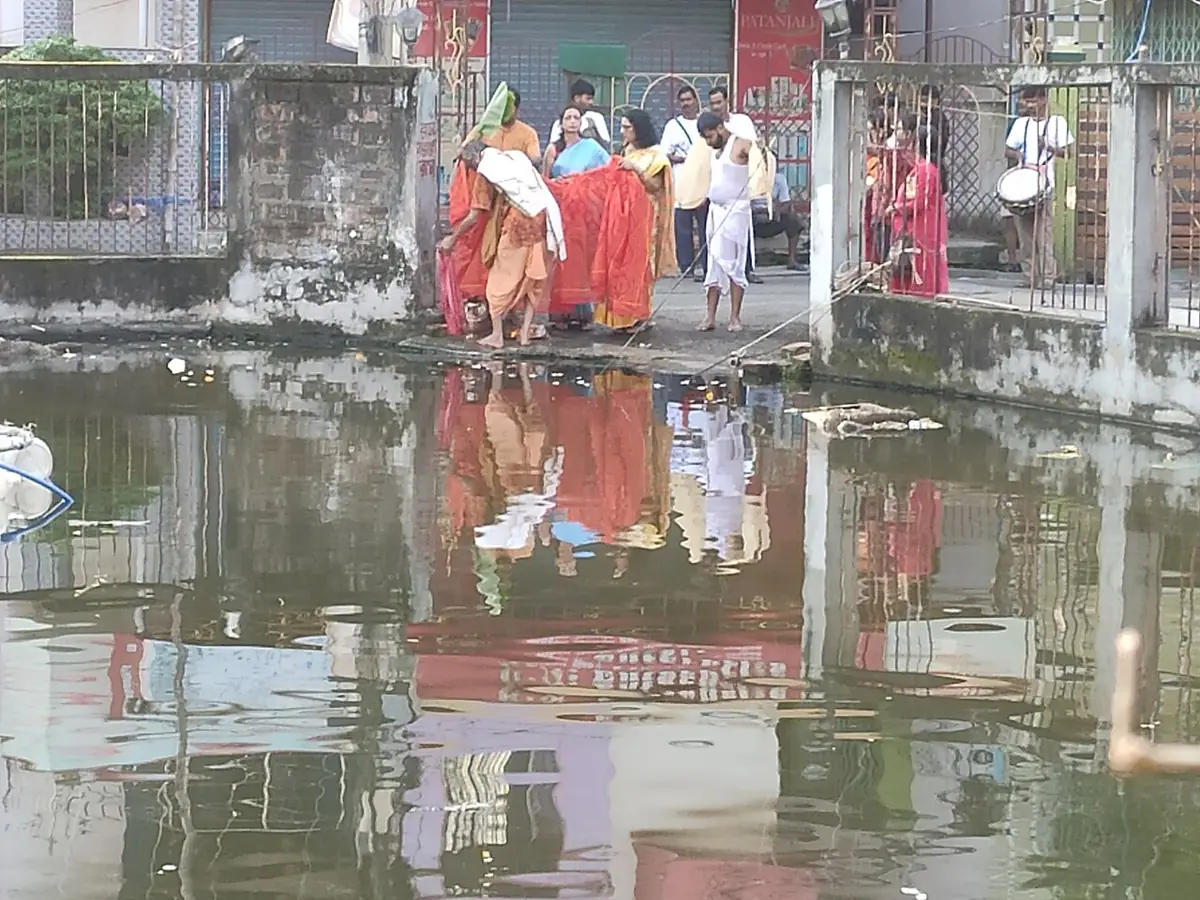
The Kola Bou ("banana bride"), properly the Nabapatrika, is a bundle of nine plants (banana, colocasia, turmeric, jayanti, bel, pomegranate, ashoka, arum and paddy) worshipped during Durga Puja as nine forms of the goddess. On Maha Saptami morning it is bathed in a river or at a ghat, dressed in a red-bordered sari and placed beside Ganesha. In 2026 Saptami falls on Sunday 18 October.
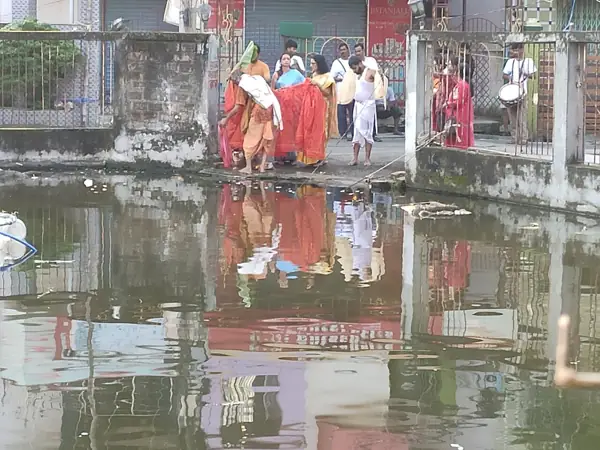 ▶ Photo story · 7 pagesKola Bou: the Nabapatrika and its nine plants
In this article 5 sections
The Kola Bou (kola, banana; bou, bride) is the most affectionate name for the Nabapatrika (naba, nine; patrika, plants or leaves), a bundle of nine plants worshipped during Durga Puja as nine forms of the goddess. On the morning of Maha Saptami, Sunday 18 October in 2026, it is bathed, dressed in a sari and installed beside Ganesha, and it is worshipped with the idol until Dashami.
The nine plants and their goddesses
The plants are tied together around a banana plant with a white aparajita creeper, along with a pair of bel fruits. Texts and family traditions assign each plant to a form of the goddess. The list below follows the commonly cited scheme; names can vary slightly in different sources.
| Plant (Bengali) | English | Goddess it represents |
|---|---|---|
| Kola | Banana | Brahmani |
| Kochu | Colocasia (taro) | Kalika |
| Holud | Turmeric | Durga |
| Jayanti | Jayanti (Sesbania) | Kartiki |
| Bel | Wood apple | Shiva (Shivaa) |
| Dalim | Pomegranate | Raktadantika |
| Ashok | Ashoka tree | Shokarahita |
| Maan kochu | Arum (giant taro) | Chamunda |
| Dhan | Paddy (rice) | Lakshmi |
Together they are worshipped as Nabapatrikavasini, the goddess who dwells in the nine plants.
Why plants?
The Nabapatrika is one of the oldest-feeling elements of the puja. Many historians and folklorists connect it with harvest and fertility rites: Durga Puja falls when the autumn rice crop is ripening in Bengal, and several of the nine are food or medicinal plants. Worshipping them honours the goddess as the life in vegetation, crops and nourishment. Whatever its origins, today it is an integral part of the Bengali puja.
Also readSaptamiThe morning bath
At dawn on Saptami, the Nabapatrika is carried to the river, a pond or a ghat for Nabapatrika snan, its ritual bath, with dhak drums, conch shells and ululation. In Kolkata the ghats along the Hooghly are crowded with these small processions. Pujas far from water bathe it in the pandal with water brought for the purpose. The waters and substances used vary by tradition.
After the bath it is wrapped in a new white or cream sari with a red border, with the end drawn over the top like a veil, marked with sindoor and carried back, often under an umbrella. The priest then performs prana pratishtha and the main Saptami puja begins. See Saptami for the full sequence.
Why she stands beside Ganesha
The Kola Bou is placed beside Ganesha, traditionally on his right. Because she is dressed like a newly married bride and stands next to him, she is popularly called Ganesha's wife, and children in Bengal often grow up hearing her called that. In ritual terms, though, she is the goddess herself, which is why some describe her as Ganesha's mother rather than his bride. Both ideas live side by side in the festival's folklore.
Where to see it
- At dawn on Saptami, at the ghats in North Kolkata near Bagbazar and Ahiritola.
- In old family pujas such as Sovabazar Rajbari, where the Kola Bou stands in the thakur dalan (worship hall). See bonedi bari pujas and the North Kolkata heritage trail.
- In any pandal from Saptami onwards: look to the side of Ganesha for a sari-wrapped bundle of leaves.
On Dashami she is bid farewell along with the goddess; see Bijoya Dashami. For the whole sequence, see Durga Puja rituals day by day.
See it in Kolkata
- 📍 Bagbazar SarbojaninOne of the oldest sarbojanin pujas. Traditional daker saaj idol, plus a riverside fair.
- 📍 Sovabazar RajbariA bonedi bari puja started by Raja Nabakrishna Deb. The thakurdalan is stunning.
- 📍 Ahiritola SarbojaninA riverside neighbourhood puja known for large-scale theme work.
Questions people ask
What is the Kola Bou?
It is the Nabapatrika, nine plants tied together and dressed in a sari, worshipped as the goddess Durga during the puja. Kola means banana and bou means bride, because the banana plant forms its core and it is dressed like a veiled bride.
What are the nine plants of Nabapatrika?
Banana (kola), colocasia (kochu), turmeric (holud), jayanti, bel or wood apple, pomegranate (dalim), ashoka, arum (maan kochu) and paddy (dhan).
Is Kola Bou Ganesha's wife?
That is the popular belief, because she stands beside Ganesha dressed as a bride. In ritual terms, though, the Nabapatrika represents the goddess Durga herself in nine forms.
When is the Kola Bou bathed?
At dawn on Maha Saptami, which in 2026 is Sunday 18 October. The bath, called Nabapatrika snan, usually takes place in the Ganga or at a pond, and is followed by a procession back to the pandal.
Why are plants worshipped in Durga Puja?
Many scholars see the Nabapatrika as a link to older harvest and fertility worship, since Durga Puja falls in the autumn crop season. It honours the goddess as the power in all vegetation and nourishment.
Read next
- RitualsSaptamiSaptami 2026 is Sunday 18 October: the dawn bath of the Nabapatrika (Kola Bou), its procession from the ghat, prana pratishtha and the start of the main puja.
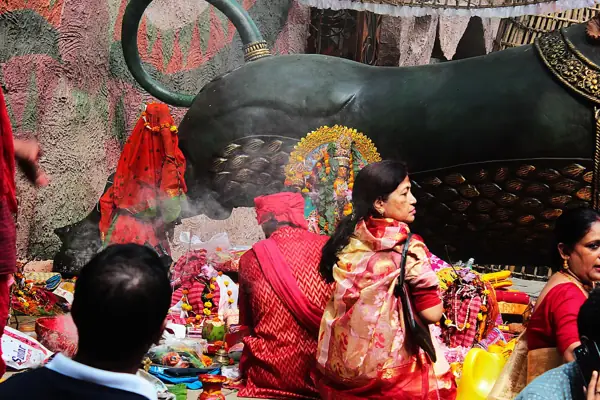 RitualsShashthiShashthi 2026 is Saturday 17 October: Kalparambha, the bodhon awakening of Durga by a bel tree, amantran and adhivas, unveiling of faces and Shashthi fasts.
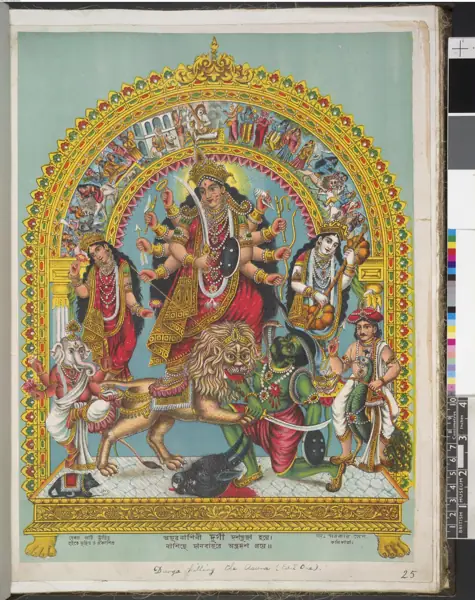 Durga PujaGoddess Durga and her familyHow to read a Durga Puja image: Durga's ten arms and weapons, the lion, Mahishasura, Lakshmi, Saraswati, Ganesha, Kartik, their vahanas, ekchala and daker saaj.
 RitualsDurga Puja rituals day by dayDurga Puja rituals day by day: Mahalaya, Shashthi bodhon, Saptami Kola Bou, Ashtami anjali and Sandhi Puja, Navami homa, Dashami sindoor khela, 2026 dates.