Labra: mixed vegetables for Durga Puja bhog
 Pujo Parikrama team3 min read · Updated
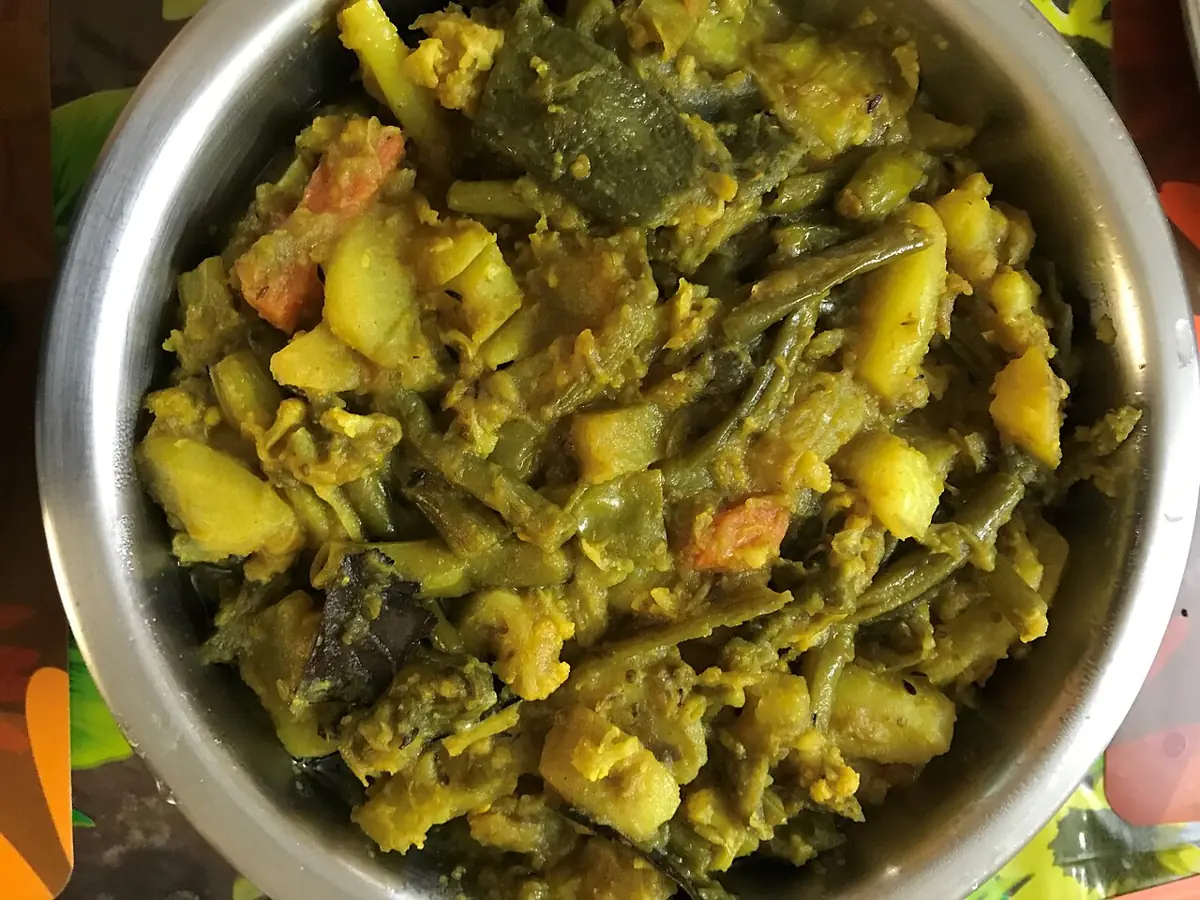
Labra, or labra torkari, is a soft Bengali mixed vegetable dish served alongside khichuri in Durga Puja bhog, especially on Ashtami. Pumpkin, potato, radish, aubergine, sweet potato and greens are cooked together with panch phoron (five-seed spice), ginger and a little sugar until they just begin to break down. It uses no onion or garlic and takes about an hour.
 ▶ Photo story · 10 pagesLabra: mixed vegetables for Durga Puja bhog
In this article 5 sections
- Serves
- 4–6 servings
- Prep
- 25 min
- Cook
- 30 min
- Total
- 55 min
- Diet
- Vegetarian
Ingredients
Tick them off as you go; ticks stay on this phone.
Method
- Prepare the vegetables
Cut all the vegetables to roughly the same size so they cook evenly, keeping the aubergine in a separate bowl of water so it does not darken. Wash and roughly chop the greens.
- Heat the oil
Heat the mustard oil in a wide, heavy pan or kadai over medium-high heat until it just begins to smoke, then lower the heat to medium. This mellows the raw sharpness of the oil.
- Temper with panch phoron
Add the bay leaves, dried red chillies and panch phoron and let them crackle for 20–30 seconds, taking care that the fenugreek does not turn dark.
- Fry the hard vegetables
Add the potato, sweet potato and radish with a pinch of turmeric and fry over medium heat for 5 minutes, stirring now and then, until lightly golden at the edges.
- Add the softer vegetables
Add the pumpkin, flat beans and drained aubergine and stir-fry for another 3–4 minutes.
- Add the spices
Add the ginger paste, green chillies, turmeric, cumin and salt with 2 tbsp water and stir for 2 minutes until the spices coat the vegetables and smell cooked.
- Simmer covered
Pour in ½ cup water, cover and cook over low-medium heat for 12–15 minutes, stirring gently every 4–5 minutes, until the potato is tender and the pumpkin is starting to break down.
- Add greens and finish
Add the greens and sugar, stir and cook uncovered for 3–4 minutes until the greens wilt and the dish is moist but not watery. Stir in the ghee, turn off the heat and rest for a few minutes before offering.
Labra is the humble, comforting partner to bhoger khichuri. On the Durga Puja bhog plate it sits right next to the khichuri, a soft heap of pumpkin, potato, radish and greens that tastes gently sweet, a little hot and fragrant with panch phoron. Few people make it the same way twice, and that is part of its charm.
Its place in the puja
At community pujas, labra is cooked in vast quantities on Ashtami and often on Saptami and Navami as well, using whatever vegetables arrive at the puja kitchen that morning. It reflects an idea that runs through bhog cooking: simple, seasonal food, cooked with care and no onion or garlic, becomes fit for the goddess. Once offered, it is served as prasad alongside khichuri, beguni and chutney. Our Durga Puja food and bhog guide covers the full thali.
Tips for success
- Cut evenly, cook in stages. Hard vegetables such as potato and radish go in first, softer ones such as pumpkin and aubergine follow. This gives a labra where some pieces hold their shape and others melt.
- Do not over-water. Labra should be moist and saucy, not a soup. Start with half a cup of water and add a few spoons more only if the pan dries before the potato is cooked.
- Stir gently. Use a flat spoon and fold rather than churn, so the pumpkin does not turn to mash too soon.
- Watch the fenugreek. The fenugreek seeds in panch phoron turn bitter if they go dark brown. Keep the heat at medium once the oil has smoked.
- Balance with sugar. The small amount of sugar is traditional in Bengali vegetable dishes and brings out the pumpkin's sweetness. Measure it, since bhog is often not tasted before it is offered.
- Smoke the mustard oil. Heating mustard oil until it just smokes removes its raw edge. Keep a window open; it is pungent.
 Also readDurga Puja bhog recipes
Variations
- Raw banana and cauliflower: add peeled raw banana chunks with the potatoes, or cauliflower florets with the pumpkin.
- Bori: fry a handful of bori (sun-dried lentil dumplings) in the oil first, lift them out and stir them in at the end.
- Coconut: a few tablespoons of grated fresh coconut stirred in at the end make a richer, festive labra.
- Hing: add a pinch of asafoetida with the panch phoron for extra savouriness in a no-onion kitchen.
- Greens: pui shaak (Malabar spinach) is classic, but spinach, amaranth or chopped radish greens all work.
Storing and reheating
Labra keeps in a covered container in the fridge for up to 2 days. Reheat gently in a pan with a splash of water, stirring carefully. It tastes even better the next day, though the vegetables will be softer. Prasad is generally best eaten fresh on the day of the puja.
Serving
Serve warm, spooned beside hot khichuri, with a beguni and a little chutney on the side. Labra is also good with plain rice and dal, or with luchi for a festive breakfast.
Questions people ask
What vegetables go in labra?
Labra usually includes red pumpkin, potato, sweet potato, white radish, aubergine and flat beans, finished with greens such as pui shaak or spinach. Many families also add raw banana, cauliflower stalks or whatever seasonal vegetables are at hand.
What is the difference between labra and chorchori?
Labra is softer and moister, with vegetables cooked until some start to break down, which suits it to eating with khichuri. Chorchori is usually drier, with the vegetables cut thinner and cooked until they catch slightly at the bottom of the pan.
Can I make labra without mustard oil?
Yes. Use ghee or a neutral oil for a milder flavour. Mustard oil gives labra its traditional pungency, so if you skip it, a pinch of hing (asafoetida) in the tempering helps add depth.
What is panch phoron?
Panch phoron is a Bengali whole-spice mix of equal parts fenugreek, nigella, cumin, black mustard and fennel seeds. It is fried in oil at the start of cooking and gives labra its characteristic aroma.
Read next
- RecipesDurga Puja bhog recipesHome recipes for the Durga Puja bhog thali: bhoger khichuri, labra, beguni, tomato chutney, payesh, narkel naru and luchi alur dom, mostly no onion or garlic.
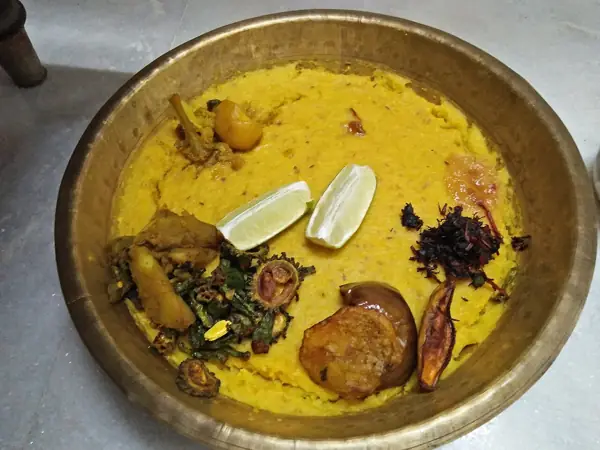 Recipes · 1 h 10 minBhoger khichuriBhoger khichuri recipe with gobindobhog rice, roasted moong dal, ghee, whole spices and ginger, no onion or garlic, just like Durga Puja Ashtami bhog. Serves 4.
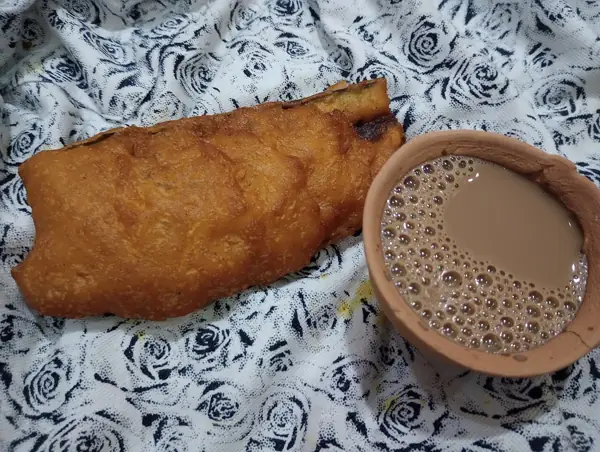 Recipes · 35 minBeguniBeguni recipe: thin aubergine slices dipped in a spiced besan and rice-flour batter and fried crisp, the hot fritter served with khichuri in Durga Puja bhog.
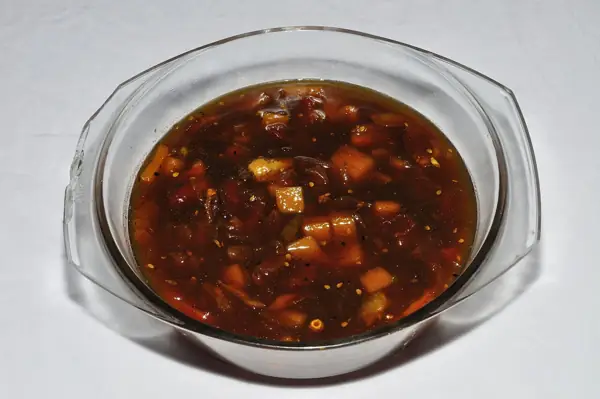 Recipes · 40 minTomato khejur aamsotto chutneyBengali tomato chutney with khejur (dates) and aamsotto (dried mango), tempered with panch phoron: the sweet-sour chutney of the Durga Puja bhog plate. Vegan.
- CultureDurga Puja foodWhat people eat at Durga Puja: khichuri bhog, labra, payesh, phuchka, rolls, mughlai paratha, rosogolla and sandesh, plus why bhog is shared and eaten together.
 RitualsMaha AshtamiMaha Ashtami 2026 is Monday 19 October: the morning pushpanjali, Kumari Puja, Sandhi Puja with 108 lotuses and lamps, fasting until anjali and what people wear.