Luchi and alur dom: Ashtami breakfast
 Pujo Parikrama team3 min read · Updated
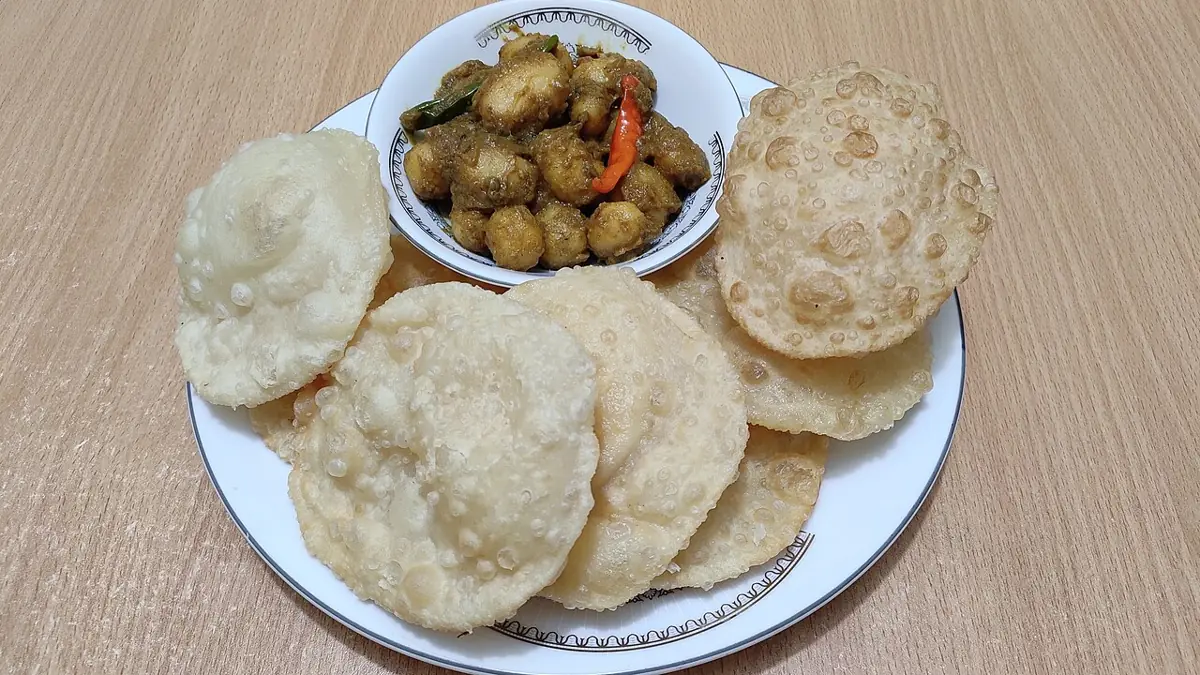
Luchi and alur dom is a festive Bengali breakfast of puffed, deep-fried flatbreads made from maida (refined flour) served with a spiced potato curry. Many families eat it on Maha Ashtami morning, often after fasting for pushpanjali, and on other puja days. This version is made without onion or garlic, with ginger, cumin and hing for flavour, and serves four.
 ▶ Photo story · 10 pagesLuchi and alur dom: Ashtami breakfast
In this article 5 sections
- Serves
- 4 servings (about 20 luchi)
- Prep
- 30 min
- Cook
- 50 min
- Total
- 1 h 20 min
- Diet
- Vegetarian
Ingredients
Tick them off as you go; ticks stay on this phone.
Method
- Make the luchi dough
Mix the maida, ½ tsp salt and ½ tsp sugar, then rub in 2 tbsp ghee with your fingertips until the flour holds together when pressed. Add water a little at a time and knead for 5–6 minutes into a smooth, firm dough, cover with a damp cloth and rest for 30 minutes.
- Boil the potatoes
Boil the baby potatoes in salted water for 12–15 minutes until a knife slides in easily. Drain, peel while warm and prick each one a few times with a fork so the gravy soaks in.
- Fry the potatoes
Heat 3 tbsp oil in a kadai over medium heat, add the potatoes with a pinch of turmeric and fry for 5–6 minutes, turning, until golden in patches. Lift them out and keep the oil in the pan.
- Temper and cook the spices
Add the cumin seeds, bay leaves, dried chillies and hing to the oil and let them crackle for 30 seconds. Add the ginger paste, green chillies, ground spices and chilli powder with 3 tbsp water and cook over low-medium heat for 3–4 minutes, stirring, until the oil separates.
- Simmer the alur dom
Add the tomato purée if using and cook for 5 minutes more. Return the potatoes, add the salt, sugar and 1 cup hot water, cover and simmer on low heat for 10 minutes, until the gravy is thick and clings to the potatoes. Finish with the garam masala and ghee.
- Roll the luchi
Knead the rested dough briefly and divide it into 20 equal balls. Smear a drop of oil on the rolling surface and roll each ball into an even circle about 10 cm across and 2 mm thick, without using dry flour, which burns in the oil.
- Heat the frying oil
Heat the frying oil in a kadai over medium-high heat to about 180°C. A small piece of dough should rise to the surface almost at once.
- Fry the luchi
Slide in one luchi at a time and gently press it under the oil with the back of a slotted spoon; it will puff up in 5–10 seconds. Flip and fry for another 10–15 seconds, keeping it pale white or very light gold, then drain on a rack.
- Serve hot
Serve the luchi immediately, as they deflate and harden as they cool, with the hot alur dom on the side.
On Maha Ashtami morning, many Bengali homes smell of hot oil and ginger. Family members who have fasted since dawn come back from offering pushpanjali (flower offering) at the pandal to a plate of puffed white luchi and a bowl of alur dom, a potato curry rich with spices. It is one of the most loved festive breakfasts in Bengal, and this version is made without onion or garlic, as many families prefer on puja days.
Its place in the puja
In many households Ashtami is a day of niramish (vegetarian food without onion or garlic), and some families avoid rice until the main puja is done. Luchi, made from refined flour and fried in ghee or oil, is festive and rice-free, which makes it a natural choice. Pushpanjali is offered in the morning, and once it is over, families gather for this meal. Some eat luchi again on Navami, or with labra or chholar dal (Bengal gram dal) instead of alur dom. Practices differ widely, so take this as one common pattern rather than a rule. In 2026, Maha Ashtami falls on Monday 19 October. For the bhog meal later in the day, see our Durga Puja bhog recipes.
Tips for success
- Firm dough, rested. The dough should be firmer than chapati dough. Resting lets the gluten relax so it rolls out without shrinking back.
- Oil, not flour, for rolling. Dry flour falls off into the frying oil and burns, darkening every luchi after it.
- Even thickness. A luchi that is thick in the middle and thin at the edges will not puff fully. Roll gently from the centre outwards, turning as you go.
- Hot oil, one at a time. Fry each luchi separately and press it gently under the oil so the steam inside puffs it up.
- Pale is right. Traditional luchi are white or barely golden. If they brown quickly, lower the heat slightly.
- Prick the potatoes. Pricking boiled potatoes lets the gravy seep in, the "dom" in alur dom, which refers to slow cooking under cover.
- Cook out the spices. Let the ground spices fry in oil until the oil separates; raw-tasting spices are the most common problem with alur dom.
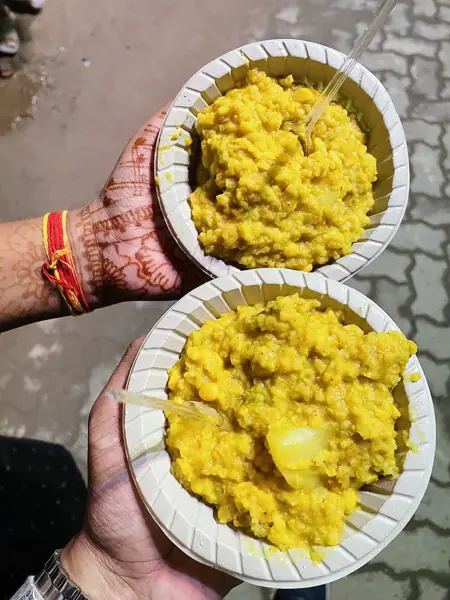 Also readDurga Puja bhog recipes
Variations
- Koraishutir kochuri: stuff the luchi with a spiced green pea paste for a winter version.
- Without tomato: leave out the tomatoes and add 2 tbsp whisked yoghurt off the heat, or simply more water, for a drier alur dom.
- Ghee luchi: fry in ghee for an extra-rich festive luchi, as some families do on special days.
- With onion and garlic: for non-puja days, many cooks start the gravy with sliced onion and garlic paste.
Storing
Luchi do not keep well and are best fried just before eating. The dough can be made 2–3 hours ahead and kept covered at room temperature. Alur dom keeps in the fridge for up to 2 days and tastes even better the next day; reheat with a splash of water.
Serving
Serve 4–5 luchi per person with a bowl of alur dom, a spoonful of tomato chutney and, if you like, a hot beguni or a sweet such as rosogolla. Eat them the moment they come out of the oil.
Questions people ask
Why are my luchi not puffing up?
Luchi usually fail to puff when the oil is not hot enough, the dough is too soft, or the rolled luchi is uneven or torn. Keep the dough firm, roll evenly to about 2 mm, and fry at around 180°C, pressing the luchi gently under the oil.
Can I make alur dom without onion and garlic?
Yes. Niramish (vegetarian, no onion or garlic) alur dom gets its flavour from ginger, cumin, hing, dried red chilli and a little sugar, and is the version often cooked on puja days. The recipe above is written that way.
What is the difference between luchi and puri?
Luchi is made with maida (refined flour) and fried to a pale white or light gold, so it is soft and delicate. Puri is usually made with whole-wheat flour and fried to a deeper golden brown.
Why do Bengalis eat luchi on Ashtami?
Many Bengali families avoid rice on Ashtami or until after pushpanjali, and luchi with a vegetarian side such as alur dom or labra makes a festive, rice-free meal. Customs vary, and some households eat khichuri bhog instead.
Read next
- RecipesDurga Puja bhog recipesHome recipes for the Durga Puja bhog thali: bhoger khichuri, labra, beguni, tomato chutney, payesh, narkel naru and luchi alur dom, mostly no onion or garlic.
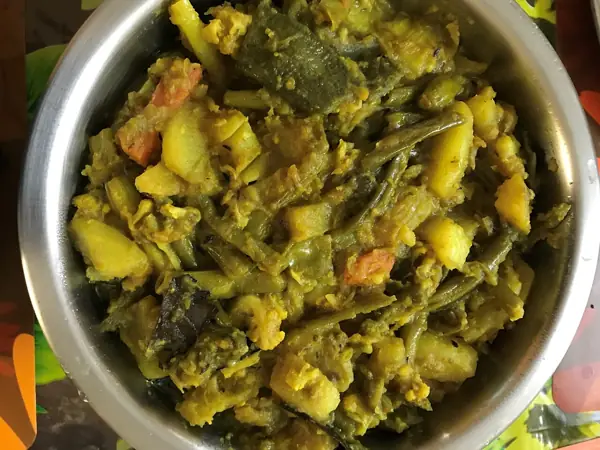 Recipes · 55 minLabraLabra torkari recipe: pumpkin, potato, radish, aubergine and greens cooked soft with panch phoron and ginger, no onion or garlic, as served with khichuri bhog.
 Recipes · 35 minBeguniBeguni recipe: thin aubergine slices dipped in a spiced besan and rice-flour batter and fried crisp, the hot fritter served with khichuri in Durga Puja bhog.
 Recipes · 40 minTomato khejur aamsotto chutneyBengali tomato chutney with khejur (dates) and aamsotto (dried mango), tempered with panch phoron: the sweet-sour chutney of the Durga Puja bhog plate. Vegan.
 RitualsMaha AshtamiMaha Ashtami 2026 is Monday 19 October: the morning pushpanjali, Kumari Puja, Sandhi Puja with 108 lotuses and lamps, fasting until anjali and what people wear.
- CultureDurga Puja foodWhat people eat at Durga Puja: khichuri bhog, labra, payesh, phuchka, rolls, mughlai paratha, rosogolla and sandesh, plus why bhog is shared and eaten together.