Tomato khejur aamsotto chutney
 Pujo Parikrama team2 min read · Updated
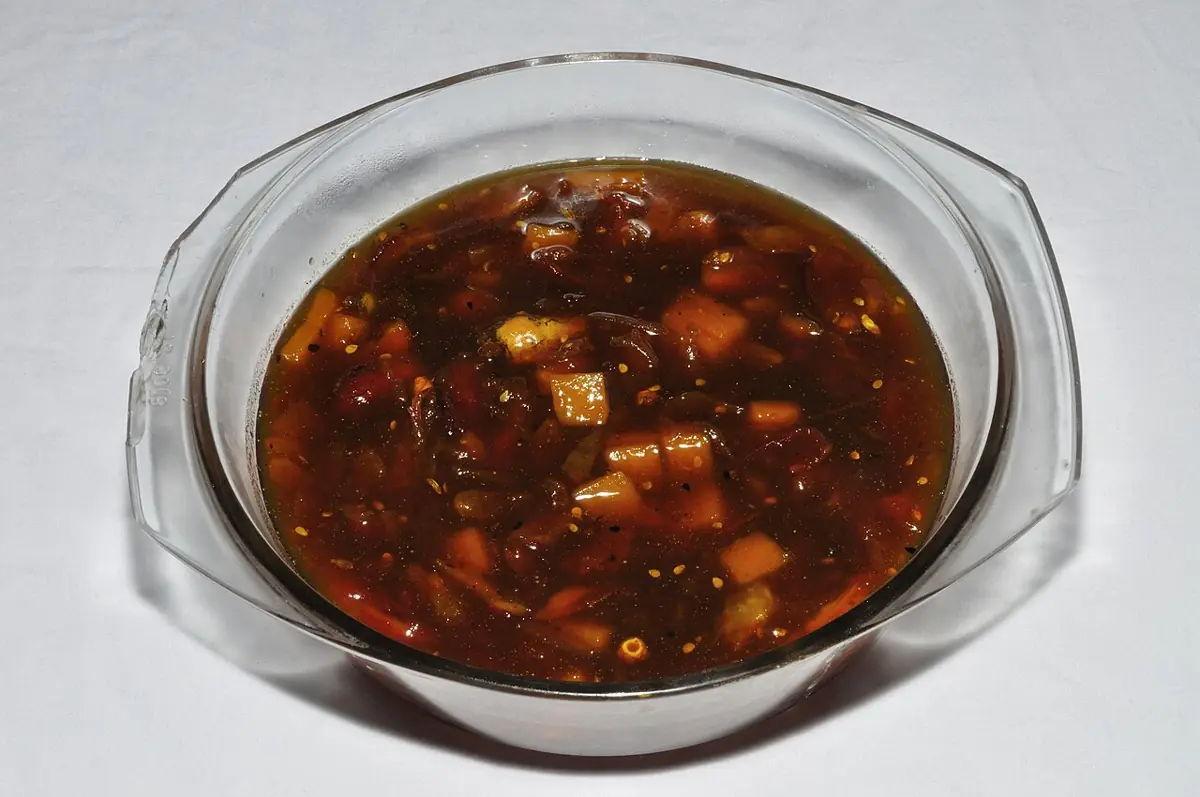
Tomato khejur aamsotto chutney is the sweet-and-sour Bengali chutney served near the end of the Durga Puja bhog meal and at weddings and feasts. Ripe tomatoes are cooked down with sugar, dates (khejur) and dried mango leather (aamsotto), tempered with panch phoron and finished with roasted spice powder. It takes about 40 minutes and keeps well for several days.
 ▶ Photo story · 8 pagesTomato khejur aamsotto chutney
In this article 5 sections
- Serves
- About 2 cups (6–8 servings)
- Prep
- 15 min
- Cook
- 25 min
- Total
- 40 min
- Diet
- Vegan
Ingredients
Tick them off as you go; ticks stay on this phone.
Method
- Prepare the tomatoes
Wash the tomatoes and cut each into 8 wedges, or chop them roughly if you prefer a smoother chutney. Keep all the juice and seeds.
- Make the bhaja moshla
If you do not have it ready, dry-roast 1 tsp cumin seeds and 1 dried red chilli in a small pan over low heat for 1–2 minutes until fragrant, cool and grind to a powder.
- Temper the oil
Heat the oil in a pan over medium heat until hot. Add the panch phoron and broken red chilli and let them crackle for 20 seconds.
- Cook the tomatoes
Add the tomatoes, ginger, turmeric and salt. Stir, cover and cook over medium heat for 8–10 minutes, until the tomatoes are soft and have released their juice.
- Add sugar and fruit
Uncover, add the sugar, dates, aamsotto and raisins and stir until the sugar dissolves. Simmer uncovered over low-medium heat for 10–12 minutes, stirring often, until glossy and thick enough to coat a spoon.
- Finish and cool
Turn off the heat and stir in the bhaja moshla. The chutney thickens as it cools, so stop cooking while it is still slightly loose. Serve at room temperature.
In a Bengali meal, chutney is not a condiment on the side but a course of its own, eaten near the end, after the savoury dishes and before the sweet. On the Durga Puja bhog plate it is usually a glossy red tomato chutney, sweet, gently sour and studded with dates and chewy pieces of dried mango. This version keeps the recipe simple and reliable.
Its place in the puja
After the khichuri, labra and beguni, a spoonful of chutney clears the palate before the payesh. At community pujas it is often cooked the day before in large batches, since it keeps well and tastes better once the flavours have settled. Because it is made without onion or garlic, it fits easily into bhog cooking. Some families avoid tomatoes in offerings and make a chutney of raw mango, pineapple or papaya instead, so follow your household's custom. Our Durga Puja food and bhog guide has more on the bhog plate.
Tips for success
- Use very ripe tomatoes. Deep red, soft tomatoes give colour and natural sweetness. Pale, firm tomatoes make a sharper, thinner chutney.
- Balance sweet and sour. Tomatoes vary a lot in acidity. If yours are very sour, add 1–2 tbsp more sugar; if they are sweet, a squeeze of lime at the end adds brightness.
- Do not over-reduce. The sugar sets the chutney as it cools. Stop when it just coats a spoon, otherwise it turns jammy and stiff.
- Cut the aamsotto small. Small pieces soften and scatter through the chutney instead of clumping.
- Make it ahead. Cooking the chutney a day in advance frees up the stove on puja day, and the flavour improves overnight.
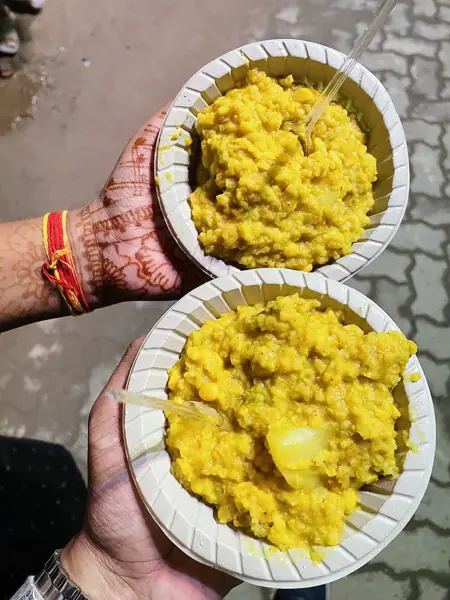 Also readDurga Puja bhog recipes
Variations
- Ginger-forward: double the ginger for a warmer, spicier chutney.
- Cashews: stir in a few broken cashews with the dates.
- Plastic chutney: for a festive alternative, peel and seed a small raw papaya, slice it paper-thin, and simmer the slivers in a light sugar syrup with a little lime juice and a pinch of panch phoron until translucent. It takes practice to get the slices even, which is why the tomato version is the everyday choice.
- Aam-khejur: in summer, when raw mangoes are in season, replace half the tomatoes with peeled raw mango.
Storing
Cool completely, then spoon into a clean glass jar and refrigerate for up to a week. Bring to room temperature before serving. Do not freeze; the texture becomes watery.
Serving
Serve a tablespoon or two per person at room temperature, near the end of the meal, with a papad or a last piece of beguni. It also goes well with luchi for breakfast.
Questions people ask
What is aamsotto?
Aamsotto is sun-dried mango pulp, sold in sheets or bars across Bengal, often sweetened. It adds a fruity sweet-sour flavour and chewy texture to chutney. Dried mango slices or a few spoons of mango jam can be used instead.
What is plastic chutney?
Plastic chutney is a Bengali sweet chutney made from raw papaya cut into thin, translucent slivers and cooked in sugar syrup, so the pieces look glassy, hence the playful name. It is popular at weddings and feasts and sometimes appears on puja menus.
How long does Bengali tomato chutney last?
Kept in a clean, airtight jar in the fridge, tomato khejur aamsotto chutney lasts about a week. The sugar helps preserve it, but always use a clean, dry spoon.
Can I make tomato chutney without sugar?
You can replace the sugar with 100 g grated jaggery for a deeper flavour. Cutting the sweetener altogether changes the dish, as Bengali chutney is meant to be distinctly sweet with a sour edge.
Read next
- RecipesDurga Puja bhog recipesHome recipes for the Durga Puja bhog thali: bhoger khichuri, labra, beguni, tomato chutney, payesh, narkel naru and luchi alur dom, mostly no onion or garlic.
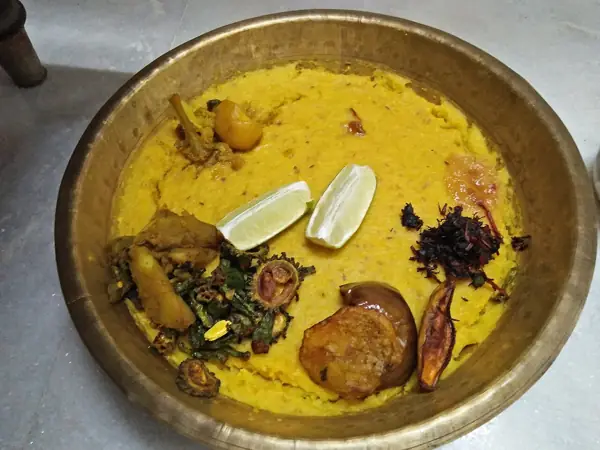 Recipes · 1 h 10 minBhoger khichuriBhoger khichuri recipe with gobindobhog rice, roasted moong dal, ghee, whole spices and ginger, no onion or garlic, just like Durga Puja Ashtami bhog. Serves 4.
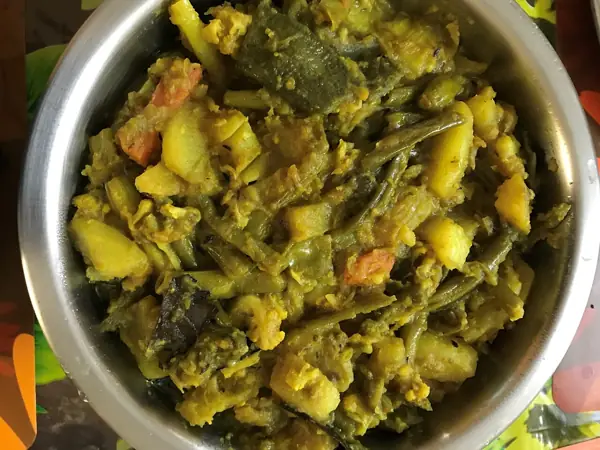 Recipes · 55 minLabraLabra torkari recipe: pumpkin, potato, radish, aubergine and greens cooked soft with panch phoron and ginger, no onion or garlic, as served with khichuri bhog.
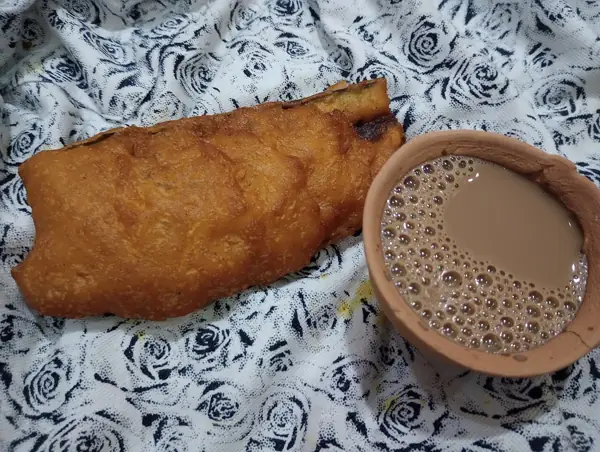 Recipes · 35 minBeguniBeguni recipe: thin aubergine slices dipped in a spiced besan and rice-flour batter and fried crisp, the hot fritter served with khichuri in Durga Puja bhog.
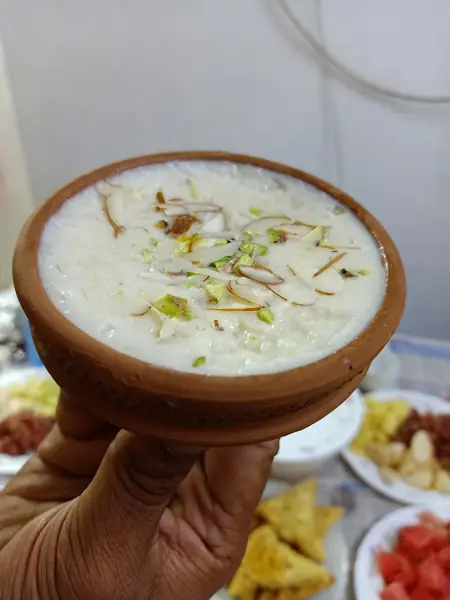 Recipes · 1 h 10 minGobindobhog payeshGobindobhog payesh recipe: fragrant rice simmered in whole milk with bay leaf, cardamom and sugar, the sweet end of Durga Puja bhog, plus a nolen gur version.
- CultureDurga Puja foodWhat people eat at Durga Puja: khichuri bhog, labra, payesh, phuchka, rolls, mughlai paratha, rosogolla and sandesh, plus why bhog is shared and eaten together.