What to wear for Durga Puja, day by day
 Pujo Parikrama team6 min read · Updated
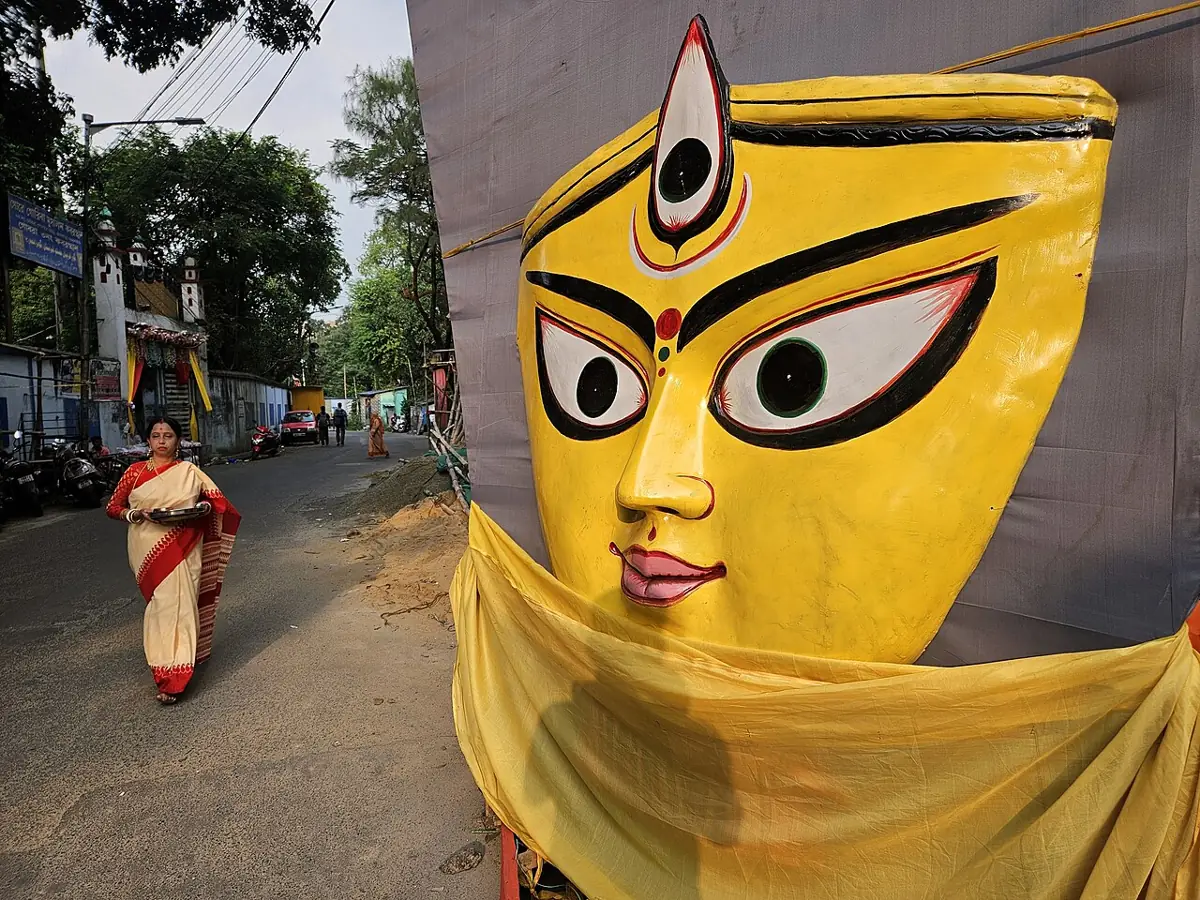
For Durga Puja, Bengalis traditionally wear new clothes (*pujor jama*) on each of the main days: cotton tant or handloom saris and kurtas in the daytime, richer jamdani, Baluchari or silk saris and silk panjabis in the evenings, a white-and-red garad or korial silk sari for Ashtami anjali, and a red-bordered white sari for sindoor khela on Bijoya Dashami. Men usually wear dhuti-panjabi or kurta-pyjama. Because Kolkata is warm and humid in October and pandal hopping means hours of walking, breathable fabrics and comfortable, broken-in footwear matter as much as style.
 ▶ Photo story · 9 pagesWhat to wear for Durga Puja, day by day
In this article 10 sections
The short answer: wear something new, wear something you can walk in, and wear fabrics that breathe. For Bengalis, Durga Puja is the year's great occasion for new clothes, pujor jama (puja clothes), and many people plan a different outfit for each day from Shashthi to Dashami. There are a few traditional favourites for particular rituals, like a white-and-red silk sari for Ashtami anjali and a red-bordered white sari for sindoor khela, but no strict dress code. Families and regions differ, and visitors of every background are welcome in whatever respectful clothes they're comfortable in.
The pujor jama tradition
In the weeks before the puja, Kolkata's markets, from Gariahat and Hatibagan to New Market, are crowded with shoppers. Parents buy new clothes for children, elders give clothes to younger relatives, and households often buy clothes for the people who work with them. Getting your pujor jama is part of the build-up, and wearing it, ideally something you haven't worn before, is part of the joy. Many people count the days in outfits: one for each evening of pandal hopping, one for anjali, one for Dashami.
Saris, explained
Bengal's weaving traditions give puja wardrobes their character. A few names you'll hear:
- Tant. Light, crisp handloom cotton saris, traditionally woven in places such as Shantipur and Phulia in Nadia district. Cool, practical, and ideal for humid daytime pandal hopping. They are starched for crispness, so expect them to soften after a few hours.
- Dhakai jamdani. A fine, almost sheer handloom fabric with motifs woven into the cloth rather than printed or embroidered. The tradition is associated with Dhaka in present-day Bangladesh, and jamdani is also woven in West Bengal. Light enough for October evenings yet dressy.
- Baluchari. Silk saris from Bishnupur in Bankura district, famous for pallus (the decorative end) woven with scenes from epics and everyday life. Heavy and formal; a good choice for an evening at a family puja.
- Garad and korial. Silk saris, typically white or off-white with a red border, from the silk-weaving areas of Murshidabad and nearby. They are a traditional choice for rituals, especially Ashtami anjali and sindoor khela.
- Lal-paar sada. Literally "red-bordered white", the classic look for married women on Dashami. It can be a garad, a korial or a cotton tant.
- Tussar and other silks. Textured, lighter silks that work for both day and evening.
If you're new to the sari, a pre-pleated or ready-to-wear sari, or a salwar-kameez or kurta set, is perfectly fine. Comfort comes first when you are on your feet in a crowd.
For men
- Dhuti-panjabi. The traditional pairing of a dhoti (dhuti in Bengali) and a long kurta (panjabi). It is common for anjali, family pujas and Dashami.
- Panjabi or kurta with pyjama or jeans. The everyday pujo look for pandal hopping, often in cotton, khadi or silk blends.
- Silk or tussar panjabi for evenings and family visits.
- A light shawl or uttariya over the shoulder is sometimes worn for rituals.
Day by day
| Day (2026) | What people often wear |
|---|---|
| Shashthi, Saturday 17 October | The first new outfit; often a cotton or handloom sari or kurta for the opening evening. |
| Saptami, Sunday 18 October | Comfortable festive wear for long hours of pandal hopping. |
| Maha Ashtami, Monday 19 October | Morning: a garad, korial, silk or new sari, or dhuti-panjabi, for pushpanjali. Evening: the dressiest outfit of the week for many. |
| Maha Navami, Tuesday 20 October | Another festive evening outfit; many save something special for the last night. |
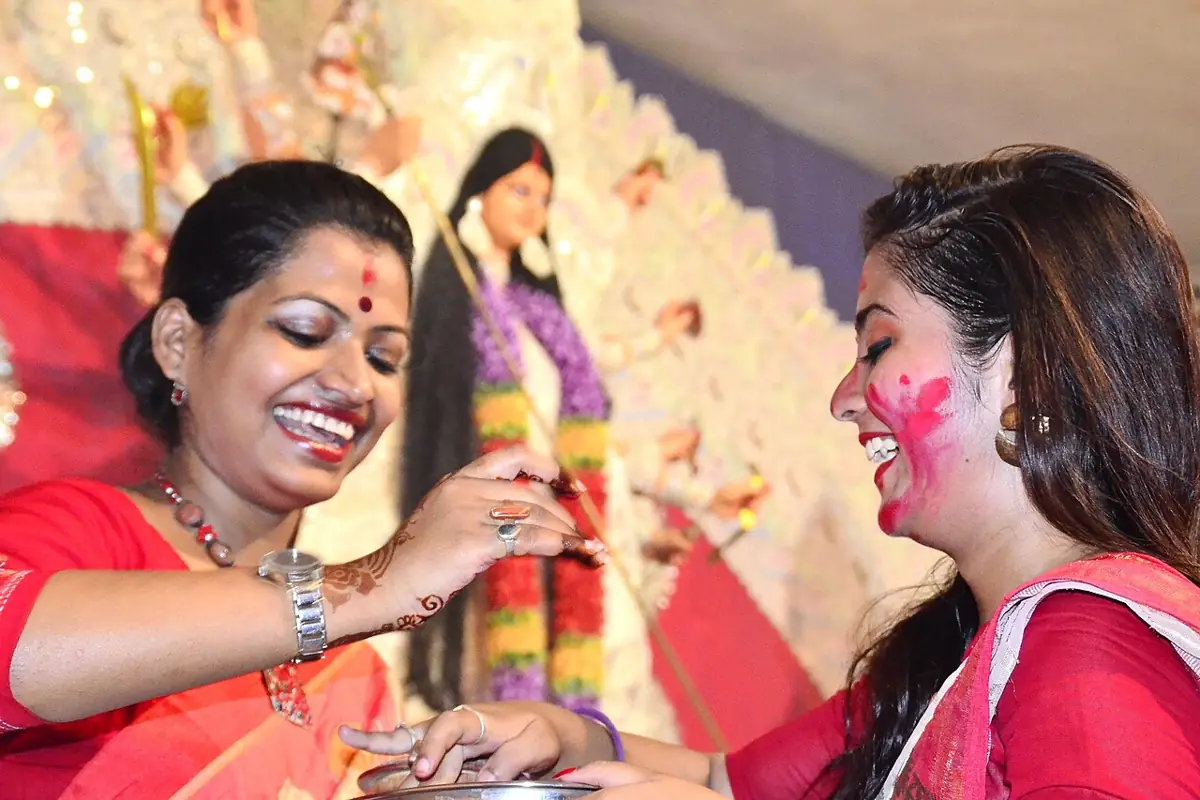
| Bijoya Dashami, Wednesday 21 October | Lal-paar sada sari for sindoor khela; white or light clothes that can take some colour. |
For more on each day's rituals, see Maha Ashtami and Bijoya Dashami.

What to wear for anjali
For the Ashtami pushpanjali, people traditionally wear clean, freshly washed or new clothes, and many fast until they have offered flowers. Women often choose a garad, korial or other silk sari; men a dhuti-panjabi or a clean kurta. You'll be standing or sitting closely packed with others, sometimes on the floor, so a sari or dhoti you can sit in easily helps. Practices vary by family and puja, so follow the lead of the people around you.
 Also readMaha Ashtami
What to wear to the bisarjan
Bisarjan (immersion) processions are joyful, loud and messy. People dance with the dhak, colours and vermilion fly, and the ghats can be wet and slippery.
- Wear something you don't mind getting stained; sindoor is very hard to wash out.
- Choose closed, grippy footwear rather than delicate sandals, and avoid long trailing hems near the water.
- Leave expensive jewellery at home.
- Carry a small towel and a change of clothes if you are going to the ghat.
Footwear for pandal hopping
You may walk many kilometres in a night, often on uneven, crowded roads. Wear shoes or sandals that are already broken in, with soft soles and good grip. Slip-ons save time at pandals and family pujas where you are asked to remove shoes. If you have new festive footwear, carry it in a bag and change for one or two stops. Blister plasters are worth packing. Our pandal hopping tips cover the rest of the walking kit.
Dressing children
Children get the most excited about pujor jama, but long evenings test any outfit. Choose soft cotton, avoid scratchy embellishments and tight waistbands, and pack a spare set for spills. Bright colours make children easier to spot in a crowd. Put a contact card with your phone number in a secure pocket; see Durga Puja with kids and elderly visitors.
Fabric tips for a humid October
- Choose breathable fabrics for the daytime: handloom cotton, khadi, linen and light jamdani. Save heavy silks and synthetics for the evening or air-conditioned visits.
- Light colours feel cooler in the sun; deep colours and rich silks look beautiful under pandal lights at night.
- Carry a spare dupatta or light scarf for sun, a sudden shower or covering your head at a family puja.
- Dress for rain. Short showers are possible; a sari or dhoti hem that can be tucked up, and footwear that tolerates puddles, help.
- Keep layers light. Pandals and Metro stations can be stuffy, and air-conditioned restaurants cold.
- Pin and tuck securely. Safety pins keep sari pleats and pallus in place in crowds and on escalators.
For visitors
You don't need traditional clothes to enjoy Durga Puja, but many visitors love buying a tant sari or a cotton panjabi as a souvenir and wearing it out. Dress modestly at family pujas and during rituals, cover your shoulders if you wish to sit near the altar, and remove shoes where asked. Planning a trip? Start with our traveller's guide to Kolkata, and look up unfamiliar words in the glossary.
Questions people ask
What is pujor jama?
Pujor jama means "puja clothes": the new outfits Bengalis buy or receive as gifts for Durga Puja. Many families give each member a new set, and people often plan a different outfit for each day from Shashthi to Dashami.
What sari is worn for Ashtami anjali?
Many women wear a garad or korial sari, a white or off-white silk with a red border, or another silk or new sari, for the Ashtami morning pushpanjali. There is no fixed rule; clean, modest, new or freshly washed clothes are what matter.
What do you wear for sindoor khela?
The classic choice is a lal-paar sada sari, white or off-white with a red border, often a garad, korial or tant. Wear something you don't mind getting vermilion on, because sindoor stains are hard to remove.
What should men wear for Durga Puja?
A dhuti-panjabi (dhoti with a long kurta) is the traditional choice, especially for anjali and family pujas. Many men wear a cotton or silk panjabi or kurta with pyjama or jeans for pandal hopping.
What shoes are best for pandal hopping?
Comfortable, broken-in shoes or sandals that are easy to slip off, because you may walk many kilometres and remove footwear at some pandals and family pujas. Keep new festive footwear for short visits.
Read next
- RitualsMaha AshtamiMaha Ashtami 2026 is Monday 19 October: the morning pushpanjali, Kumari Puja, Sandhi Puja with 108 lotuses and lamps, fasting until anjali and what people wear.
 RitualsSindoor khelaSindoor khela is the Bijoya Dashami ritual where women offer vermilion to Durga and smear it on each other: who takes part, how it is done, what to wear.
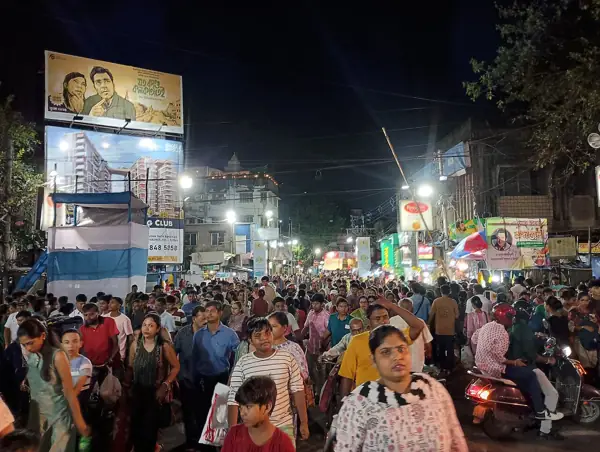 CulturePandal hopping in KolkataPractical Kolkata pandal hopping tips: the best hours to beat crowds, using the Metro, what to carry, kids and elders, safety, and which area is known for what.
 VisitVisiting Kolkata for Durga Puja 2026Plan a Durga Puja 2026 trip to Kolkata: when to arrive, airport and stations, where to stay, metro and cabs, October weather, money, safety and a 3-day plan.
 CultureDurga Puja glossaryA Durga Puja glossary: 58 Bengali and Sanskrit words explained, from anjali, bodhon and dhunuchi to sindoor khela, daker saaj, bonedi bari and thakur dekha.