Bathukamma: Telangana's festival of flowers
 Pujo Parikrama team3 min read · Updated
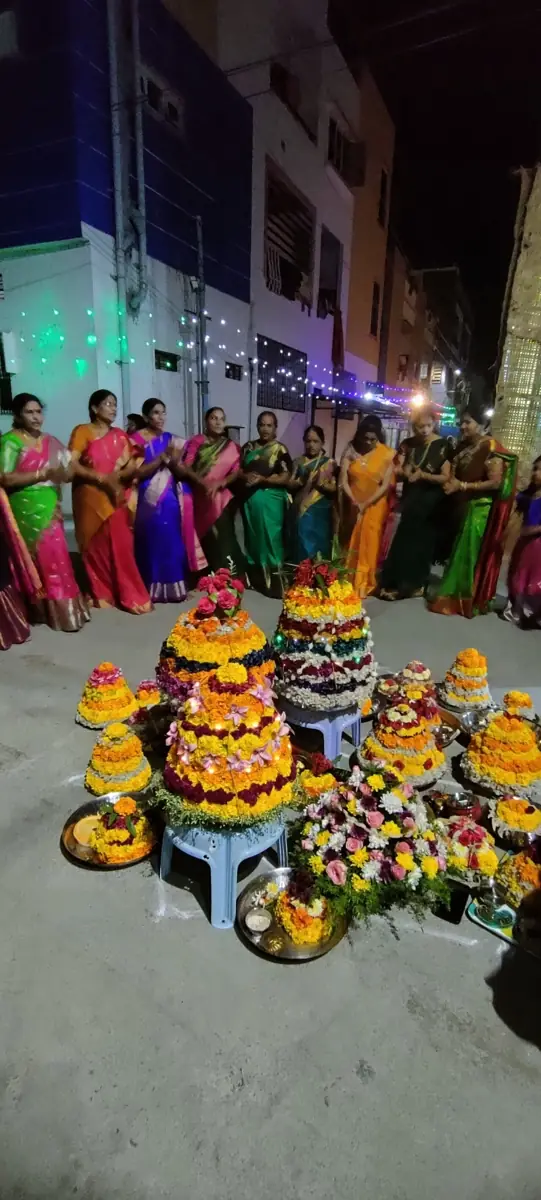
Bathukamma is Telangana's state festival, a nine-day celebration of the Goddess by women during Navratri. Each evening women stack seasonal flowers into a cone (the bathukamma), dance and sing in a circle around it, and set it afloat on a lake or tank. It begins with Engili Pula Bathukamma on Mahalaya Amavasya, Saturday 10 October 2026, and ends with Saddula Bathukamma on Durgashtami, which 2026 calendars place on 18 or 19 October.
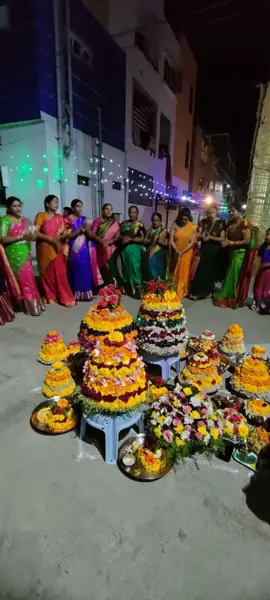 ▶ Photo story · 8 pagesBathukamma: Telangana's festival of flowers
In this article 6 sections
Bathukamma is Telangana's festival of flowers and the state's official festival. For nine days during Navratri, women and girls build cone-shaped towers of flowers, called bathukammas, gather in the evening to dance and sing around them, and then let them float away on a lake, tank or pond. The name is usually translated as "Mother Goddess, come alive": the flowers themselves are honoured as the Goddess, often identified with Gauri.
Bathukamma 2026 dates
The festival begins on Mahalaya Amavasya, Saturday 10 October 2026, with Engili Pula Bathukamma, and ends with Saddula Bathukamma on Durgashtami. Published 2026 calendars disagree on the last day: some, including the state calendar, give 18 October, while others following a different panchang give 19 October. Dussehra (Dasara) follows. Check the Telangana government holiday list or your local temple for the final dates.
How a bathukamma is made
A bathukamma is built in layers on a thambalam, a brass or steel plate:
- A base of leaves is laid on the plate.
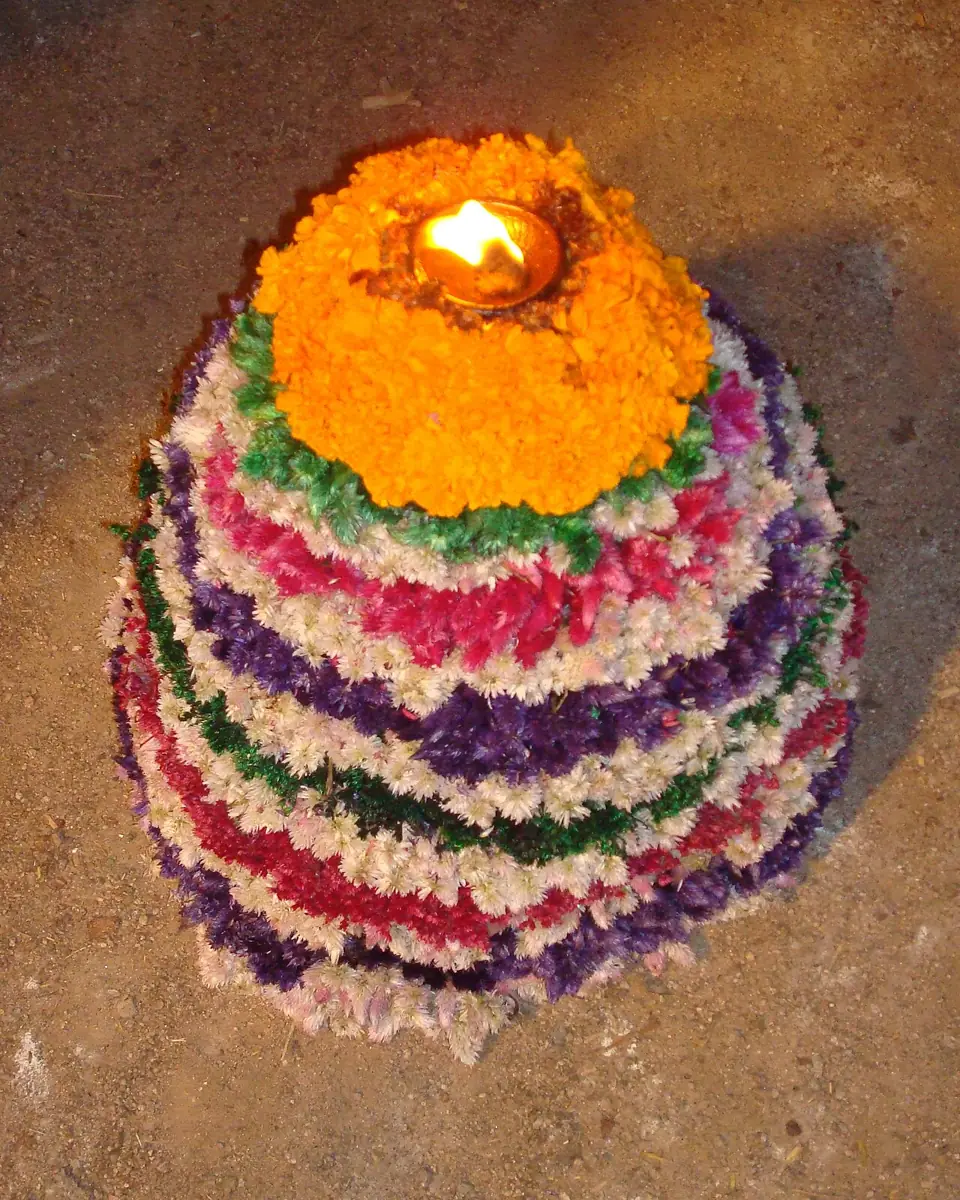
- Flowers are packed in concentric rings, each smaller than the last, so the stack narrows into a cone. Colours are alternated in bands.
- A small Gauramma (Gauri), a cone of turmeric paste, is placed on top, sometimes with a pumpkin flower.
The flowers are those of the Deccan monsoon's end: bright yellow tangedu (Tanner's cassia), feathery gunuka (celosia), banti (marigold), chamanti (chrysanthemum), lotus, and many more. Many of them are medicinal plants, and people say the flowers cleanse the water bodies they are set afloat on. Bathukammas range from a hand's height on the first days to towers a metre or more tall on the last.

The evening ritual
In the late afternoon, women in their best saris carry their bathukammas to an open space: a temple yard, a street corner, the bank of a tank. The bathukammas are placed in the centre, and the women form a circle around them, clapping in rhythm and singing Bathukamma songs, call-and-response folk songs about the Goddess, family life, history and the village. The circle turns slowly for an hour or more.
At dusk the bathukammas are carried to the water and set afloat with a final song. Women share small offerings of food (prasadam) with each other, and go home together.
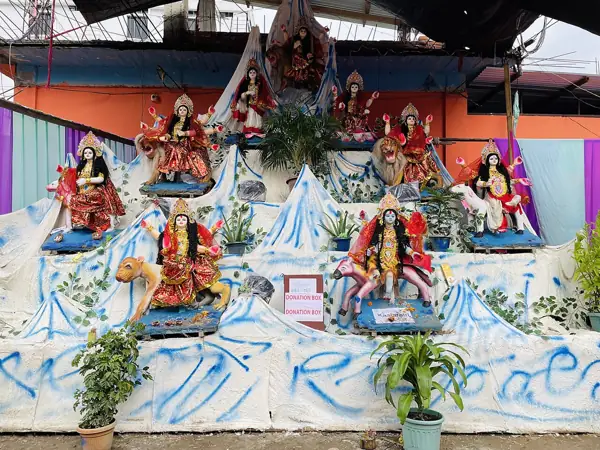 Also readNavratri and Dussehra across India
The nine days
Each day has its own name and its own offering. The names vary a little between districts, but a common sequence is:
| Day | Name | Typical offering |
|---|---|---|
| 1 | Engili Pula Bathukamma | Sesame seeds, rice flour |
| 2 | Atukula Bathukamma | Flattened rice (atukulu), jaggery |
| 3 | Muddapappu Bathukamma | Soft-cooked lentils, milk, jaggery |
| 4 | Nanabiyyam Bathukamma | Soaked rice, milk, jaggery |
| 5 | Atla Bathukamma | Small pancakes (atlu) |
| 6 | Aligina Bathukamma | A rest day, no bathukamma |
| 7 | Vepakayala Bathukamma | Rice-flour fritters shaped like neem fruit |
| 8 | Vennamuddala Bathukamma | Sesame, butter, ghee, jaggery |
| 9 | Saddula Bathukamma | Five or more kinds of flavoured rice |
Saddula Bathukamma, the last day, is the biggest. The tallest bathukammas of the year are built, and families cook saddulu, flavoured rices such as tamarind, lemon, coconut, sesame and curd rice, to share after the immersion.
Where to see it
Every town and village in Telangana celebrates, and Telangana families keep Bathukamma wherever they live. In Hyderabad the largest gatherings are around Hussain Sagar and the city's lakes, with state-organised celebrations on the final evening. Outside the state, Telugu associations in other cities hold community Bathukamma evenings; ask locally.
Bathukamma and the season
Bathukamma runs through the same nine nights that Bengal spends preparing for and celebrating Durga Puja, and Gujarat spends dancing garba. See how the other communities keep the season in Navratri across India, and the Tamil and Telugu doll displays in the Golu guide.
Questions people ask
When is Bathukamma in 2026?
Bathukamma begins with Engili Pula Bathukamma on Mahalaya Amavasya, Saturday 10 October 2026, and ends with Saddula Bathukamma on Durgashtami. Calendars differ on whether that falls on 18 or 19 October, so check the Telangana government holiday list or your temple.
What does Bathukamma mean?
Bathukamma is usually translated as 'Mother Goddess, come alive' (bathuku, life, and amma, mother). The flower stack itself is honoured as the Goddess, often identified with Gauri.
Which flowers are used in Bathukamma?
Seasonal wild and garden flowers of the Deccan, especially tangedu (Tanner's cassia, bright yellow), gunuka (celosia), banti (marigold), chamanti (chrysanthemum), along with lotus, gummadi (pumpkin) flowers and others, often with a turmeric Gauri placed on top.
What is Saddula Bathukamma?
Saddula Bathukamma is the grand final day, on Durgashtami. The tallest bathukammas are made, and five or more kinds of flavoured rice (saddulu), such as tamarind, lemon, coconut, sesame and curd rice, are prepared and shared.
Is Bathukamma only for women?
The circle dance, the songs and the making of the bathukamma are led by women and girls. Men help gather flowers and carry the larger stacks to the water, and the whole family joins the evening gatherings.
Read next
- NavratriNavratri and Dussehra across IndiaHow India marks Navratri and Dussehra region by region: Durga Puja, garba, Golu, Bathukamma, Mysuru Dasara, Kullu Dussehra, Ramlila, Ayudha Puja and Vidyarambham.
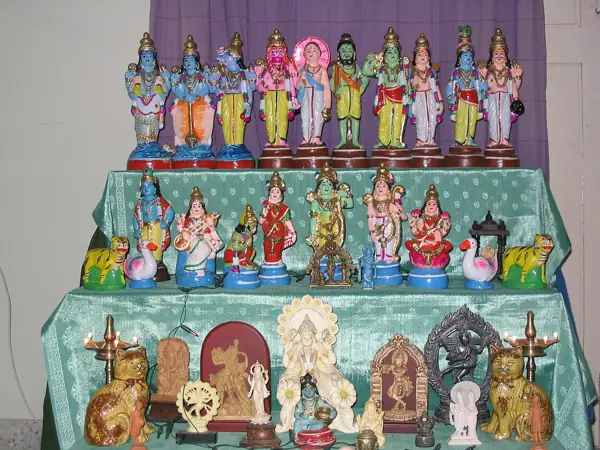 NavratriGoluGolu, the Navratri doll display of Tamil Nadu, Andhra (Bommala Koluvu) and Karnataka (Gombe Habba): the steps, which dolls go where, visiting, thamboolam and sundal.
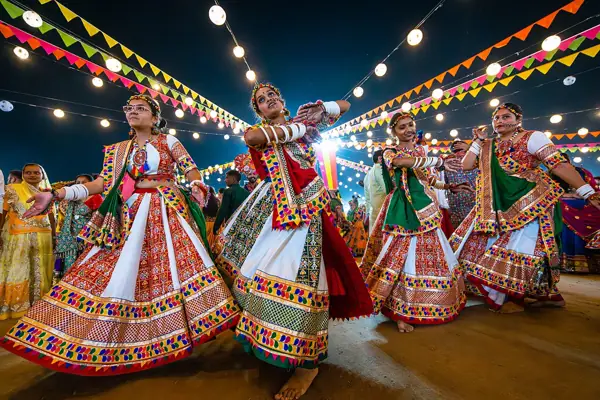 NavratriNavratri 2026What Navratri means, when Sharad Navratri 2026 falls, its rituals (ghatasthapana, Navadurga, fasting, garba) and how it differs from Bengal's Durga Puja.
- NavratriNavadurgaThe nine forms of Durga, from Shailaputri to Siddhidatri: what each name means, how each is depicted and the offering commonly linked to each Navratri day.