Golu: the Navratri doll display of South India
 Pujo Parikrama team3 min read · Updated
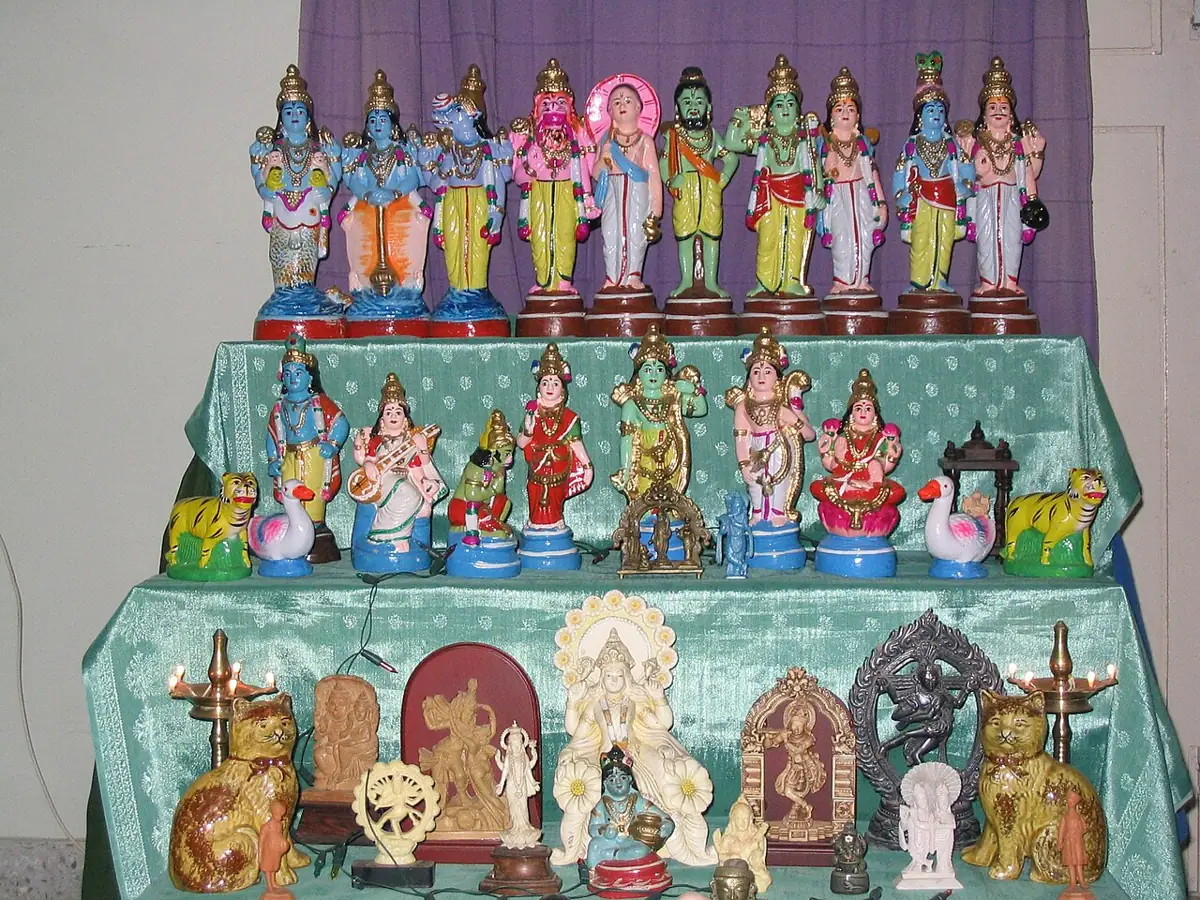
Golu (also Kolu or Bommai Kolu) is the Navratri custom of arranging dolls on an odd number of steps at home, kept in Tamil Nadu, and as Bommala Koluvu in Andhra Pradesh and Gombe Habba in Karnataka. Gods sit on the top steps, saints and epic scenes in the middle, and everyday life at the bottom. For the nine nights families light a lamp, offer sundal and invite neighbours, who leave with thamboolam. In 2026 the nine nights begin on 11 October.
 ▶ Photo story · 7 pagesGolu: the Navratri doll display of South India
In this article 5 sections
Golu (also written Kolu, and called Bommai Kolu, "the court of dolls", in Tamil) is a Navratri display of dolls arranged on steps at home. It is a Tamil custom at heart, kept as Bommala Koluvu in Andhra Pradesh and Gombe Habba in Karnataka, and Tamil and Telugu families take it with them wherever they live, Kolkata included. For nine nights the display is the centre of the house: a lamp is lit before it, songs are sung, and neighbours come visiting.
In 2026 Navratri begins on Sunday 11 October, the day after Mahalaya Amavasya, so most Golus go up that morning and stay until Vijayadashami. Families follow their own panchang for the exact days.
The steps
A Golu is built on an odd number of steps (padi): three, five, seven, nine, occasionally eleven. Wooden or metal frames are covered with a white or coloured cloth. The arrangement follows a loose order, from the divine at the top to the everyday at the bottom:
- Top steps: the deities, often with a kalasam (a pot topped with a coconut) for the Goddess, and figures of Durga, Lakshmi and Saraswati.
- Middle steps: saints, sages and scenes from the Ramayana, the Mahabharata and the Dashavatara (Vishnu's ten forms).
- Lower steps: ordinary life: weddings, markets, musicians, a village, animals and birds.
Many families also build a "park" on the floor in front: a pond made from a mirror, sown mustard or ragi sprouting into a lawn, little houses and toy trains. Children often take charge of this part.

The dolls
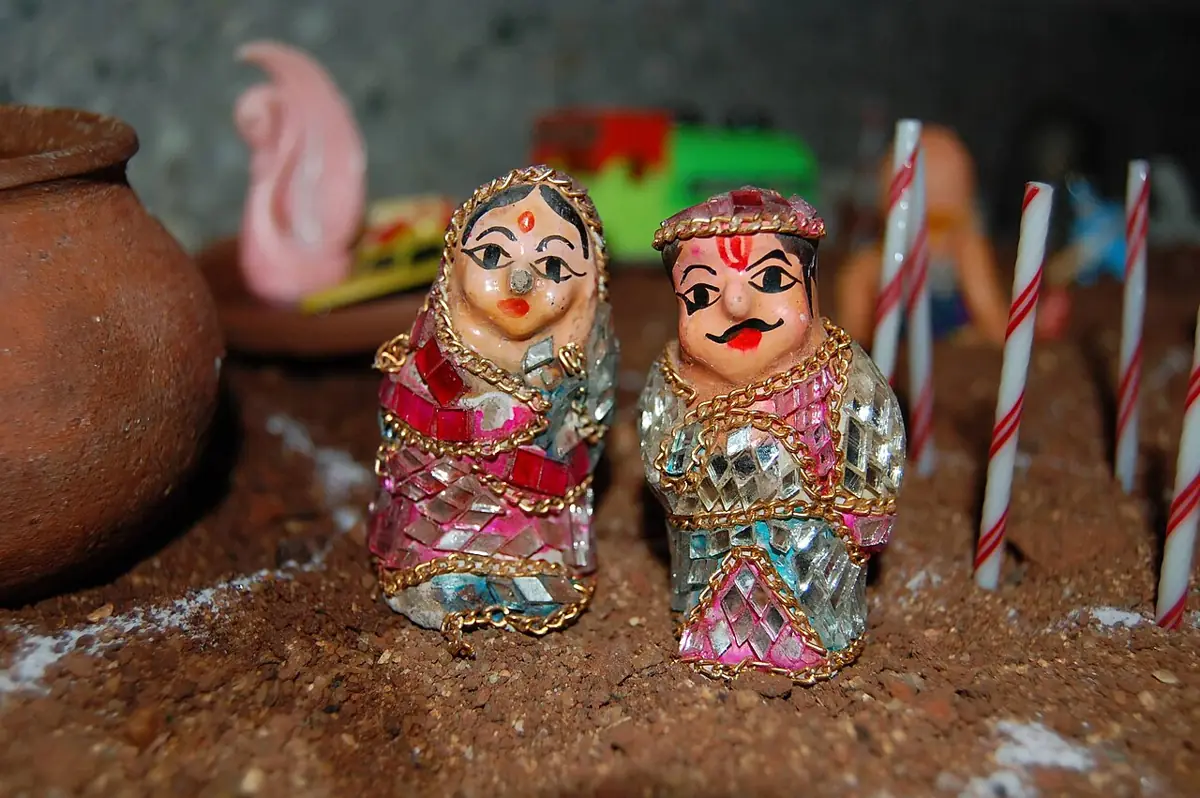
Golu dolls (bommai) are traditionally clay or wood, painted by hand. Marapachi dolls, a carved wooden couple, are usually the first to go up; many are heirlooms handed from mother to daughter and dressed in new clothes each year. Karnataka's Gombe Habba gives pride of place to a pattada gombe, a royal couple. Families add one new doll a year, so a long-kept Golu becomes a record of the family's own history.
Doll markets fill up in the weeks before Navratri, most famously around the temple streets of Mylapore in Chennai. Andhra's Kondapalli wooden toys and Karnataka's lacquered Channapatna toys are favourites.
 Also readNavratri and Dussehra across India
The nine evenings
Each evening the lamp is lit, a short puja is done, and a neivedyam (food offering) is made. The classic offering is sundal, boiled chickpeas, black-eyed peas, green gram or peanuts tempered with mustard seeds, curry leaves and grated coconut, a different one each day in many homes.
Then the visiting begins. Women and girls go from house to house, look at each Golu, sing a song or two (the classical repertoire has many Navaratri kritis), and are given thamboolam: betel leaves and areca nuts, turmeric and kumkum, a fruit or coconut, and often a small gift such as a blouse piece, bangles or a steel box. Children are dressed up and asked to sing.
Saraswati Puja and Vijayadashami
On Navami, books and musical instruments are placed before the Goddess for Saraswati Puja and Ayudha Puja, and are not used until the next morning. On Vijayadashami, the books are taken back with a prayer, and in the evening many families lay one doll down to put the Golu to sleep. The dolls are packed away carefully over the next day, wrapped in paper or cloth, until next year.
Golu and Durga Puja
Golu and Bengal's Durga Puja meet in the same goddess and the same nine nights, but one is a home-made world of dolls and the other is a public festival in pandals. In Kolkata, South Indian families often keep a Golu at home and still go out pandal hopping in the evenings: the Kolkata guide shows when each pandal is quietest. See also Navratri across India and Navratri in Kolkata.
Questions people ask
How many steps should a Golu have?
Traditionally an odd number: three, five, seven or nine, and sometimes eleven. Nine steps are common in homes with large collections. The number matters less than keeping the order of gods at the top and everyday life at the bottom.
When should Golu be set up in 2026?
Families usually set up Golu on the first day of Navratri, which in 2026 is Sunday 11 October, after Mahalaya Amavasya on 10 October, and keep it until Vijayadashami. Many follow a muhurta from their family panchang.
What are marapachi dolls?
Marapachi dolls are a pair of carved wooden dolls, a man and a woman, often handed down from mother to daughter and dressed afresh each year. They are among the first dolls placed on a Golu.
What is given to guests at a Golu?
Guests, especially women and girls, are offered sundal (a savoury dish of boiled legumes) and thamboolam: betel leaves and areca nuts, turmeric and kumkum, fruit or a coconut, and often a small gift.
How is the Golu taken down?
On the evening of Vijayadashami, many families lay one doll down symbolically to put the Golu to sleep, then pack the dolls away over the next day or two.
Read next
- NavratriNavratri and Dussehra across IndiaHow India marks Navratri and Dussehra region by region: Durga Puja, garba, Golu, Bathukamma, Mysuru Dasara, Kullu Dussehra, Ramlila, Ayudha Puja and Vidyarambham.
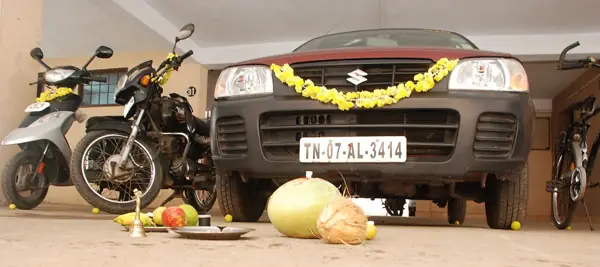 NavratriAyudha Puja, Saraswati Puja and VidyarambhamHow South India ends Navratri: Saraswati Puja and Ayudha Puja on Navami, when tools, vehicles and books are worshipped, and Vidyarambham, a child's first letters on Vijayadashami.
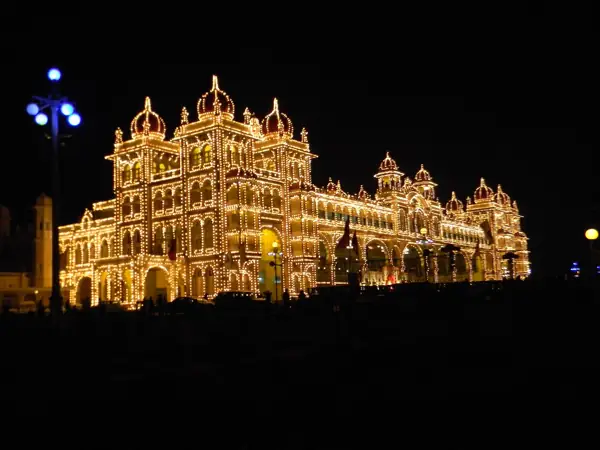 NavratriMysuru DasaraMysuru Dasara, Karnataka's Nadahabba: its history, the lit palace, the Jamboo Savari elephant procession, the torchlight parade and practical tips for 2026.
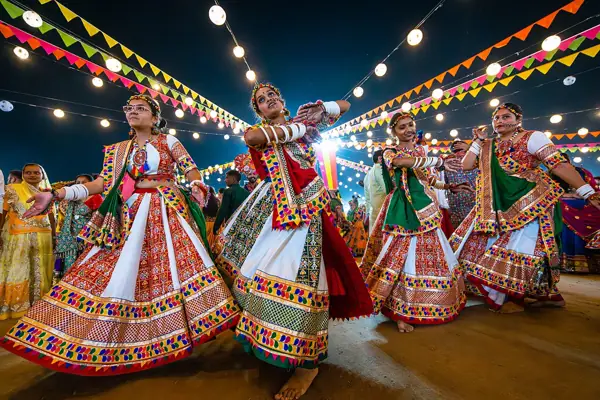 NavratriNavratri 2026What Navratri means, when Sharad Navratri 2026 falls, its rituals (ghatasthapana, Navadurga, fasting, garba) and how it differs from Bengal's Durga Puja.
 NavratriNavratri in KolkataNavratri and Dussehra in Kolkata for every community: where Ravan dahan happens, finding garba nights, vrat food, Golu at home, and how to enjoy Durga Puja if you're not Bengali.