Ayudha Puja, Saraswati Puja and Vidyarambham
 Pujo Parikrama team3 min read · Updated
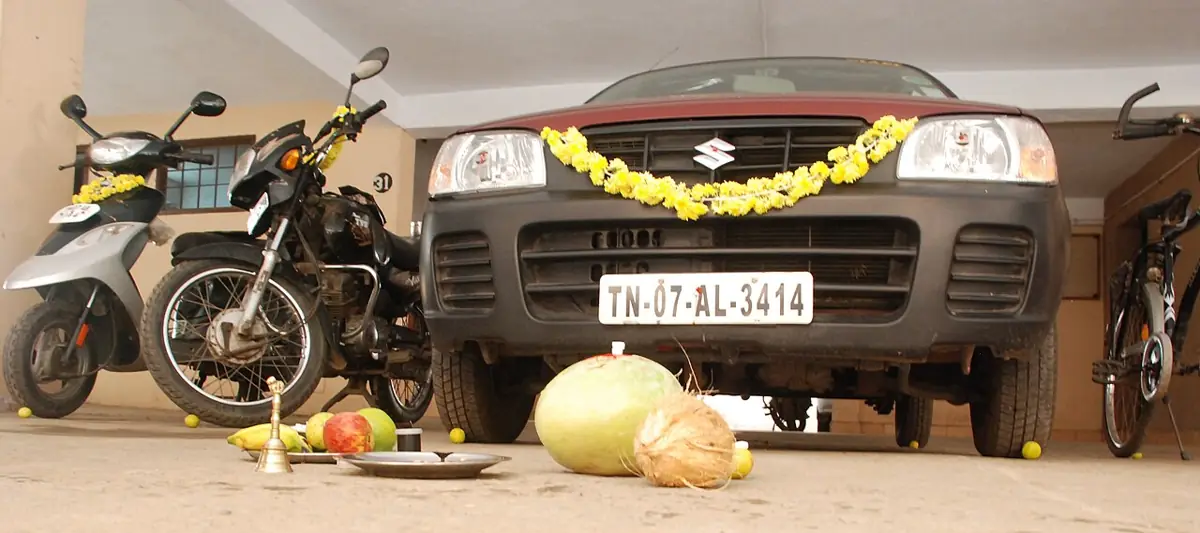
In South India the last days of Navratri honour knowledge and work. On Navami, Ayudha Puja and Saraswati Puja are performed: tools, machines, vehicles, musical instruments and books are cleaned, decorated and worshipped, and in Kerala the books stay with the Goddess, unread, until the next morning. On Vijayadashami, small children are initiated into writing in the Vidyarambham ceremony, tracing their first letters in rice. In 2026 calendars place Navami on 19 or 20 October and Vijayadashami on 20 or 21 October.
 ▶ Photo story · 7 pagesAyudha Puja, Saraswati Puja and Vidyarambham
In this article 5 sections
In much of South India, the last two days of Navratri are about knowledge and work. On Navami, people worship the tools of their trade and the books they learn from: Ayudha Puja and Saraswati Puja. On Vijayadashami, they make a fresh start, and in Kerala and parts of Karnataka, small children write their first letters in the Vidyarambham ceremony.
2026 dates
Ayudha Puja falls on Mahanavami and Vidyarambham on Vijayadashami. Calendars disagree by a day in 2026: Navami falls on 19 or 20 October and Vijayadashami on 20 or 21 October, depending on the panchang. Bengal's calendar has Maha Navami on Tuesday 20 October and Bijoya Dashami on Wednesday 21 October. Follow the calendar of your family or temple.
Saraswati Puja
Saraswati, the goddess of learning, music and the arts, is worshipped in the last three days of Navratri across the south. Books, notebooks, pens and musical instruments are placed before her image, decorated with flowers and sandal paste.
In Kerala this is a ceremony of its own. On the evening of Ashtami, books and instruments are handed over to the Goddess in the Pooja Vaippu (placing for worship). For the next day and a half, students don't study and musicians don't practise; the learning rests with Saraswati. On Vijayadashami morning, the books are taken back in the Pooja Eduppu (taking up), and the first thing done is to read or write a few lines and play a few notes, a fresh beginning to the year's learning.
 Also readNavratri and Dussehra across India
Ayudha Puja
Ayudha means implement or weapon. On Navami, people honour whatever they work with:
- At home: knives and kitchen tools, sewing machines, laptops and phones.
- At work: machines in factories, tools in workshops, computers in offices, account books in shops.
- Vehicles: cars, autorickshaws, buses and lorries are washed and decorated with banana stems, mango leaves, flowers and kumkum.
- Instruments and weapons: the veena and the mridangam, and in royal and martial traditions, swords and arms.
Each item is cleaned, marked with turmeric, sandal paste and kumkum, and garlanded, and given the day off. In Tamil Nadu and Karnataka, an ash gourd marked with kumkum is often smashed on the road in front of a vehicle or shop to ward off the evil eye. In Mysuru, the royal weapons and the palace elephants are worshipped as part of Dasara.
Offices and workshops often hold a shared puja with sweets and sundal, and in many places the day is a public holiday.
Vidyarambham: a child's first letters
Vidyarambham ("the beginning of learning"), also called Ezhuthiniruthu in Malayalam, is the initiation of a child, usually aged two to five, into letters on Vijayadashami. A priest, teacher, writer or family elder holds the child on their lap and:
- Guides the child's finger to write "Hari Sri" (ഹരിശ്രീ), the auspicious opening words, in a plate of rice grains.
- Writes the same letters on the child's tongue with a gold ring.
- Says the first letters of the alphabet aloud for the child to repeat.
Thousands of children are initiated each year at temples and cultural centres across Kerala, such as the Thunchan Parambu in Tirur, the Panachikkadu Saraswati temple near Kottayam, and the Mookambika temple at Kollur in Karnataka, as well as at home and in churches and community halls. Many families also start music or dance lessons on this day.
Related traditions
Ayudha Puja and Saraswati Puja sit inside the Golu season in Tamil and Telugu homes, and share their spirit with Bengal's Vishwakarma Puja, when tools are worshipped in September. For how the rest of India spends the same days, see Navratri across India and Bengal's Maha Navami.
Questions people ask
When is Ayudha Puja in 2026?
Ayudha Puja is performed on Mahanavami, the ninth day of Navratri. In 2026 calendars place it on Monday 19 or Tuesday 20 October depending on the panchang; the Bengal calendar's Maha Navami is Tuesday 20 October. Follow your family's or temple's calendar.
What is worshipped on Ayudha Puja?
The tools of one's livelihood: machines, vehicles, computers, kitchen and farm tools, weapons, musical instruments and books. They are cleaned, marked with turmeric, sandalwood paste and kumkum, garlanded, and rested for the day.
What is Vidyarambham?
Vidyarambham, 'the beginning of learning', is the ceremony on Vijayadashami in which a child aged about two to five writes their first letters. Guided by a priest, teacher or elder, the child traces 'Hari Sri' in a plate of rice, and the letters are written on the tongue with a gold ring.
Why are books not read during Navratri's last days in Kerala?
In Kerala, books and instruments are placed before Saraswati on the evening of Ashtami (Pooja Vaippu) and are left with the Goddess until Vijayadashami morning (Pooja Eduppu). Reading, writing and practice are paused, and resumed with a fresh start.
Is Ayudha Puja the same as Vishwakarma Puja?
They share the idea of honouring tools and machines, but they are different festivals. Ayudha Puja falls on Mahanavami in South India; in Bengal and eastern India, tools are worshipped on Vishwakarma Puja in September.
Read next
- NavratriNavratri and Dussehra across IndiaHow India marks Navratri and Dussehra region by region: Durga Puja, garba, Golu, Bathukamma, Mysuru Dasara, Kullu Dussehra, Ramlila, Ayudha Puja and Vidyarambham.
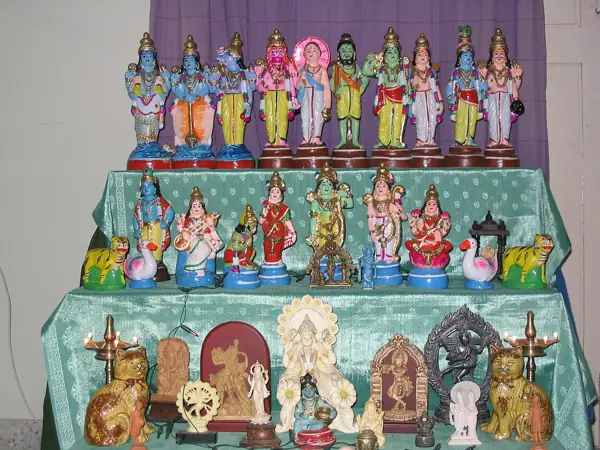 NavratriGoluGolu, the Navratri doll display of Tamil Nadu, Andhra (Bommala Koluvu) and Karnataka (Gombe Habba): the steps, which dolls go where, visiting, thamboolam and sundal.
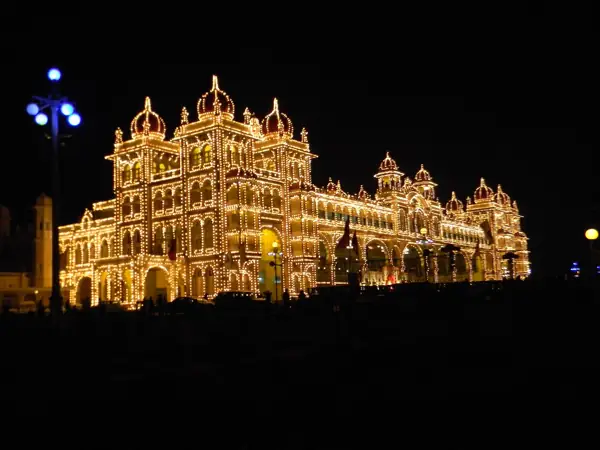 NavratriMysuru DasaraMysuru Dasara, Karnataka's Nadahabba: its history, the lit palace, the Jamboo Savari elephant procession, the torchlight parade and practical tips for 2026.
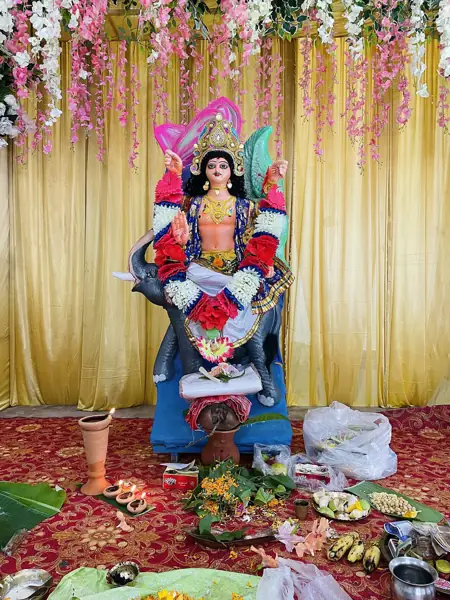 FestivalsVishwakarma PujaVishwakarma Puja usually falls on 17 September: worship of the divine architect in factories and workshops, tools and machines, and kite flying over Kolkata.
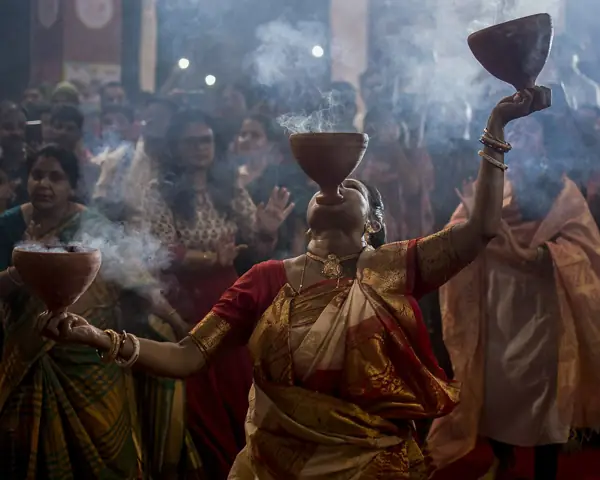 RitualsMaha NavamiMaha Navami 2026 is Tuesday 20 October: the Navami puja, the homa fire offering, khichuri bhog, symbolic offerings in place of sacrifice and dhunuchi naach.